
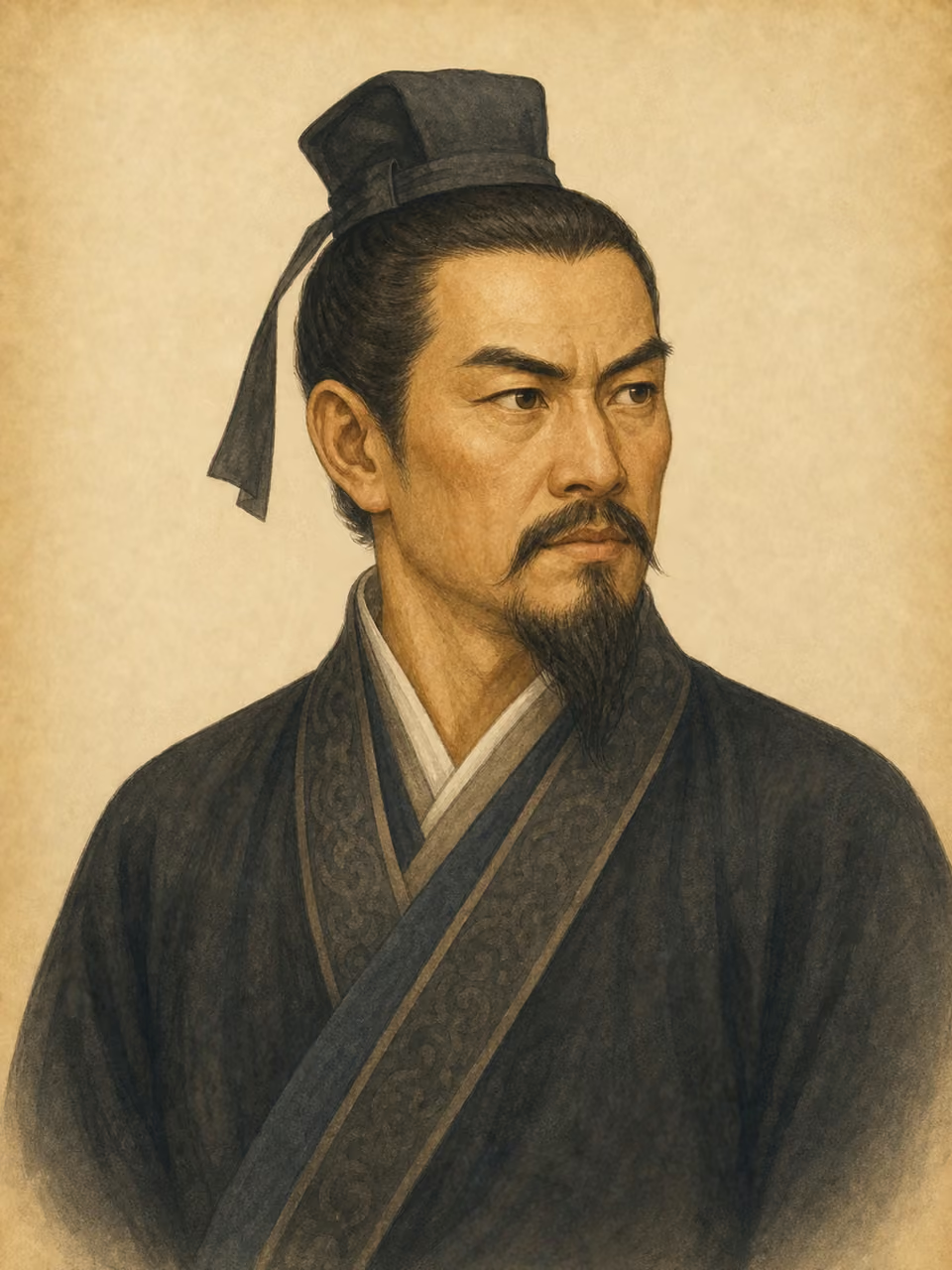
Shang Yang

Portrait: AI-generated imagined likeness

Shang Yang

Politician · Philosopher

Years
c. 390 BC–338 BC
Birthplace
China
Birth polity
State of Wey
Era
Ancient
Field
Politics
Occupations
Politician · Philosopher

A politician and legal thinker who promoted reform in the Qin Dynasty during the Warring States period. Reforms that emphasized military merit, household registration, and agricultural production supported Qin's rise to power. He is a person who thinks about institutional reform towards the unification of China. He was a reformer who created the premises for a unified nation.

View in catalog

Historical context

Places

  • State of Qin

    Work

  • Xianyang

    Work

Works & achievements

  • Shang Yang's reforms

    356 BC–350 BC

    Law

Origins

Origins map
Birth country
Birth country
China

Map: Natural Earth (PD)

Biography

Early life

He is said to have come from the Mamoru region, and served the Qin during the Sengoku period, a time when nations competed against each other. He had an idea that valued rule based on law and merit rather than a blood-related aristocratic order.

Achievements

Through the changes made by Shonan, he promoted the military meritorious title system, the renza system, and the reform of the land system. These became the foundation for Qin to grow into a military and administrative state that overwhelmed other countries.

Character & anecdotes

While the reforms strengthened Qin, the strict rule of law also led to strong opposition. Shang Yan himself was executed during a political dispute, demonstrating both the success of institutional reform and the danger of reformers.

Historical Impact

If you study Shanggu, you will understand that the unification of Qin was supported not only by Qin Shihuang personally, but also by the institutional reforms that preceded him. We can also understand the power and tension that legalist thought brought to nation-building. We can also see the power of systems to change society.