
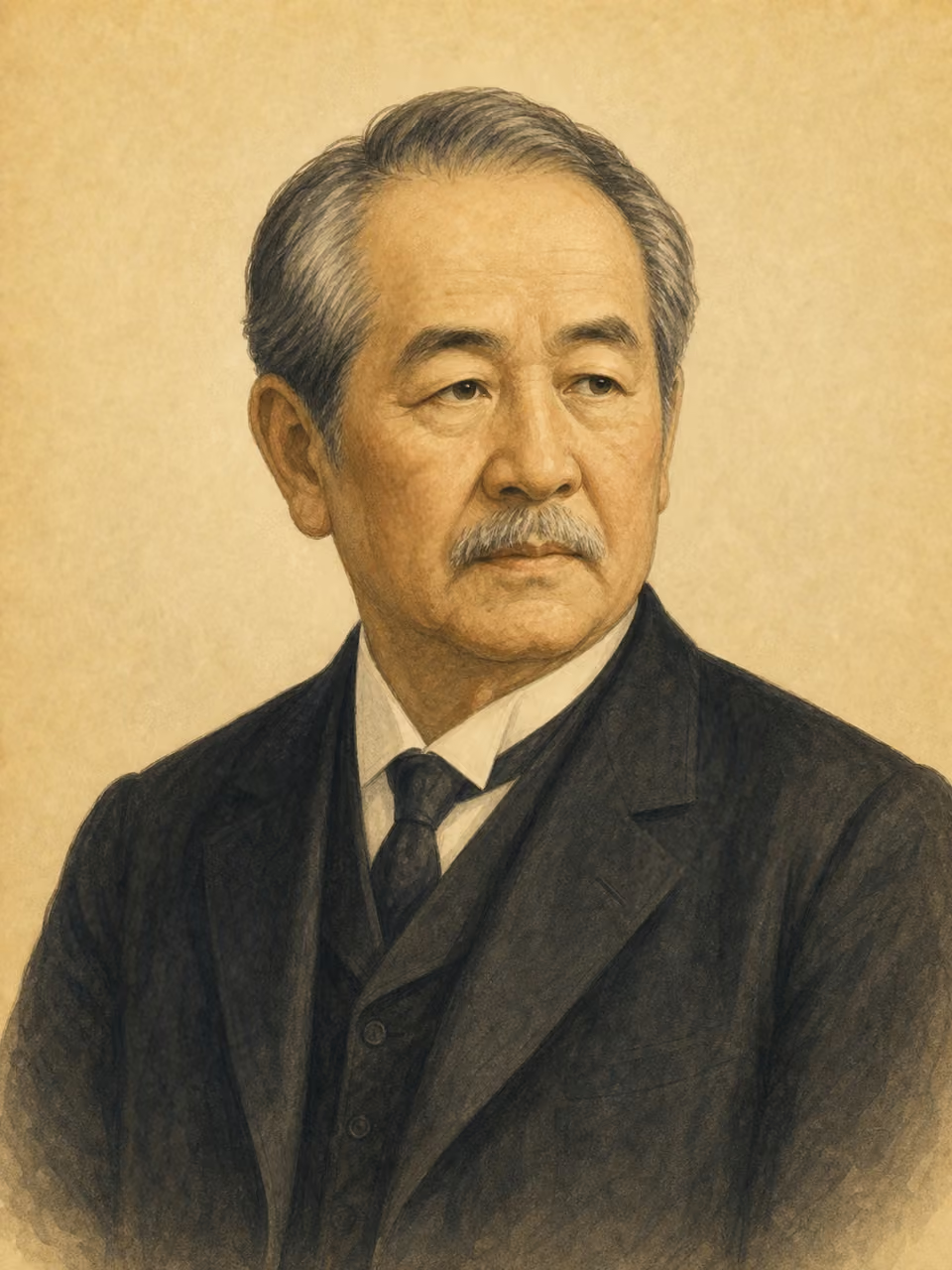
Shibusawa Eiichi

Portrait: AI-generated imagined likeness

Shibusawa Eiichi

Entrepreneur · Banker

Years
1840–1931
Birthplace
Japan
Birth polity
Japan under the Tokugawa shogunate
Era
Modern
Field
Business
Occupations
Entrepreneur · Banker

Service in the late Tokugawa world and firsthand observation of European banking and industry at the Paris Exposition shaped Shibusawa's sense of what modern institutions could look like. Back in Japan, he moved between government reform and private enterprise, helping found the First National Bank and many companies in ways that made coordination itself his defining historical activity.

View in catalog

Historical context

Places

  • Chiaraijima

    Birth

  • Tokyo

    Work

Works & achievements

  • First National Bank

    1873

    Other

  • The Analects and the Abacus

    1916

    Book

Origins

Origins map
Birth country
Birth country
Japan

Map: Natural Earth (PD)

Biography

Early life

Shibusawa Eiichi was born in 1840 in Musashi Province into a family engaged in both farming and commerce. In the late Tokugawa years he entered political service, and his participation in the Japanese mission to the Paris Exposition gave him direct exposure to European institutions and industry.

Achievements

After working in the early Meiji government, he played a leading role in founding the First National Bank and in supporting a large number of companies, business groups, and public institutions. Railways, paper, insurance, exchanges, and educational projects all fell within the broad range of enterprises he helped foster.

Character & anecdotes

Shibusawa is closely associated with the phrase The Analects and the Abacus, which expressed his effort to reconcile moral responsibility with economic activity. He did not create modern Japanese capitalism alone, but he was unusually effective at connecting state reform, private initiative, and durable institutions.

Historical Impact

Shibusawa remains important because he helped spread the institutional foundations of modern Japanese capitalism, linking banking, joint-stock enterprise, and public-facing projects rather than treating them as isolated sectors. The ideal summarized in The Analects and the Abacus can be romanticized, but it still points to his lasting role in debates over business ethics, national development, and civic economy.