
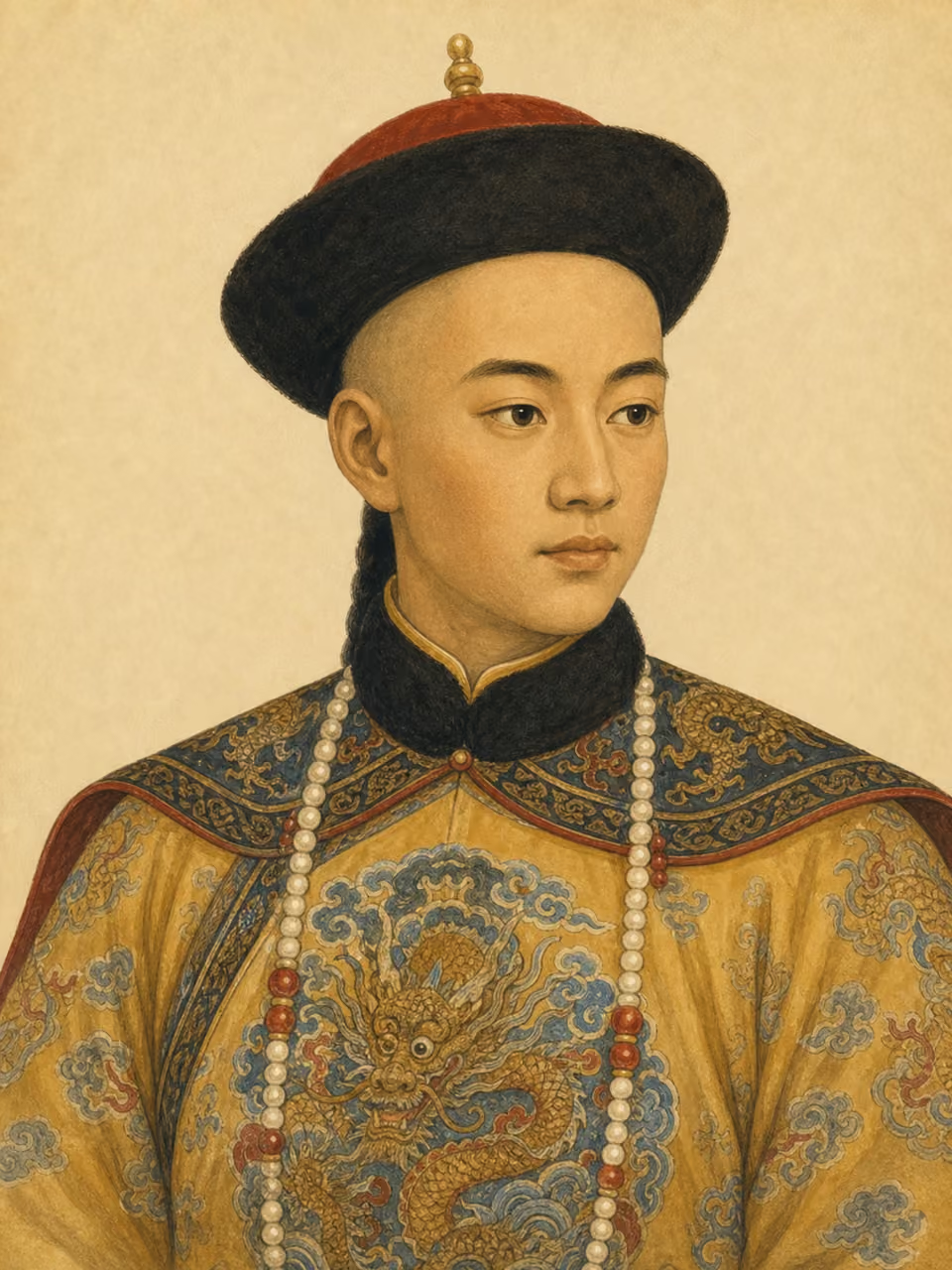
Shunzhi Emperor

Portrait: AI-generated imagined likeness

Shunzhi Emperor

Monarch

Years
1638–1661
Birthplace
China
Birth polity
Later Jin
Era
Early modern
Field
Politics
Occupations
Monarch

After entering the Qing Dynasty, the emperor began to rule with Beijing as his capital. He is an important figure in understanding the Ming-Qing change and the Manchu dynasty's domination of China. He is also a monarch who reflects the early stages of the Qing Dynasty's institutionalization of imperial rule.

View in catalog

Historical context

Places

  • Mukden

    Birth

  • Beijing

    Work

Events

  • Qing entry into Beijing

    1644

    Political event · Subject

Origins

Origins map
Birth country
Birth country
China

Map: Natural Earth (PD)

Biography

Early life

He was born into the Manchuria royal family that moved from the Later Jin to the Qing Dynasty, and ascended the throne at a young age. Actual politics was supported by the regent Dorgon and others, who took advantage of the collapse of the Ming Dynasty to enter Beijing.

Achievements

In 1644, the Qing Dynasty entered Beijing, laying the foundations for domination of mainland China. During the era of Emperor Shunzhi, the aim was to stabilize Manchuria rule while inheriting the Ming system.

Character & anecdotes

Because it was short-lived, it symbolizes the early stages of the Qing Dynasty's establishment as a Chinese dynasty rather than individual rule. The process by which the conquering dynasty of Manchuria incorporated the Han Chinese bureaucracy is important.

Historical Impact

If you study Emperor Shunzhi, you will realize that the Ming-Qing transition was not just a dynastic change, but a major change that involved civil war, northern forces, and the succession of the bureaucracy. You can understand Qing Dynasty China from both sides of conquest and rule. We can also see the violence of dynastic change and the process of integration.