
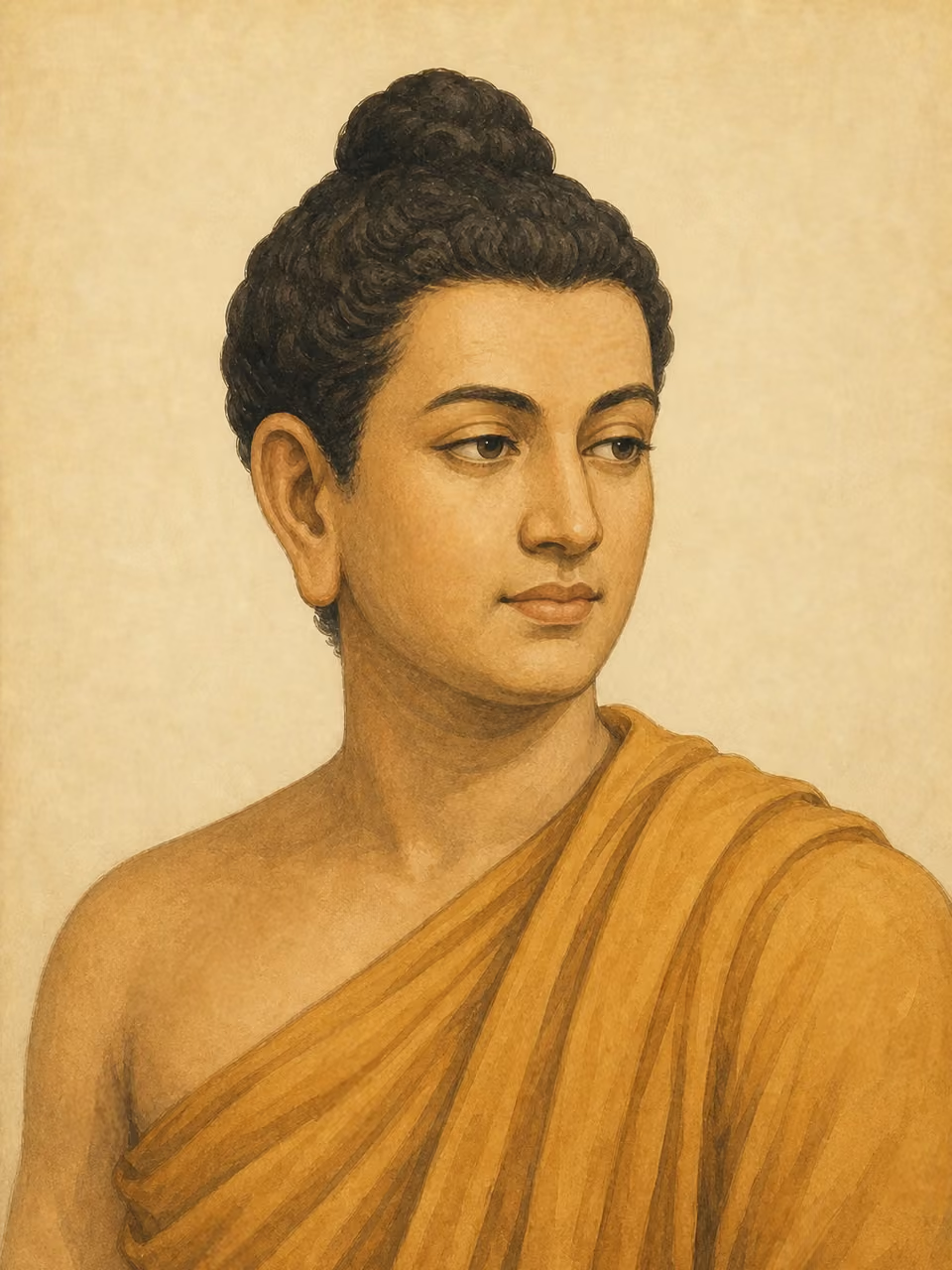
Siddhartha Gautama

Portrait: AI-generated imagined likeness

Siddhartha Gautama

Religious leader · Spiritual teacher

Years
c. 563 BC–c. 483 BC
Birthplace
Nepal
Birth polity
Shakya republic
Era
Ancient
Field
Religion
Occupations
Religious leader · Spiritual teacher

Later tradition remembers Siddhartha Gautama leaving a protected life after confronting aging, sickness, and death, then entering a long search for release from suffering. After awakening, he spent years teaching on the road, turning insight into a disciplined path that others could practice within a growing community.

View in catalog

Historical context

Places

  • Lumbini

    Birth

  • Bodh Gaya

    Work

Events

  • Buddhahood

    Cultural event · Subject

Origins

Origins map
Birth countryAssociated countries
Birth country
Nepal
Associated countries
India

Map: Natural Earth (PD)

Biography

Early life

Traditional biographies place Siddhartha Gautama among the Shakya and describe a privileged early life near Lumbini before he renounced household status in search of a way beyond aging, sickness, and death. The details are shaped by later religious memory as much as by recoverable history.

Achievements

After experimenting with severe ascetic practice, he was believed to have attained awakening at Bodh Gaya. He then taught frameworks later known as the Four Noble Truths and the Eightfold Path, offering both a diagnosis of suffering and a disciplined path beyond it. The community that formed around his teaching became the basis of the Buddhist sangha.

Character & anecdotes

Tradition places his first sermon at Sarnath and his death at Kushinagar after decades of itinerant teaching. Chronology remains debated, which is why even widely repeated dates are treated cautiously by historians.

Historical Impact

Teachings associated with Gautama spread through monasteries, scriptures, debate, ritual, and art from South Asia into Sri Lanka, Central and East Asia, Southeast Asia, and Tibet. In the process they reshaped ideas of kingship, ethics, merit, compassion, and the nature of liberation, making Buddhism one of the major civilizational traditions of Eurasia.

Notes

The dates here follow a long-used conventional chronology but are marked approximate because scholarly reconstructions vary.