
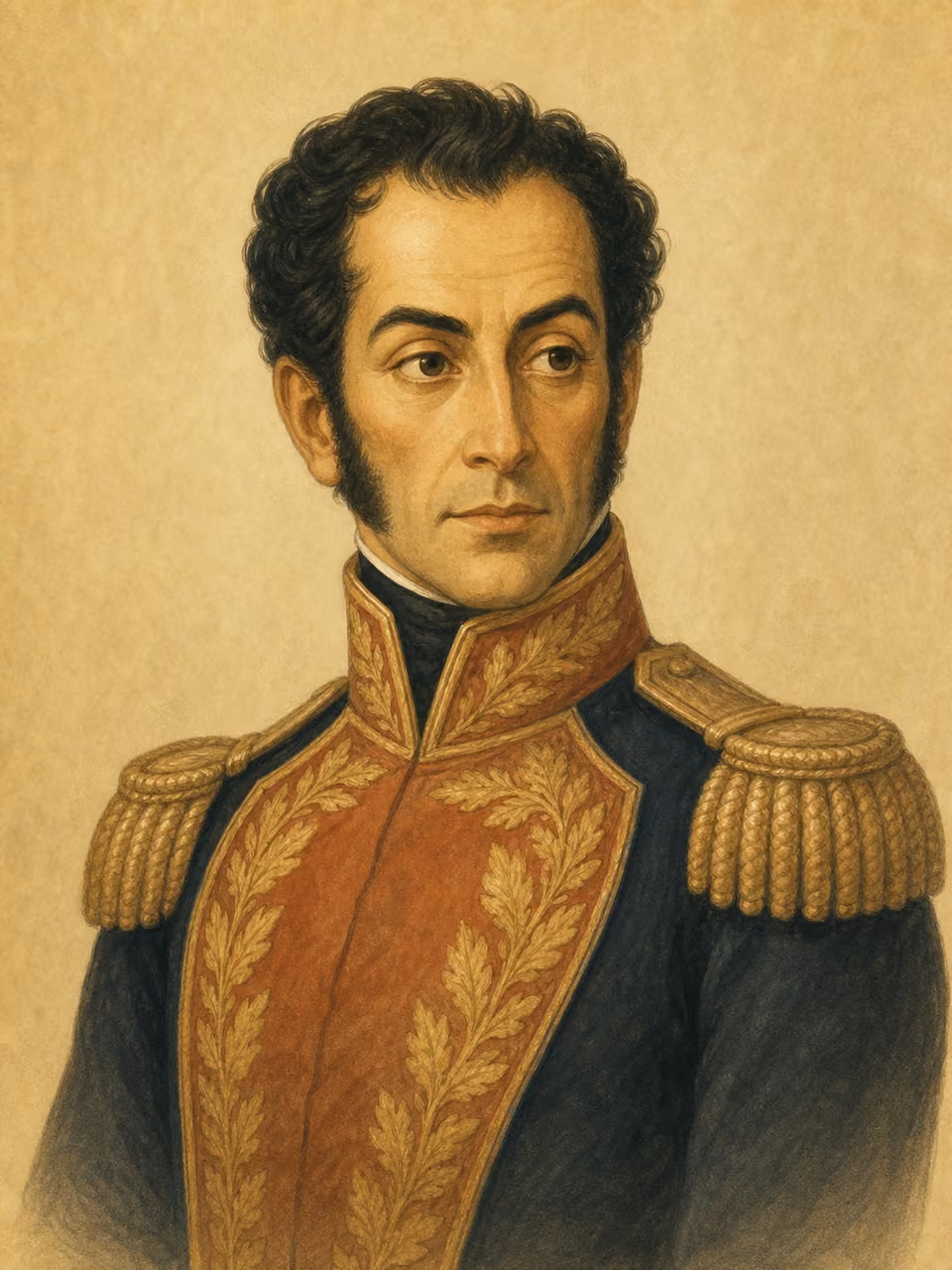
Simon Bolivar

Portrait: AI-generated imagined likeness

Simon Bolivar

Politician · Military leader

Years
1783–1830
Birthplace
Venezuela
Birth polity
Captaincy General of Venezuela
Era
Modern
Field
Politics
Occupations
Politician · Military leader

Through exile, return, and punishing campaigns such as the crossing of the Andes, Bolivar turned independence into a military and political project spanning much of northern South America. Yet victory did not end the story: the struggle to hold Gran Colombia together made the Liberator's career just as much about the fragility of state building as about battlefield triumph.

View in catalog

Historical context

Places

  • Caracas

    Birth

Works & achievements

  • Cartagena Manifesto

    1812

    Essay

Events

  • Venezuelan War of Independence

    1810–1823

    War · Commander

  • Battle of Boyaca

    1819

    Battle · Commander

Origins

Origins map
Birth country
Birth country
Venezuela

Map: Natural Earth (PD)

Biography

Early life

Simon Bolivar was born in 1783 in Caracas into a wealthy creole family. Orphaned at a young age, he still received a broad education and was deeply shaped by Enlightenment thought and by time spent in Europe during the age of revolution.

Achievements

Bolivar became one of the central leaders of the independence struggles in Venezuela, New Granada, Ecuador, and Peru, helping bring Spanish rule to an end across a vast region. He also pursued the political project of Gran Colombia, which made him important not only as a commander but as a founder of new republican states.

Character & anecdotes

His life is marked by dramatic reversals, exile, and difficult campaigns such as the crossing of the Andes. After military victory, he struggled to hold together the states he had helped free, and his late years were colored by frustration at fragmentation and political conflict.

Historical Impact

Bolivar became a foundational symbol of Latin American independence, but his historical force also comes from the unresolved tension between liberation and concentrated authority in his political vision. National memory, revolutionary rhetoric, and regional integration projects continue to invoke him because the problems he faced after independence never disappeared.

Notes

He is commonly remembered in Spanish as El Libertador, the Liberator.