
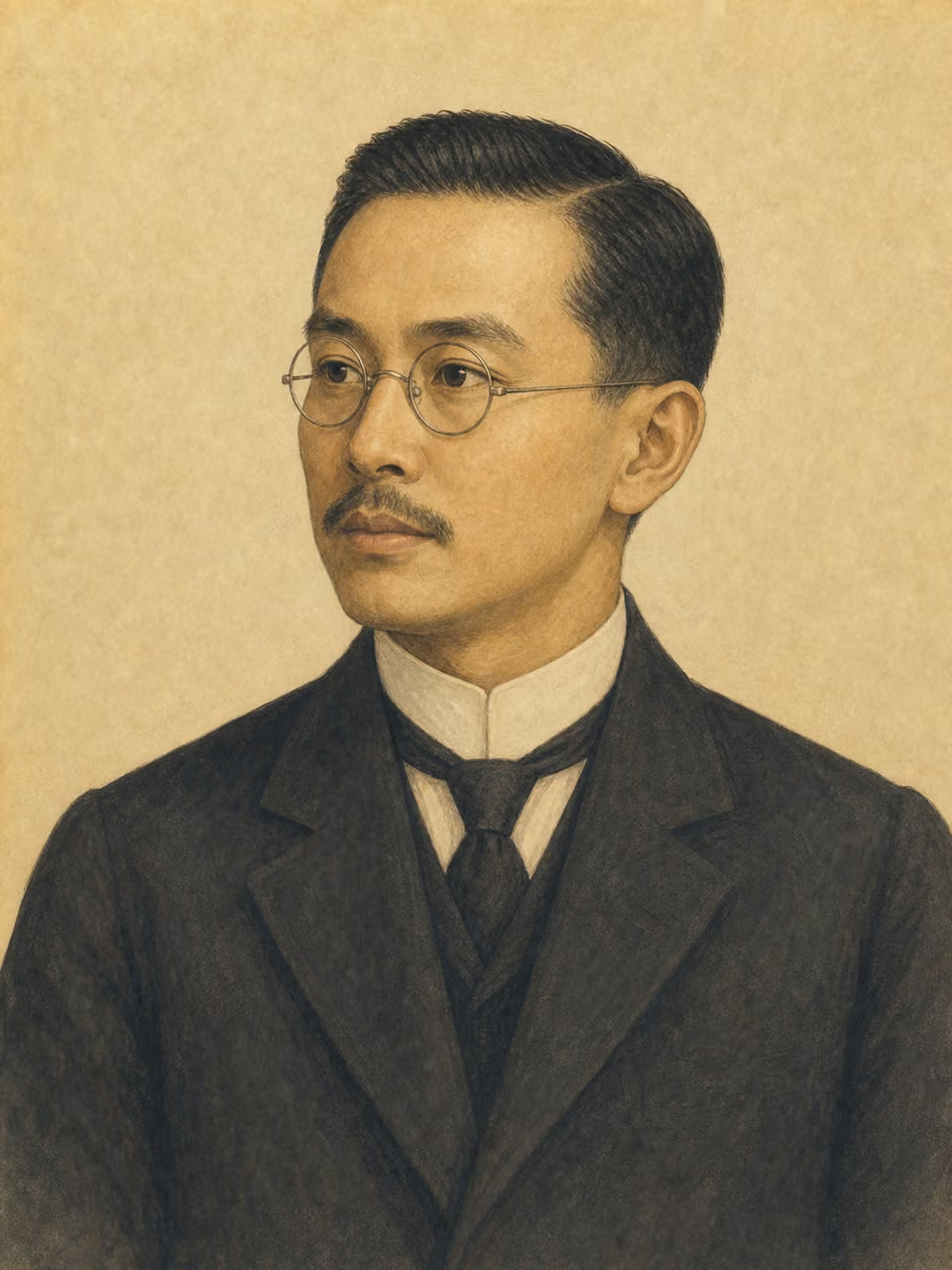
Song Jiaoren

Portrait: AI-generated imagined likeness

Song Jiaoren

Politician · revolutionary

Years
1882–1913
Birthplace
China
Birth polity
Qing dynasty
Era
Modern
Field
Politics
Occupations
Politician · revolutionary

A politician who tried to promote parliamentary politics in China after the Xinhai Revolution. He was involved in organizing the Nationalist Party and aimed for a responsible cabinet system, but was assassinated. He is a person who symbolizes the failure of democratic politics in the early days of the Republic of China.

View in catalog

Historical context

Places

  • Taoyuan, Hunan

    Birth

  • Shanghai

    Death

Events

  • Xinhai Revolution

    1911–1912

    Revolution · Participant

  • early Republican Chinese parliamentary politics

    1912–1913

    Political event · Leader

Origins

Origins map
Birth country
Birth country
China

Map: Natural Earth (PD)

Biography

Early life

Born in Konan, he came into contact with modern political thought through studying abroad in Japan. During the period of reform and revolution at the end of the Qing Dynasty, he became one of the young people learning about constitutional politics and nationalism.

Achievements

He participated in the organization of revolutionary factions, and after the Xinhai Revolution, he tried to develop the Kuomintang as an electoral party. He envisioned a cabinet government with a parliamentary majority to counter Yuan Shikai's concentration of power.

Character & anecdotes

Song Jiaoren was shot at Shanghai Railway Station in 1913 and died shortly after. The incident strengthened distrust in Yuan Shikai's regime and marked a turning point in China's early republic being crushed by military power.

Historical Impact

If you study Song Jiaoren, you will see that the Xinhai Revolution could not create a stable republic simply by overthrowing the emperor. Issues of elections, political parties, warlords, and central power have existed since the early days of the Republic of China. He is an important figure in thinking about democratic politics in modern China.