
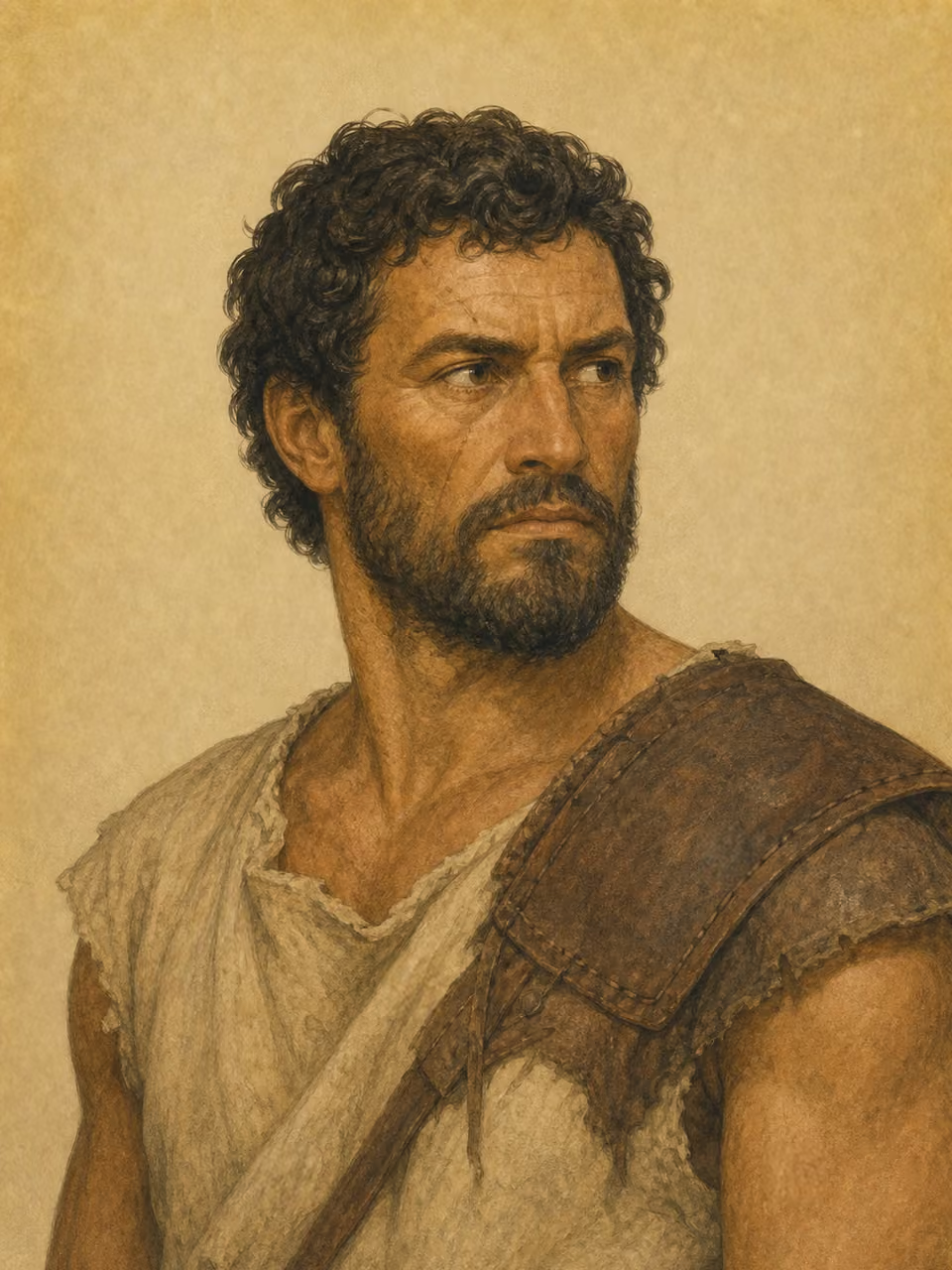
Spartacus

Portrait: AI-generated imagined likeness

Spartacus

revolutionary · Military leader

Years
c. 103 BC–c. 71 BC
Birthplace
Bulgaria
Birth polity
Thrace
Era
Ancient
Field
Social reform
Occupations
revolutionary · Military leader

A gladiator at the end of the Roman Republic who led the Third Slave War. It was strongly remembered by future generations as a symbol of slave revolt. It is important when considering labor, violence, and class order in Roman society.

View in catalog

Historical context

Places

  • Thrace

    Birth

  • Capua

    Work

Events

  • Third Servile War

    73 BC–71 BC

    War · Leader

Origins

Origins map
Birth countryAssociated countries
Birth country
Bulgaria
Associated countries
Italy

Map: Natural Earth (PD)

Biography

Early life

He is said to have come from Thrace, and was captured during the Roman military/slavery system and made into a gladiator. After living a harsh life at a training camp in Capua, he escaped with his friends.

Achievements

Starting in 73 BC, he led a large-scale slave revolt, defeating the Roman army several times. Although they were ultimately defeated by Crassus and others, the revolt had a huge impact on the Roman ruling class.

Character & anecdotes

It is not clear from historical sources whether Spartacus' purpose was to free slaves or to escape to their homeland. It is necessary to separate the idealized hero images of later generations from the limitations of ancient historical materials.

Historical Impact

When we study Spartacus, we learn that Rome's prosperity was supported by slave labor and wars of conquest. Since modern times, the memory of the rebellion has been used as a symbol of movements seeking freedom and liberation, and has become a link between ancient history and modern thought.