
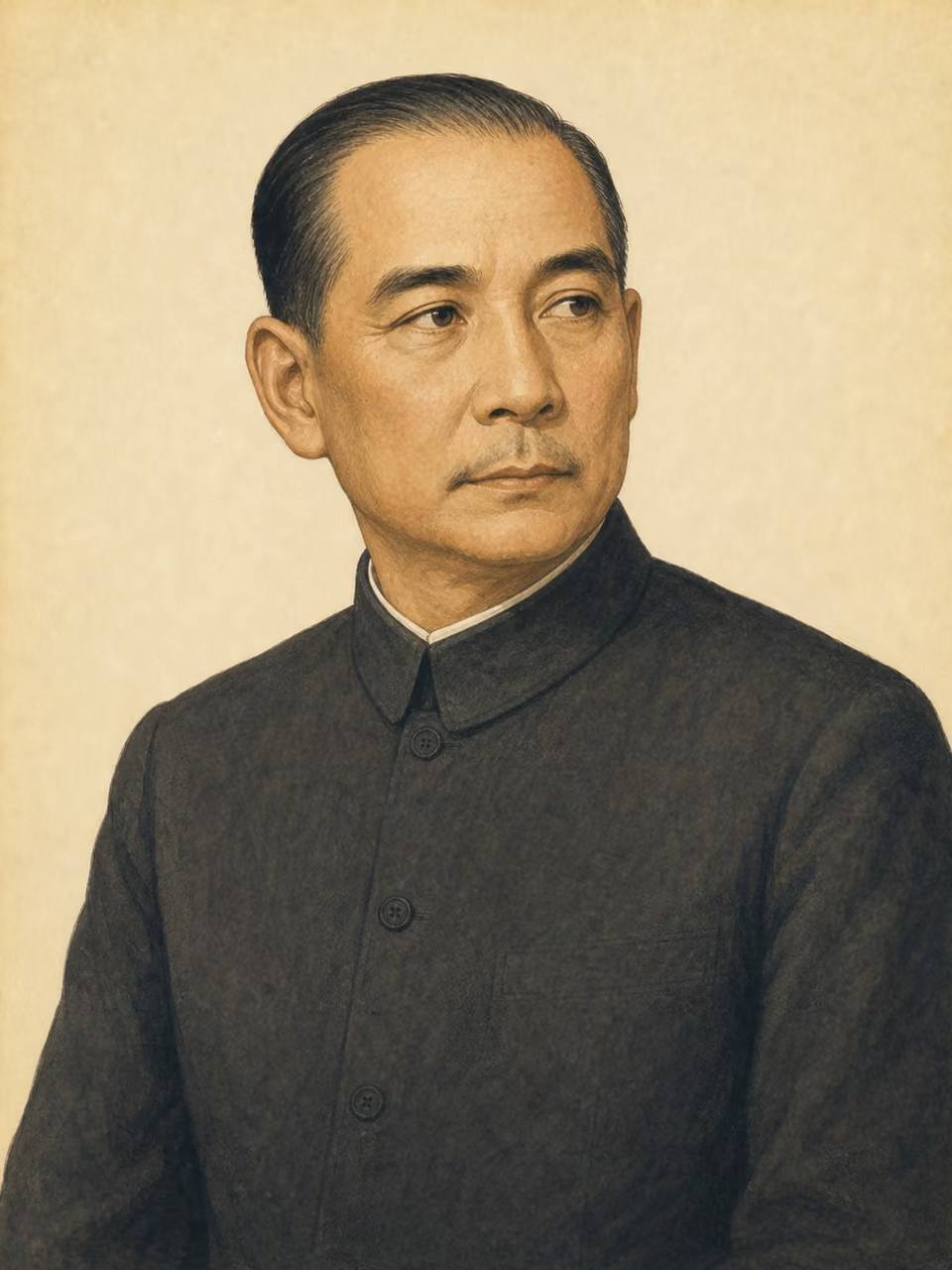
Sun Yat-sen

Portrait: AI-generated imagined likeness

Sun Yat-sen

Politician · revolutionary · Physician · Philosopher

Years
1866–1925
Birthplace
China
Birth polity
Qing dynasty
Era
Modern
Field
Politics
Occupations
Politician · revolutionary · Physician · Philosopher

Chinese revolutionary and politician. It advocated the principle of the Three Peoples and became a symbol of the Xinhai Revolution and the establishment of the Republic of China. He is a person who thinks about the collapse of the Qing Dynasty and the formation of a modern Chinese nation.

View in catalog

Historical context

Places

  • Nanjing

    Work

Works & achievements

  • Three Principles of the People

    1905–1924

    Theory

Events

  • Xinhai Revolution

    1911

    Revolution · Leader

Origins

Origins map
Birth country
Birth country
China

Map: Natural Earth (PD)

Biography

Early life

Born in Guangdong province, he was educated in Hawaii and Hong Kong, and also studied Western medicine. In China at the end of the Qing Dynasty, a revolutionary movement was spreading against the backdrop of pressure from the great powers and the failure of domestic reforms.

Achievements

He organized the Kochukai and the China Alliance, and advocated the principle of the three peoples: ethnicity, civil rights, and people's livelihood. After the Xinhai Revolution in 1911, he became the provisional president of the Republic of China and demonstrated the ideals of republican government.

Character & anecdotes

Sun Yat-sen spent much of his life in exile and fundraising, and was not always present at the revolutionary scene. Even so, he became a symbolic leader who united overseas Chinese and revolutionaries from all over the country.

Historical Impact

If you study Sun Yat-sen, you will see that China's modernization proceeded not only through dynastic reform, but also through revolution, republicanism, nationalism, and social reform initiatives. He is a fundamental figure in the Chinese Nationalist Party and modern Chinese history. The distance between revolutionary ideology and nation-building can also be considered.