
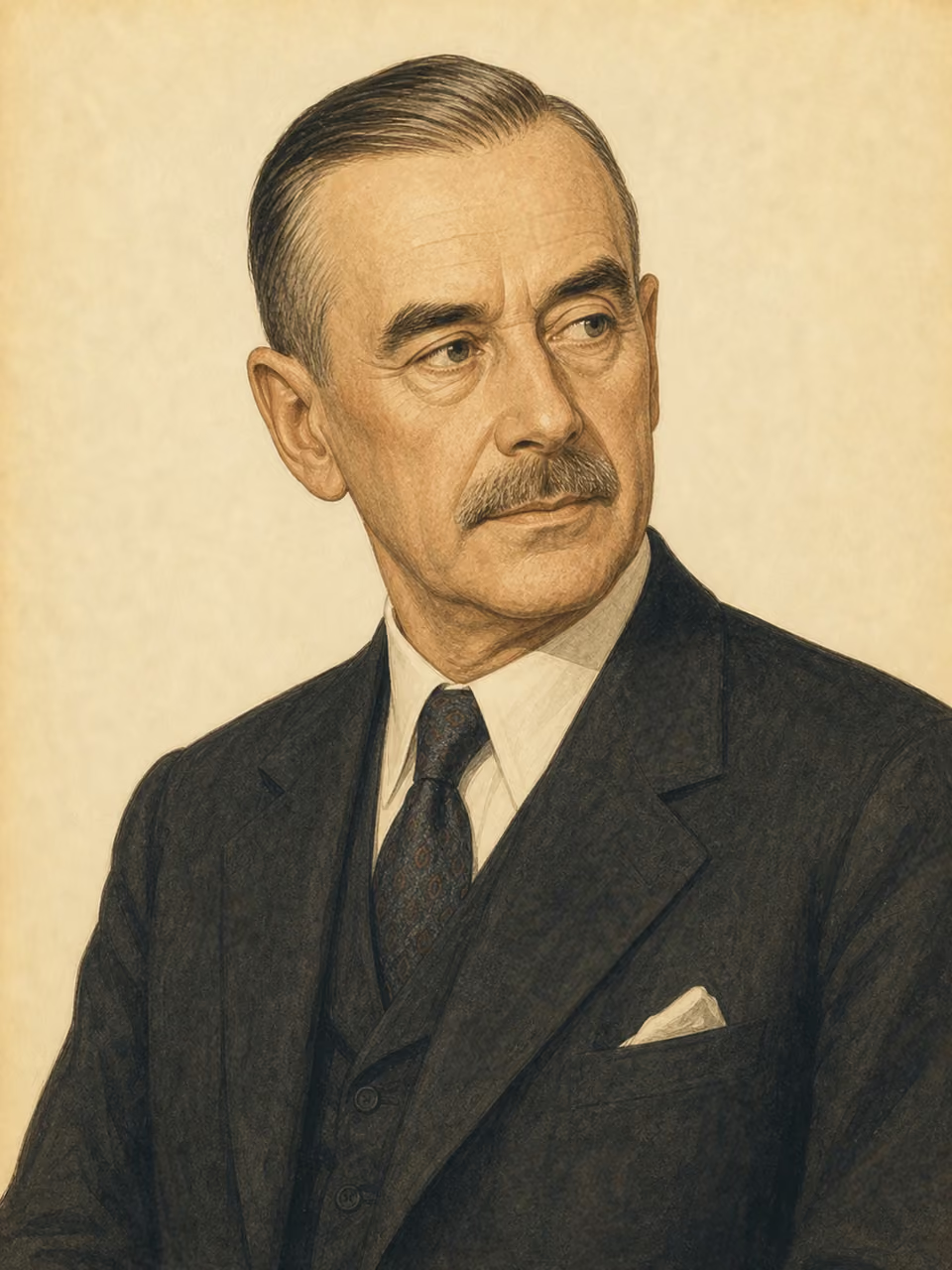
Thomas Mann

Portrait: AI-generated imagined likeness

Thomas Mann

Writer · Novelist · Poet

Years
1875–1955
Birthplace
Germany
Birth polity
German Empire
Era
Modern
Field
Literature
Occupations
Writer · Novelist · Poet

German writer. He portrayed the crisis of modern civil society and the spirit in works such as ``The Buddenbrokes'' and ``The Magic Mountain.'' He opposed Nazism and went into exile. He is a person who thinks about 20th century literature.

View in catalog

Historical context

Places

  • Munich

    Work

Works & achievements

  • Buddenbrooks

    1901

    Book

  • The Magic Mountain

    1924

    Book

Events

  • Anti-Nazi exile literature

    1933–1945

    Movement · Participant

Origins

Origins map
Birth countryAssociated countries
Birth country
Germany
Associated countries
United States

Map: Natural Earth (PD)

Biography

Early life

Born into a merchant family in Lübeck, he experienced the German Empire, the Weimar Republic, and the Nazi era. Changes in modern German society formed the backdrop for his novels.

Achievements

His novels depict family, illness, art, politics, and the crisis of European civilization, and won the Nobel Prize for Literature in 1929. After the Nazi regime was established, he defected and continued to make anti-Nazi messages.

Character & anecdotes

Thomas Mann transformed from a conservative cultural figure into an exiled intellectual who championed democracy and anti-fascism. He is also a person who thinks about the political responsibility of literary figures.

Historical Impact

When you study Thomas Mann, you realize that 20th century European literature was deeply connected not only to individual psychology, but also to war, fascism, exile, and criticism of civilization. He is an important figure in modern German culture.