
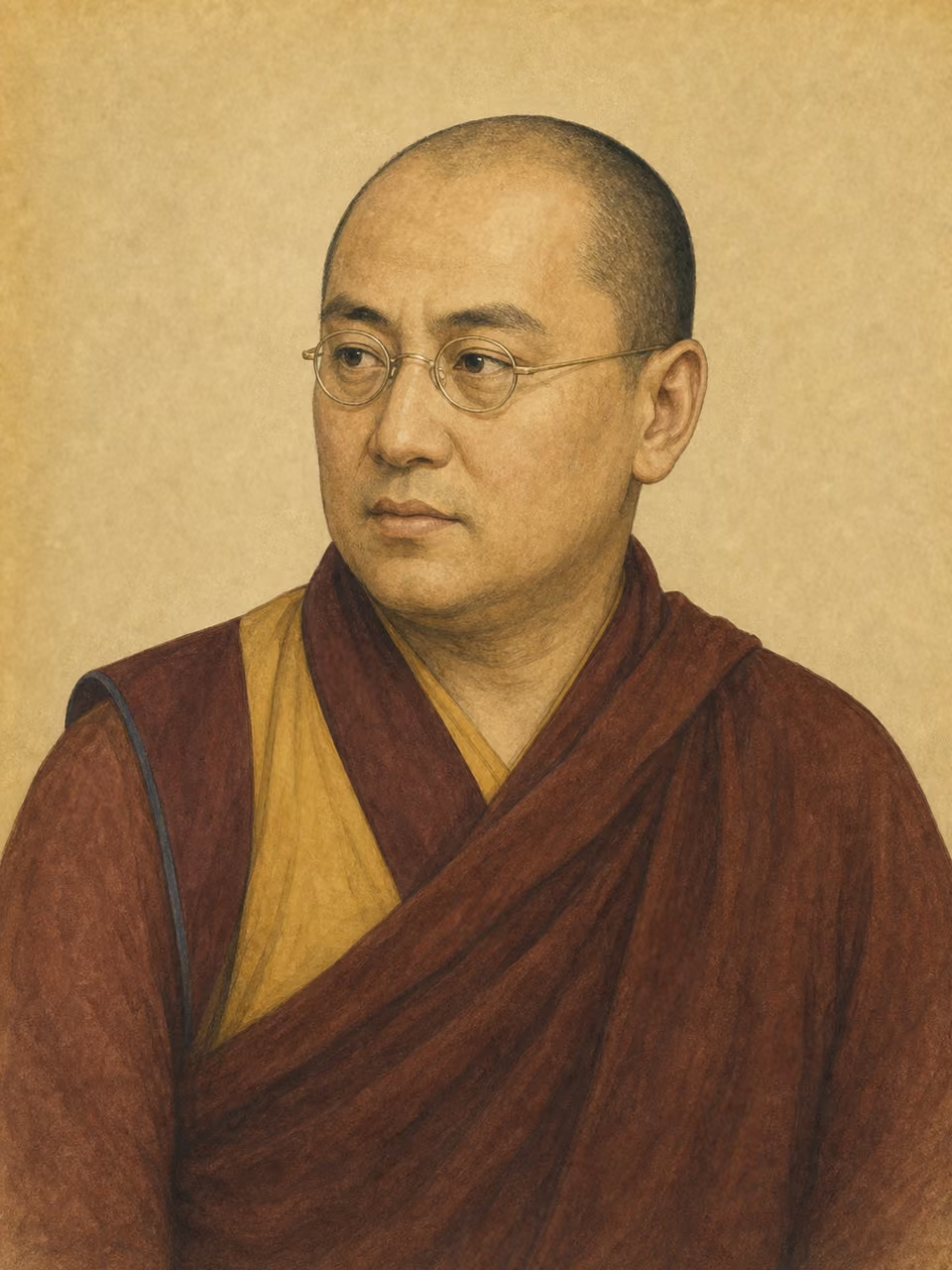
Thubten Gyatso

Portrait: AI-generated imagined likeness

Thubten Gyatso

Religious leader · Politician · Writer

Years
1876–1933
Birthplace
China
Birth polity
Tibet under Qing rule
Era
Modern
Field
Religion
Occupations
Religious leader · Politician · Writer

Tibetan religious and political leader and the 13th Dalai Lama. During the period of turmoil from the end of the Qing Dynasty to the beginning of the Republic of China, he tried to protect Tibet's independence and actively worked on reforming the military system and administration.

View in catalog

Historical context

Places

  • Lhasa

    Work

  • Darjeeling

    Exile

Events

  • British expedition to Tibet

    1904

    Expedition · Subject

  • Tibetan modernization reforms

    1913–1933

    Political event · Leader

Origins

Origins map
Birth countryAssociated countries
Birth country
China
Associated countries
India

Map: Natural Earth (PD)

Biography

Early life

Born in Tibet, which was under the influence of the Qing Dynasty, he was recognized as the Dalai Lama at an early age. He was educated within the religious system of Lhasa, and as he grew up, he was placed in a position where he was required to make political decisions.

Achievements

Under pressure from the British expedition to Tibet and the Qing Dynasty, he also experienced exile in India. After returning to Japan, he made efforts to reform the military system, tax system, education, and diplomacy, bringing the country closer to a modern state.

Character & anecdotes

During his time, Tibet was a region where the interests of the Qing Dynasty, Britain, Russia, and the Republic of China intersected. Although he was a religious leader, he was also a politician who read international politics and took action.

Historical Impact

When we study the 13th Dalai Lama, we understand that the transformation of modern Asia extended not only to mainland China but also to Tibet and the Himalayas. Although his reforms were not fully institutionalized, they became the premise for thinking about later Tibetan politics. It is a gateway to understanding the history of a region caught between imperialism and national self-determination.