
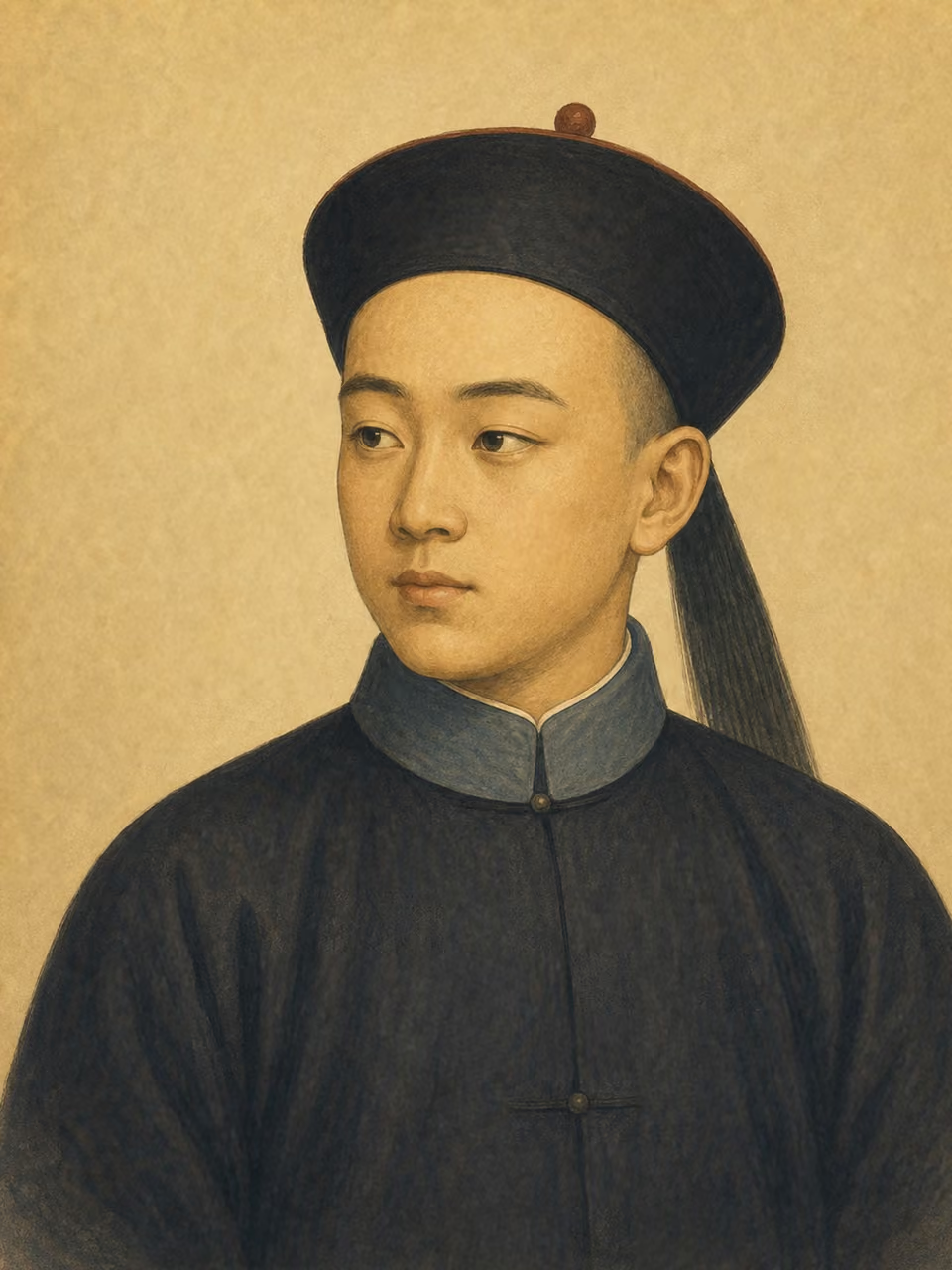
Tongzhi Emperor

Portrait: AI-generated imagined likeness

Tongzhi Emperor

Emperor · Monarch

Years
1856–1875
Birthplace
China
Birth polity
Qing dynasty
Era
Modern
Field
Politics
Occupations
Emperor · Monarch

He was the emperor of the Qing Dynasty and ascended the throne at a young age. Real power was held by Empress Dowager Cixi and others, and the reconstruction after the Taiping Rebellion and the Western affairs movement progressed. He was the emperor at the center of the period called Tongzhi Zhongzheng, and was the gateway to thinking about politics at the end of the Qing Dynasty.

View in catalog

Historical context

Places

  • Beijing

    Birth

  • Forbidden City

    Work

Events

  • Tongzhi Restoration

    1862–1874

    Political event · Subject

  • Self-Strengthening Movement

    1861–1895

    Movement · Context

Origins

Origins map
Birth country
Birth country
China

Map: Natural Earth (PD)

Biography

Early life

He was born in the Beijing court as the son of Emperor Xianfeng. Since he ascended the throne in 1861 at a young age, politics was controlled by the regent, Empress Dowager Cixi, Imperial Prince Kyo, and powerful local bureaucrats.

Achievements

During his reign, after the Taiping Rebellion was suppressed, order was restored to the Qing Dynasty. Zeng Guofan, Li Hongzhang, and others attempted to modernize the military and industry, and the Western affairs movement gained momentum.

Character & anecdotes

Emperor Tongzhi himself had limited political initiative, but the term Tongzhi Zhongxing, which bears his name, refers to the period when the Qing Dynasty temporarily attempted to rebuild itself. His death at a young age also increased the instability of court politics.

Historical Impact

Studying Emperor Tongzhi reveals that the Qing Dynasty in the late 19th century sought to modernize while facing civil war, pressure from great powers, and the constraints of court politics. More important than the power of the individual emperor was that local bureaucrats and the empress dowager government supported the nation. This provides clues to consider the limits of late Qing reforms.