
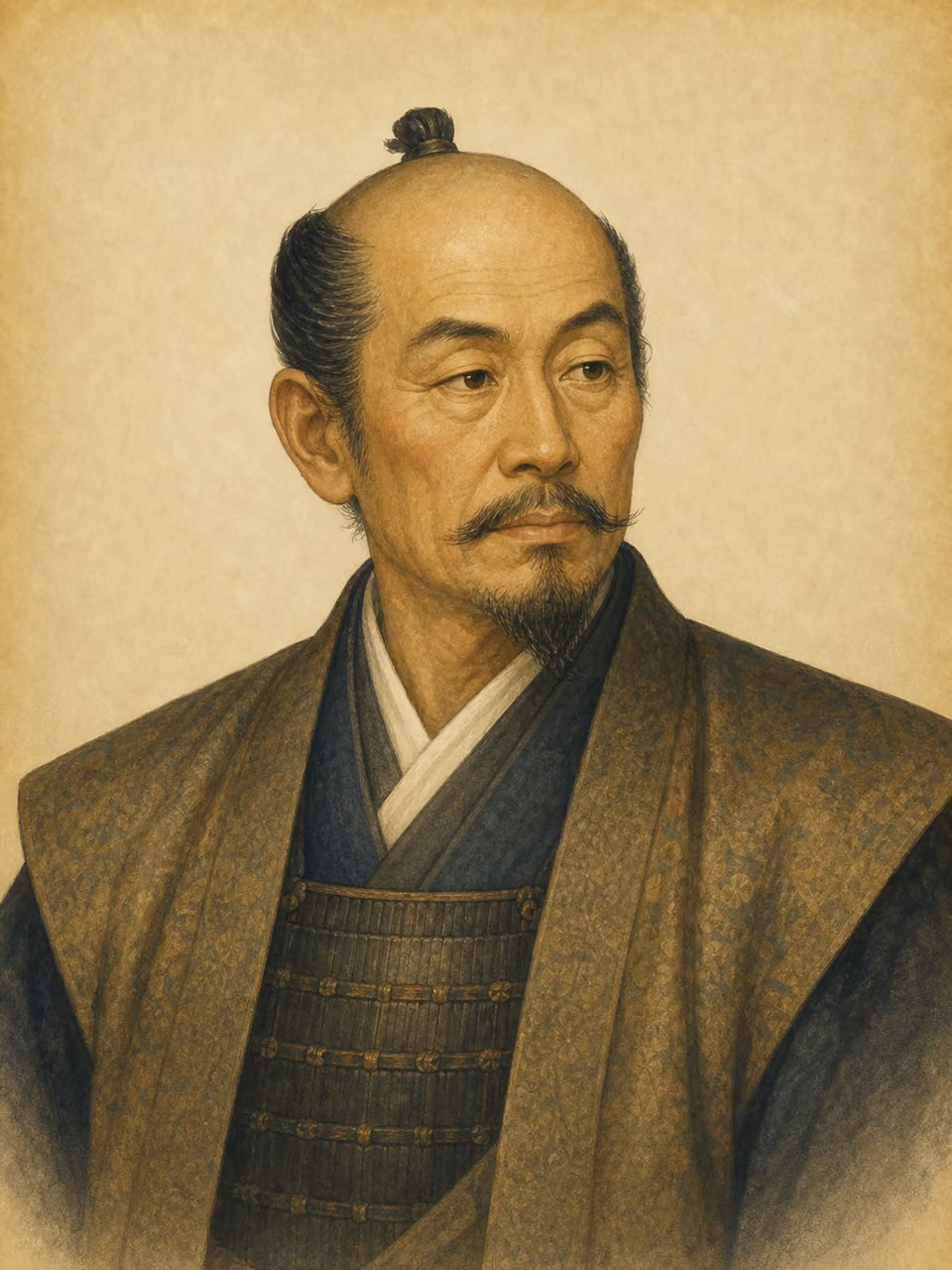
Toyotomi Hideyoshi

Portrait: AI-generated imagined likeness

Toyotomi Hideyoshi

Daimyo · Military commander · Politician

Years
c. 1537–1598
Birthplace
Japan
Birth polity
Owari Province
Era
Early modern
Field
Politics
Occupations
Daimyo · Military commander · Politician

A military commander and politician who promoted national unification in Japan during the Warring States period. He assumed power as the successor of Oda Nobunaga and carried out land surveys and sword hunting. He is a figure who represents the social transformation from the medieval period to the early modern period. He was a powerful figure who created the prerequisites for the early modern state.

View in catalog

Historical context

Places

  • Owari Province

    Birth

  • Osaka Castle

    Work

Events

  • Unification of Japan under Hideyoshi

    1582–1590

    Political event · Leader

Origins

Origins map
Birth country
Birth country
Japan

Map: Natural Earth (PD)

Biography

Early life

He is said to have come from a lowly position in Owari, and rose to prominence by serving Nobunaga Oda. He was distinguished not only by his military talent, but also by his ability to organize, build castles, and control his vassals.

Achievements

After the Battle of Yamazaki, he seized power and promoted national unification by attacking Shikoku, Kyushu, and Odawara. He proceeded with the reorganization of land control and class order through Taiko kenchi and sword hunting.

Character & anecdotes

The story of Hideyoshi's rise was told as a symbol of his success in life, but in his later years he fought a large-scale foreign war, dispatching troops to Korea. We need to look at both sides: glory and power expansion.

Historical Impact

If you study Toyotomi Hideyoshi, you will see that the unification of the Sengoku period was supported not only by military victories, but also by land surveys, separation of soldiers and farmers, and the development of castles and transportation. You can also understand the premise of the establishment of the Edo Shogunate. Social reorganization after unification also appears concrete.