
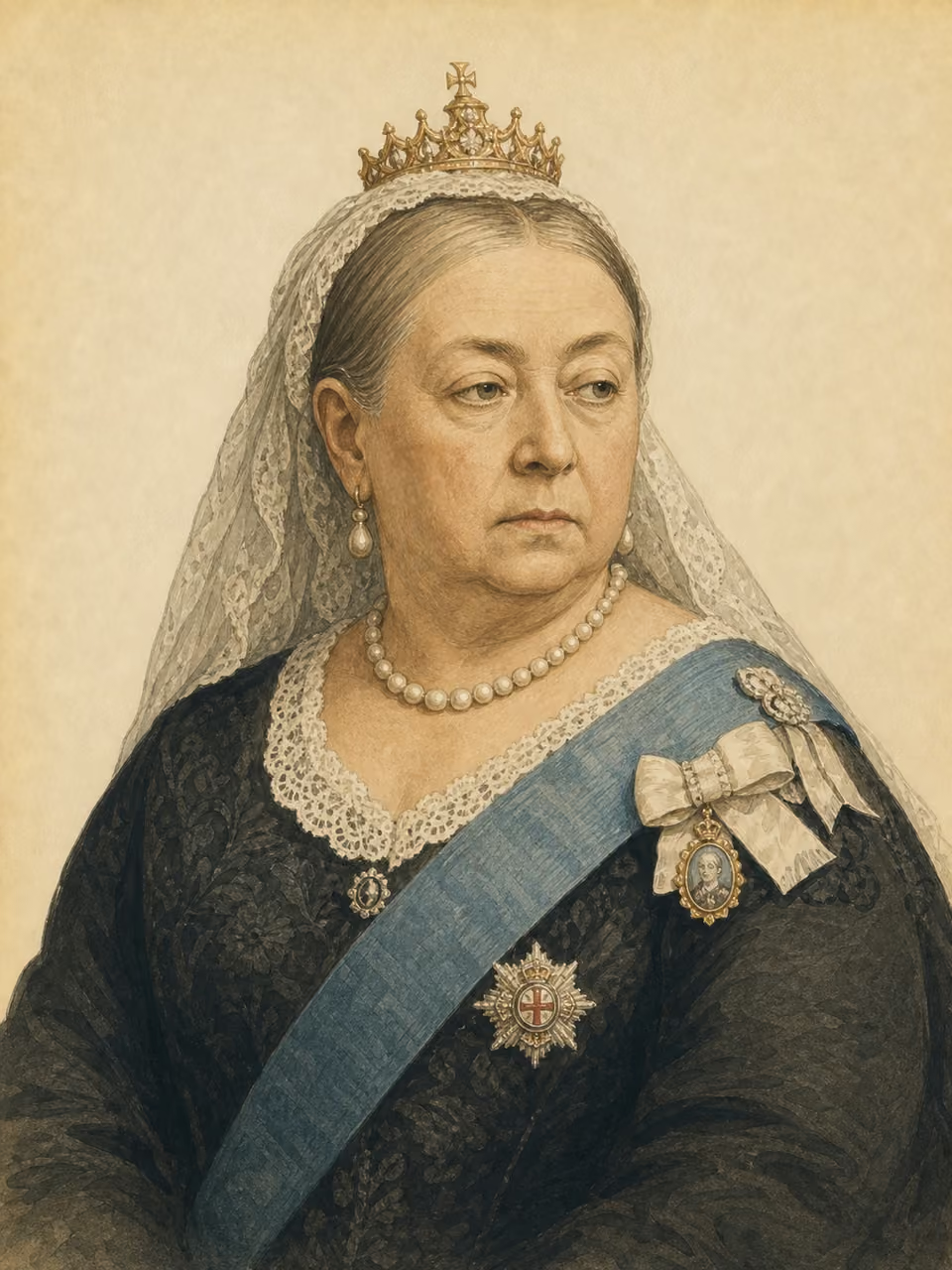
Victoria

Portrait: AI-generated imagined likeness

Victoria

Monarch

Years
1819–1901
Birthplace
United Kingdom
Birth polity
United Kingdom of Great Britain and Ireland
Era
Modern
Field
Politics
Occupations
Monarch

Queen of England. His long reign was known as the Victorian era, and symbolized the era of prosperity and expansion of the British Empire following the Industrial Revolution. He is a person who thinks about the nineteenth century world and imperialism.

View in catalog

Historical context

Places

  • London

    Work

Events

  • Victorian era

    1837–1901

    Political event · Subject

  • Assumption of the title Empress of India

    1876

    Political event · Subject

Origins

Origins map
Birth country
Birth country
United Kingdom

Map: Natural Earth (PD)

Biography

Early life

Born into the Hanoverian royal family, he ascended the throne in 1837 at a young age. In England, parliamentary politics and industrialization progressed, and the royal power had a stronger symbolic role than actual political power.

Achievements

During his reign, Britain expanded its industrial, naval, and colonial powers. In 1876, she received the title Empress of India, reinforcing the image of the royal family as a symbol of the empire.

Character & anecdotes

Queen Victoria's name was also associated with the image of a moral family and middle-class culture. On the other hand, the prosperity of that era was inseparable from colonial rule and labor issues.

Historical Impact

Studying Queen Victoria shows that nineteenth-century Britain achieved global influence through a combination of parliamentary politics, industrial capitalism, imperial rule, and royal symbolism. He is a person who thinks about modern empires. Royal and imperial symbolism may also be considered.