
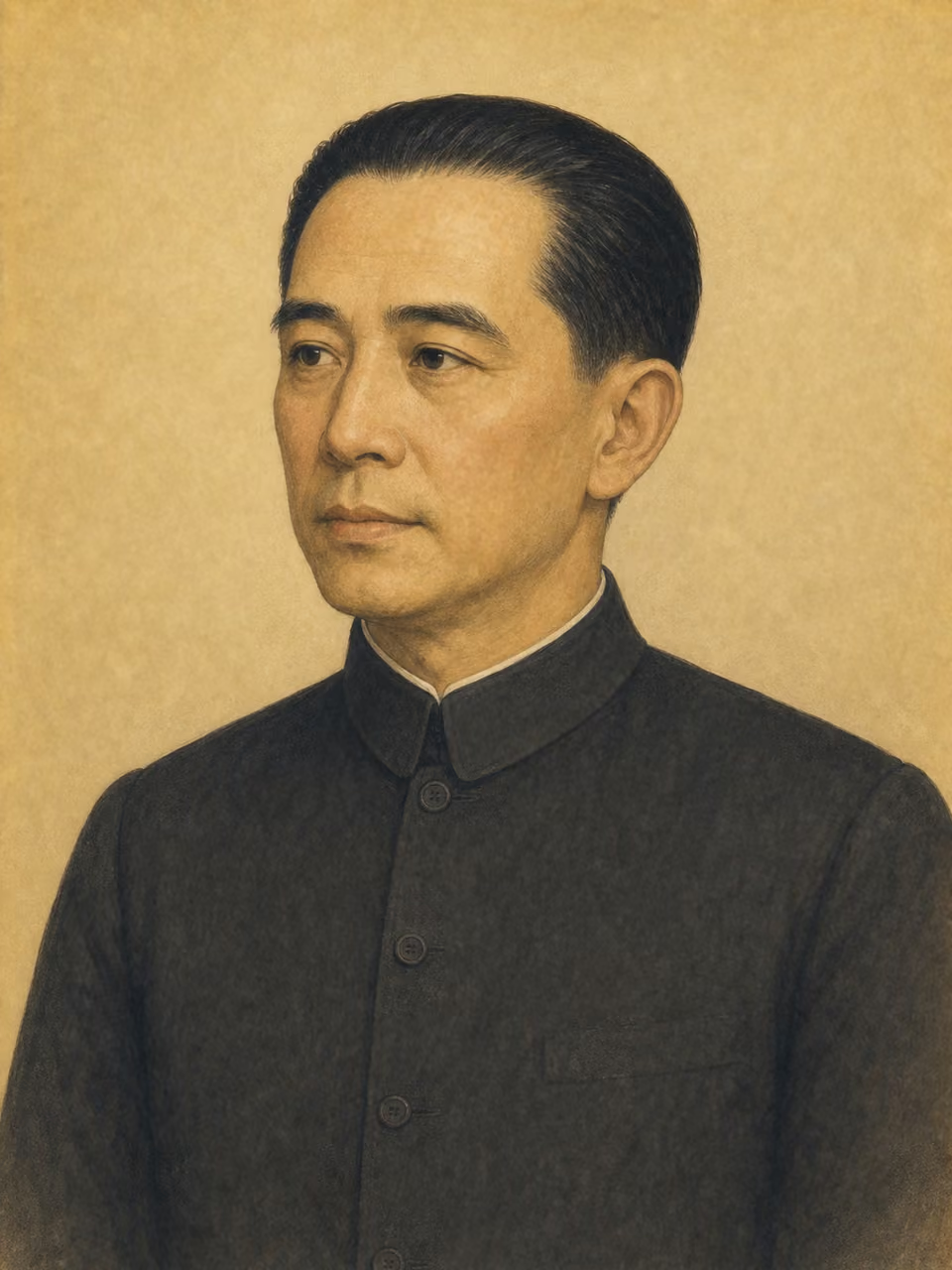
Wang Jingwei

Portrait: AI-generated imagined likeness

Wang Jingwei

Politician · revolutionary · Writer

Years
1883–1944
Birthplace
China
Birth polity
Qing dynasty
Era
Modern
Field
Politics
Occupations
Politician · revolutionary · Writer

A Chinese politician who progressed from being a revolutionary during the Xinhai Revolution to becoming a leader of the Kuomintang Party. During the Sino-Japanese War, he led a pro-Japanese government in Nanjing, and his reputation was highly divided. He is an important figure who shows the twists in modern Chinese history.

View in catalog

Historical context

Places

  • Sanshui

    Birth

  • Nanjing

    Work

Events

  • Xinhai Revolution

    1911

    Revolution · Participant

  • Wang Jingwei regime

    1940–1944

    Political event · Leader

Origins

Origins map
Birth countryAssociated countries
Birth country
China
Associated countries
Japan

Map: Natural Earth (PD)

Biography

Early life

Born in Guangdong at the end of the Qing Dynasty, he became close to revolutionaries through studying in Japan. He joined Sun Yat-sen's League and became well-known in the movement to overthrow the Qing Dynasty.

Achievements

He held an important position within the Kuomintang and was involved in the struggle for power within the party after Sun Yat-sen's death. During the Sino-Japanese War, he broke away from the Chiang Kai-shek government in Chongqing and established a government in Nanjing that received support from Japan.

Character & anecdotes

When he was young, Wang Zhaoming was captured in a plot to assassinate important figures in the Qing Dynasty and was hailed as a revolutionary. The difference between his participation in the pro-Japanese government in later years is large, and this is a reason for strong controversy in modern Chinese history.

Historical Impact

Studying Wang Zhaoming reveals the complexity of how modern Chinese politicians changed positions during revolution, sectarian conflict, the war against Japan, and occupation. His government was tied to Japan's occupation policy, and after the war he was harshly criticized as a collaborator. This is food for thinking about the tension between nationalism and realpolitik.