
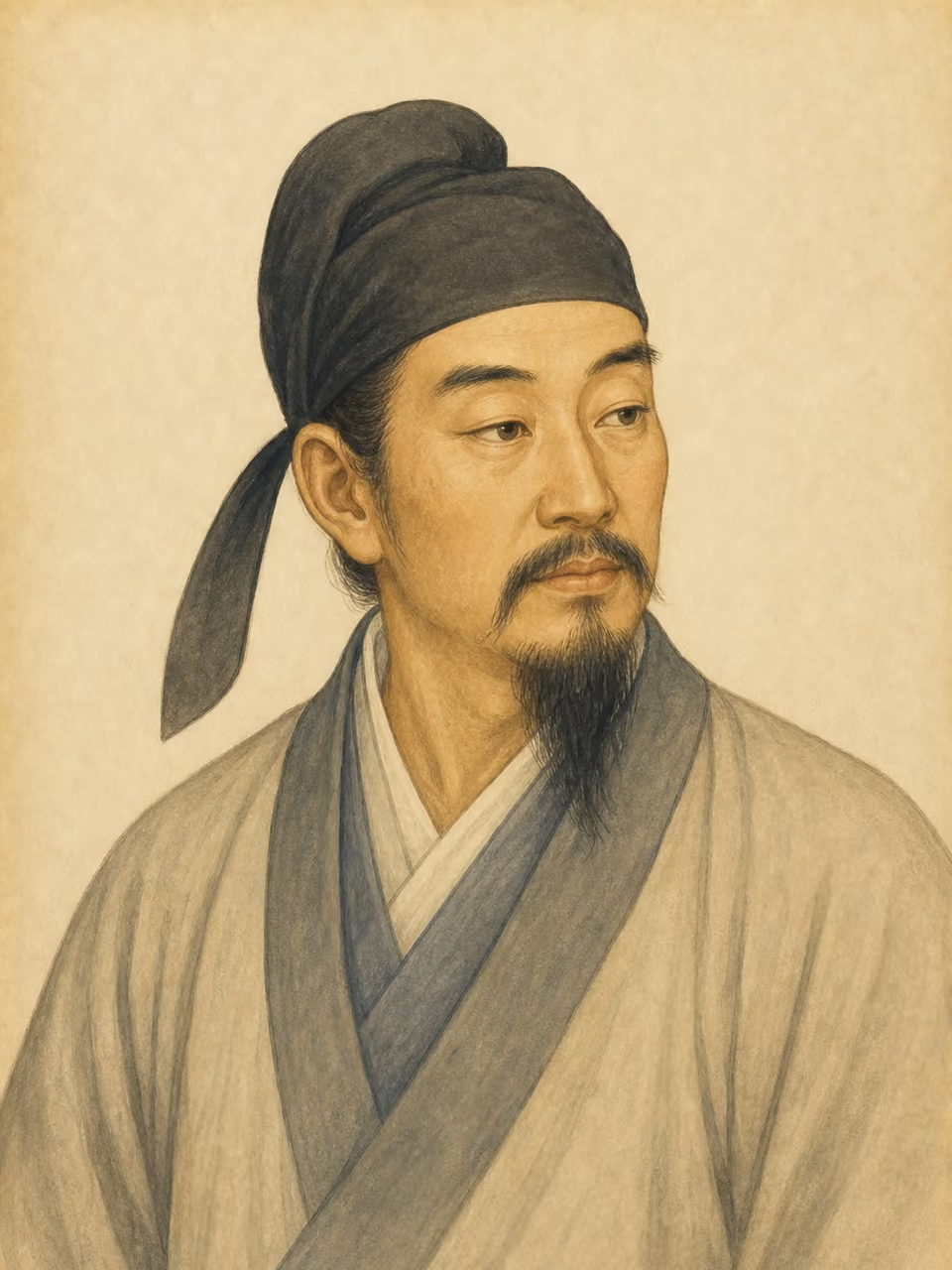
Wang Wei

Portrait: AI-generated imagined likeness

Wang Wei

Poet · Painter · Politician

Years
c. 699–c. 759
Birthplace
China
Birth polity
Tang dynasty
Era
Medieval
Field
Literature
Occupations
Poet · Painter · Politician

A Tang Dynasty poet, painter, and bureaucrat known for his natural poetry and landscape expressions. It represented the sophistication of flourishing Tang culture and showed a world where poetry, painting, and Buddhist sensibilities intersected. It is important in the history of East Asian literature.

View in catalog

Historical context

Places

  • Puzhou

    Birth

  • Chang'an

    Work

Works & achievements

  • Wang River Collection

    Poem

Origins

Origins map
Birth country
Birth country
China

Map: Natural Earth (PD)

Biography

Early life

Born during the period when Tang culture was at its peak, he became a bureaucrat after passing the imperial examination. While involved in the court culture of Chang'an, he developed a poetic style that found a quiet state in nature.

Achievements

He was highly acclaimed for his poems about landscapes and countryside, and was described by later generations as ``There are pictures within the poems, and poetry within the pictures.'' Wang Wei's poems became a representative example of understanding natural expression in Tang poetry.

Character & anecdotes

Wang Wei was also deeply interested in Buddhism, and the character ``matsume'' is said to have originated from ``Weimakoji.'' Despite experiencing political turmoil, his works express a strong sense of serenity and introspection.

Historical Impact

Studying Wang Wei reveals that Tang culture was a multilayered culture that included not only urban splendor but also nature, seclusion, and religious sensibilities. This will be an entryway to thinking about Chinese poetry and East Asian aesthetics. You can also see a culture where poetry and painting are linked.