
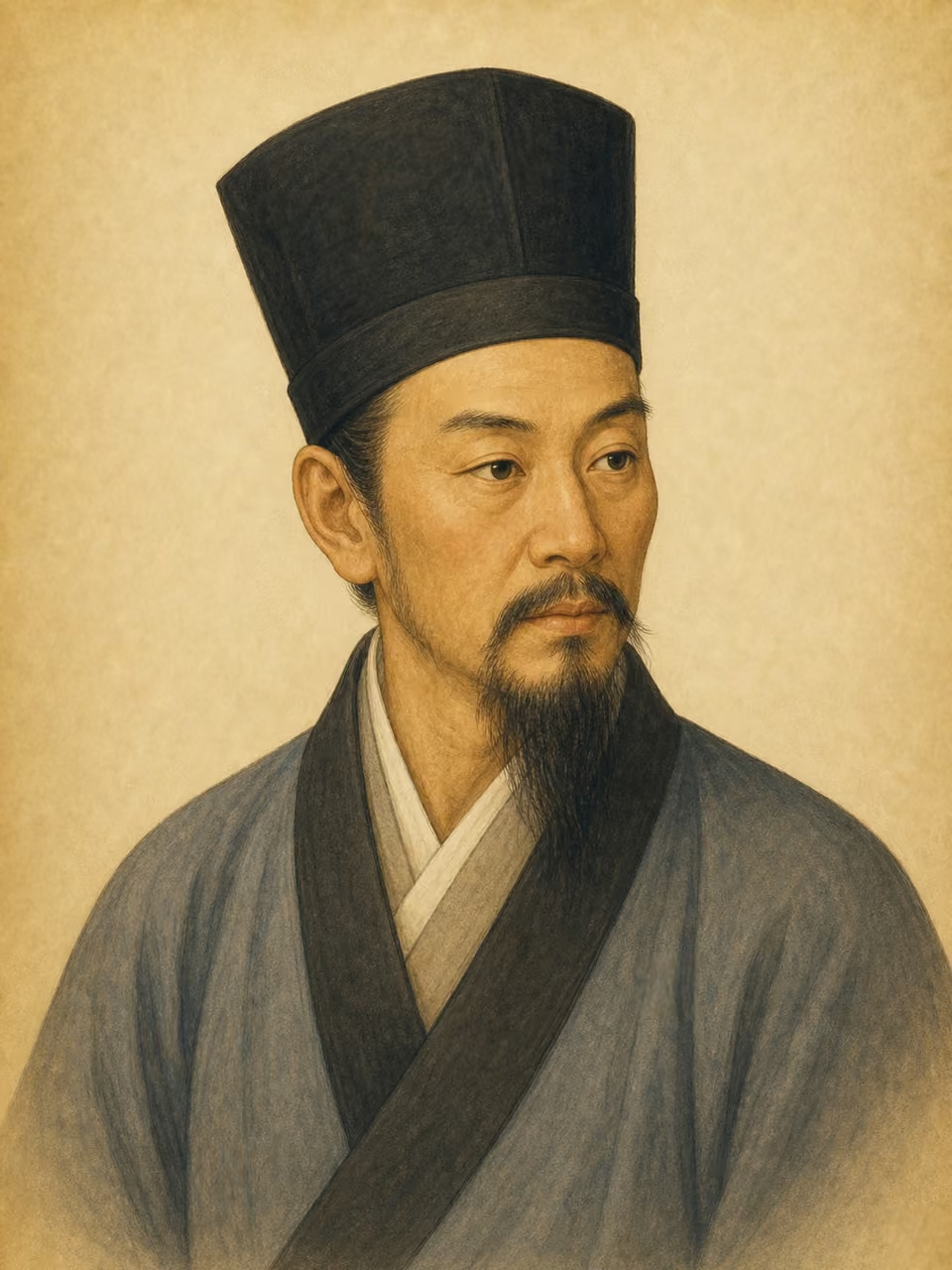
Wang Yangming

Portrait: AI-generated imagined likeness

Wang Yangming

Philosopher · Politician · Writer

Years
1472–1529
Birthplace
China
Birth polity
Ming dynasty
Era
Early modern
Field
Philosophy
Occupations
Philosopher · Politician · Writer

He was a thinker and bureaucrat of the Ming Dynasty, and the person who perfected Yangming Studies. He preached Chigyo Goichi and Chiryochi, and spread a philosophy that emphasized practice, which was different from Neo-Confucianism. It is important for understanding the history of East Asian thought. You can also see the lineage of practical ethics.

View in catalog

Historical context

Places

  • Yuyao

    Birth

  • Longchang

    Exile

Works & achievements

  • Yangming learning

    Theory

Origins

Origins map
Birth country
Birth country
China

Map: Natural Earth (PD)

Biography

Early life

He was born into a family of samurai in Zhejiang and became a bureaucrat after passing the imperial examination. Through his experiences of political setbacks and demotion, he deepened his philosophy of valuing inner wisdom and practice.

Achievements

Through Yomeigaku, he taught that moral knowledge is inseparable from action. As a bureaucrat, he was also involved in suppressing rebellions, and is unique in that he connected thought and political practice.

Character & anecdotes

Wang Yangming is said to have reached an ideological turning point during his demotion to Longba. Loss of power and isolation led to a philosophy that sought ground within oneself rather than outside authority.

Historical Impact

When we study Wang Yangming, we see that Confucianism was not just a classical interpretation, but developed as an idea that encouraged action and social reform. You can understand the spread of Yomeigaku, which also influenced Japan and Korea. You can also see the process by which ideas are linked to political action.