
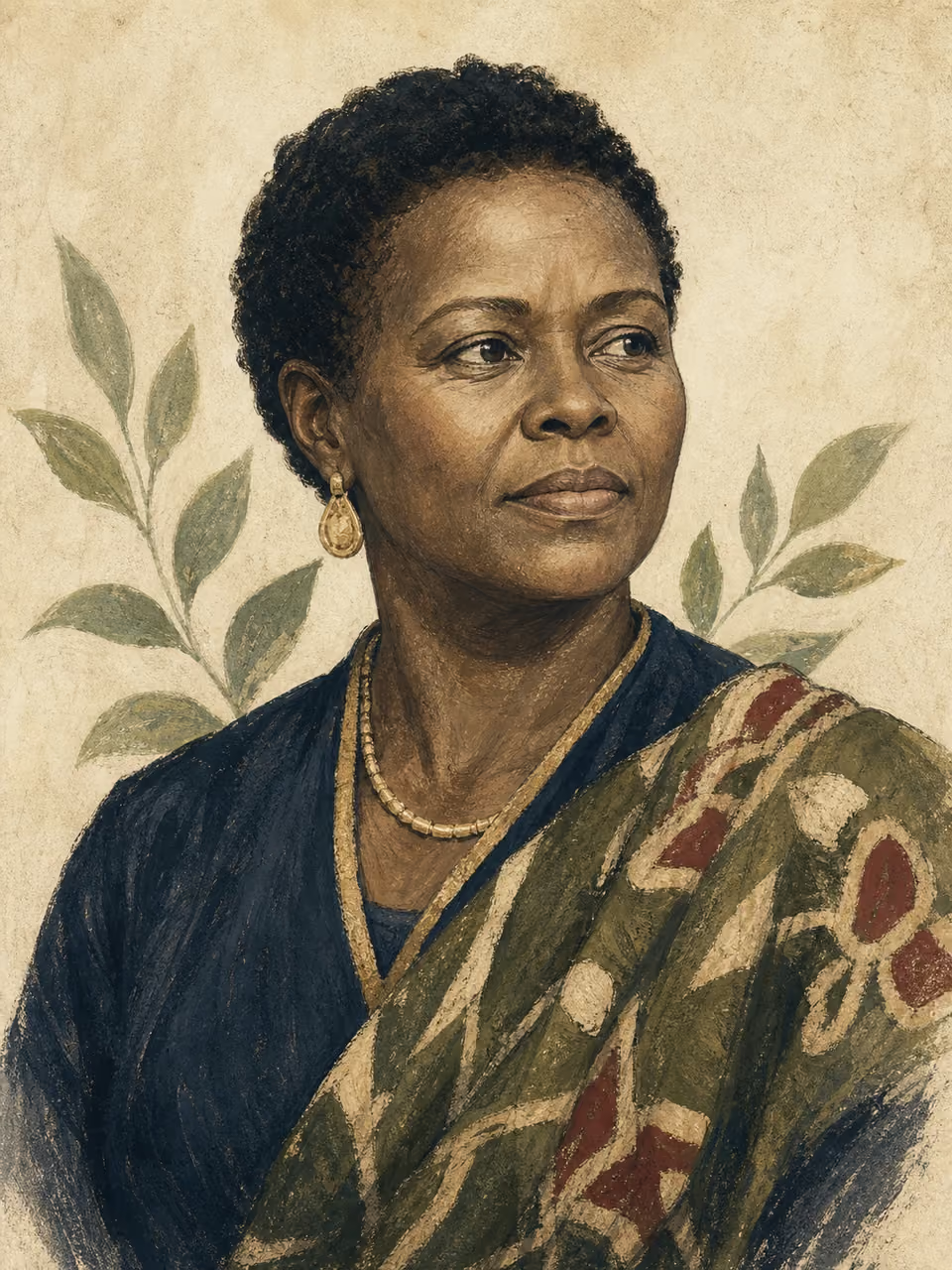
Wangari Maathai

Portrait: AI-generated imagined likeness

Wangari Maathai

Political activist · Biologist · Politician

Years
1940–2011
Birthplace
Kenya
Birth polity
Kenya Colony
Era
Contemporary
Field
Social reform
Occupations
Political activist · Biologist · Politician

When Wangari Maathai organized women to raise seedlings and plant trees, she made deforestation visible as an immediate problem of fuel, water, and everyday labor. Her protests against land grabs and authoritarian development turned tree planting into a civic action as much as an environmental one.

View in catalog

Historical context

Places

  • Nyeri

    Birth

  • Nairobi

    Work

Events

  • Green Belt Movement

    1977

    Movement · Leader

  • Nobel Peace Prize

    2004

    Cultural event · Participant

Origins

Origins map
Birth country
Birth country
Kenya

Map: Natural Earth (PD)

Biography

Early life

Wangari Maathai was born in 1940 in the Nyeri region of central Kenya. Educated in Kenya and the United States, she became a pioneering woman scholar in East Africa and developed a deep concern for the relationship between ecology and community life.

Achievements

In 1977 she founded the Green Belt Movement, which organized women to raise seedlings and plant trees. She treated deforestation, land use, poverty, and authoritarian politics as connected problems, and in 2004 she became the first African woman to receive the Nobel Peace Prize.

Character & anecdotes

Maathai faced arrests, public attacks, and violence for opposing destructive development and forest loss, but she continued to frame environmental protection as a defense of everyday life. She later served in parliament and government, pressing for change through both activism and formal politics.

Historical Impact

Maathai changed environmental politics by linking ecology to democracy, women's work, and local control over land and resources rather than treating conservation as an abstract ideal. That framework influenced movements well beyond Kenya and helped make environmental justice part of the global language of rights and peace.

Notes

The Green Belt Movement supported the planting of tens of millions of trees in Kenya.