
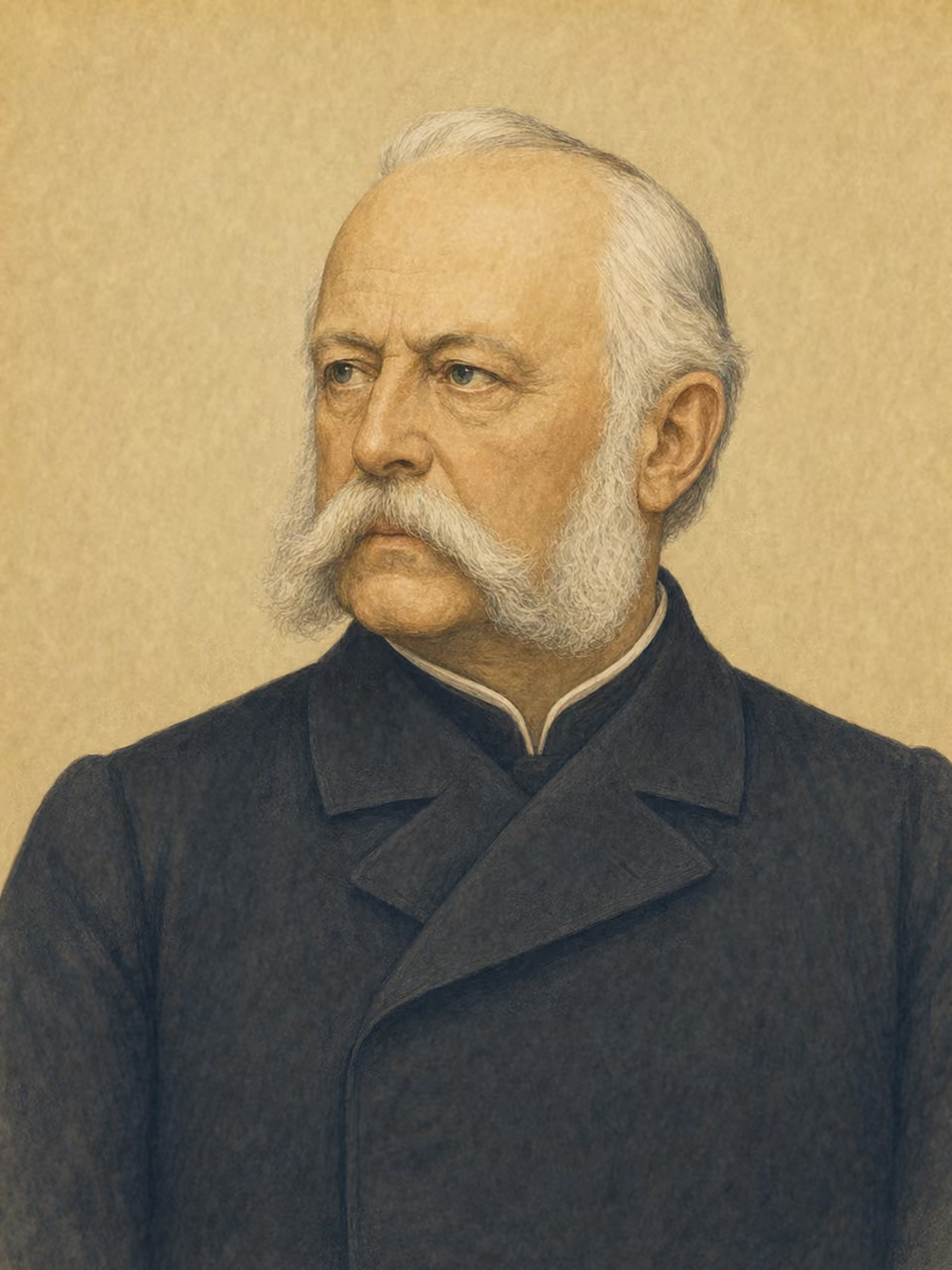
Wilhelm I

Portrait: AI-generated imagined likeness

Wilhelm I

Monarch · Politician

Years
1797–1888
Birthplace
Germany
Birth polity
Kingdom of Prussia
Era
Modern
Field
Politics
Occupations
Monarch · Politician

King of Prussia and first emperor of the German Empire. Bismarck was used to unify Germany through the Prussian and Franco-Prussian wars. He was an important figure in the European international order of the 19th century.

View in catalog

Historical context

Places

  • Berlin

    Birth

  • Versailles

    Work

Events

  • Franco-Prussian War

    1870–1871

    War · Leader

  • proclamation of the German Empire

    1871

    Political event · Subject

Origins

Origins map
Birth countryAssociated countries
Birth country
Germany
Associated countries
France

Map: Natural Earth (PD)

Biography

Early life

Born into the Prussian royal family, he was educated as a military man. Although he was criticized for being a conservative member of the royal family during the 1848 Revolution, he later succeeded to the throne and faced a parliamentary conflict over military reform.

Achievements

He appointed Bismarck as chancellor and promoted German unification under Prussia's leadership. After wars with Denmark, Austria, and France, he was crowned Emperor of Germany in 1871 at the Palace of Versailles.

Character & anecdotes

Bismarck stands out as the leader of unification, but Wilhelm I was the one who gave legitimacy to the king's power and military. The fact that the place of the emperor's enthronement was Versailles in France gave a strong impression of victory in the Franco-Prussian War.

Historical Impact

When we study Wilhelm I, we learn that German unification was achieved not through a liberal revolution, but through Prussia's military power and the framework of a dynastic state. A unified Germany drastically changed the balance of power in Europe. He is a central figure in understanding the nation-state and military diplomacy in the latter half of the nineteenth century.