
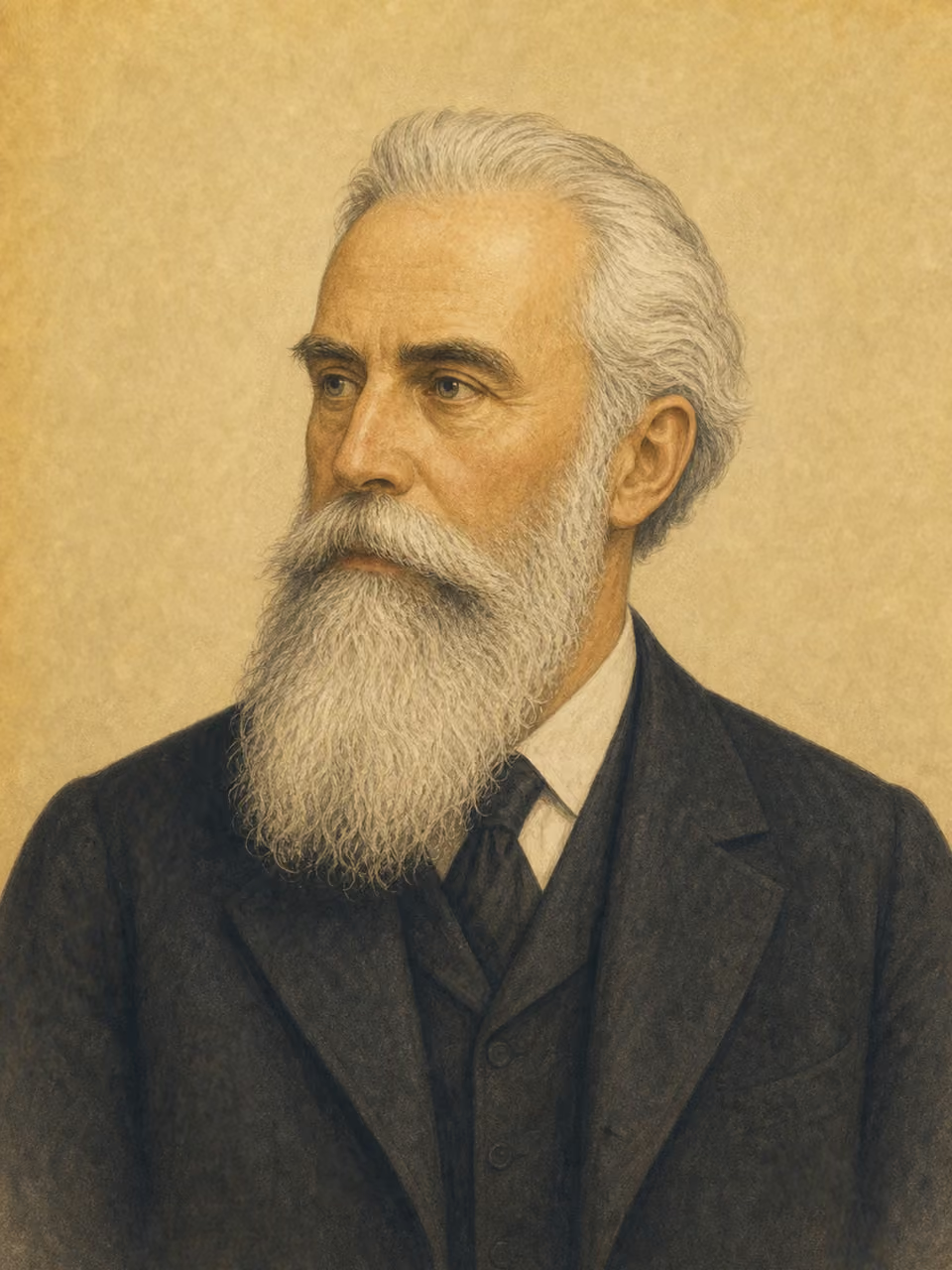
Wilhelm Rontgen

Portrait: AI-generated imagined likeness

Wilhelm Rontgen

Physicist · Engineer

Years
1845–1923
Birthplace
Germany
Birth polity
Kingdom of Prussia
Era
Modern
Field
Science
Occupations
Physicist · Engineer

German physicist who discovered X-rays. He demonstrated that invisible light rays can penetrate the human body and other substances, bringing about a major turning point in medical diagnosis and physics. He is a person who considers the relationship between modern science and medicine.

View in catalog

Historical context

Places

  • Lennep

    Birth

  • Wurzburg

    Work

Works & achievements

  • discovery of X-rays

    1895

    Discovery

Events

  • first Nobel Prize in Physics

    1901

    Cultural event · Subject

Origins

Origins map
Birth countryAssociated countries
Birth country
Germany
Associated countries
Netherlands · Switzerland

Map: Natural Earth (PD)

Biography

Early life

Born in Lennep, Prussia, he was educated in the Netherlands and Switzerland. As an experimental physicist, he conducted research at universities around the country and turned his attention to cathode rays and electromagnetic phenomena.

Achievements

In 1895, he discovered an unknown form of radiation at the University of Würzburg and named it X-rays. His photograph of the bones of a hand caused such a strong impact that he was awarded the first Nobel Prize in Physics in 1901.

Character & anecdotes

Roentgen is credited with making the discovery of X-rays widely available without patenting them. Immediately after its discovery, doctors and scientists began applying it, making it an example of scientific results rapidly spreading to society.

Historical Impact

When you study X-rays, you realize that physics at the end of the 19th century began to move toward the world of atoms and radiation. X-rays changed medical diagnosis and had a major impact on war medicine and hospital systems. He is also an important figure when considering modern diagnostic imaging, radiology, and the Nobel Prize system.