
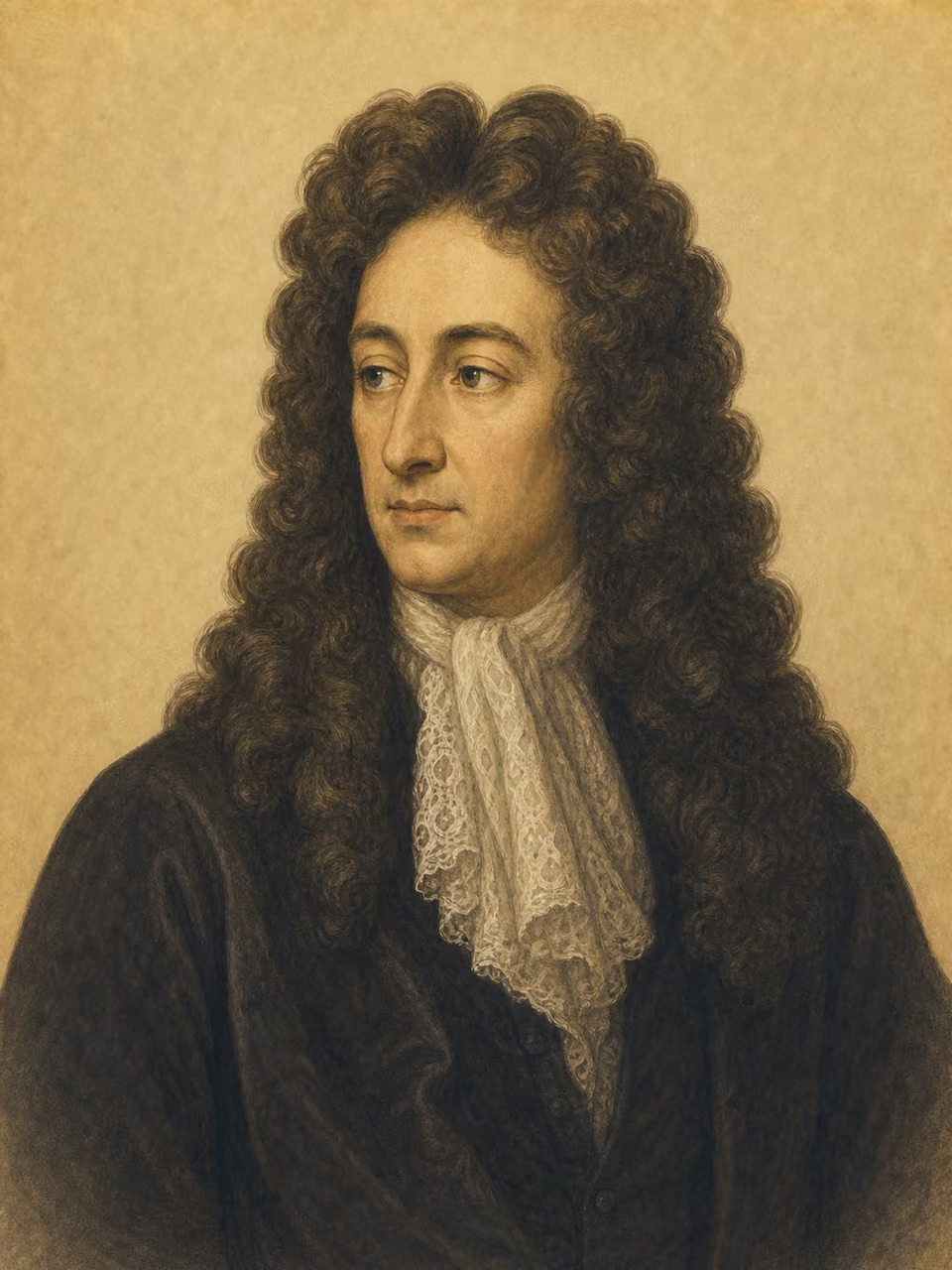
William III of England

Portrait: AI-generated imagined likeness

William III of England

Monarch · Politician

Years
1650–1702
Birthplace
Netherlands
Birth polity
Dutch Republic
Era
Early modern
Field
Politics
Occupations
Monarch · Politician

Governor of the Netherlands who became King of England after the Glorious Revolution. He defeated James II, co-ruled with Mary II, and was involved in the development of constitutional monarchy through the Bill of Rights. It is the cornerstone of early modern European politics.

View in catalog

Historical context

Places

  • The Hague

    Birth

  • London

    Work

Works & achievements

  • Bill of Rights 1689

    1689

    Law

Events

  • Glorious Revolution

    1688–1689

    Revolution · Leader

  • Nine Years' War

    1688–1697

    War · Leader

Origins

Origins map
Birth countryAssociated countries
Birth country
Netherlands
Associated countries
United Kingdom · Ireland

Map: Natural Earth (PD)

Biography

Early life

He was born into an Orange family in the Federal Republic of the Netherlands. He played an important role in Dutch politics and European diplomacy, opposing the expansion of King Louis XIV of France.

Achievements

He landed in England in 1688 and started the Glorious Revolution. The following year, he joined Mary II on the throne and renewed the relationship between royal power and parliament through the ratification of the Bill of Rights.

Character & anecdotes

``Willem III'' in World History Notes does not refer to the Dutch king of the 19th century, but to William III, Duke of Orange, who is spoken of in the context of the Glorious Revolution. In English historical sources, he is also called William of Orange.

Historical Impact

If you study William III, you will see that the Glorious Revolution was not only connected to domestic issues of succession to the throne, but also to international politics in Europe against France. After the Bill of Rights, politics in England focused on parliamentary consent. He is a central figure in understanding the difference between absolute monarchy and constitutional monarchy.