
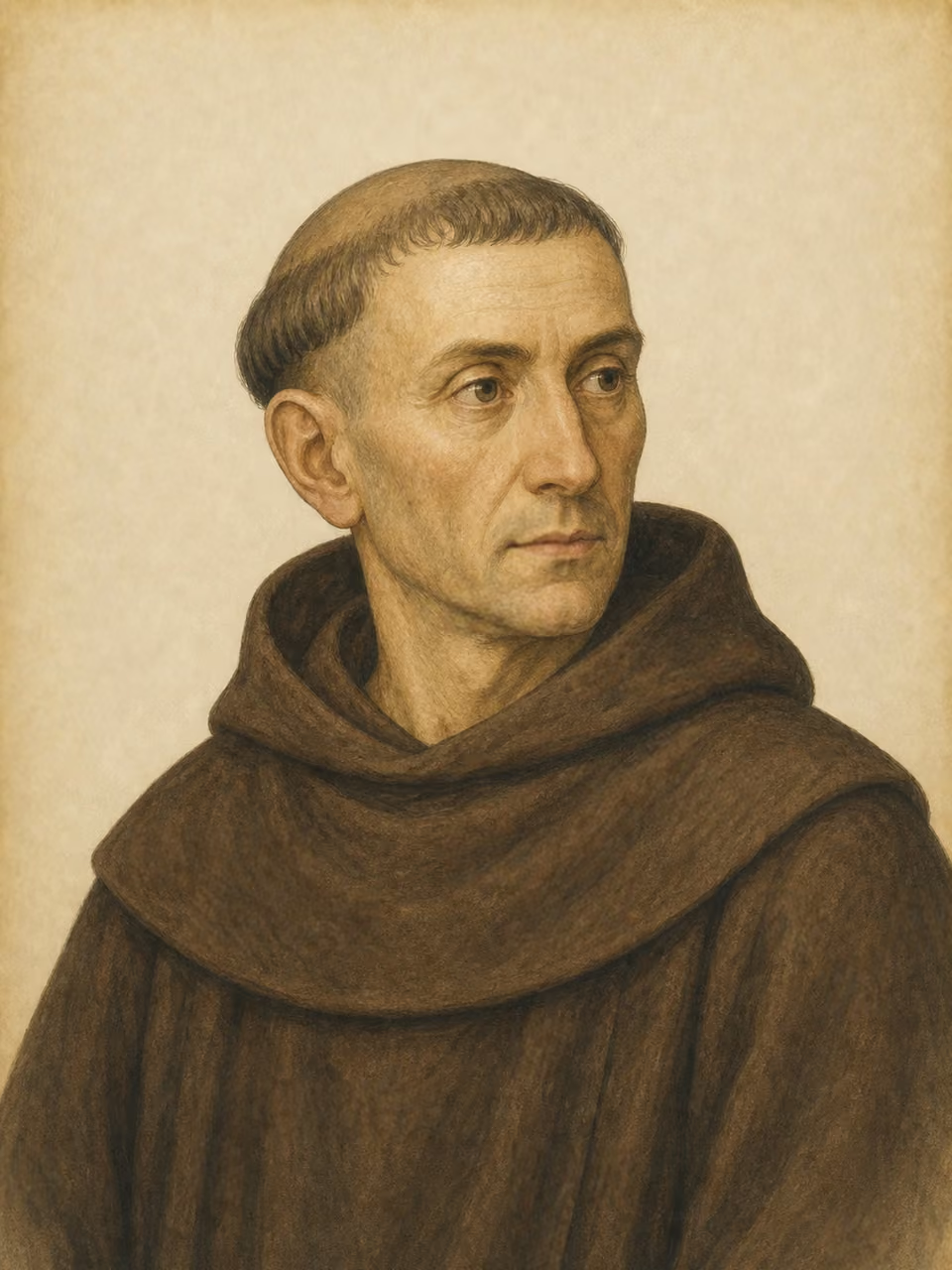
William of Ockham

Portrait: AI-generated imagined likeness

William of Ockham

Philosopher · theologian

Years
c. 1287–c. 1349
Birthplace
United Kingdom
Birth polity
Kingdom of England
Era
Medieval
Field
Philosophy
Occupations
Philosopher · theologian

A medieval English philosopher and theologian known for ``Ockham's Razor.'' He was involved in universal debates and criticism of the papacy, and represented late Scholastic thought. It represents a shift in medieval thought.

View in catalog

Historical context

Places

  • Ockham

    Birth

  • Avignon

    Work

  • Munich

    Exile

Works & achievements

  • Summa Logicae

    Book

Origins

Origins map
Birth countryAssociated countries
Birth country
United Kingdom
Associated countries
France · Germany

Map: Natural Earth (PD)

Biography

Early life

Born in the south of England, he was educated as a Franciscan friar. At a time when universities and religious orders were the centers of knowledge, he considered questions of existence and knowledge through logic and theology.

Achievements

He is known for his principle of not assuming unnecessary existence, and developed nominalism, which holds that the universal does not exist apart from the individual. He became involved in political theory due to his conflict with Pope John XXII.

Character & anecdotes

Although the expression ``Occam's Razor'' itself is a later clarification, it is widely known as a way of thinking that avoids complicated explanations. This is an example of how medieval philosophy is connected to modern logical thinking.

Historical Impact

When we study William of Ockham, we learn that knowledge in medieval Europe was not simply subordinated to faith, but that there was active debate over logic, language, and criticism of authority. It also serves as a bridge to modern thought.