
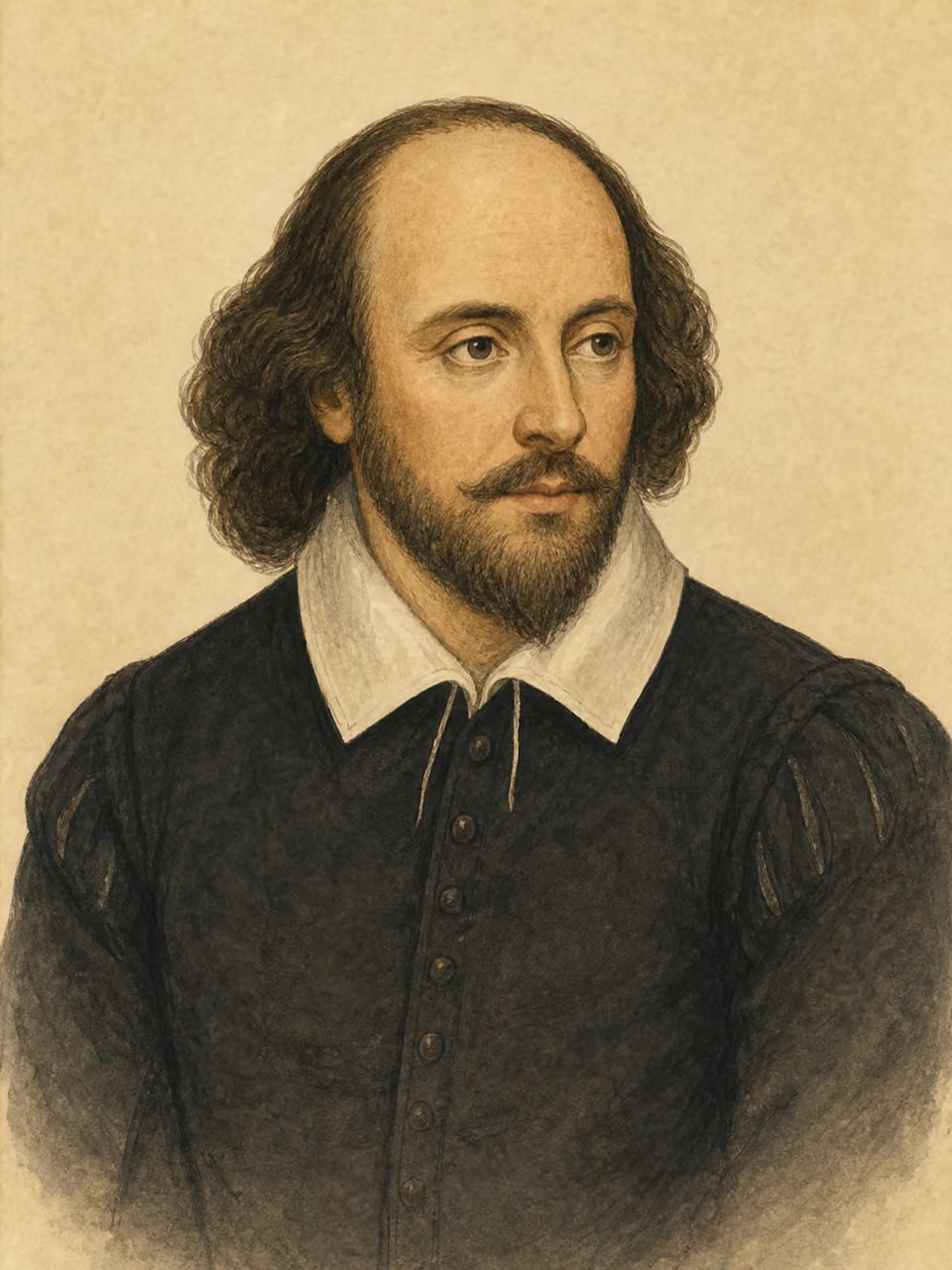
William Shakespeare

Portrait: AI-generated imagined likeness

William Shakespeare

Playwright · Poet

Years
1564–1616
Birthplace
United Kingdom
Birth polity
Kingdom of England
Era
Early modern
Field
Literature
Occupations
Playwright · Poet

As London's commercial theatres expanded, Shakespeare wrote for the practical demands of an acting company, producing plays such as Hamlet, Macbeth, and King Lear for performance rather than for silent prestige. Moving between public playhouses and courtly occasions, he turned succession crises, jealousy, desire, and betrayal into stage language that felt urgently contemporary to his audiences.

View in catalog

Historical context

Places

  • Stratford-upon-Avon

    Birth

  • London

    Work

Works & achievements

  • Hamlet

    c. 1600

    Play

  • First Folio

    1623

    Book

Origins

Origins map
Birth country
Birth country
United Kingdom

Map: Natural Earth (PD)

Biography

Early life

William Shakespeare was born in 1564 at Stratford-upon-Avon. The documentary record for his youth is patchy, but he likely received a solid grammar-school education before moving into London's expanding theatrical world as both an actor and a writer during the late Elizabethan period.

Achievements

He wrote across tragedy, comedy, and history, producing plays such as Hamlet, Macbeth, King Lear, and Romeo and Juliet that fused political conflict with psychological depth. His sonnets also became central to English literary history and helped shape the language's later expressive possibilities.

Character & anecdotes

Because the evidence for his life is incomplete, Shakespeare has attracted endless debate about lost years, collaboration, and authorship. Even so, his connection to the London stage, to his acting company, and to the Globe Theatre is historically substantial rather than mythical.

Historical Impact

Shakespeare changed later literature not simply by leaving a shelf of canonical texts, but by redefining what drama could do with character, rhetoric, and political conflict. School curricula, repertory theatre, translation traditions, and global film culture have all used his plays as recurring machinery for rethinking power, love, violence, and memory.