
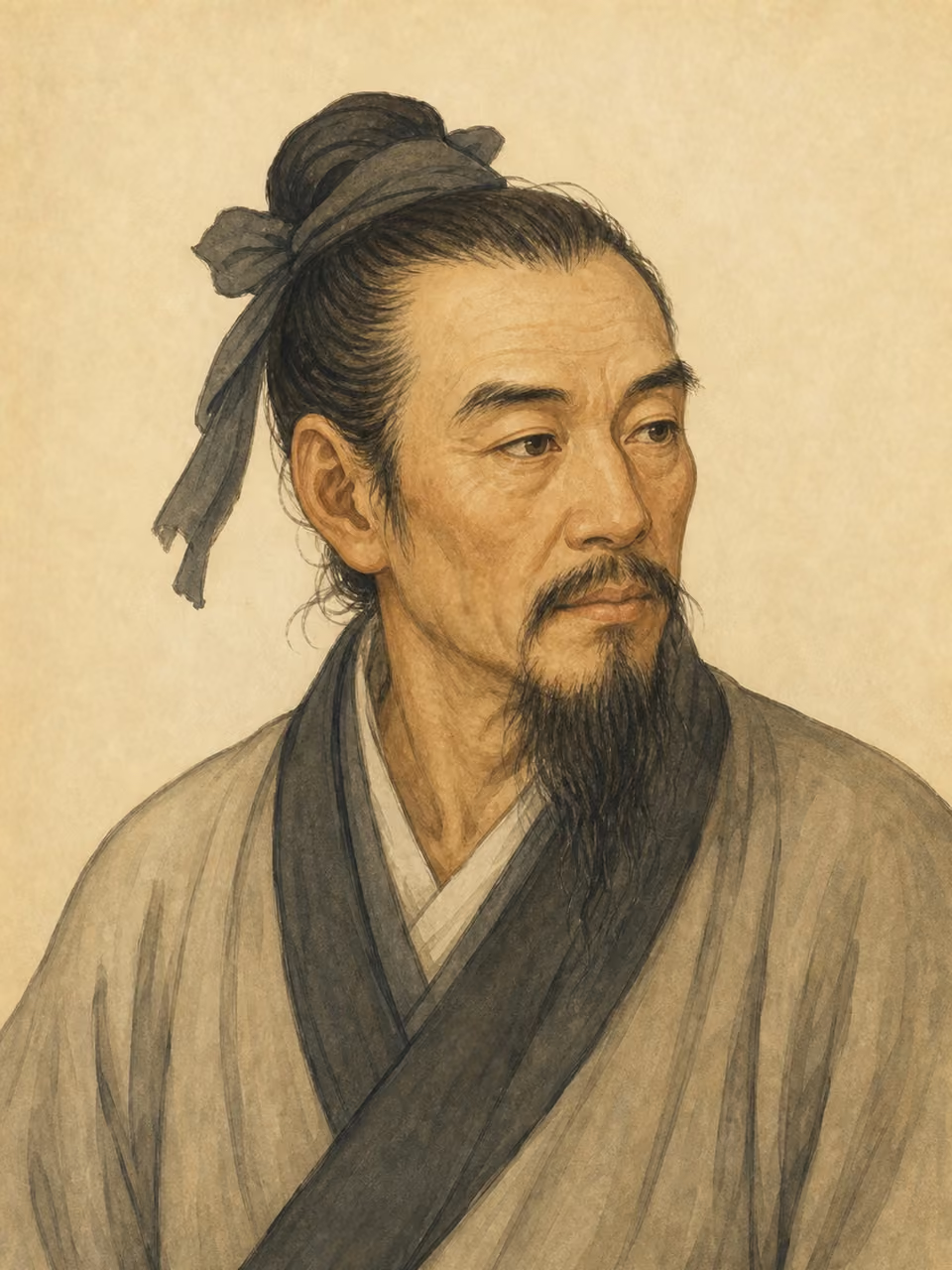
Wu Daozi

Portrait: AI-generated imagined likeness

Wu Daozi

Painter

Years
c. 680–c. 740
Birthplace
China
Birth polity
Tang dynasty
Era
Medieval
Field
Art
Occupations
Painter

A painter of the Tang Dynasty who was known as the ``Painting Saint.'' He is said to be a master of Buddhist murals and figure paintings, and is a symbol of Tang court culture and Buddhist art. This is important when considering the history of East Asian painting. It also shows the spread of religious art.

View in catalog

Historical context

Places

  • Yangzhai

    Birth

  • Chang'an

    Work

Works & achievements

  • Buddhist mural tradition

    Painting

Origins

Origins map
Birth country
Birth country
China

Map: Natural Earth (PD)

Biography

Early life

He is said to have come from the Hanam area, and showed talent for painting at a young age. In Chang'an, the capital of the Tang dynasty, the imperial court, temples, and international Buddhist culture intersected, creating a demand for large-scale mural painting.

Achievements

He gained fame for his temple murals and portraits, and his style of painting with powerful line drawings became legendary in later generations. Although much of his work has been lost, it has long been talked about as an ideal image of Tang Dynasty painting.

Character & anecdotes

There is an anecdote about Wu Daoxuan that the dragons and people he drew looked like they were coming out of the wall. This is a legend to praise his brushstrokes and realism.

Historical Impact

When we study Wu Daoxuan, we learn that Tang Dynasty art developed within the context of Buddhism, the imperial court, and urban culture. It is also understandable that even if the actual objects are lost, reputation and legends shape art history. Another possibility is the image of a legendary artist.