
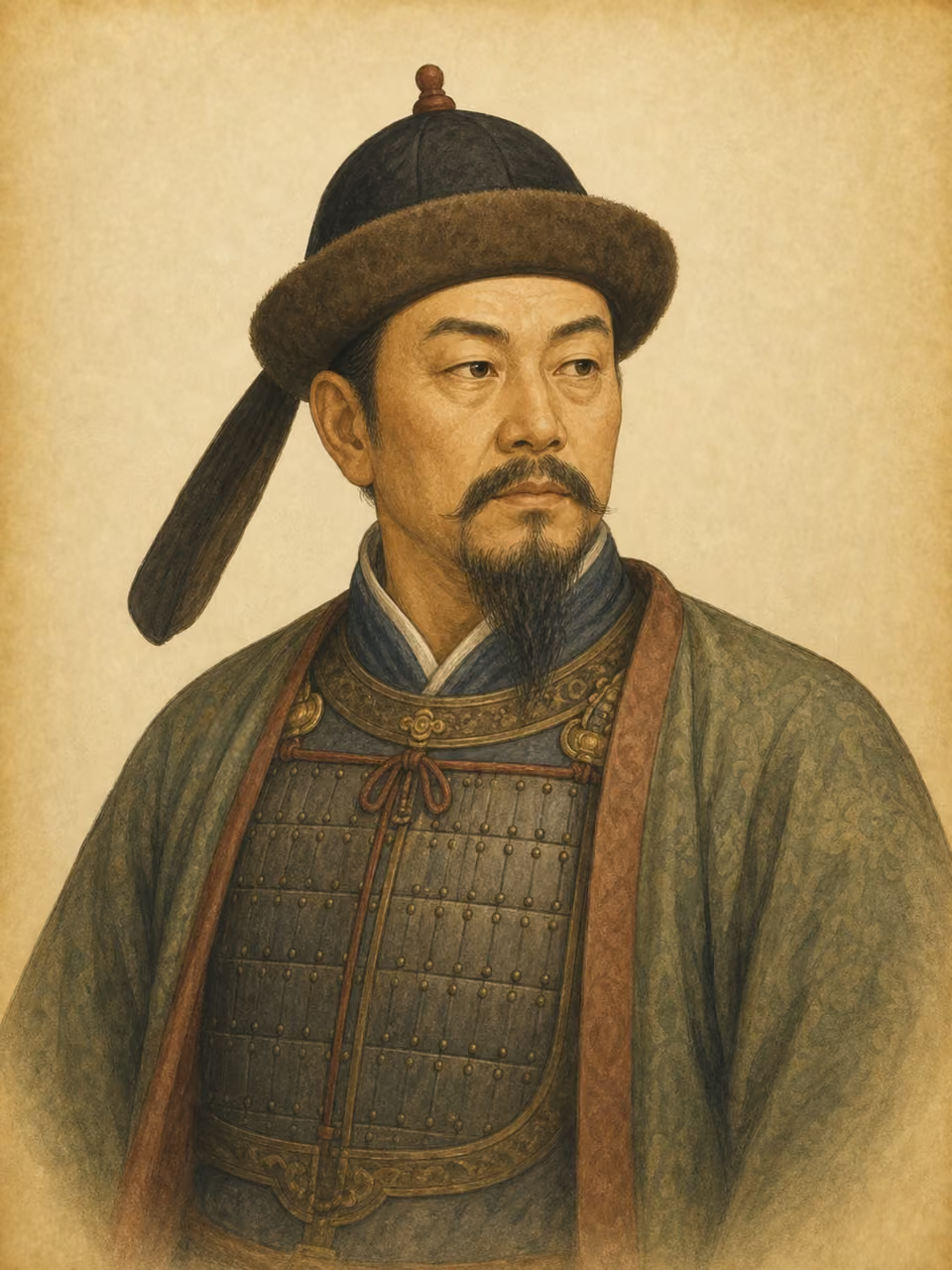
Wu Sangui

Portrait: AI-generated imagined likeness

Wu Sangui

Military leader · Monarch

Years
1612–1678
Birthplace
China
Birth polity
Ming dynasty
Era
Early modern
Field
Military
Occupations
Military leader · Monarch

He was the first military commander of the late Ming and Qing dynasties, and is known for opening the Shanhai Pass to the Qing army. He stood at the turning point of the Ming and Qing changes, and was later involved in the Three Clan Rebellion. It is an example of the complexity of dynasty change. Loyalty and survival choices overlap.

View in catalog

Historical context

Places

  • Liaodong

    Birth

  • Shanhai Pass

    Campaign

Events

  • Ming-Qing transition

    1644–1683

    War · Participant

Origins

Origins map
Birth country
Birth country
China

Map: Natural Earth (PD)

Biography

Early life

Born into a military family of the Ming Dynasty, he grew up as a military commander responsible for the defense of the north. As Li Zicheng's rebellion coincided with the expansion of Manchu power, he was forced to make an important choice.

Achievements

He drew in the Qing army at Shanhai Pass, paving the way for them to enter Beijing. After that, it served the Qing Dynasty, but as one of the three clans based in Yunnan, it had great local power.

Character & anecdotes

Wu Sangui is often depicted simply as a traitor, but he was a military leader who operated at the intersection of three forces: the Ming, the rebels, and the Qing. It shows a situation that cannot be explained by individual loyalty alone.

Historical Impact

When we study Wu Sangui, we understand that the Ming-Qing transition was not a single conquest, but rather a fusion of Han military commanders, the Manchu government, peasant revolts, and local military power. We can also understand the governance issues of the early Qing Dynasty. The boundary between conquest and cooperation can also be considered.