
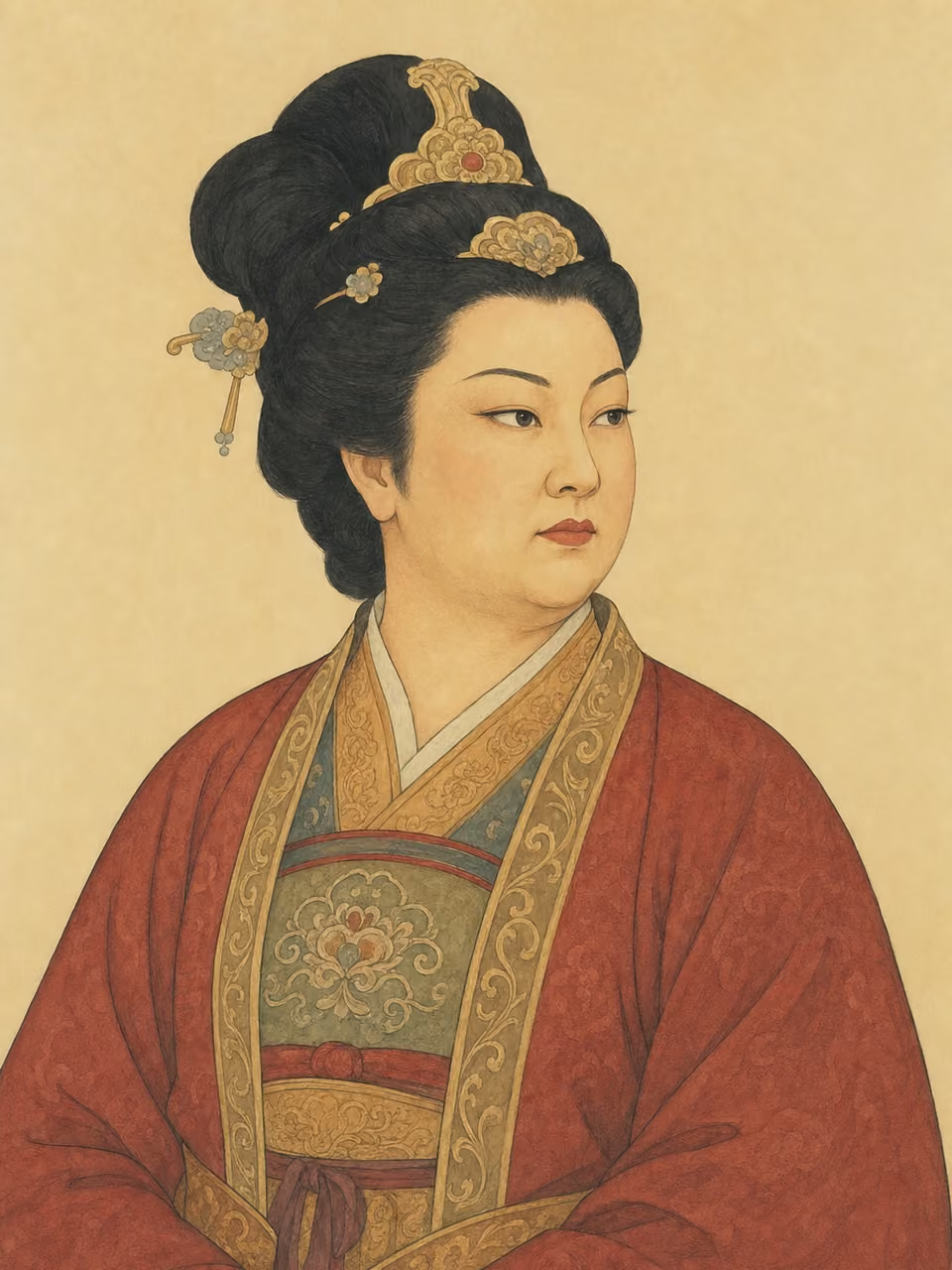
Wu Zetian

Portrait: AI-generated imagined likeness

Wu Zetian

Emperor · Monarch · Poet

Years
624–705
Birthplace
China
Birth polity
Tang dynasty
Era
Medieval
Field
Politics
Occupations
Emperor · Monarch · Poet

A unique female monarch in Chinese history who rose from the empress of the Tang Dynasty to emperor and founded the Wu Zhou dynasty. He consolidated his power through promotion to bureaucrats and the use of Buddhism. She is a central figure in thinking about court politics and women's power in the Tang Empire.

View in catalog

Historical context

Places

  • Wenshui

    Birth

  • Luoyang

    Work

Events

  • Founding of Wu Zhou

    690

    Political event · Leader

Origins

Origins map
Birth country
Birth country
China

Map: Natural Earth (PD)

Biography

Early life

She entered the court of Taizong Gaozong of the Tang Dynasty and later became the empress of Gaozong. Against the backdrop of the emperor's declining health and conflicts among the imperial family, he strengthened his influence on political affairs and succeeded in the power struggle within the imperial court.

Achievements

In 690, he changed the name of the country to Zhou and called himself emperor. He proceeded with imperial examinations and recruitment of human resources, and developed his rule centering on Luoyang, making use of Buddhist-style legitimation.

Character & anecdotes

Evaluations of Empress Wu Zetian have been strongly influenced by historical accounts that include opposition to the empress. It is necessary to look at not only the image of a ruthless person in power, but also the policies of a ruler.

Historical Impact

When we study Empress Zetian, we understand that Tang politics was influenced not only by the individual emperor but also by the complex relationships between maternal relatives, eunuchs, bureaucrats, and religious authorities. Possibilities and limitations of female rulers in East Asia and biased evaluations of historical books are also considered.