
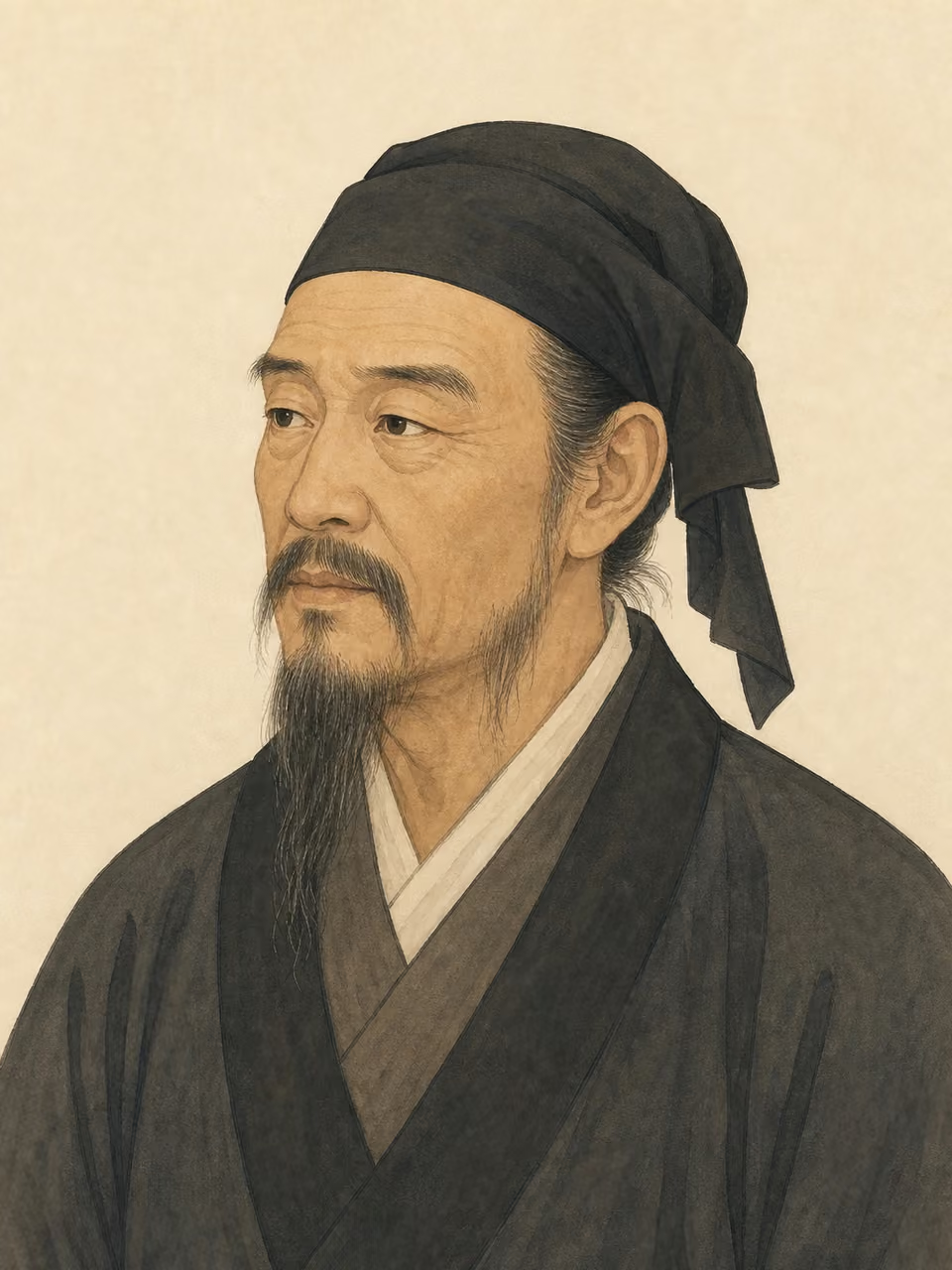
Xunzi

Portrait: AI-generated imagined likeness

Xunzi

Philosopher · Writer

Years
c. 313 BC–c. 231 BC
Birthplace
China
Birth polity
Zhao
Era
Ancient
Field
Philosophy
Occupations
Philosopher · Writer

A Confucian thinker at the end of the Sengoku period, known for his theories on sexual evil. He developed the idea of ​​ordering people through courtesy and education, bringing Confucian thought closer to realpolitik. It also had an influence on institutional thought after Qin and Han.

View in catalog

Historical context

Places

  • Zhao

    Birth

  • Jixia Academy

    Education

Works & achievements

  • Xunzi

    Book

Events

  • Hundred Schools of Thought

    Movement · Participant

Origins

Origins map
Birth country
Birth country
China

Map: Natural Earth (PD)

Biography

Early life

He is said to have come from the Zhao dynasty, and was active in academic activities under the Qi Dynasty. During the Warring States period, when feudal lords competed with each other, thinkers were strongly required to think not only about morality but also how to govern the nation.

Achievements

Believing that conflicts would arise if human desires were ignored, he emphasized correction through etiquette, law, and education. It is said that his disciples included Han Fei and Li Si, and he also had connections with Buddhist thought.

Character & anecdotes

Xunzi's theory of bad nature is often treated in textbooks in contrast to Mencius' theory of good nature. It needs to be read as an argument that shows trust in education and the system, rather than a simple conflict between good and evil.

Historical Impact

When we study Xunzi, we learn that Confucian thought supported national order by linking it not only with ideal moral theory but also with civility, bureaucracy, and the operation of law. It is also possible to understand how ancient Chinese thought led to the formation of the institutions of the Qin and Han empires.