
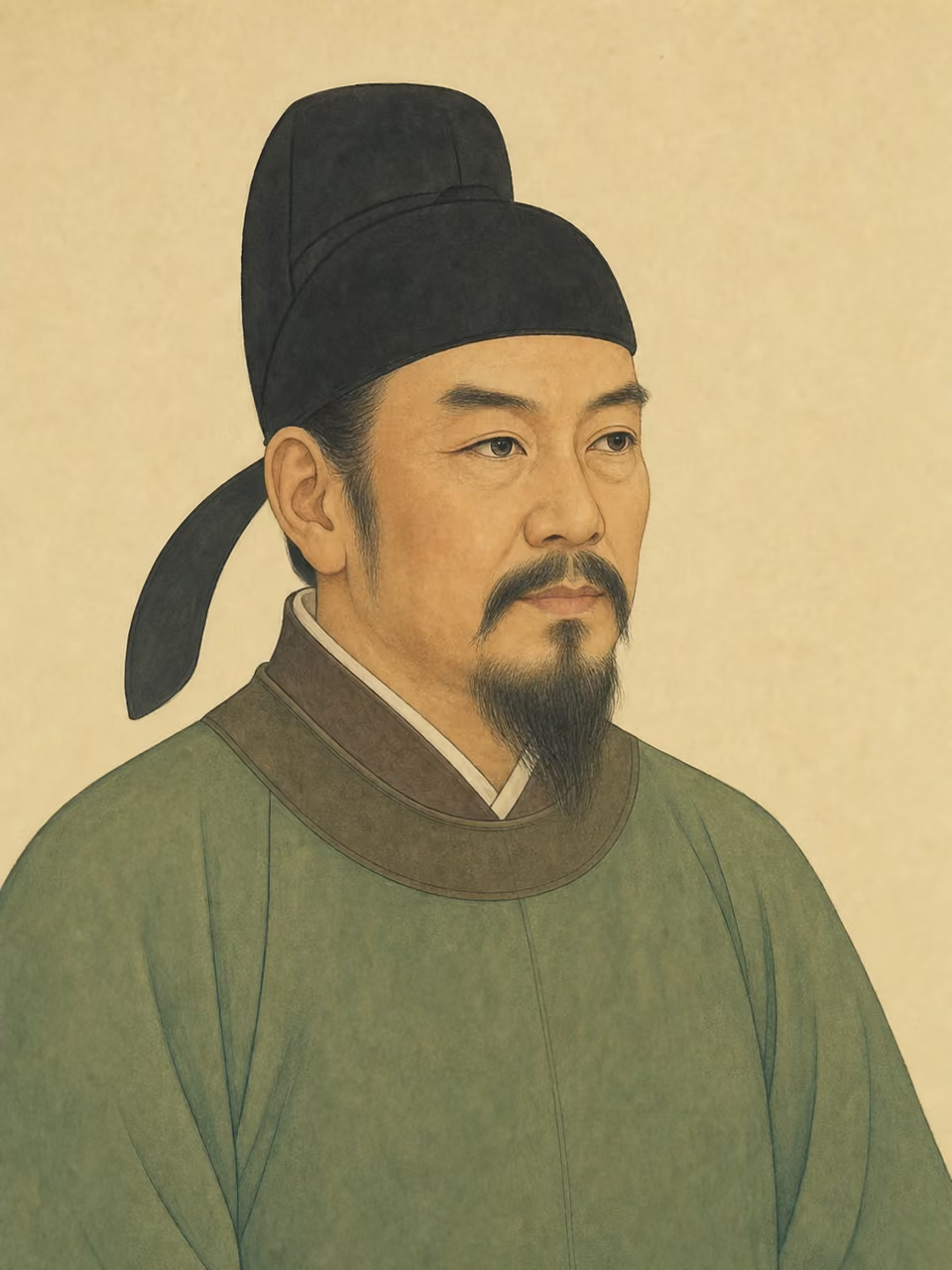
Yan Liben

Portrait: AI-generated imagined likeness

Yan Liben

Painter · Architect · Poet

Years
600–673
Birthplace
China
Birth polity
Sui dynasty
Era
Medieval
Field
Art
Occupations
Painter · Architect · Poet

He was the first painter and bureaucrat of the Tang Dynasty, and is known for his ``Illustrated Scrolls of Successive Emperors.'' He visualized the emperor and political memory through court paintings. This is important when considering the relationship between art in Tang culture and state power.

View in catalog

Historical context

Places

  • Yongzhou

    Birth

  • Chang'an

    Work

Works & achievements

  • Thirteen Emperors Scroll

    Painting

Origins

Origins map
Birth country
Birth country
China

Map: Natural Earth (PD)

Biography

Early life

Born into a bureaucratic family in the Sui and Tang dynasties, his father and older brother were also involved in architecture and crafts. During the period when the unified Tang dynasty was established, he worked as a technical official and a painter at the imperial court.

Achievements

He was excellent at drawing figures and gained fame for his works that are said to depict the figures of successive emperors. Paintings were used as historical representations in the court culture that supported the political order of the Taizong and Gojong periods.

Character & anecdotes

Although Yan Liben became prime minister, there is an anecdote that he was ashamed to be called out for his painting skills. For Shidaifu bureaucrats, the relationship between craftsmanship and political status was a sensitive issue.

Historical Impact

When we study Yan Liben, we learn that Tang art was not only decorative, but also a political medium that demonstrated the legitimacy and historical memory of the dynasty. It provides clues to understanding East Asian portraiture, court culture, and the politics of painting.