
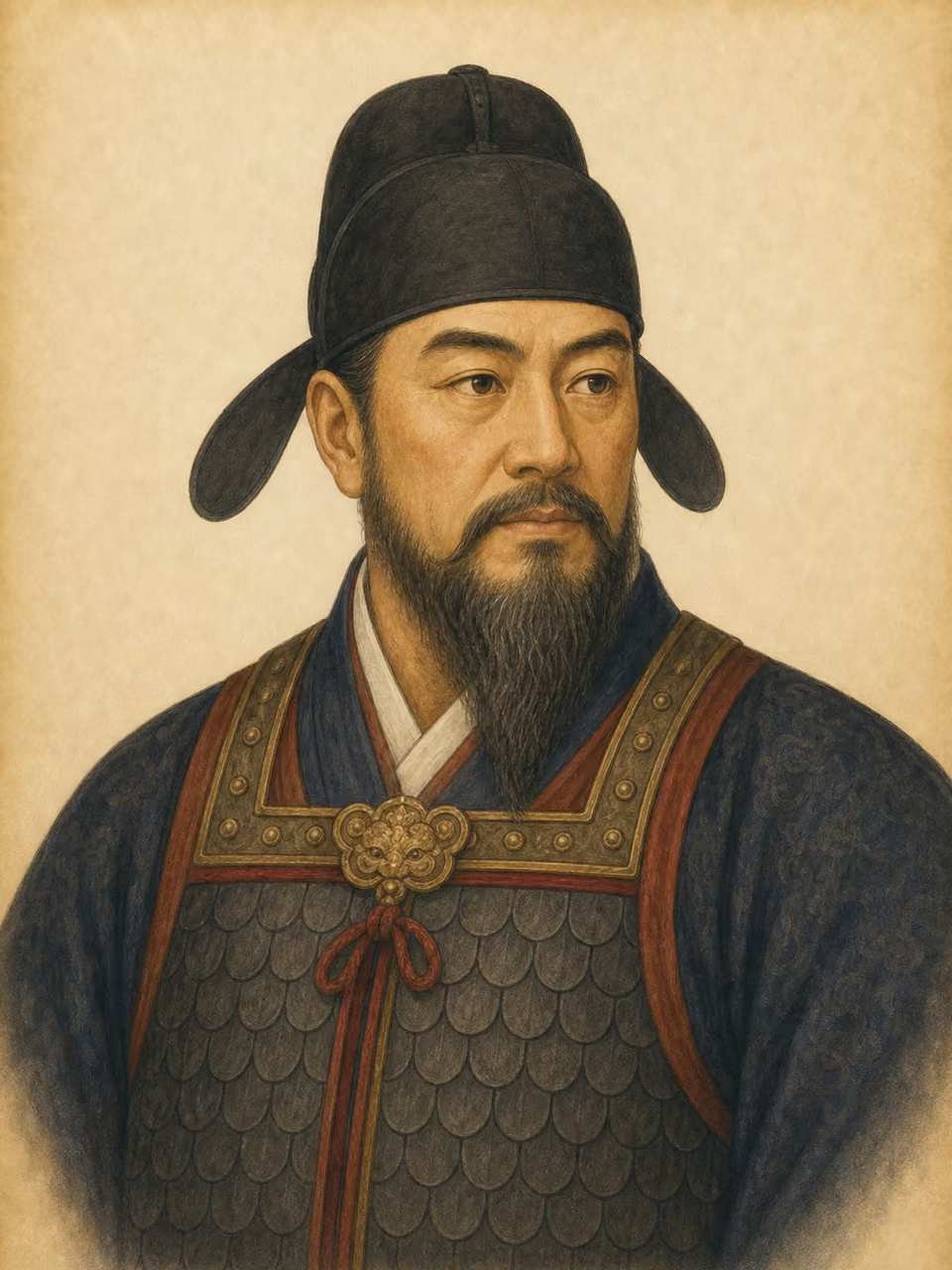
Yi Sun-sin

Portrait: AI-generated imagined likeness

Yi Sun-sin

Naval officer · Military leader

Years
1545–1598
Birthplace
South Korea
Birth polity
Joseon
Era
Early modern
Field
Military
Occupations
Naval officer · Military leader

A naval commander of the Joseon Dynasty who fought against the Japanese army during the Bunroku and Keicho eras. He is known for his command in turtle ships and naval battles. This is important when considering wars and maritime traffic in East Asia. Also suitable for comparing military history.

View in catalog

Historical context

Places

  • Hanseong

    Birth

  • Myeongnyang Strait

    Campaign

Events

  • Imjin War

    1592–1598

    War · Commander

Origins

Origins map
Birth countryAssociated countries
Birth country
South Korea
Associated countries
Japan

Map: Natural Earth (PD)

Biography

Early life

Born in Hanseong, he became a military officer after studying in the military department. Although he was demoted and reinstated many times within the bureaucracy, he became involved in local defense and naval development.

Achievements

He led the Korean naval force during the Imjinwa War and the Jongyo Rebellion, and fought against the Japanese navy that threatened their supply routes. It overcame its inferiority in battles such as the Battle of Myeongryang, and made a major contribution to the defense of Korea.

Character & anecdotes

Yi Sun-shin's diary, ``Ranju Diary,'' not only describes the situation on the battlefield, but also the commander's anxieties and friction with the administration. This is a material that allows you to read about the actual military service behind the images of heroes.

Historical Impact

If you study Yi Sun-shin, you will understand that the East Asian wars at the end of the 16th century were influenced not only by land battles, but also by maritime replenishment, shipbuilding, and regional defense. You can also understand the relationship between Korea, Japan, and the Ming Dynasty three-dimensionally. You can also see how naval power changed the entire war.