
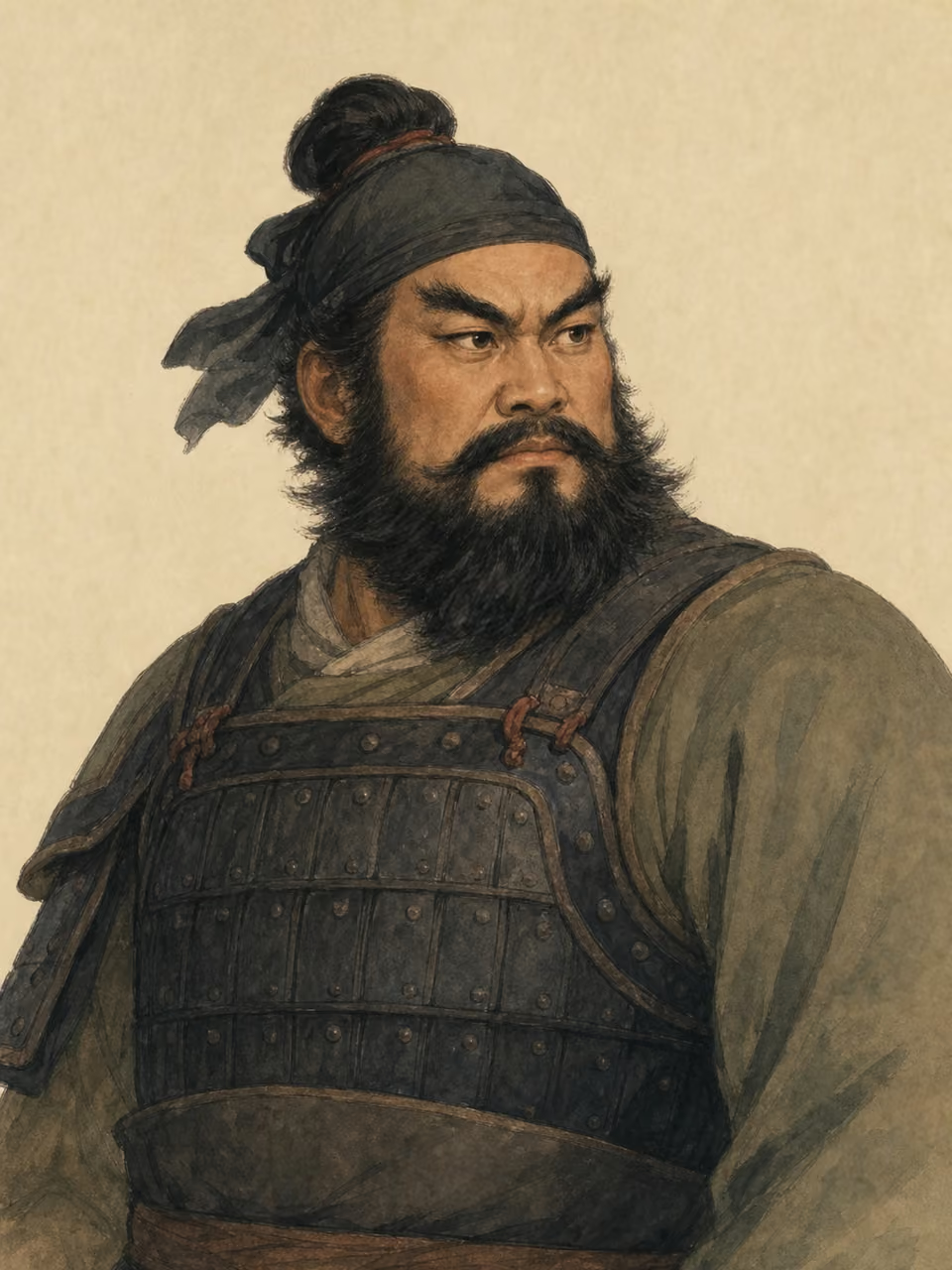
Zhang Fei

Portrait: AI-generated imagined likeness

Zhang Fei

Military commander · Military leader · Politician

Years
c. 167–221
Birthplace
China
Birth polity
Eastern Han
Era
Ancient
Field
Military
Occupations
Military commander · Military leader · Politician

A military commander from the end of the Later Han Dynasty to the Three Kingdoms period who served Liu Bei. He supported the founding of Shu Han with Guan Yu, and is known as a brave general in the Romance of the Three Kingdoms. This is an entry point for thinking about the difference between official history and stories.

View in catalog

Historical context

Places

  • Zhuo Commandery

    Birth

  • Shu Han

    Work

Events

  • Battle of Changban

    208

    Battle · Commander

Origins

Origins map
Birth country
Birth country
China

Map: Natural Earth (PD)

Biography

Early life

He is said to have come from Yuzhou's Yu County, and worked together with Liu Bei and Guan Yu from an early stage. After the Yellow Turban Rebellion at the end of the Eastern Han Dynasty, as local military forces rose to prominence, they built up their power by fighting in various places.

Achievements

He is famous for the story of how he stopped Cao Cao's army at the Battle of Changsaka, and later became an important general of Shu Han. He was also involved in the capture of Izhou and supported the military base of the Liu Bei regime.

Character & anecdotes

Zhang Fei is described as a fierce and powerful man, and this is also the image of his character that is emphasized in novels and storytelling. The heroes of Romance of the Three Kingdoms are a perfect example for understanding the process by which historical figures are turned into stories.

Historical Impact

When you study Zhang Fei, you realize that the Three Kingdoms period was not just a story of heroes, but was born amidst the collapse of the Later Han Empire, local warlords, and struggles over legitimacy. At the same time, the power of literary works to shape historical understanding can be considered, and the distance between historical facts and stories can also be seen.