
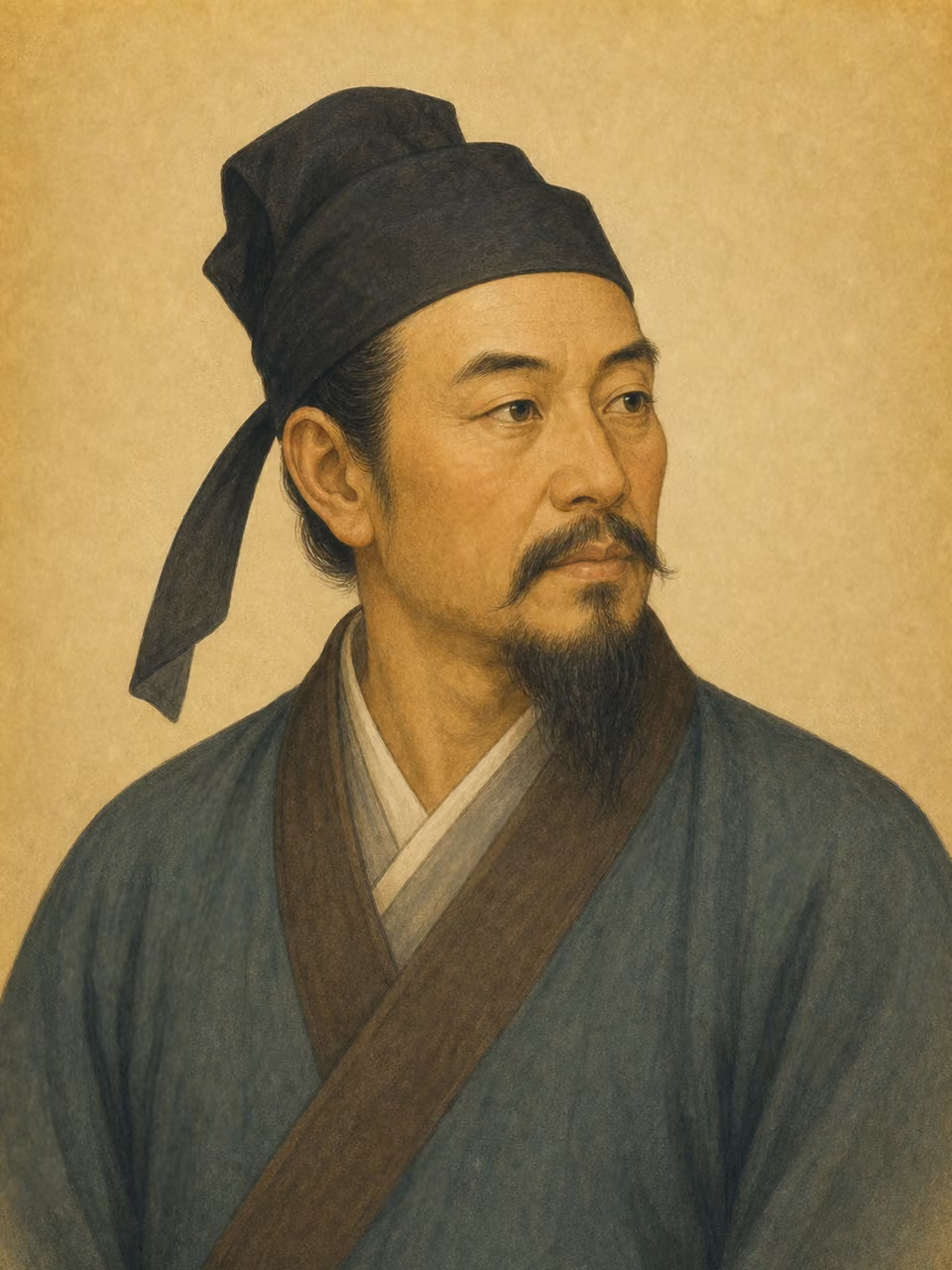
Zhang Heng

Portrait: AI-generated imagined likeness

Zhang Heng

Astronomer · Mathematician · Inventor · Poet

Years
78–139
Birthplace
China
Birth polity
Eastern Han dynasty
Era
Ancient
Field
Science
Occupations
Astronomer · Mathematician · Inventor · Poet

A scientist and literary figure from the Later Han Dynasty, known for his astronomy and earthquake observation instruments. He is also excellent in poetry and shows the breadth of ancient Chinese intellectuals. He is an important figure in the history of science and technology. You can also see the spread of ancient science.

View in catalog

Historical context

Places

  • Nanyang

    Birth

  • Luoyang

    Work

Works & achievements

  • Zhang Heng seismoscope

    132

    Invention

  • Ling Xian

    Book

Events

  • Eastern Han astronomy

    c. 100–c. 139

    Cultural event · Participant

Origins

Origins map
Birth country
Birth country
China

Map: Natural Earth (PD)

Biography

Early life

Born in Nanyang, he studied academics and literature, and also worked as a bureaucrat. In the Later Han, knowledge of the calendar, astronomy, and geography was deeply connected to state governance and rituals.

Achievements

He is known for writing about astronomical theory and for creating the wind and geogeograph, which is said to indicate the direction of earthquakes. He also left behind literary works, which were praised both for his observation of nature and for his written expression.

Character & anecdotes

Although there is some debate over the actual structure of climate and geomechanics, the idea of systematically capturing earthquakes is important. It shows that observation of natural phenomena was involved in politics and academics in ancient China.

Historical Impact

When we study Zhang Heng, we understand that although ancient science is different from modern experimental science, it developed in conjunction with the needs of observation, calendars, cosmology, and government. You will be able to understand the rich tradition of Chinese science and technology history. It also provides material for thinking about the relationship between technology and national governance.