
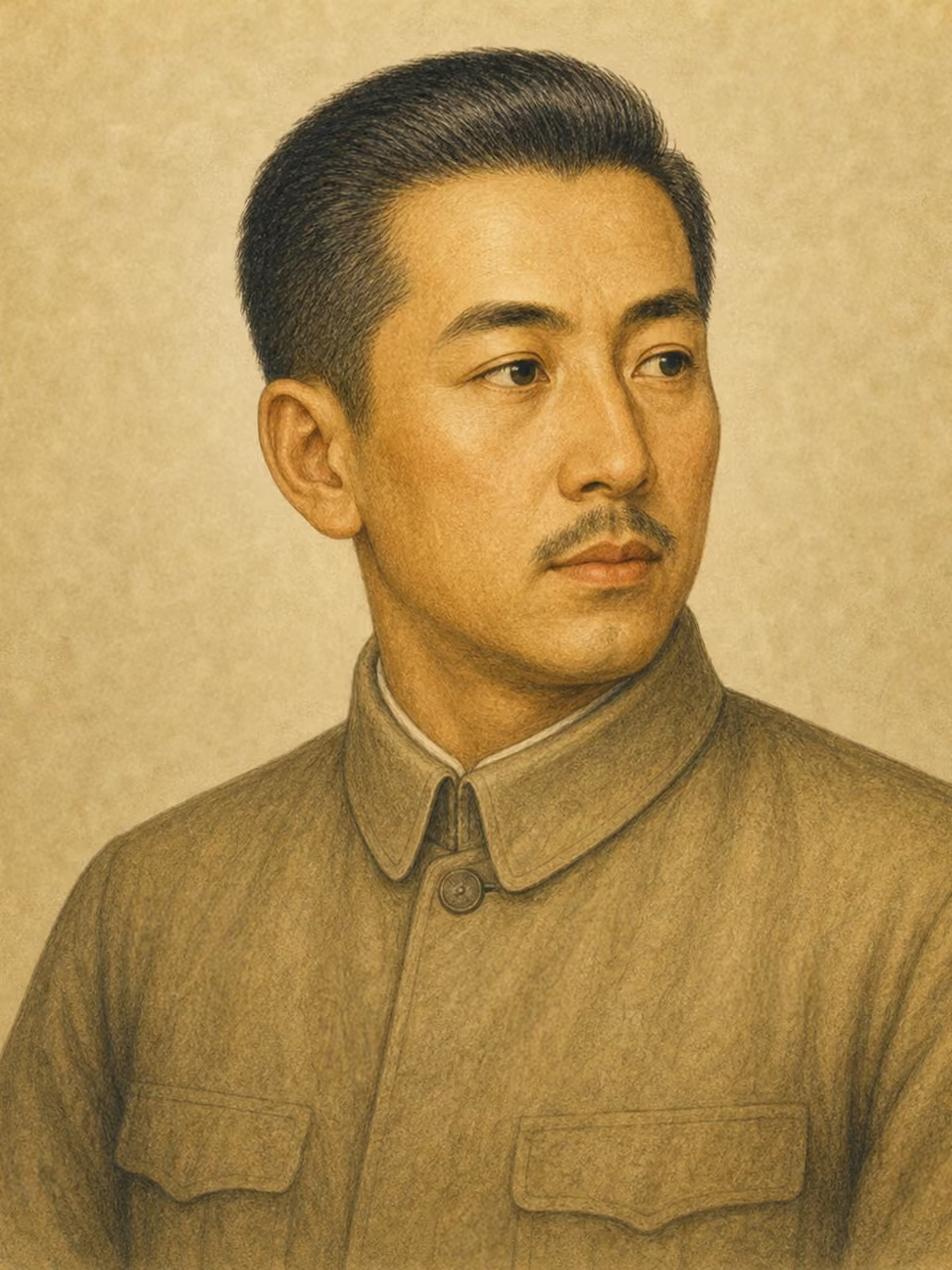
Zhang Xueliang

Portrait: AI-generated imagined likeness

Zhang Xueliang

Politician · Military leader

Years
1901–2001
Birthplace
China
Birth polity
Manchuria in the late Qing period
Era
Contemporary
Field
Politics
Occupations
Politician · Military leader

A warlord leader in northeastern China. As the son of Zhang Zuolin, he took over politics in Manchuria and urged Chiang Kai-shek to rebel against Japan during the Xi'an Incident. He is a person who thinks about Chinese politics on the eve of the Sino-Japanese War.

View in catalog

Historical context

Places

  • Manchuria

    Work

  • Xi'an

    Work

Events

  • Xi'an Incident

    1936

    Political event · Leader

  • Northeast China after Zhang Zuolin

    1928–1936

    Political event · Leader

Origins

Origins map
Birth countryAssociated countries
Birth country
China
Associated countries
Taiwan

Map: Natural Earth (PD)

Biography

Early life

He was born as the son of Zhang Zuolin, the leader of the Mukden military faction, and grew up in the military politics of the northeastern region. After the bombing of his father, he inherited power in the Tohoku region at a young age and adjusted the relationship with the Nationalist government.

Achievements

At Tohoku Ibori, they indicated their intention to join the Nationalist Government, but after the Manchurian Incident, they faced the advance of Japan. In the Xi'an Incident of 1936, Chiang Kai-shek was arrested and forced to fight against Japan through a joint effort between China and the Communist Party.

Character & anecdotes

After the Xi'an Incident, Zhang Xueliang lived under house arrest for a long time. Although he left his mark on history with a single political decision, he was deprived of his freedom for most of his subsequent life.

Historical Impact

When we study Zhang Xueliang, we understand that on the eve of the Sino-Japanese War, China was torn between pressure from warlords, the Kuomintang, the Communist Party, and Japan. The Xi'an Incident was a turning point that significantly changed the relationship between the Chinese Civil War and the War of Resistance against Japan, and provides a clue to the context of the formation of the united front.