
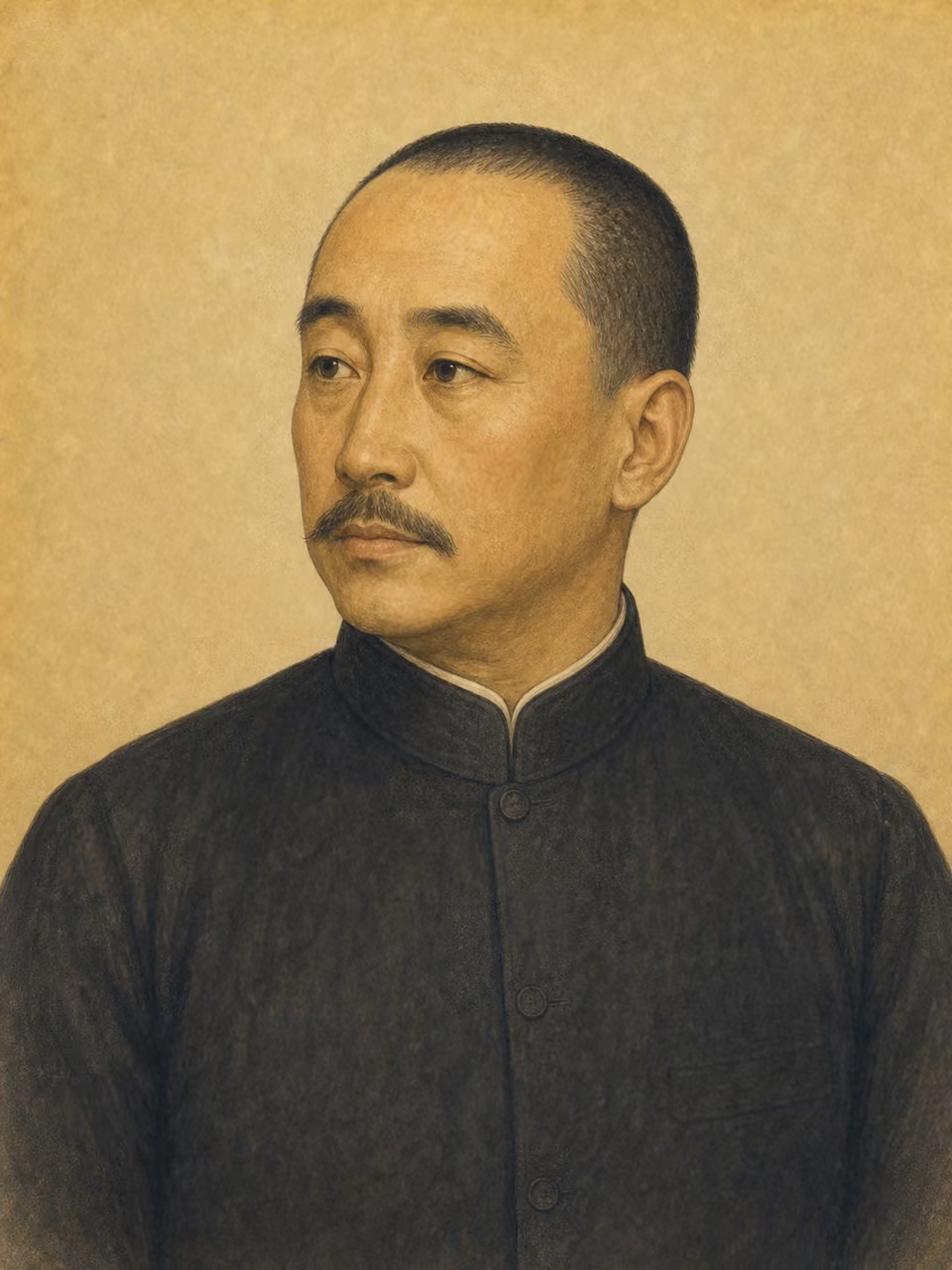
Zhang Zuolin

Portrait: AI-generated imagined likeness

Zhang Zuolin

Politician · Military leader

Years
1875–1928
Birthplace
China
Birth polity
Qing dynasty
Era
Modern
Field
Military
Occupations
Politician · Military leader

He was a Chinese military faction leader based in Manchuria, and the person who led the Fengtian sect. He was involved in a power struggle during the Beijing government, and was killed in a bombing during his relationship with Japan's Kwantung Army. This is the gateway to understanding the Manchuria issue.

View in catalog

Historical context

Places

  • Haicheng

    Birth

  • Shenyang

    Work

Events

  • Warlord Era

    1916–1928

    Political event · Leader

  • Huanggutun incident

    1928

    Political event · Subject

Origins

Origins map
Birth countryAssociated countries
Birth country
China
Associated countries
Japan

Map: Natural Earth (PD)

Biography

Early life

Born in Manchuria at the end of the Qing Dynasty, he rose from the world of horse bandits and local armed groups to become a military leader. After the Xinhai Revolution, when China's central power weakened, regional warlords began to control politics.

Achievements

He led the Fengtian faction and ruled Manchuria, participating in a war between warlords over control of the Beijing government. With support and pressure from Japan, they expanded their power and became an important part of the period of Beiyang warlords.

Character & anecdotes

In 1928, while retreating to Manchuria by the Northern Expeditionary Forces, the entire train was blown up by a member of the Kwantung Army. The Zhang Zuolin bombing incident shows how Japan's Manchuria policy has led to the military becoming more independent.

Historical Impact

Studying Zhang Zuolin, we learn that the politics of the early Republic of China was driven not only by the parliament and the constitution, but also by local warlords, railroads, and foreign powers. After his death, his son Zhang Xueliang carried out the Tohoku Yiban campaign, and the situation surrounding Manchuria further developed into a conflict between China and China. He is an important figure who connects the warlord era and the Manchurian issue.