
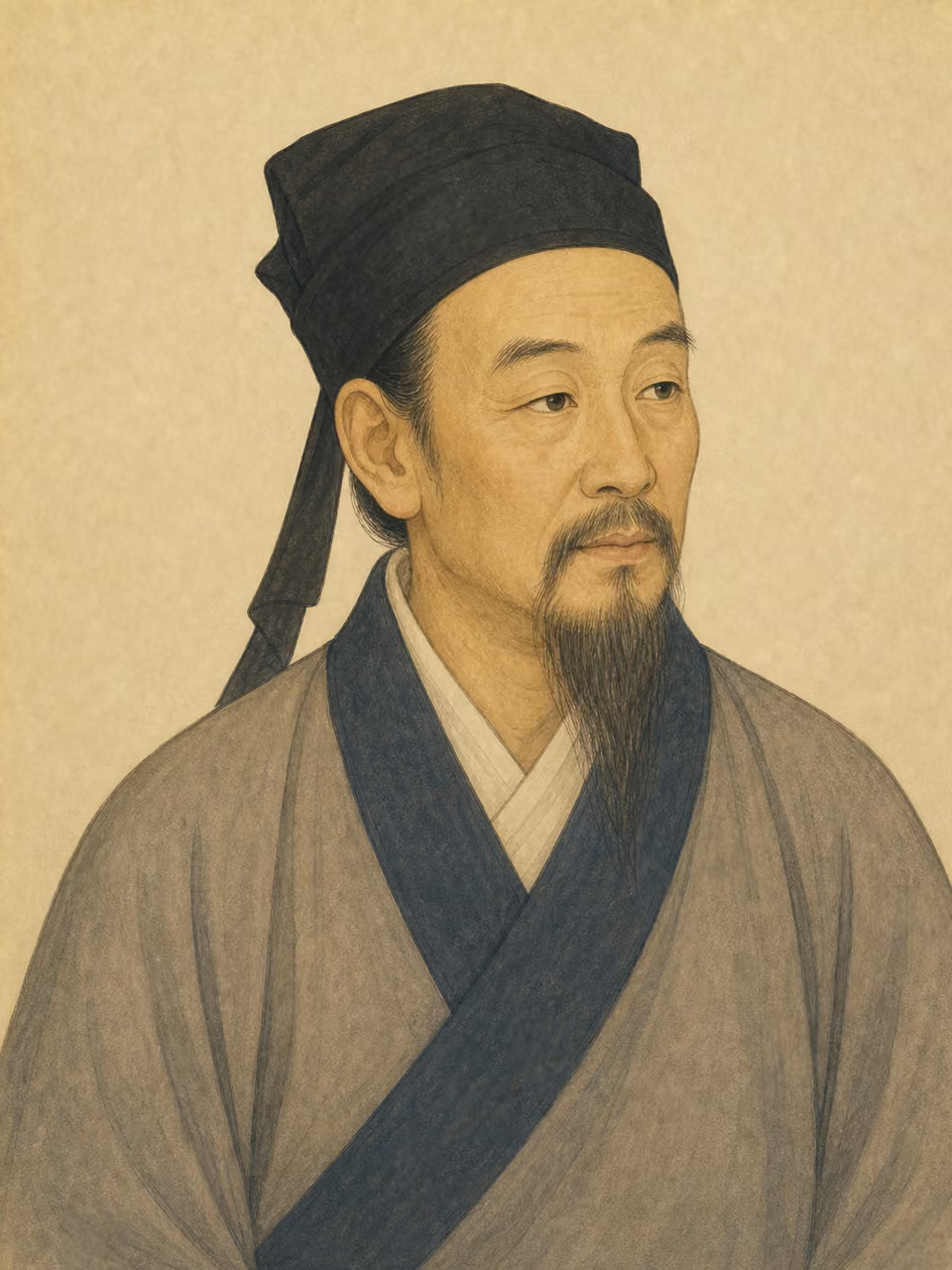
Zhou Dunyi

Portrait: AI-generated imagined likeness

Zhou Dunyi

Philosopher · Writer

Years
1017–1073
Birthplace
China
Birth polity
Northern Song
Era
Medieval
Field
Philosophy
Occupations
Philosopher · Writer

A thinker of the Northern Song Dynasty, who is said to be the pioneer of Song learning, which led to Neo-Confucianism. He linked cosmology and ethics through his ``Taiji Illustrated Guide''. It shows the flow of Confucianism's transformation into a new philosophical system, and serves as a gateway to learning about Song Dynasty thought.

View in catalog

Historical context

Places

  • Daozhou

    Birth

Works & achievements

  • Taijitu shuo

    Book

Events

  • Neo-Confucianism

    Movement · Influenced by

Origins

Origins map
Birth country
Birth country
China

Map: Natural Earth (PD)

Biography

Early life

Born in the Konan area, he deepened his studies while working as a local government official. After the turmoil of the Five Dynasties at the end of the Tang Dynasty, civil government and the imperial examination system were established in the Song Dynasty, creating an intellectual environment that reorganized Confucianism.

Achievements

He presented a cosmology that developed from Taiji to Yin and Yang, the Five Elements, and all things, and placed human moral cultivation within that order. It was later emphasized by Cheng Yan, Cheng Yi, Zhu Xi, and others, and was incorporated into the lineage of Song studies.

Character & anecdotes

Zhou Dunyi is also known for his writings about his love for lotuses, ``The Lotus Theory''. The depiction of a lotus blooming cleanly out of mud as a symbol of a gentleman clearly shows moral ideals.

Historical Impact

When you study Zhou Dunyi, you will see that Song Dynasty Confucianism developed not only into the interpretation of scripture, but also into a philosophy that brings together the universe, mind, and ethics. You can understand the prehistory of Neo-Confucianism, which has long been influential in East Asia, and also see the process by which Confucianism deepened into a theory of intellectual cultivation.