
An Lushan Rebellion
755–763
A major rebellion against the Tang dynasty from 755 to 763, begun by the frontier military governor An Lushan and continued by successive leaders of the rebel Yan regime.

- Period
- 755–763
- Kind
- Rebellion
- Regions
- East Asia
- Keywords
- An Lushan Rebellion · background · course · outcome
Follow the story · Four stages
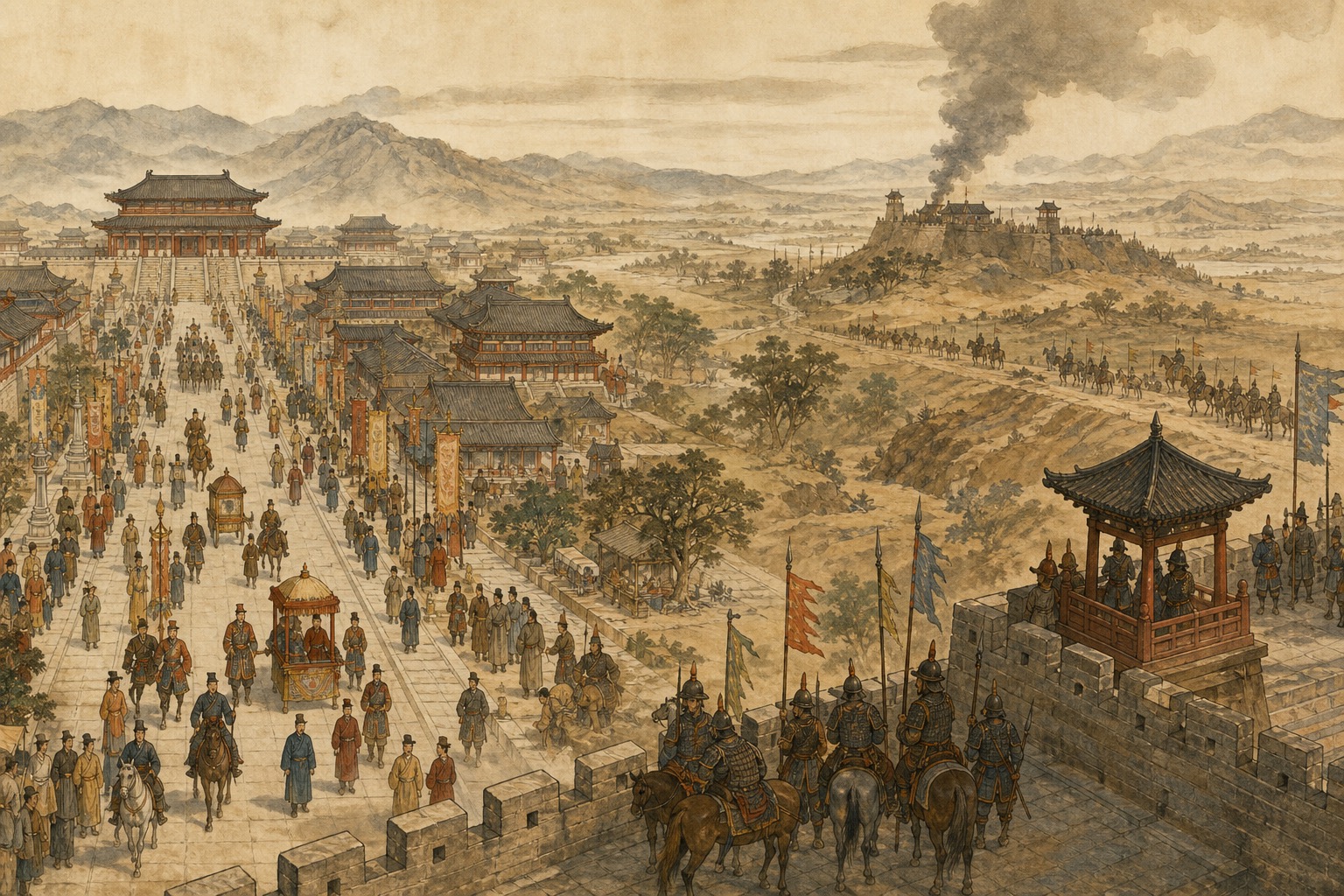
Background
Long-service frontier armies placed growing military and administrative power in the hands of regional commissioners. An Lushan commanded several northeastern circuits, while factional conflict and uncertainty at Emperor Xuanzong's late court sharpened his confrontation with the central government.
- Long-service frontier armies placed growing military and administrative power in the hands of regional commissioners.
- An Lushan commanded several northeastern circuits, while factional conflict and uncertainty at Emperor Xuanzong's late court sharpened his confrontation with the central government.
- Core event: A major rebellion against the Tang dynasty from 755 to 763, begun by the frontier military governor An Lushan and continued by successive leaders of the rebel Yan regime.
Course
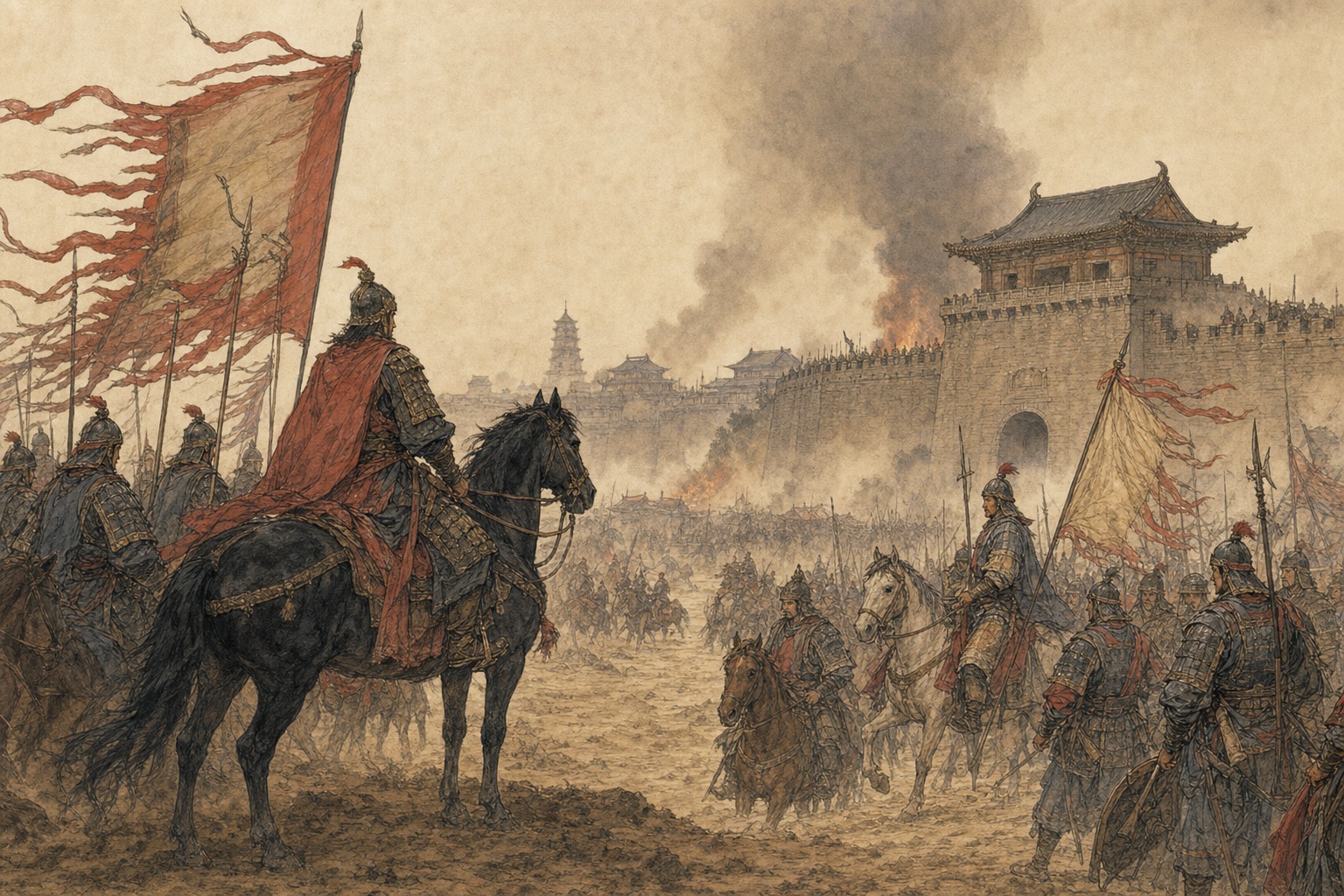
The rebels captured Luoyang, founded a Yan dynasty, and took Chang'an in 756. Tang forces recovered both capitals with major Uyghur assistance, but assassinations and leadership changes on the rebel side allowed the war to continue under Shi Siming and his successors.
- The rebels captured Luoyang, founded a Yan dynasty, and took Chang'an in 756.
- Tang forces recovered both capitals with major Uyghur assistance, but assassinations and leadership changes on the rebel side allowed the war to continue under Shi Siming and his successors.
- Conditions behind the action: Long-service frontier armies placed growing military and administrative power in the hands of regional commissioners. An Lushan commanded several northeastern circuits, while factional conflict and uncertainty at Emperor Xuanzong's late court sharpened his confrontation with the central government.
Outcome
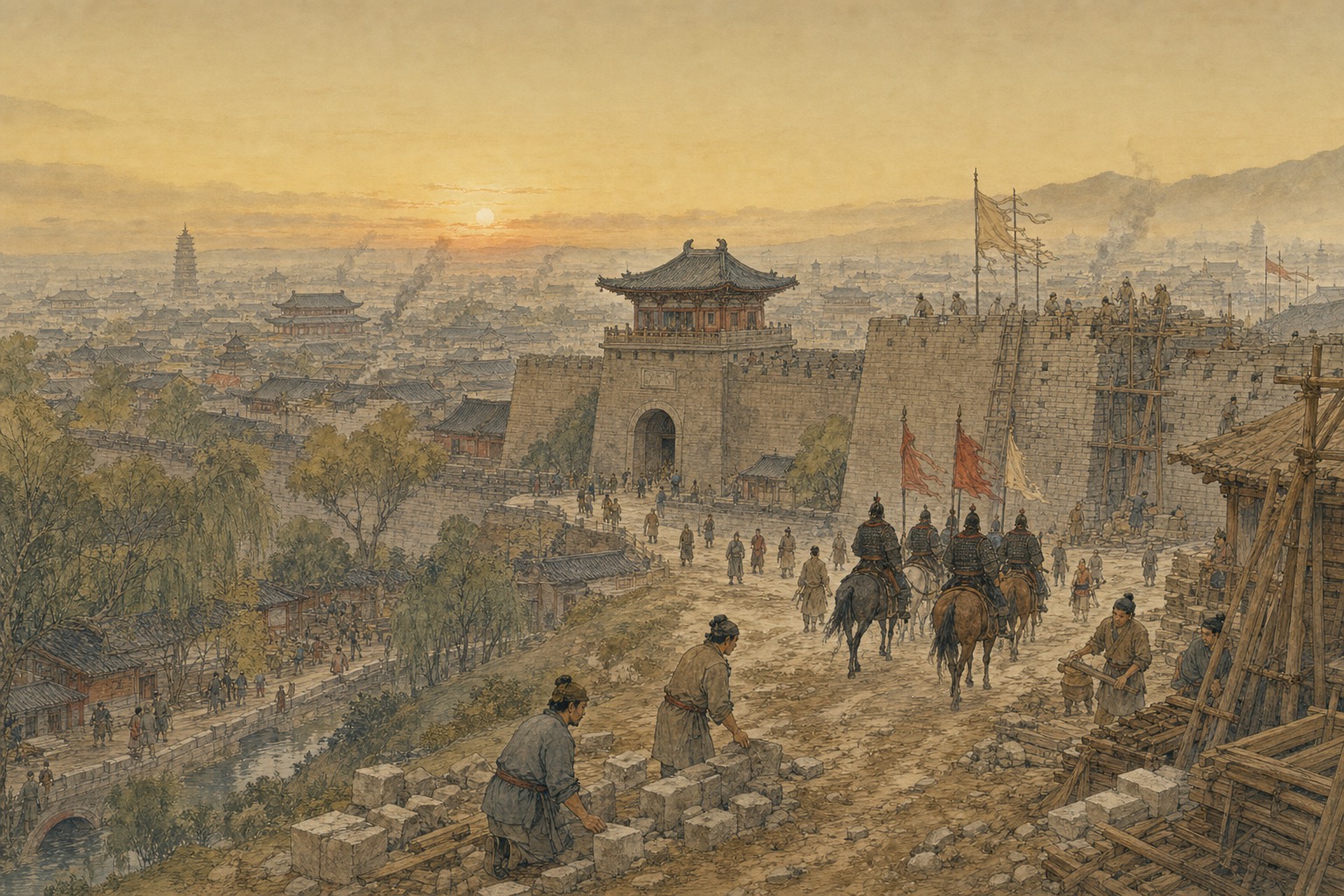
The rebellion was suppressed by 763, leaving displacement, damaged cities and farmland, and severe fiscal strain. To survive, the Tang had expanded provincial military commands and compromised with regional commanders, making direct central control harder to restore.
- The rebellion was suppressed by 763, leaving displacement, damaged cities and farmland, and severe fiscal strain.
- To survive, the Tang had expanded provincial military commands and compromised with regional commanders, making direct central control harder to restore.
- Process producing the result: The rebels captured Luoyang, founded a Yan dynasty, and took Chang'an in 756. Tang forces recovered both capitals with major Uyghur assistance, but assassinations and leadership changes on the rebel side allowed the war to continue under Shi Siming and his successors.
Historical significance
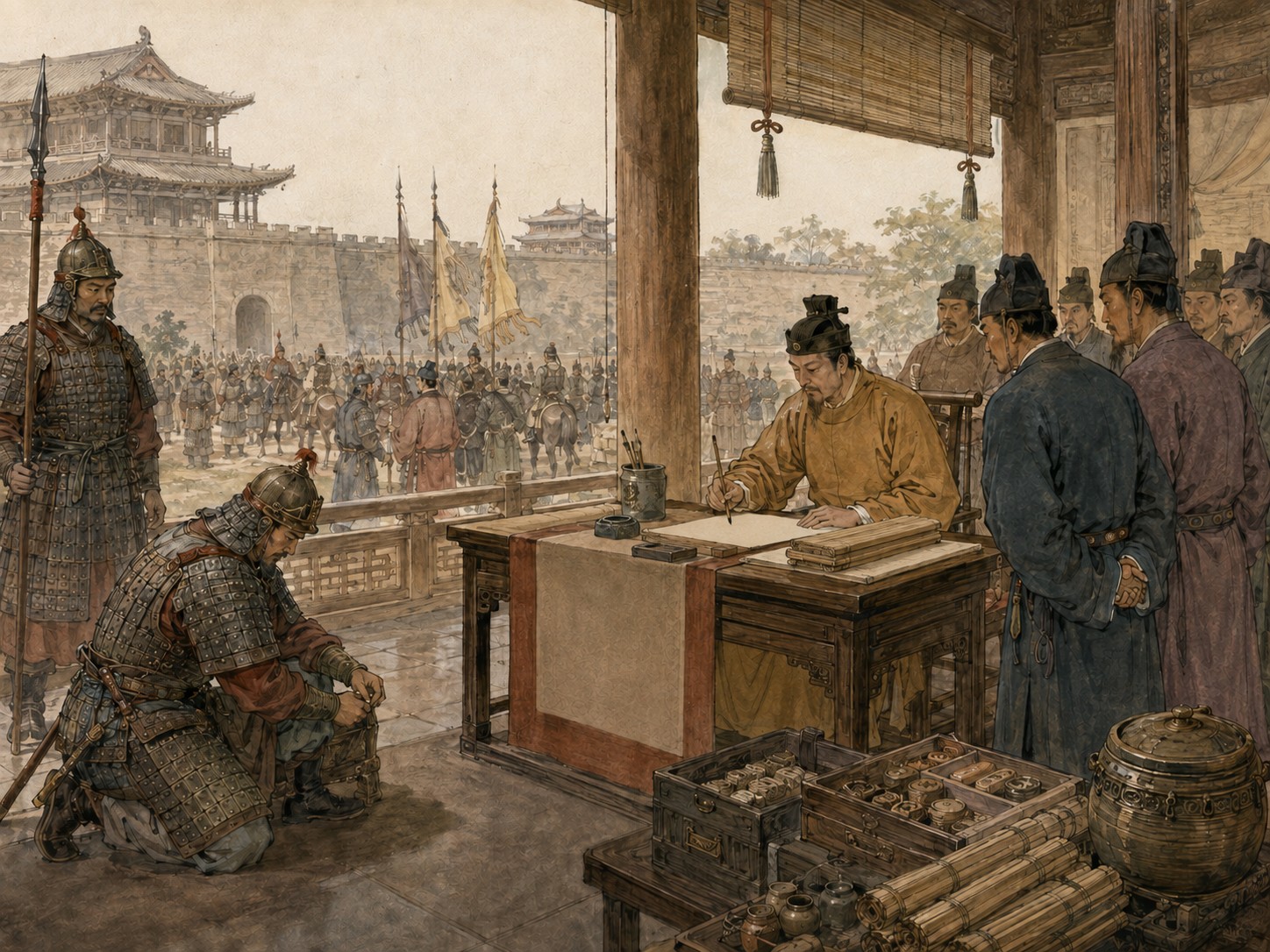
The rebellion did not cause every feature of Tang decline at once, but it accelerated military decentralization, fiscal and army reform, and shifts in East Asian power. It remains a key dividing point for comparing the institutions of the early and late Tang.
- The rebellion did not cause every feature of Tang decline at once, but it accelerated military decentralization, fiscal and army reform, and shifts in East Asian power.
- It remains a key dividing point for comparing the institutions of the early and late Tang.
- Immediate consequence: The rebellion was suppressed by 763, leaving displacement, damaged cities and farmland, and severe fiscal strain. To survive, the Tang had expanded provincial military commands and compromised with regional commanders, making direct central control harder to restore.


Related figures
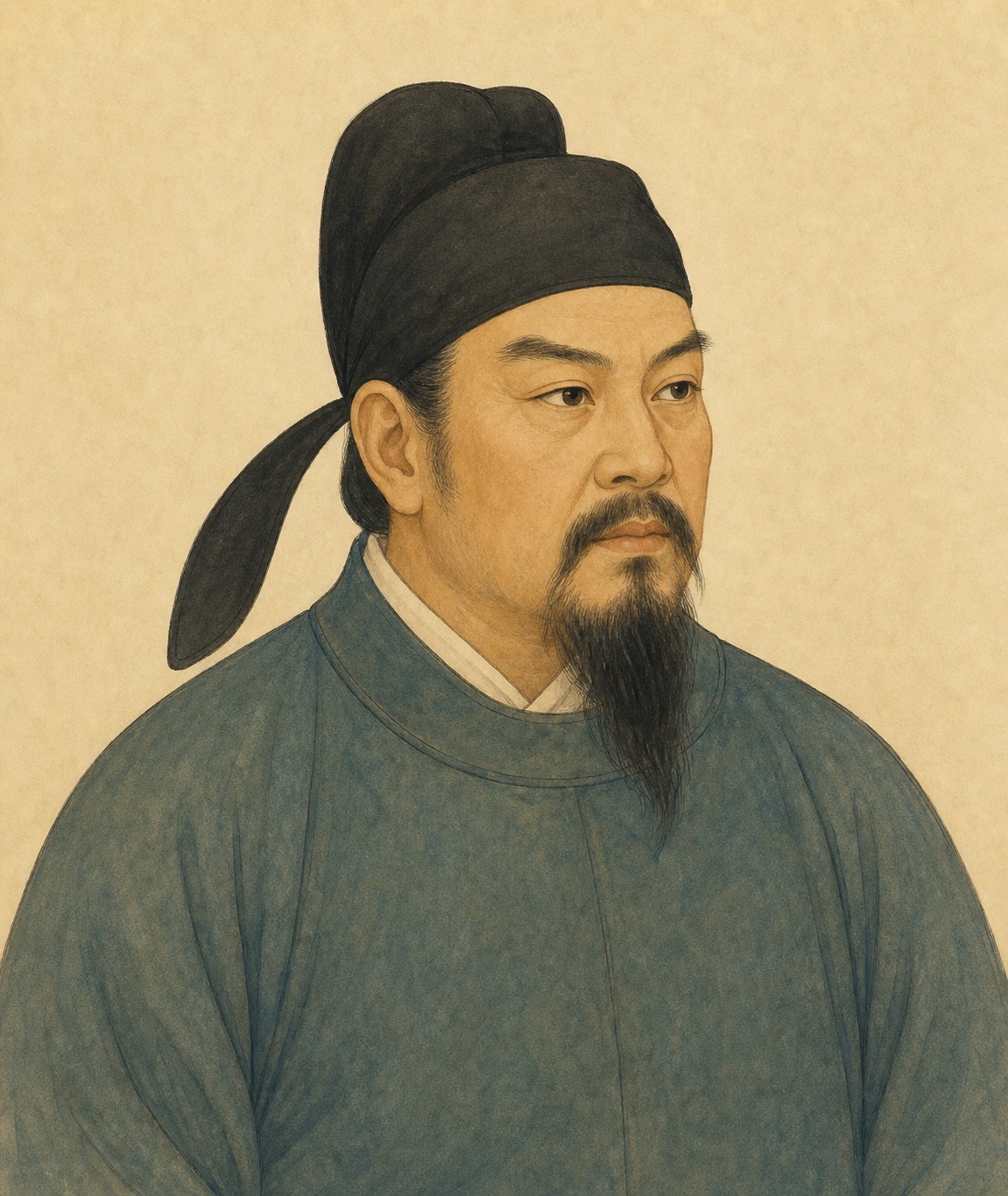
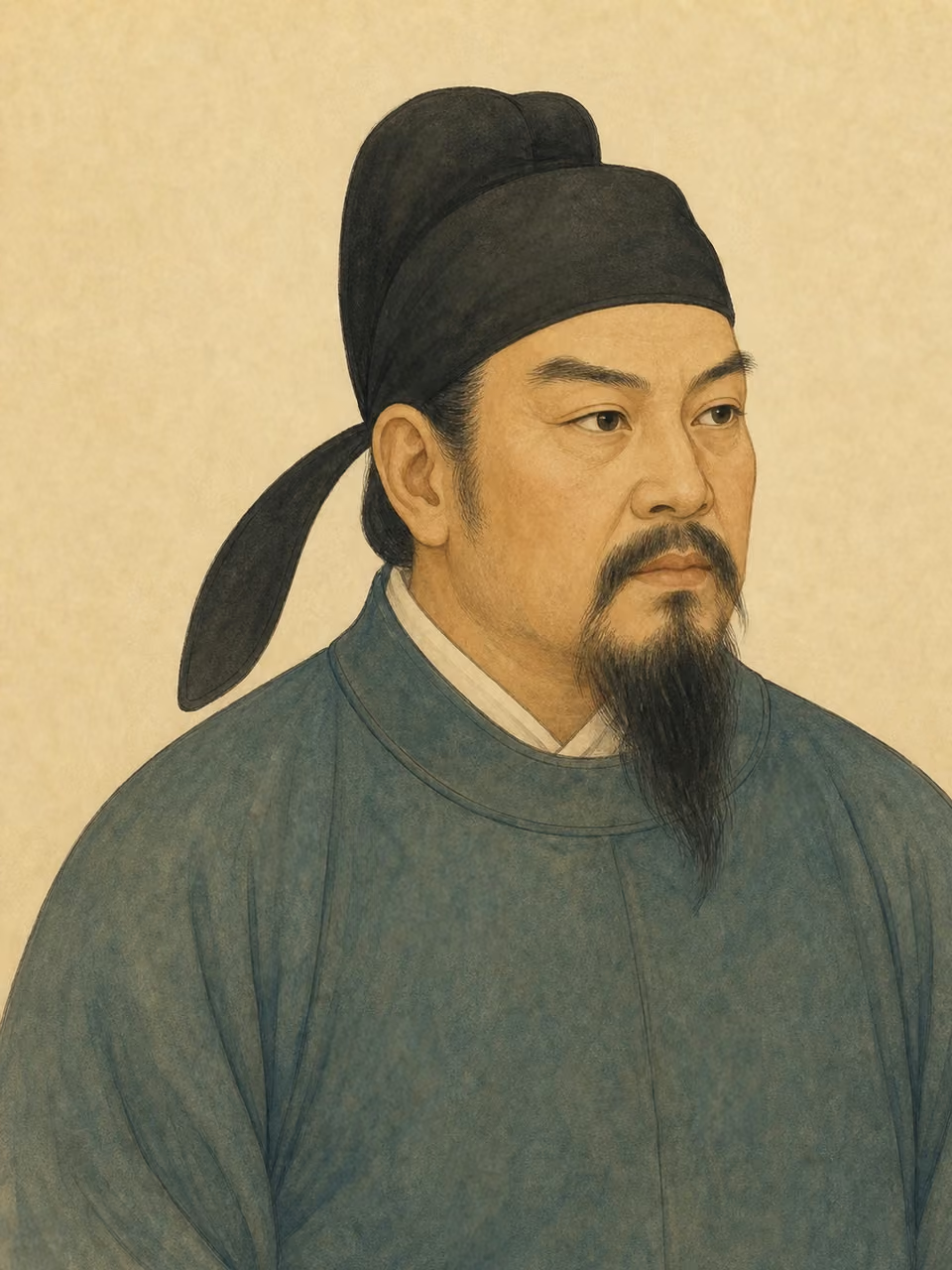
Yan Zhenqing
historical figure in context
A politician and calligrapher of the Tang Dynasty who had a great influence on later generations with his powerful calligraphy. During the Anshi Rebellion, he stood on the side of the Tang dynasty and resisted. It is a representative example of Tang culture, where calligraphy and memories of loyalty are linked.
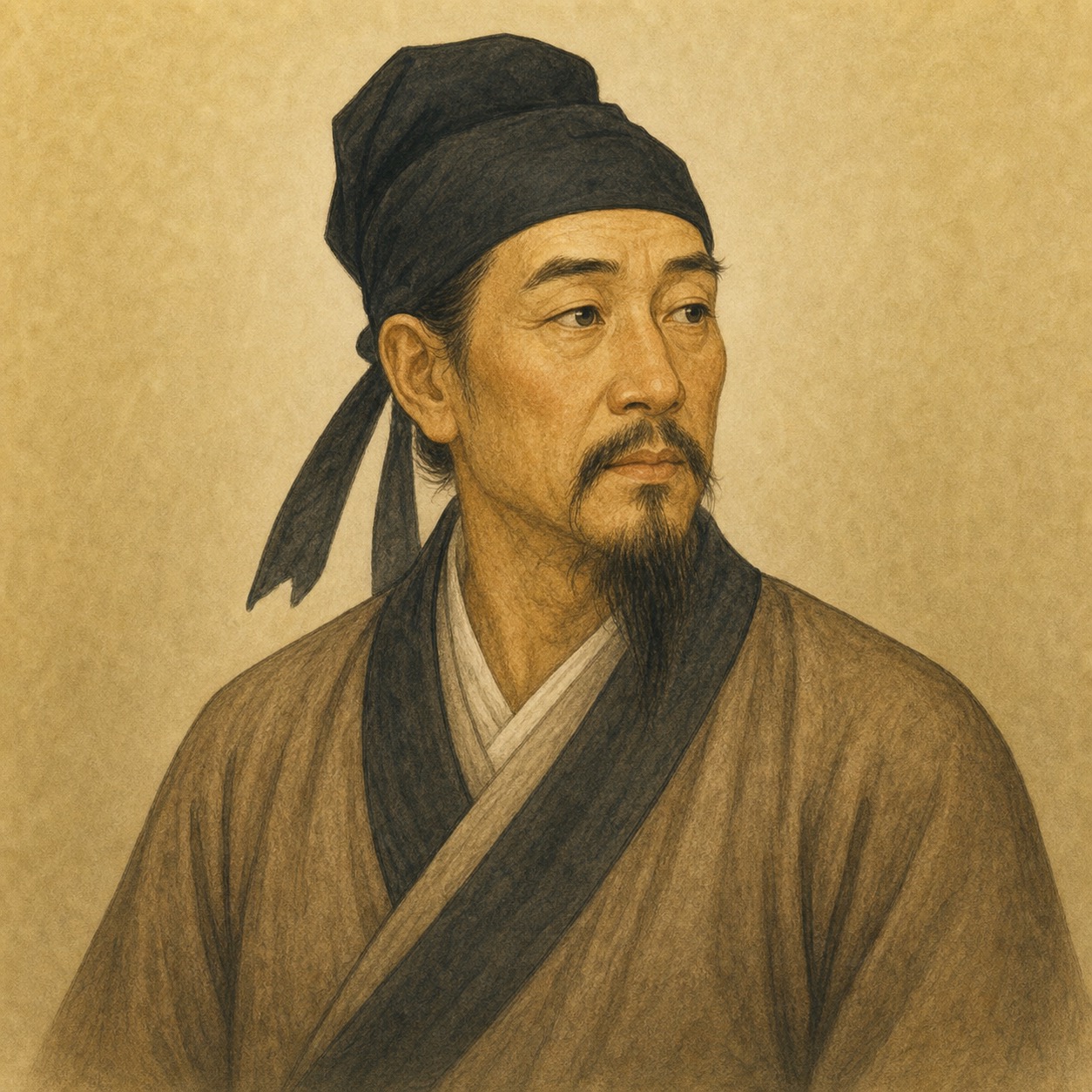
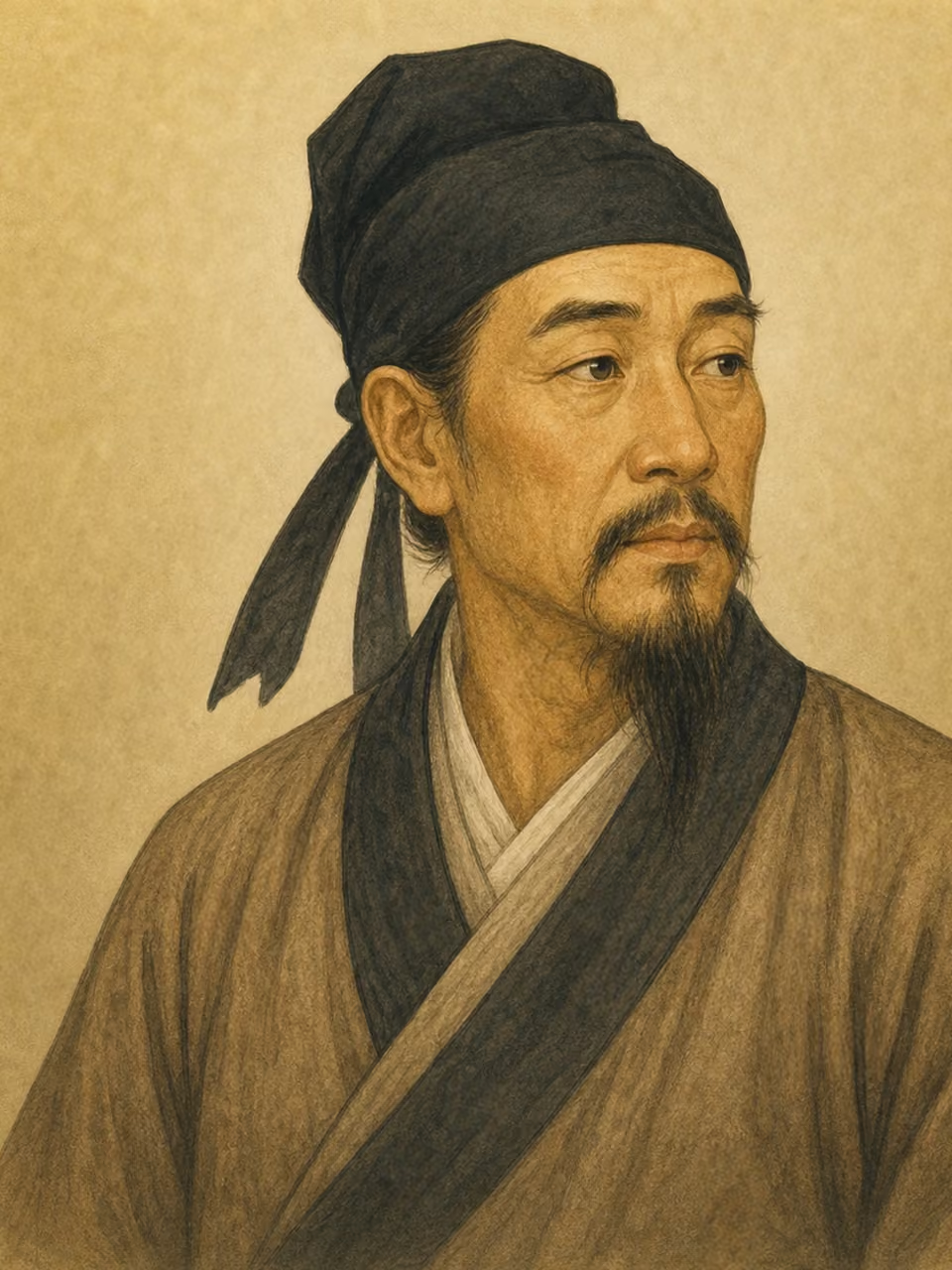
Du Fu
historical figure in context
Poet of the Tang Dynasty. A giant of Chinese poetry, along with Li Bai, who experienced the Anshi Rebellion and wrote about the suffering of society in his poems. He is a person who thinks about the prosperity and turmoil of the Tang Dynasty.
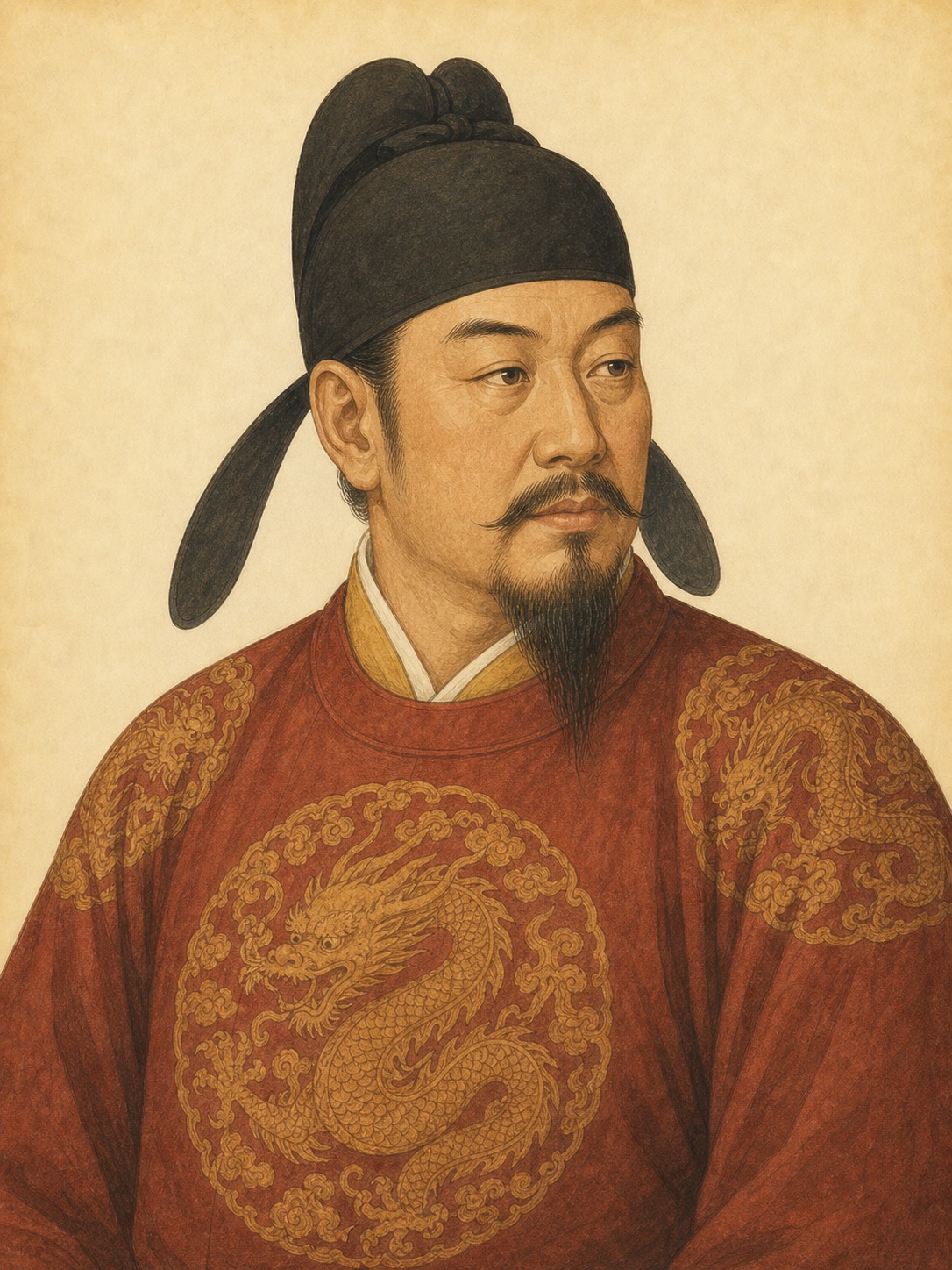
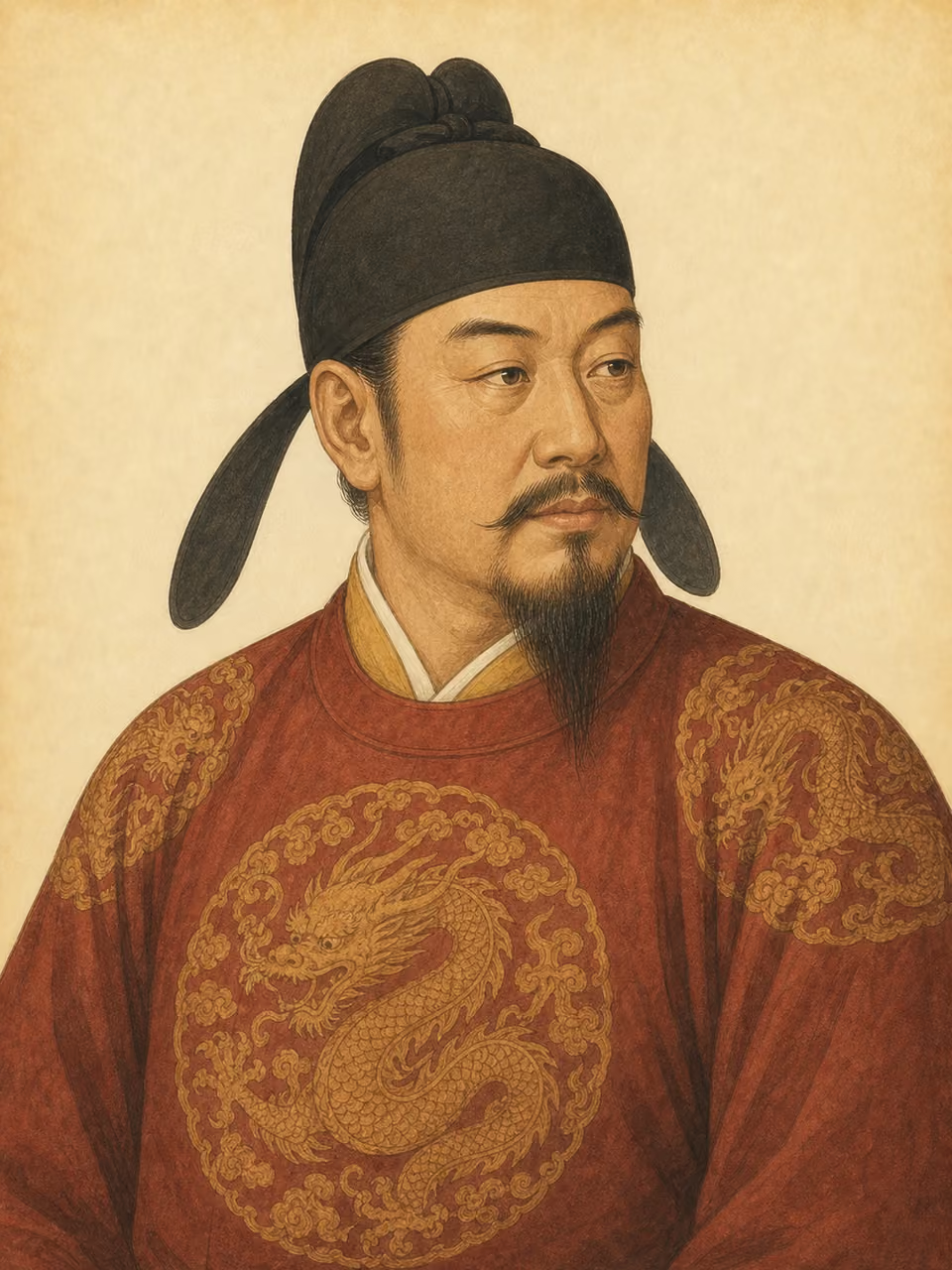
Emperor Xuanzong of Tang
historical figure in context
Emperor of the Tang Dynasty. He led the prosperity of the Tang Dynasty during the Kaiyuan era, but in his later years he gave important support to the Yang Guifei family and An Lushan, and was forced to abdicate during the Anshi Rebellion. He is a person who thinks about the rise and fall of the Tang Dynasty. It was also a turning point in the flourishing Tang culture.
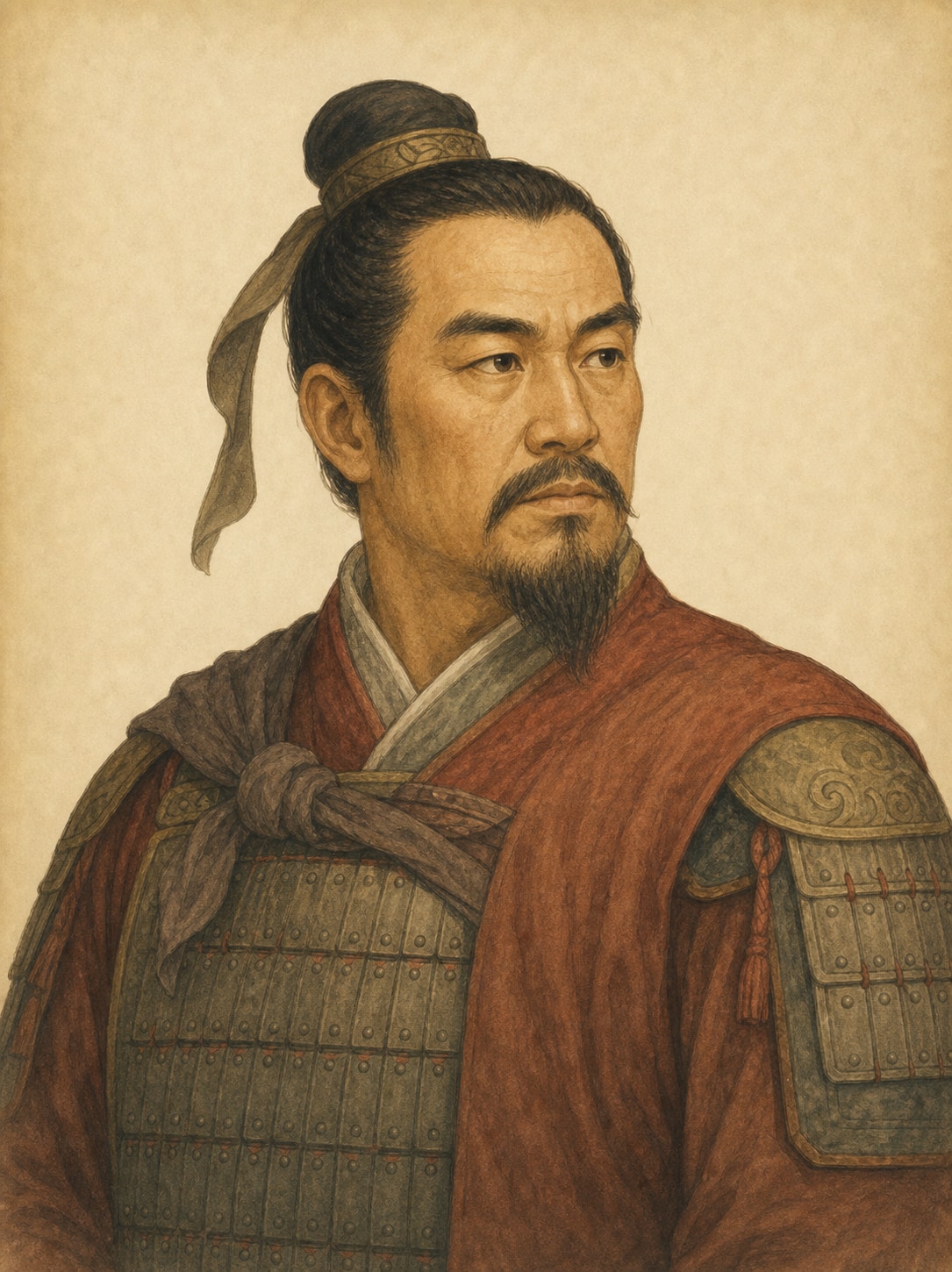
Shi Siming
historical figure in context
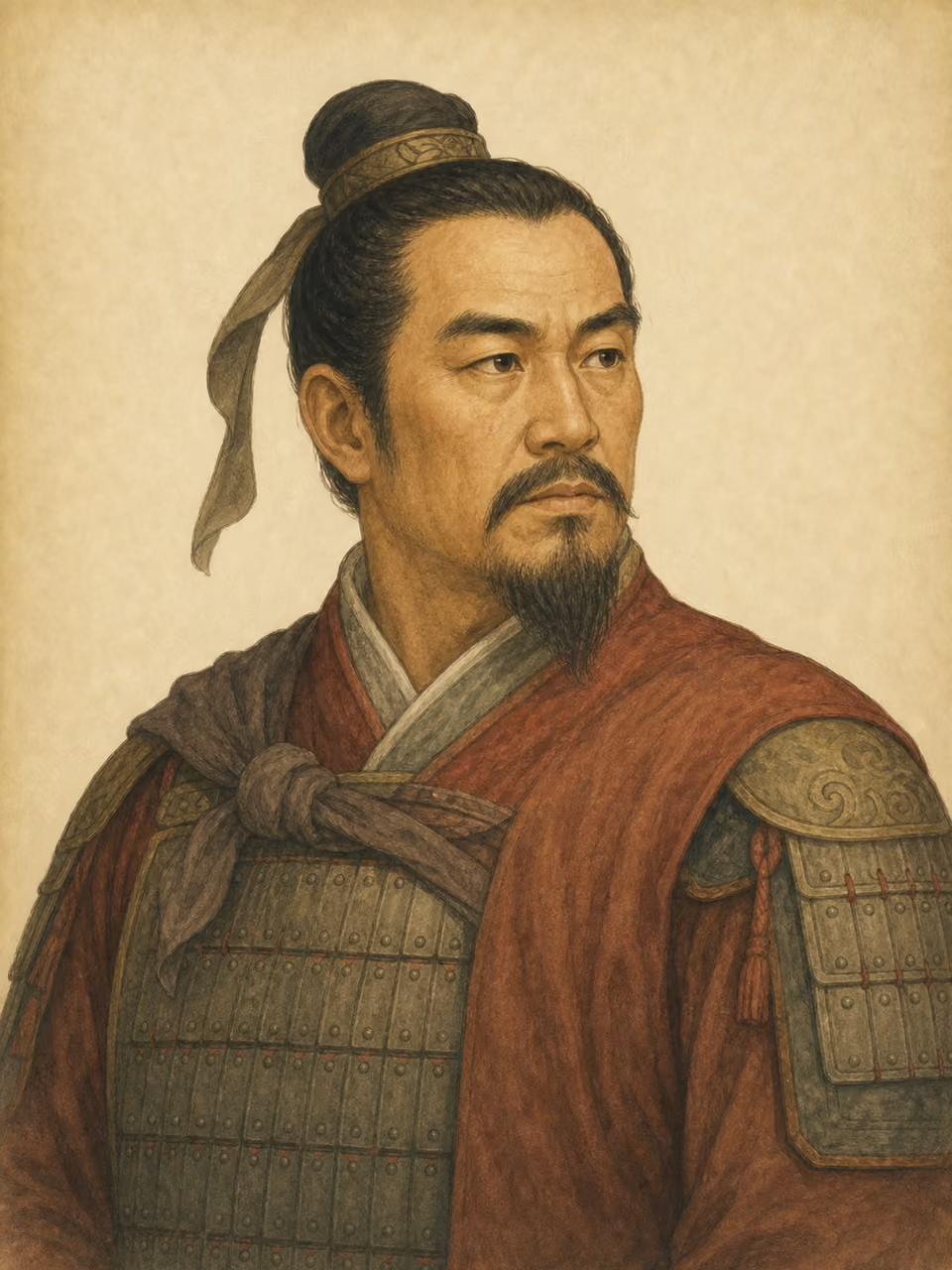
A military leader who led the rebel forces following An Lushan during the Anshi Rebellion of the Tang Dynasty. This is important when considering the military system of the Tang Dynasty and the power of frontier envoys. He is also a person who specifically shows the reason why the rebellion lasted for so long.
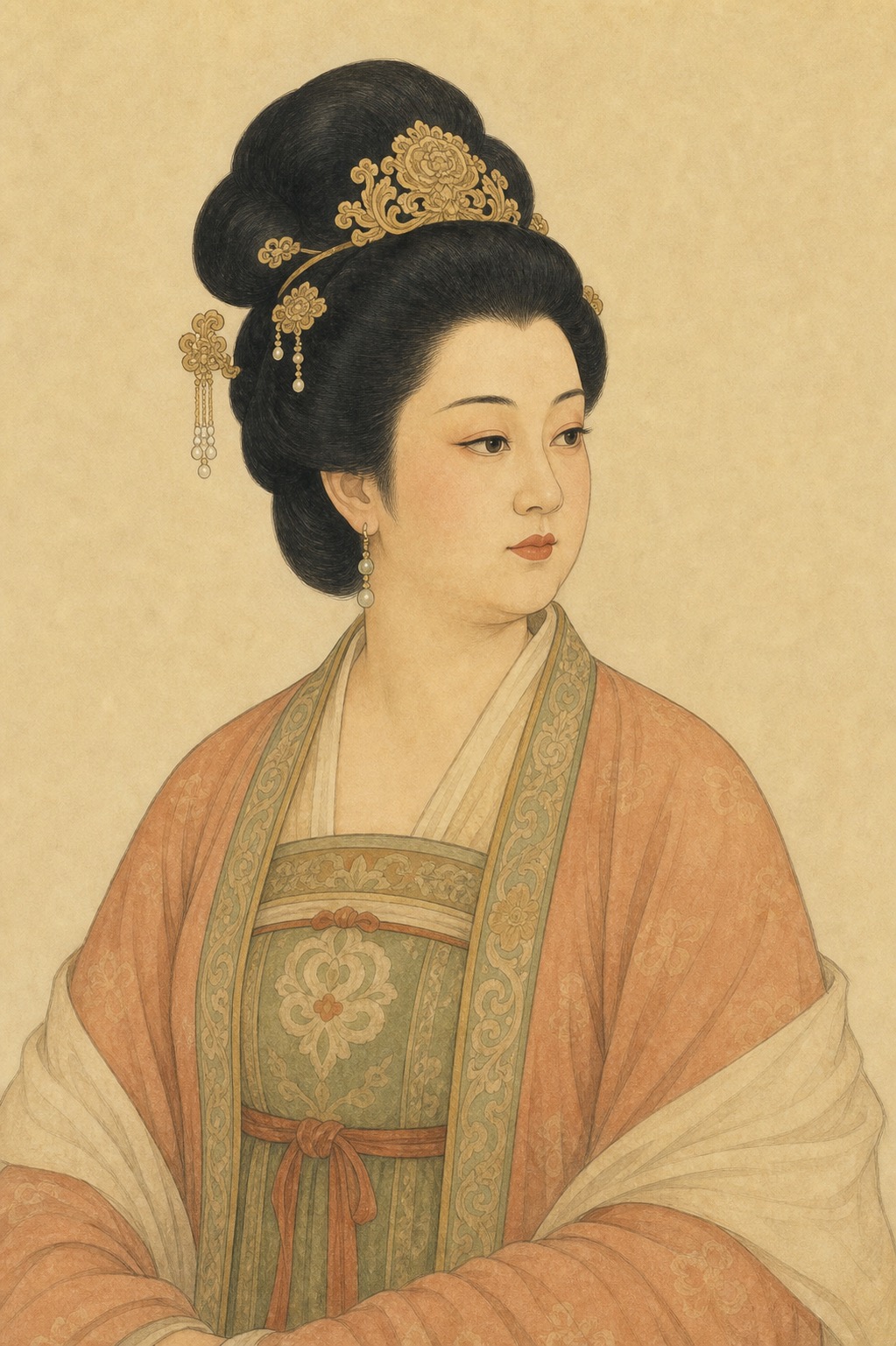
Yang Guifei
historical figure in context
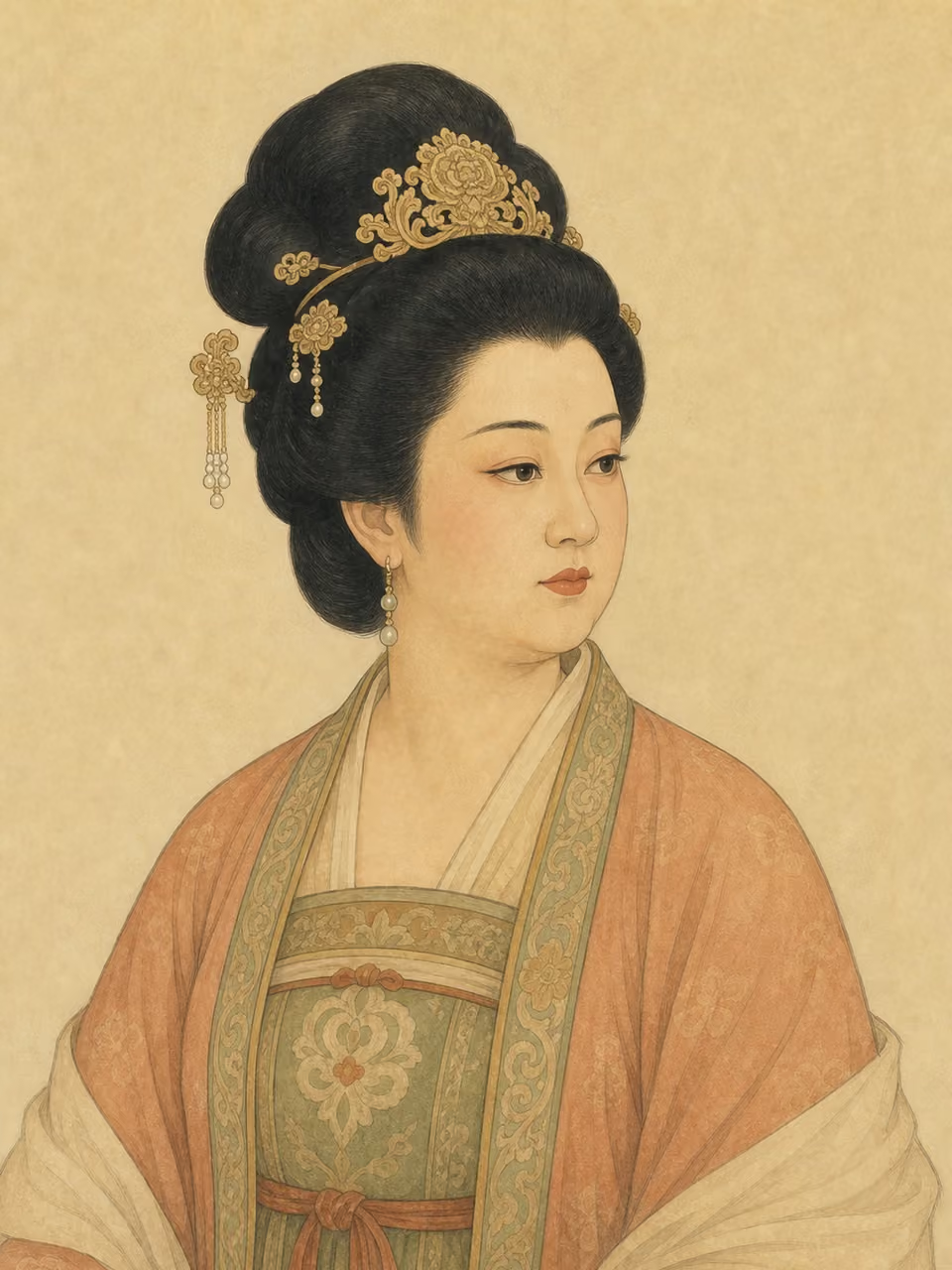
She was a beloved consort of Emperor Xuanzong of the Tang Dynasty, and is a figure associated with the Anshi Rebellion. It symbolizes the glamor of court culture and political crisis. He is an important figure in East Asian culture who has long been depicted in literature and paintings.
Related events
735
Prelude
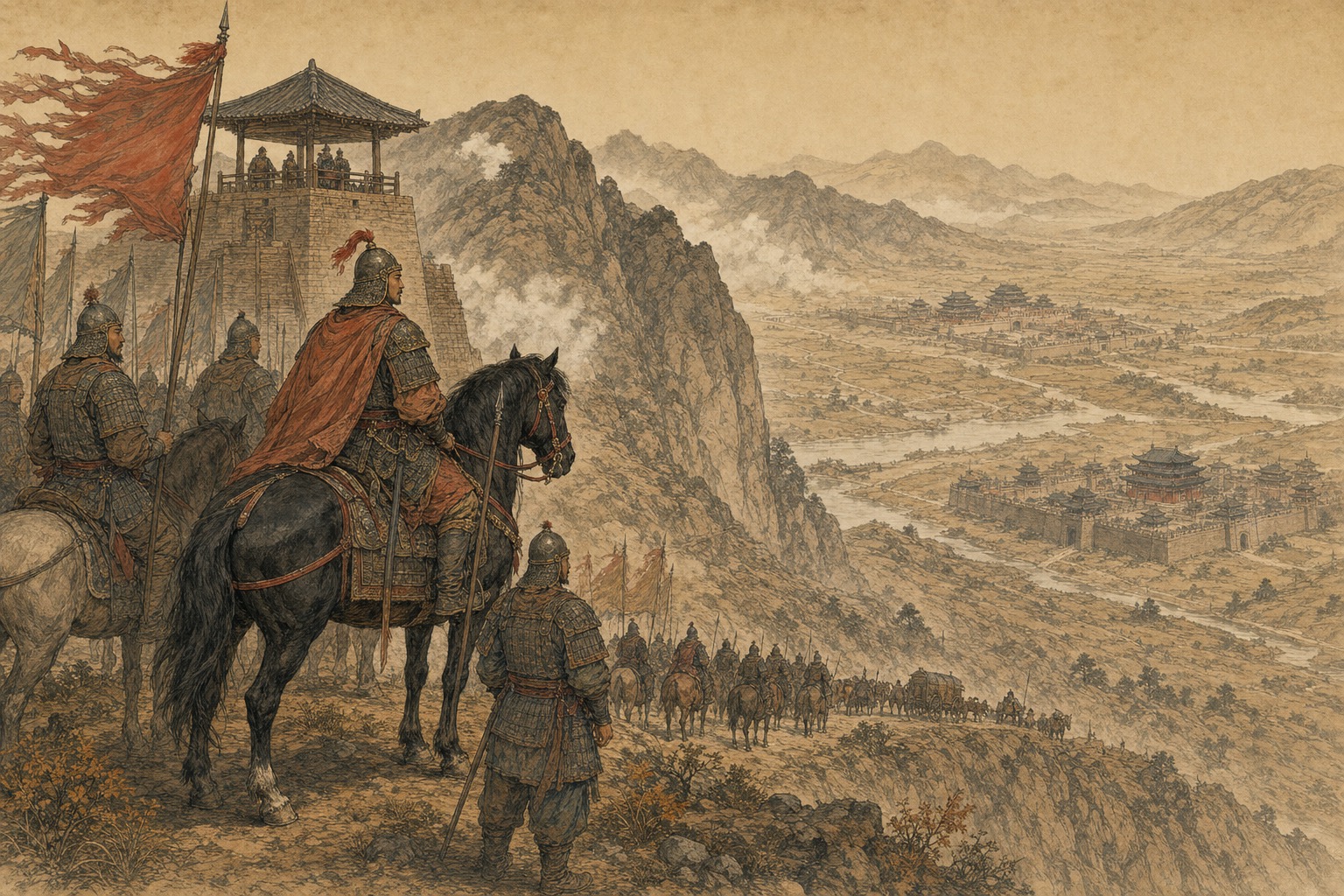
Prelude — Background: Long-service frontier armies placed growing military and administrative power in the hands of regional commissioners. An Lushan commanded several northeastern circuits, while factional conflict and uncertainty at Emperor Xuanzong's late court sharpened his confrontation with the central government.
c. 754
Rising tension
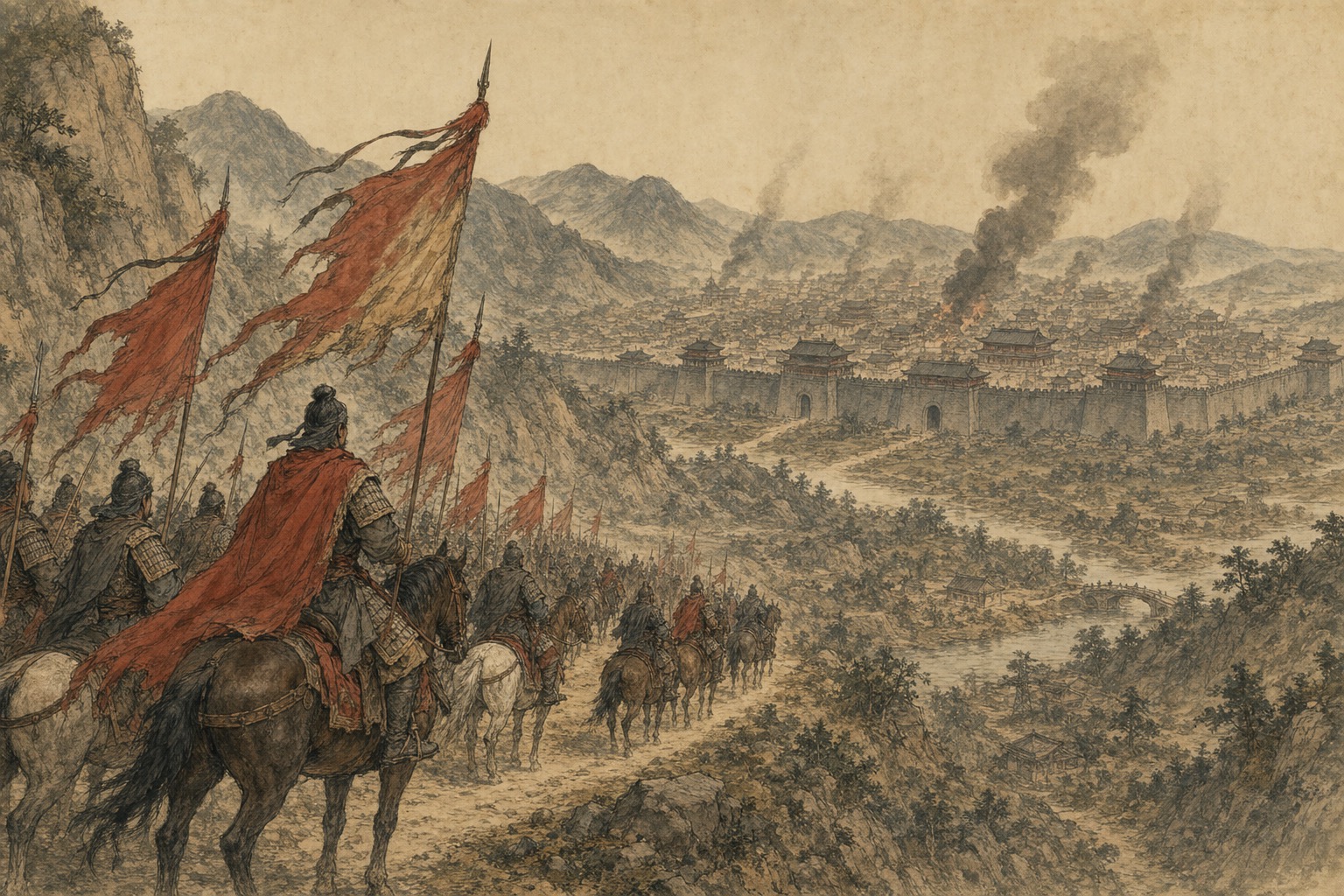
Rising tension — Build-up: The rebels captured Luoyang, founded a Yan dynasty, and took Chang'an in 756. Tang forces recovered both capitals with major Uyghur assistance, but assassinations and leadership changes on the rebel side allowed the war to continue under Shi Siming and his successors.
755–763
An Lushan Rebellion
Current event
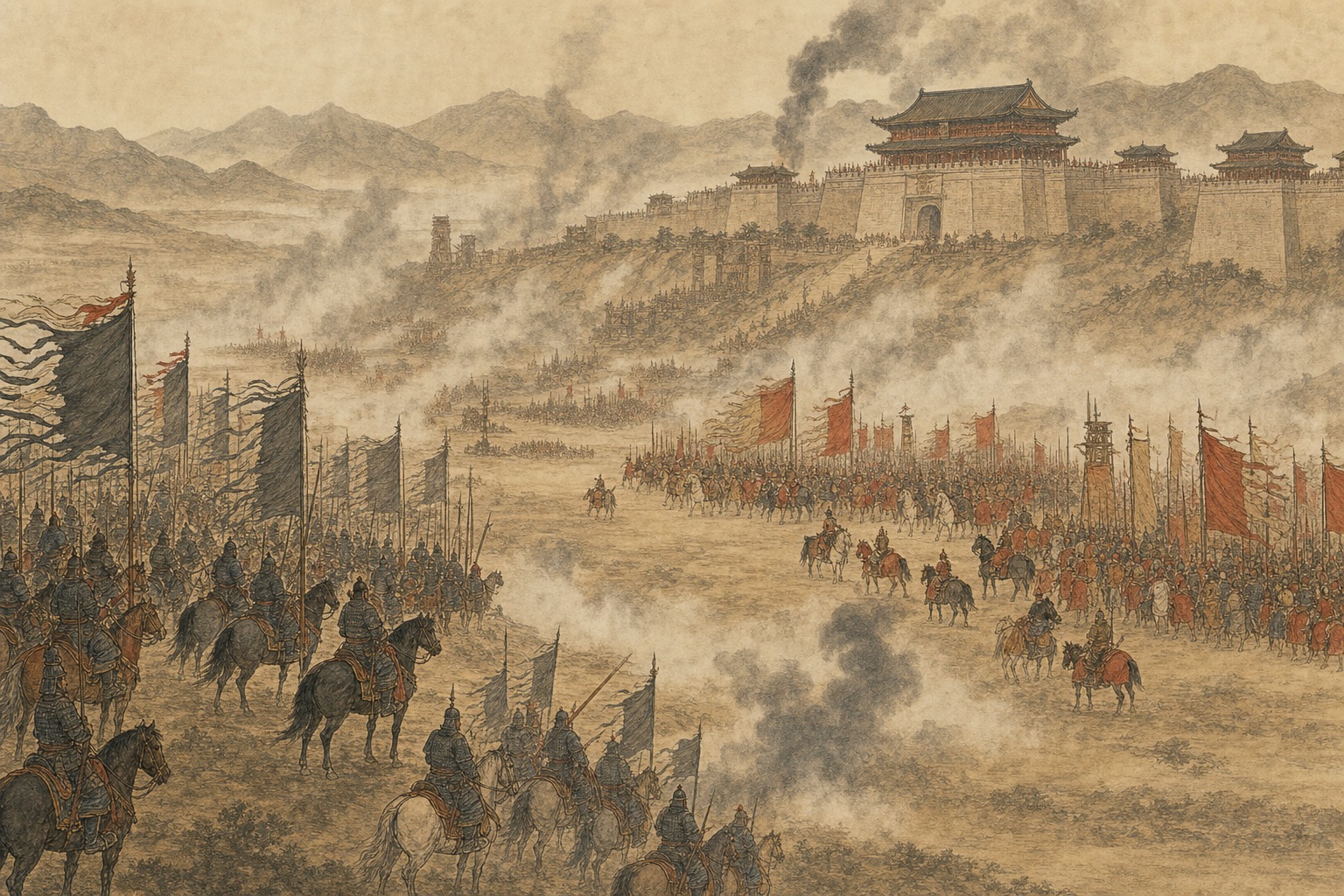
An Lushan Rebellion — Central transition: A major rebellion against the Tang dynasty from 755 to 763, begun by the frontier military governor An Lushan and continued by successive leaders of the rebel Yan regime.
c. 764
Immediate aftermath
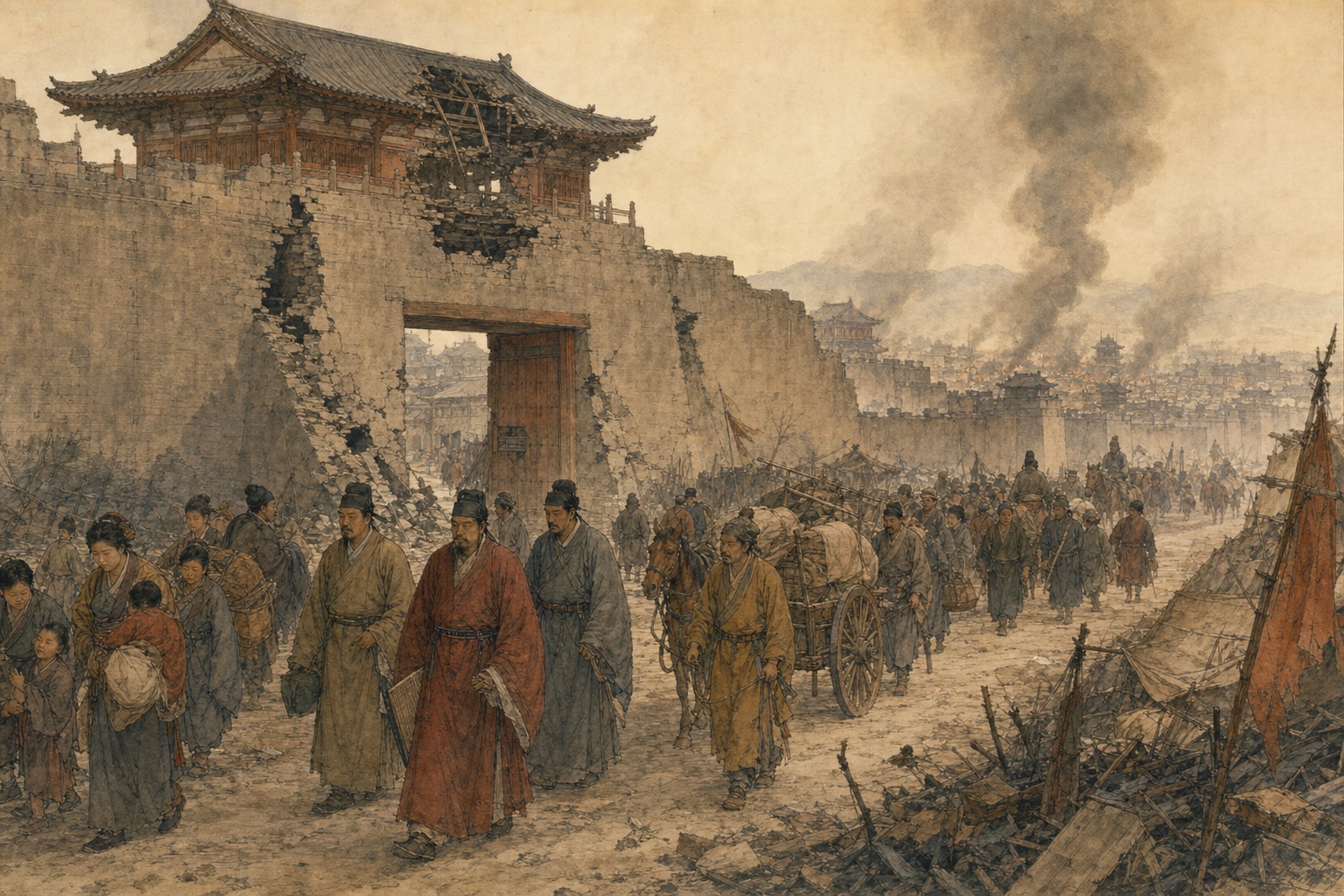
Immediate aftermath — Immediate result: The rebellion was suppressed by 763, leaving displacement, damaged cities and farmland, and severe fiscal strain. To survive, the Tang had expanded provincial military commands and compromised with regional commanders, making direct central control harder to restore.
c. 773
Long-term significance
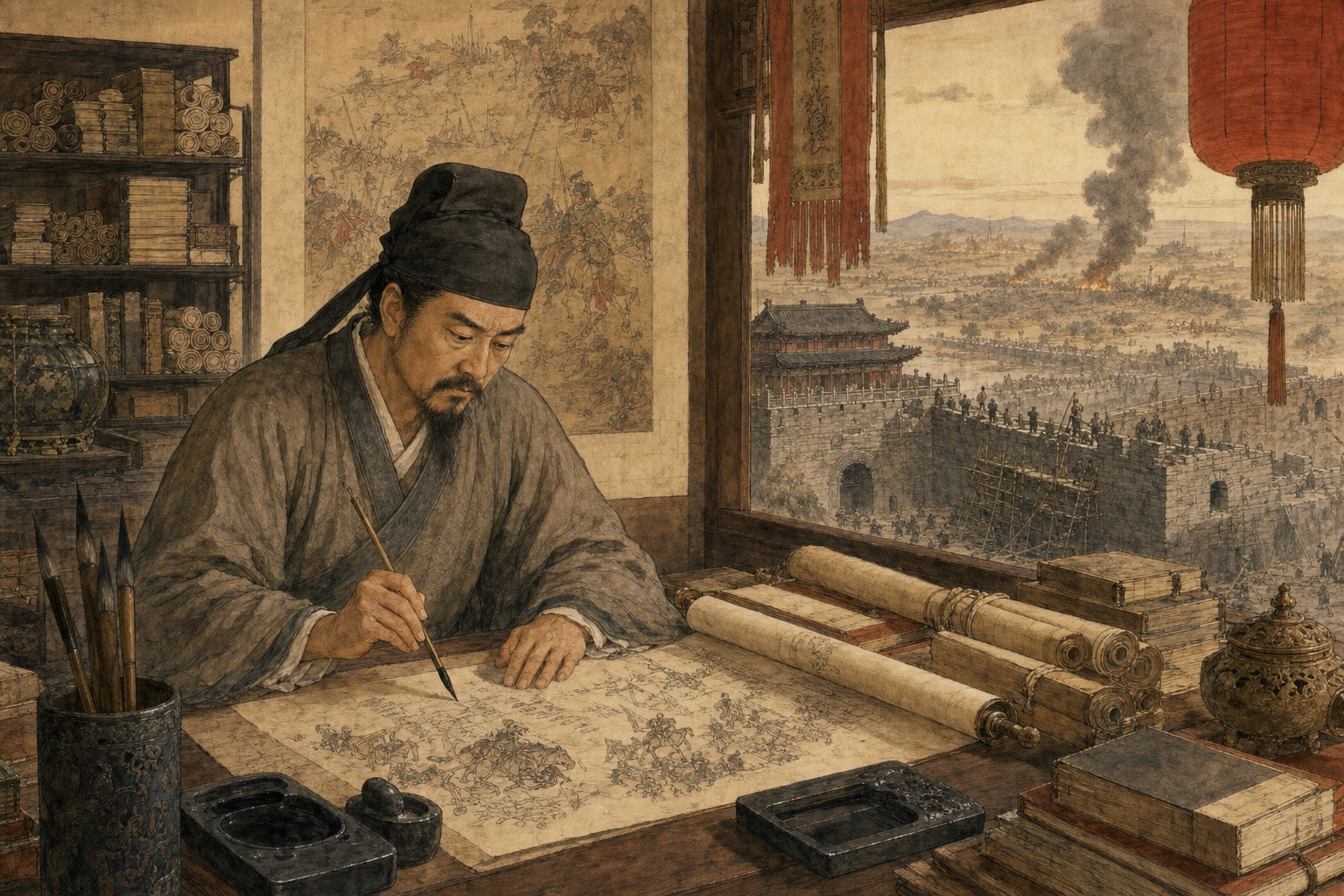
Long-term significance — Long-term significance: The rebellion did not cause every feature of Tang decline at once, but it accelerated military decentralization, fiscal and army reform, and shifts in East Asian power. It remains a key dividing point for comparing the institutions of the early and late Tang.


Sources
- An Lushan Rebellion — ECFE9C64AE6E73EC4319B165A606F88C (Cambridge University Press)cambridge.orgThis Cambridge University Press resource supports the chronology, setting, and course of An Lushan Rebellion.
- An Lushan Rebellion — 55D49F02EE80100AC5A4D9FA3CC04FA1 (Cambridge University Press)cambridge.orgThis Cambridge University Press resource supports the chronology, setting, and course of An Lushan Rebellion.
- An Lushan Rebellion — Q253774 (Wikidata)wikidata.orgThis Wikidata resource supports the chronology, setting, and course of An Lushan Rebellion.