
Berlin Conference
1884–1885
The November 1884–February 1885 meeting at which fourteen states negotiated rules for commerce, navigation, and future colonial claims in Africa.

- Period
- 1884–1885
- Kind
- Conference
- Regions
- Europe, Africa
- Keywords
- Berlin Conference · background · course · outcome
Follow the story · Four stages
Background
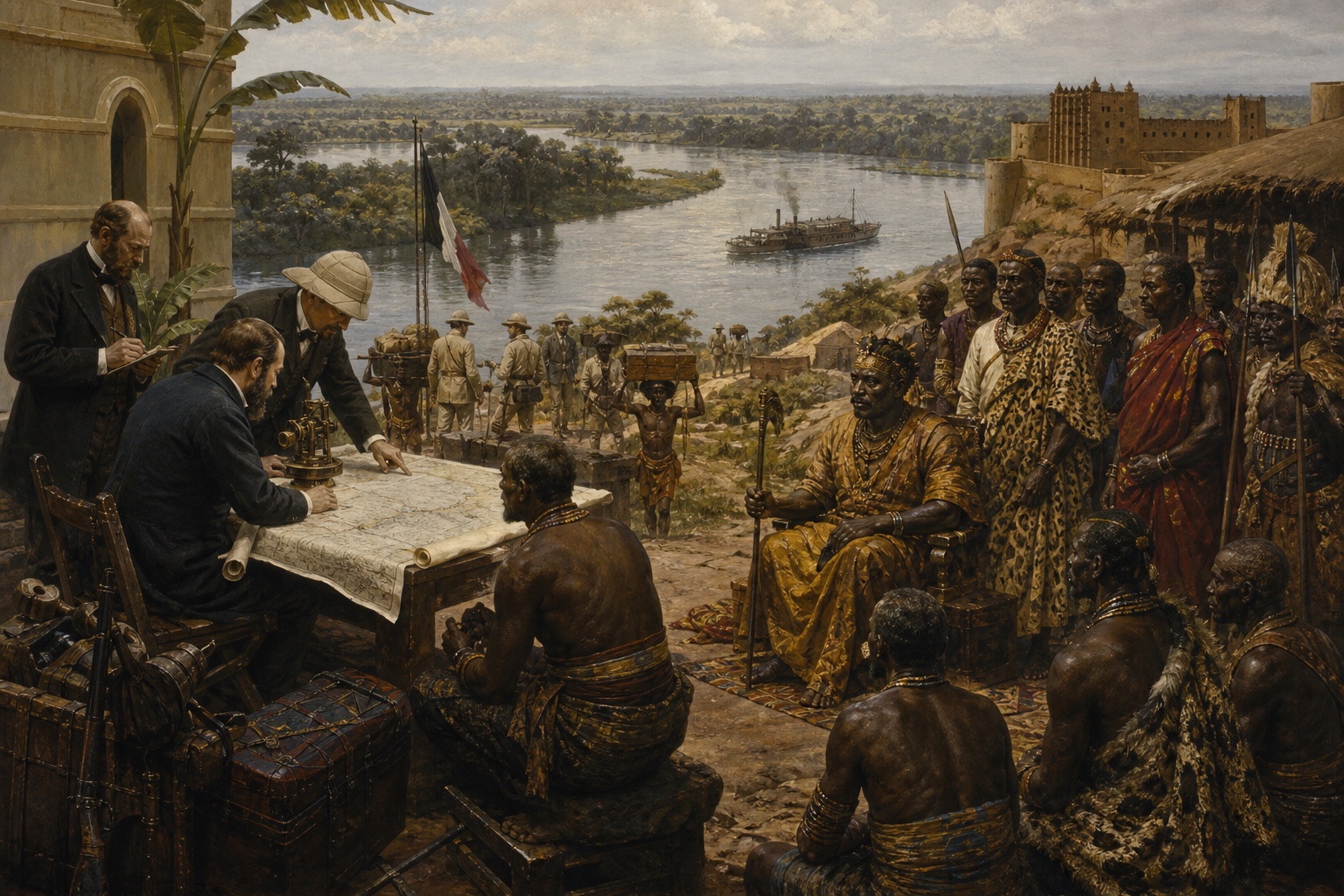
European expansion in Africa predated the meeting, while rivalry around the Congo basin involved Leopold II of Belgium, France, Portugal, and others. Bismarck's government convened the powers to contain conflict among them while securing German colonial interests. No representatives of African states or societies were invited.
- European expansion in Africa predated the meeting, while rivalry around the Congo basin involved Leopold II of Belgium, France, Portugal, and others.
- Bismarck's government convened the powers to contain conflict among them while securing German colonial interests.
- No representatives of African states or societies were invited.
Course
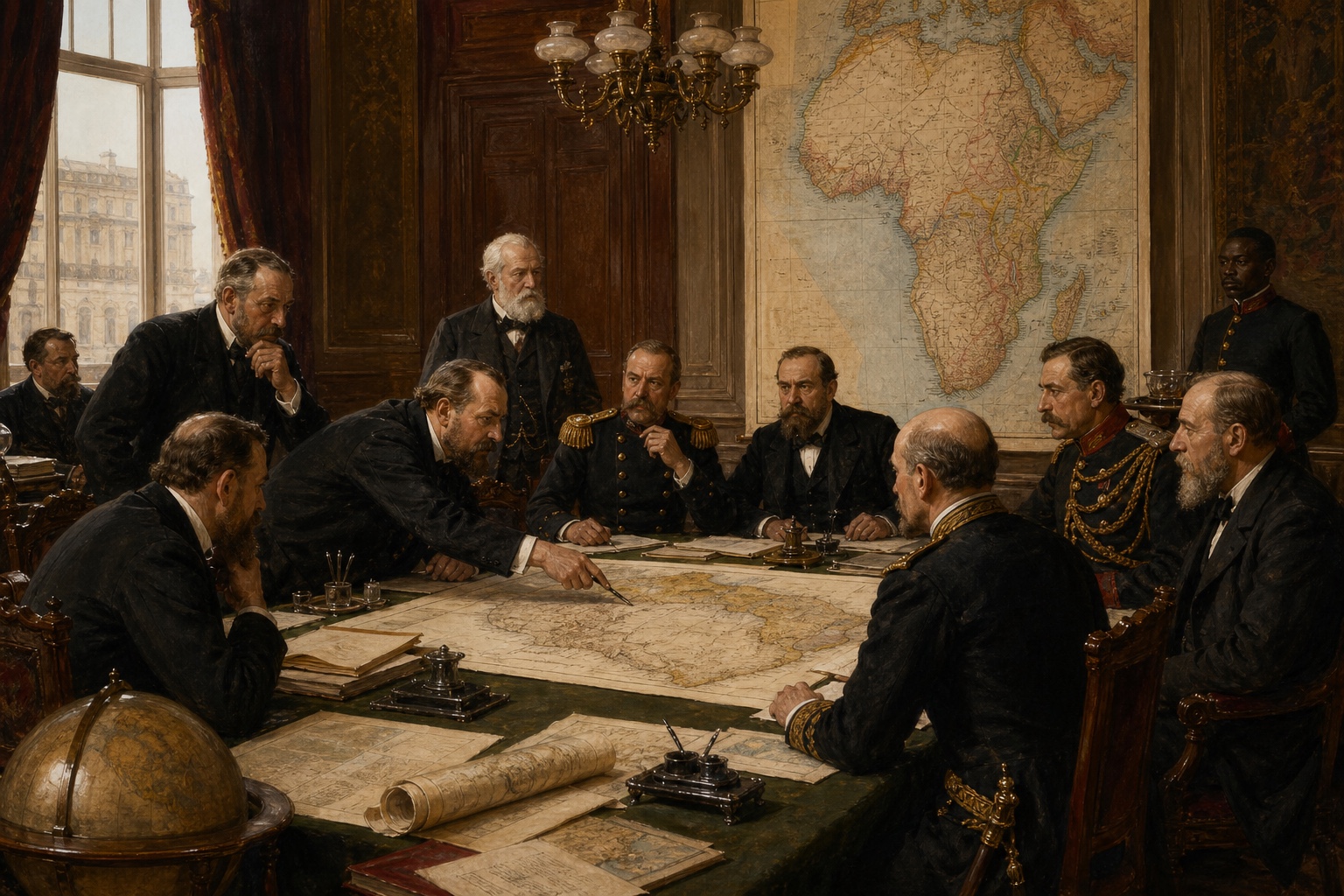
Delegates negotiated free trade in the Congo basin, navigation on the Congo and Niger, a declaration against the slave trade, and notification of new coastal claims. The General Act's principle of effective occupation required a claimant to establish authority on the ground rather than rely on a paper claim alone.
- Delegates negotiated free trade in the Congo basin, navigation on the Congo and Niger, a declaration against the slave trade, and notification of new coastal claims.
- The General Act's principle of effective occupation required a claimant to establish authority on the ground rather than rely on a paper claim alone.
- The source record helps place this stage in context.
Outcome
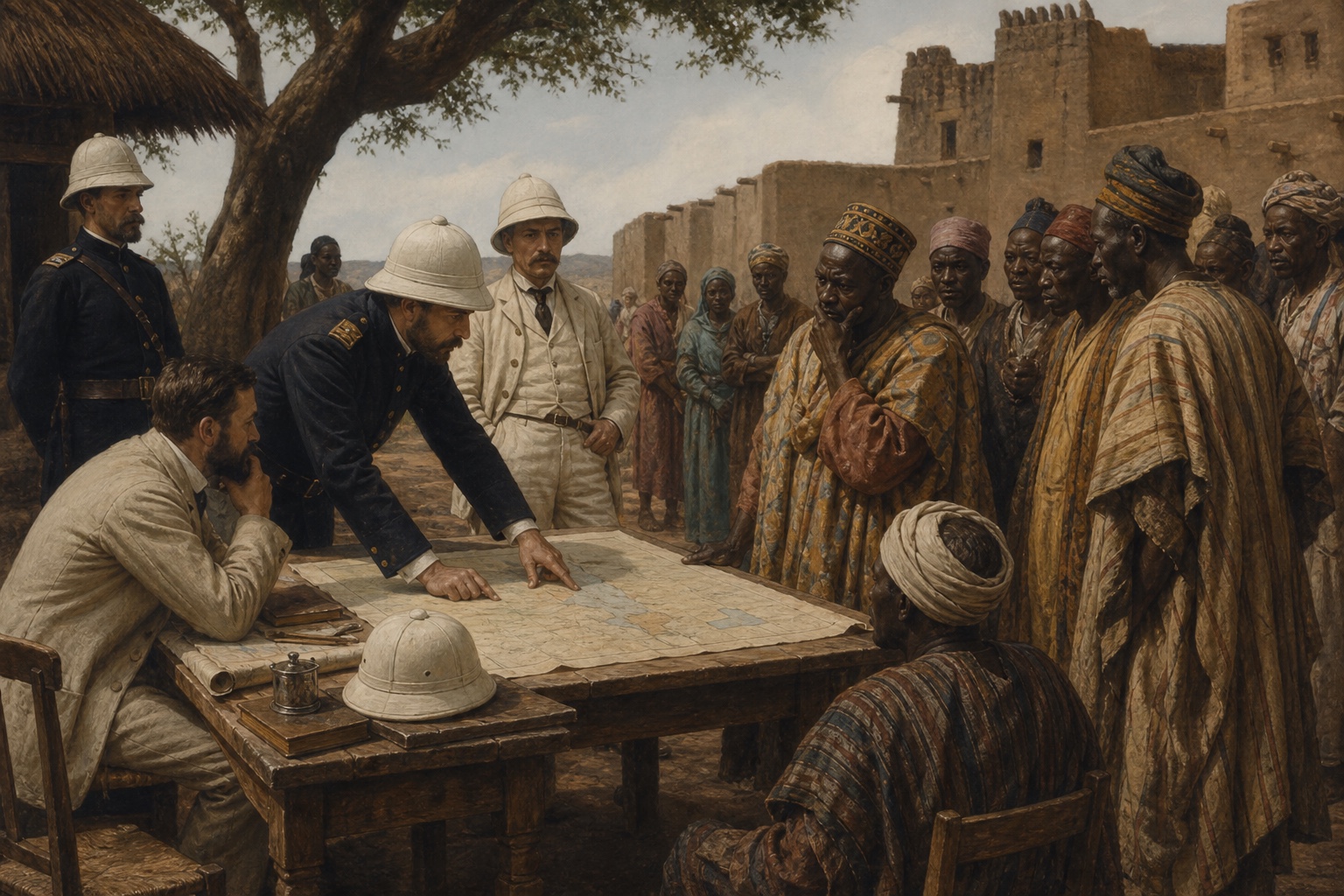
The conference did not draw every African border around one table. It supplied a legal and diplomatic framework for accelerating colonial competition, while recognition of the Congo Free State advanced through parallel diplomacy. Military expeditions, coerced treaties, occupation, African resistance, and warfare subsequently turned claims into colonial rule.
- The conference did not draw every African border around one table.
- It supplied a legal and diplomatic framework for accelerating colonial competition, while recognition of the Congo Free State advanced through parallel diplomacy.
- Military expeditions, coerced treaties, occupation, African resistance, and warfare subsequently turned claims into colonial rule.
Historical significance
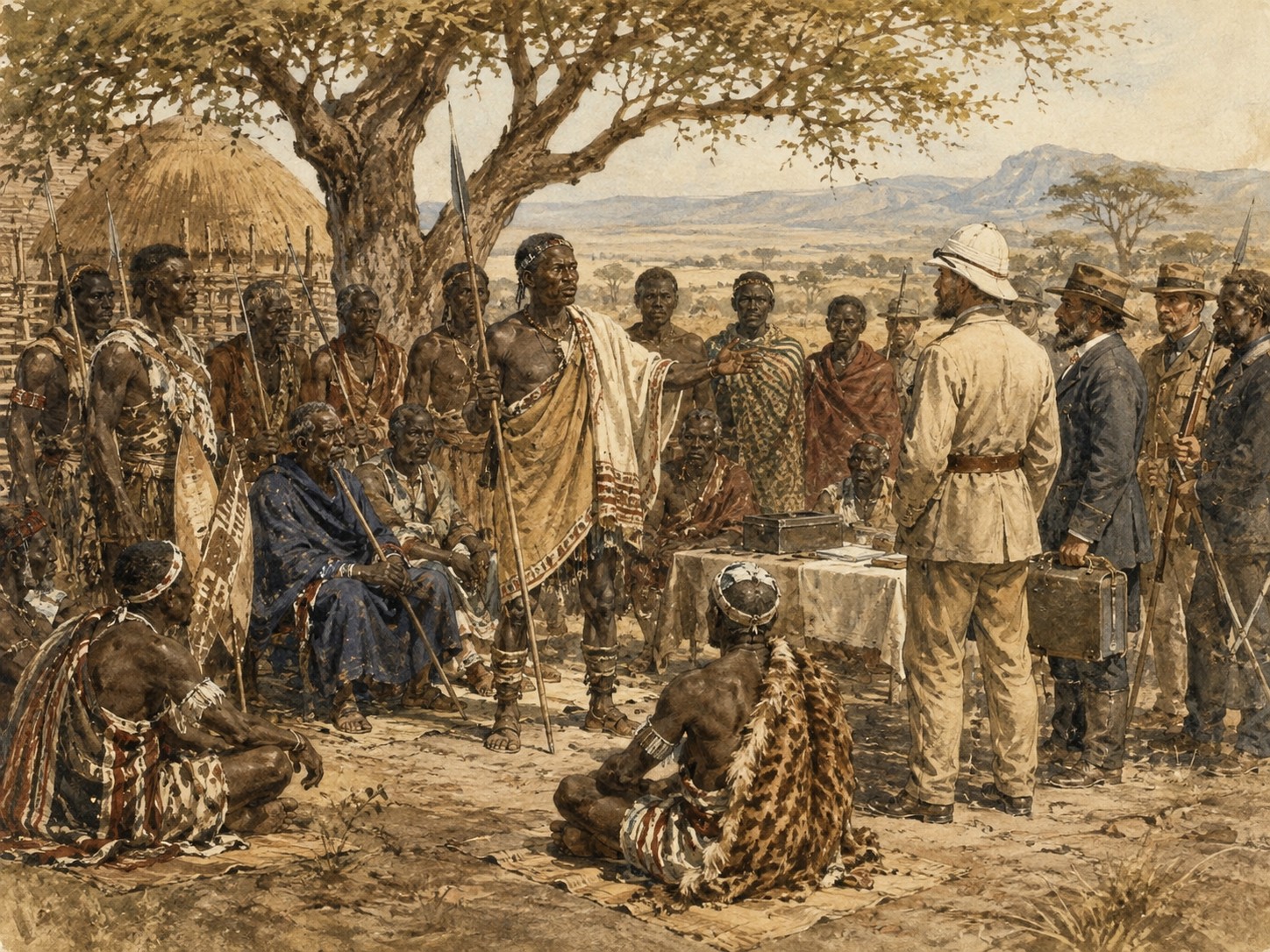
By excluding Africans and prioritizing order among imperial powers, the conference became a symbol of colonialism. Yet saying it instantly partitioned Africa obscures invasions already under way, the violent conquests that followed, and African negotiation and resistance. Its rules must be distinguished from the later process that enforced them. The connection to South Africa's anti-apartheid struggle is structural rather than direct: imperial conquest and land dispossession formed the wider order from which segregation and apartheid developed.
- By excluding Africans and prioritizing order among imperial powers, the conference became a symbol of colonialism.
- Yet saying it instantly partitioned Africa obscures invasions already under way, the violent conquests that followed, and African negotiation and resistance.
- Its rules must be distinguished from the later process that enforced them.


Related figures
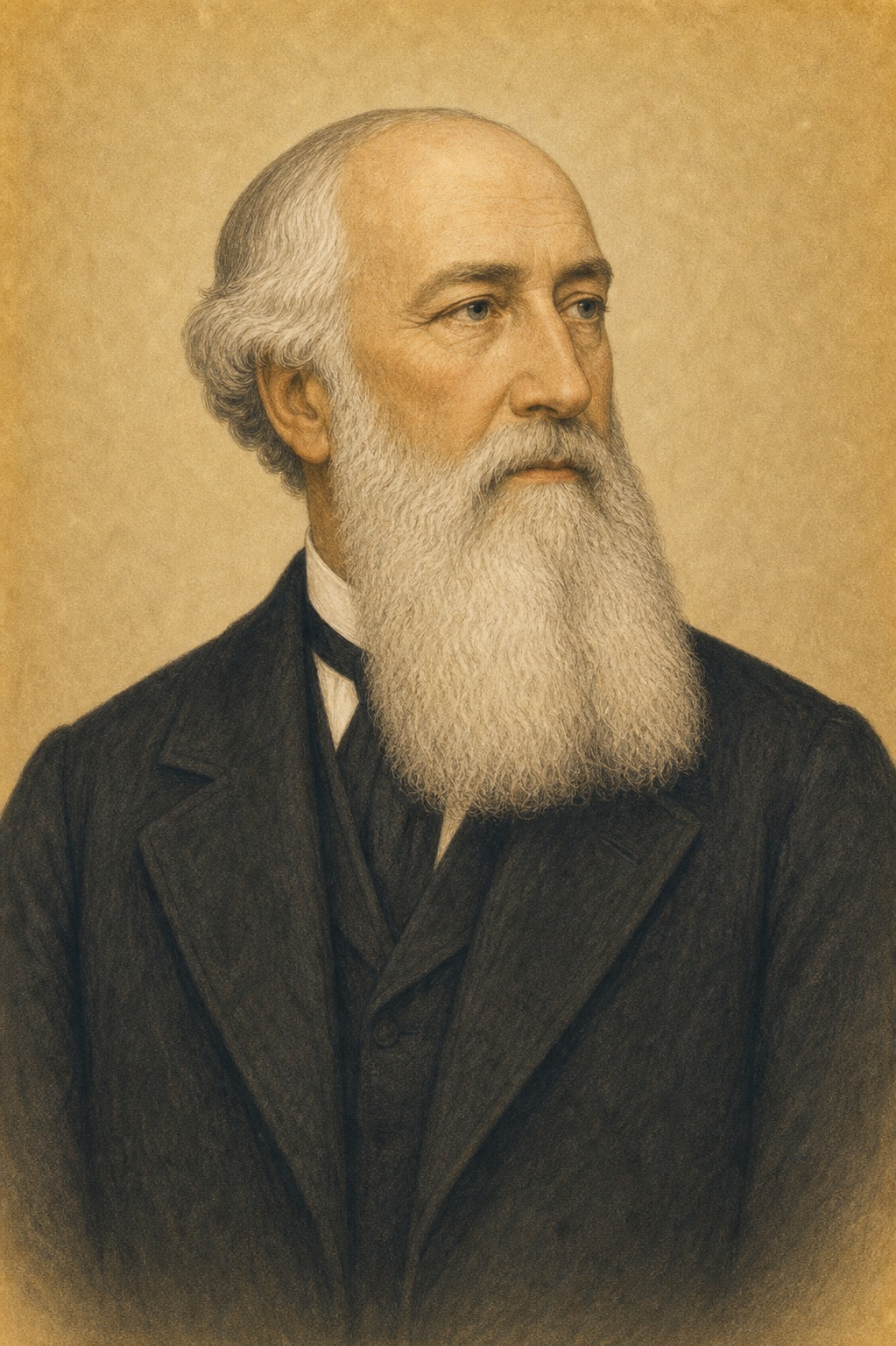
Leopold II of Belgium
historical figure in context
King of Belgium who ruled the Congo Free State like a private territory. It symbolizes the partition of Africa and colonial violence. This is important when considering the interests of imperialism and human rights violations. You can also see the reality of colonial rule.
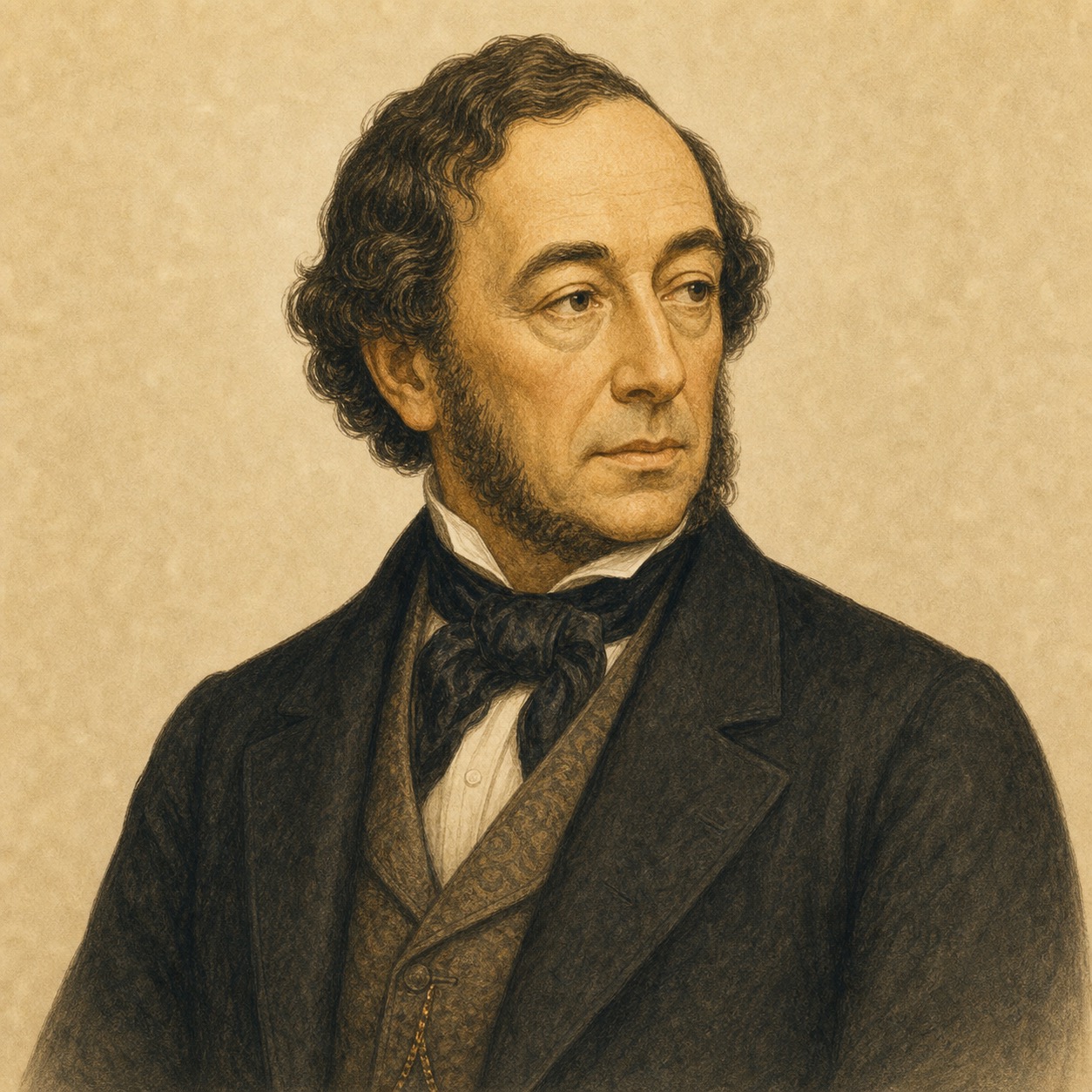
Benjamin Disraeli
historical figure in context
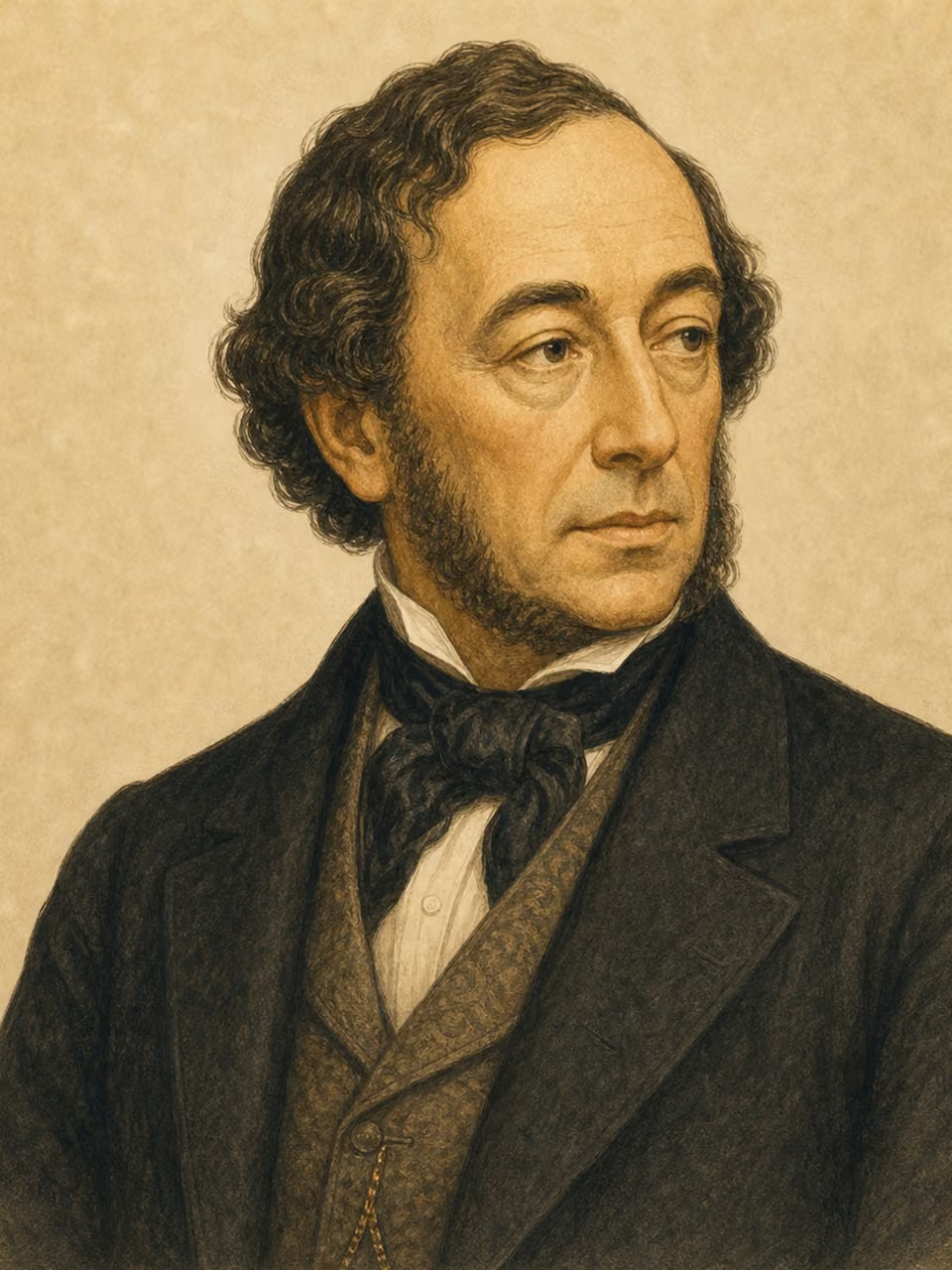
British politician and novelist. He led the Conservative Party and became prime minister, promoting imperial policy and social reform. He is a person who thinks about British politics in the 19th century.
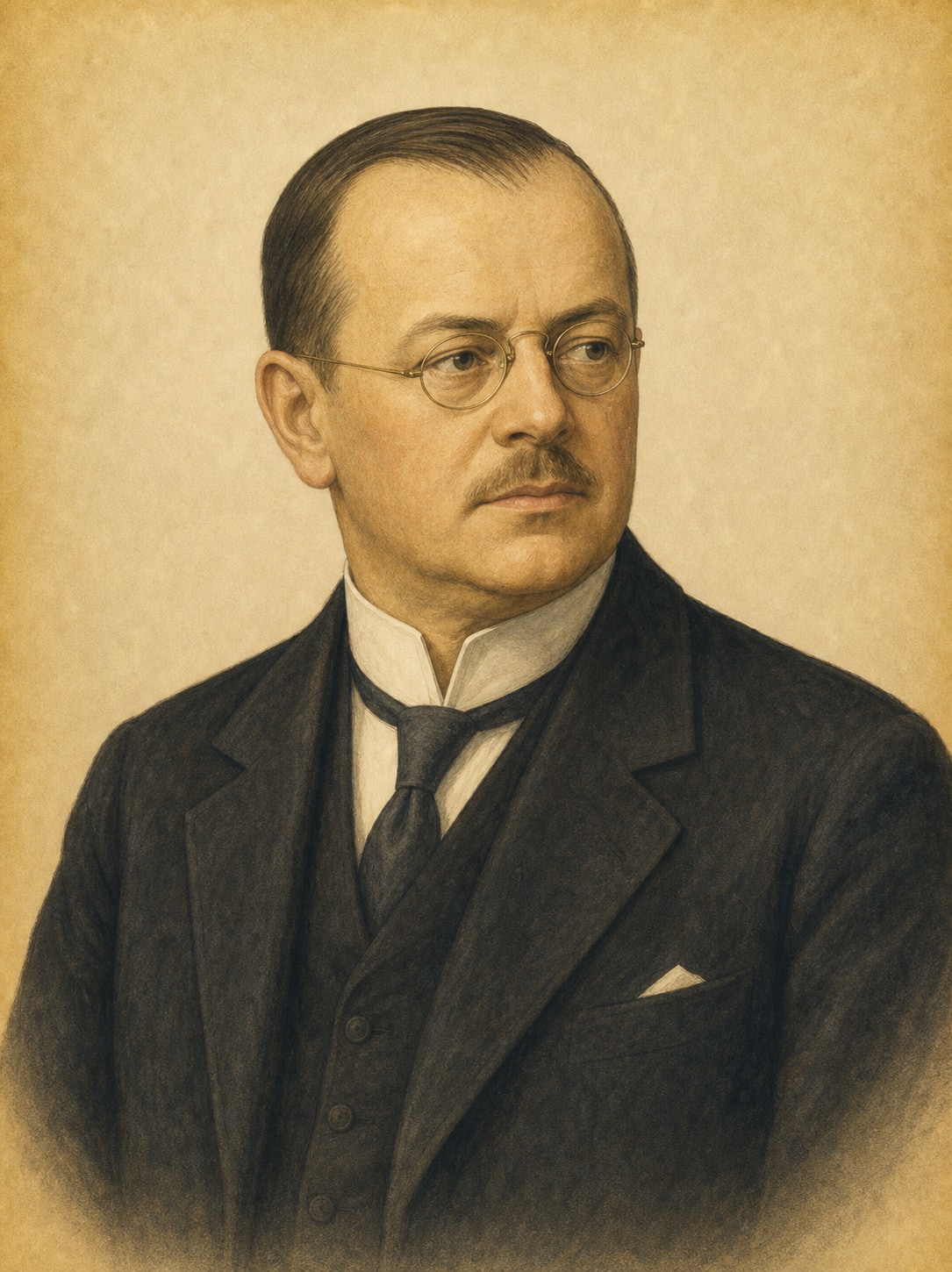
Gustav Stresemann
historical figure in context
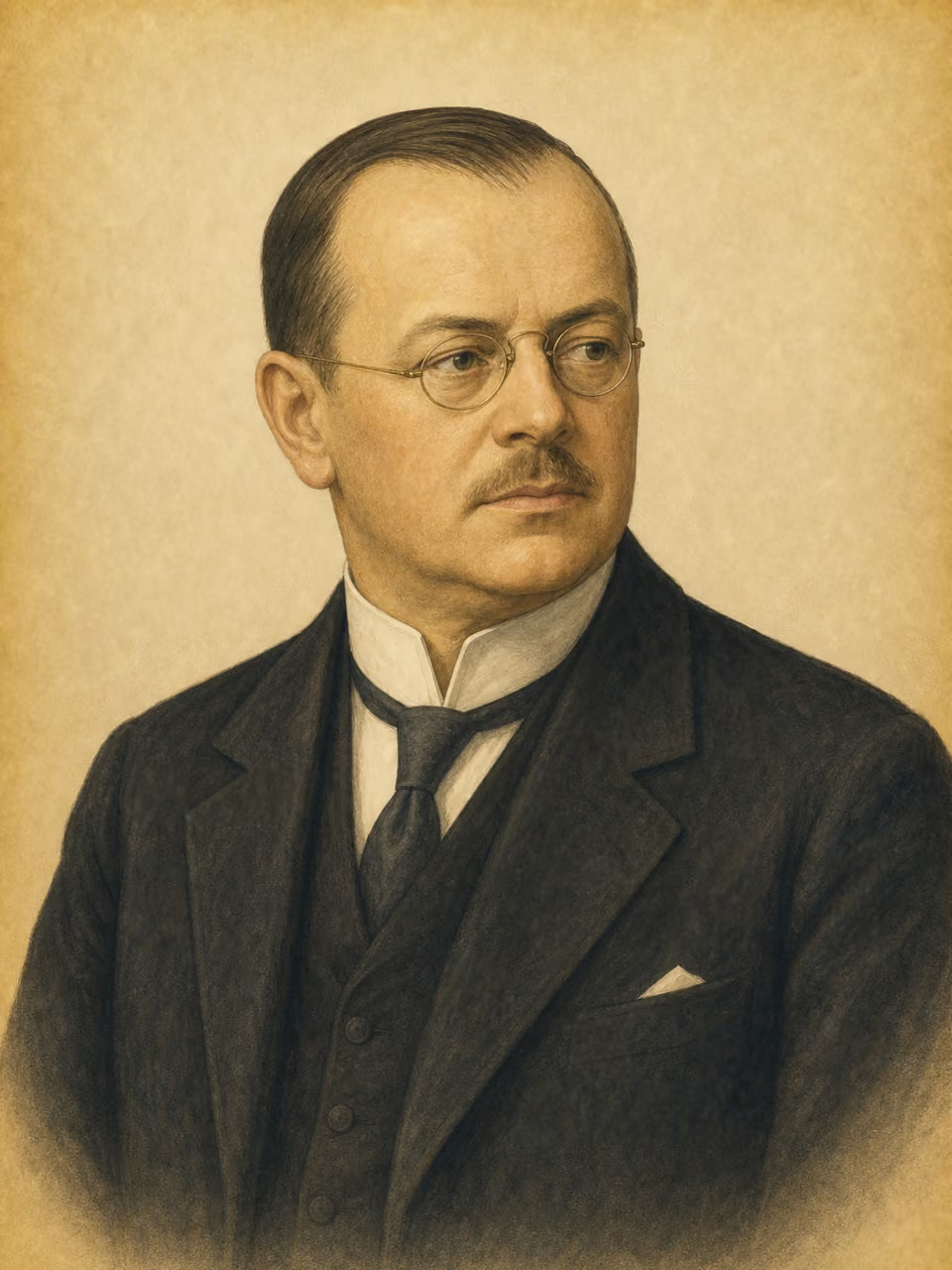
German politician and foreign minister during the Weimar Republic. He promoted post-inflation stabilization and cooperative diplomacy. He is an important figure when considering the European order after World War I. It shows the possibilities and limits of cooperative diplomacy.
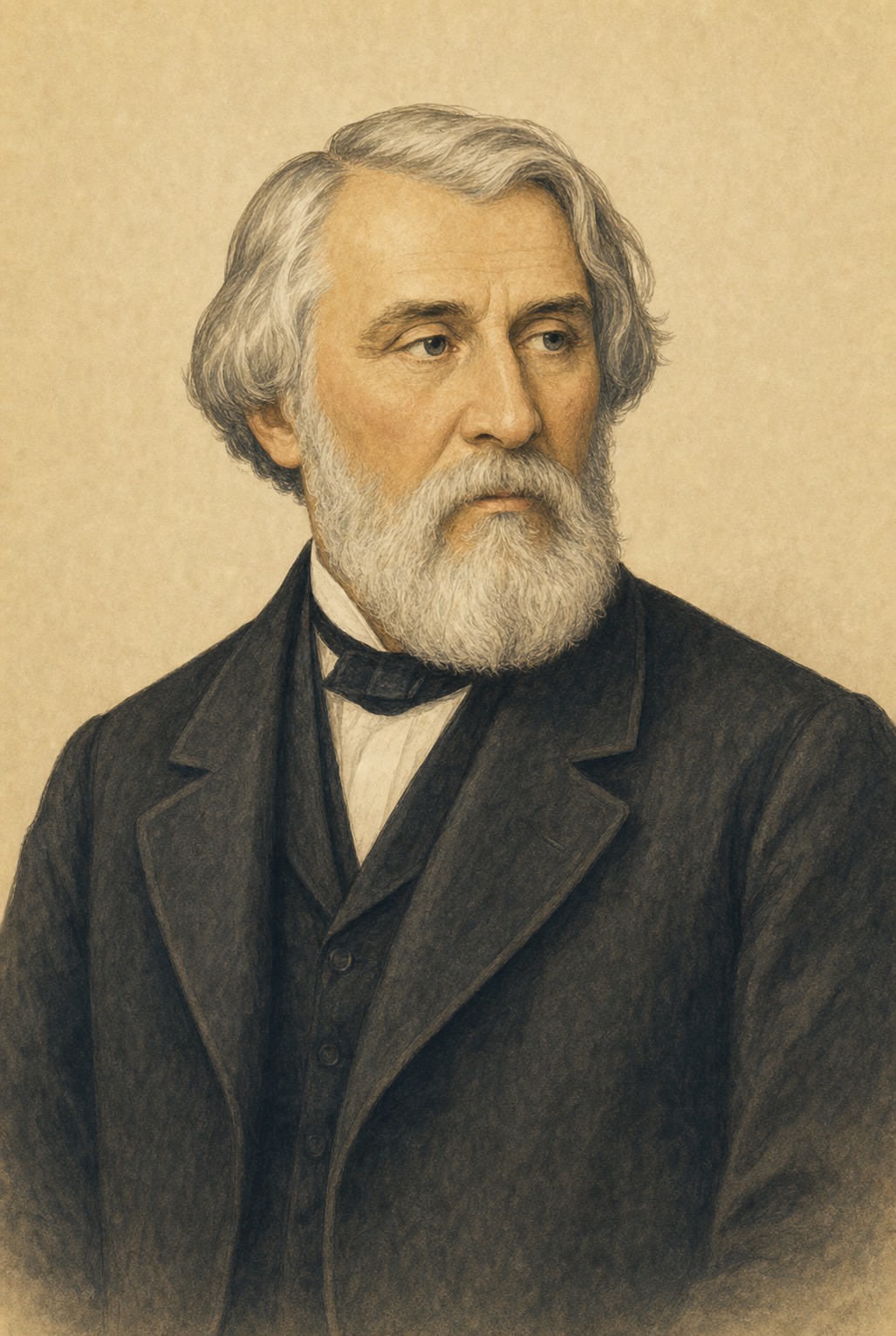
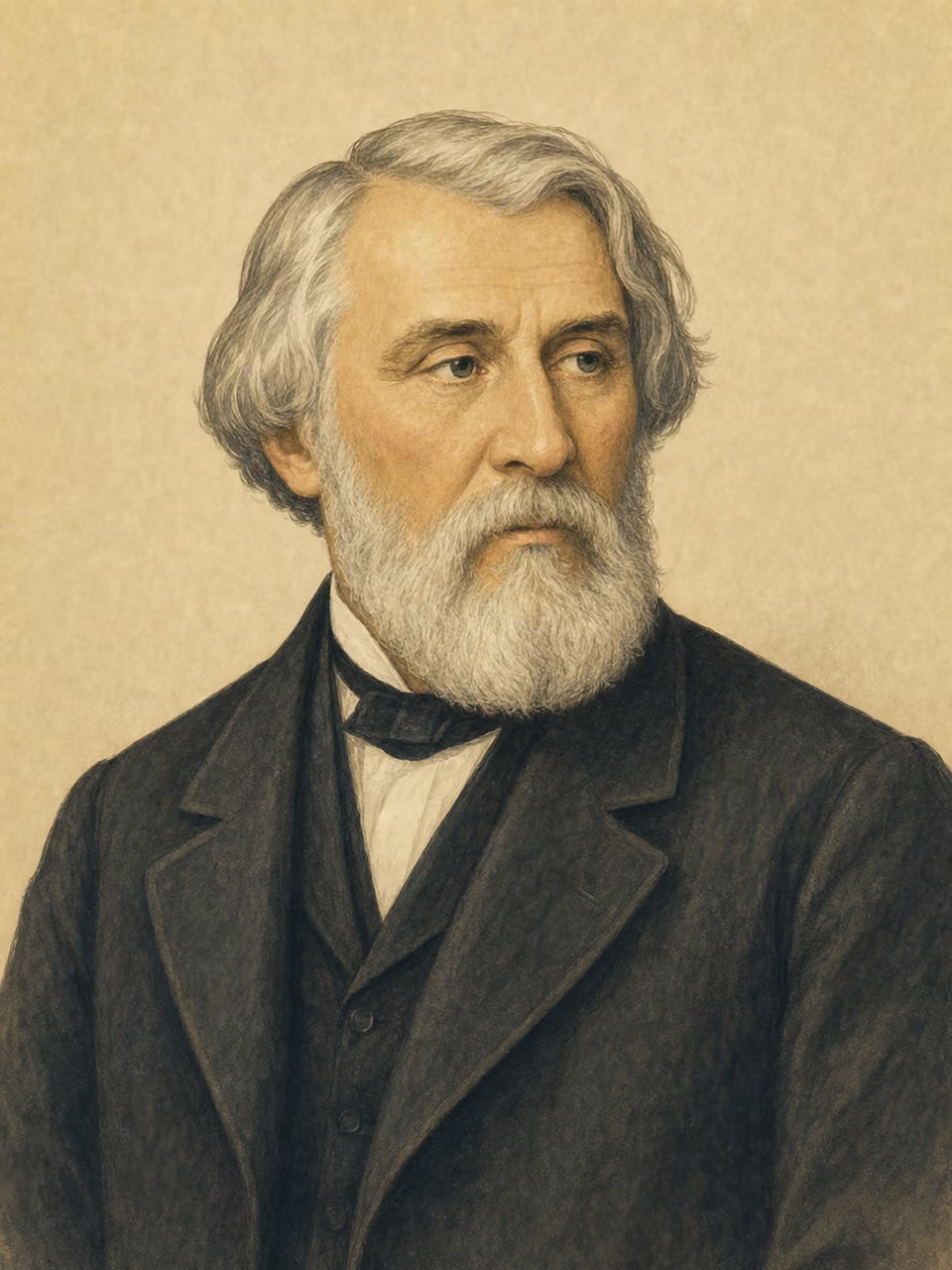
Ivan Turgenev
historical figure in context
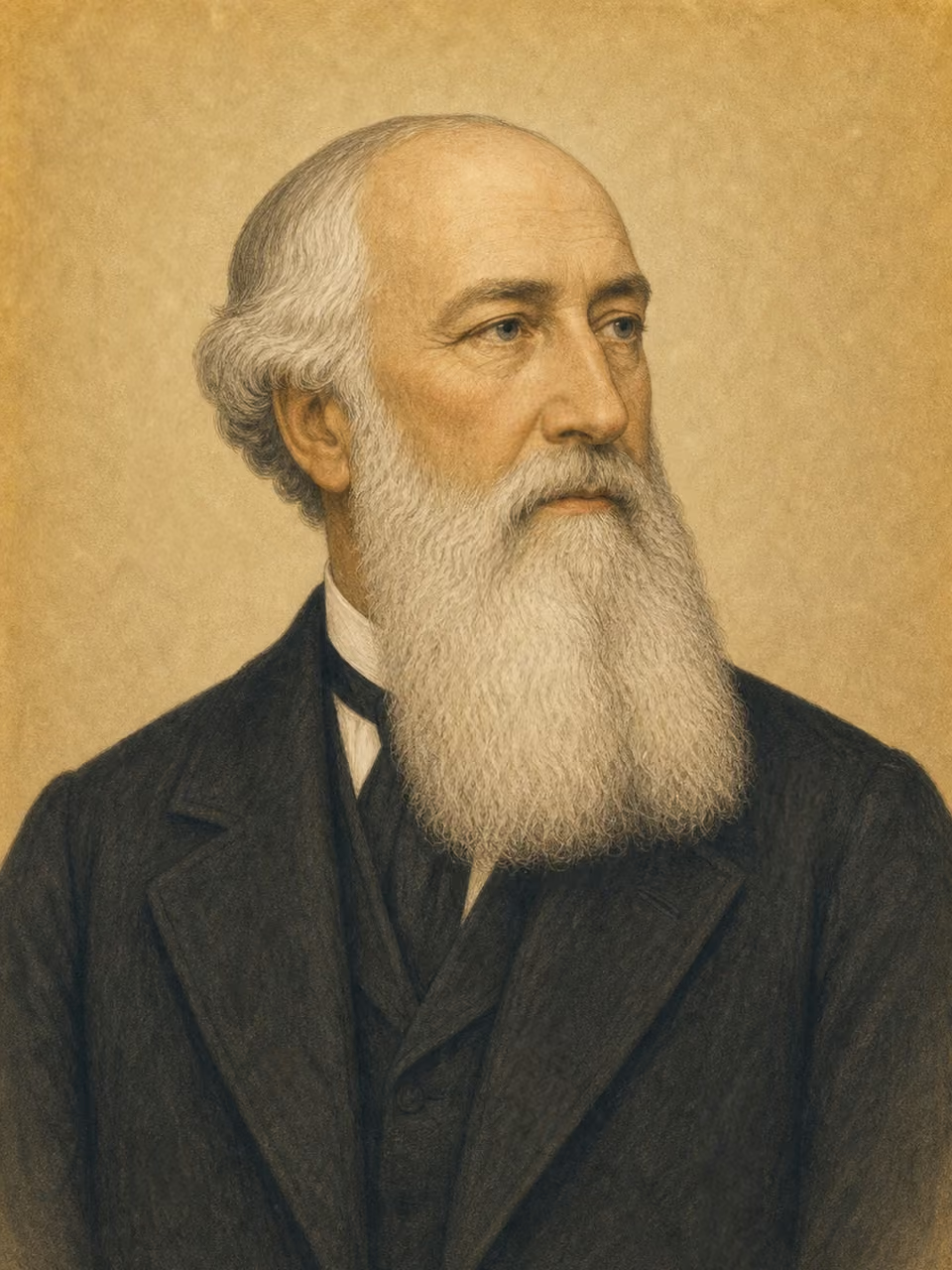
A 19th century Russian novelist who depicted generational conflict and nihilism in ``Fathers and Sons.'' Observed Russian society before and after the serfdom reform through literature. Shows the points of contact between Russian literature and modern thought.
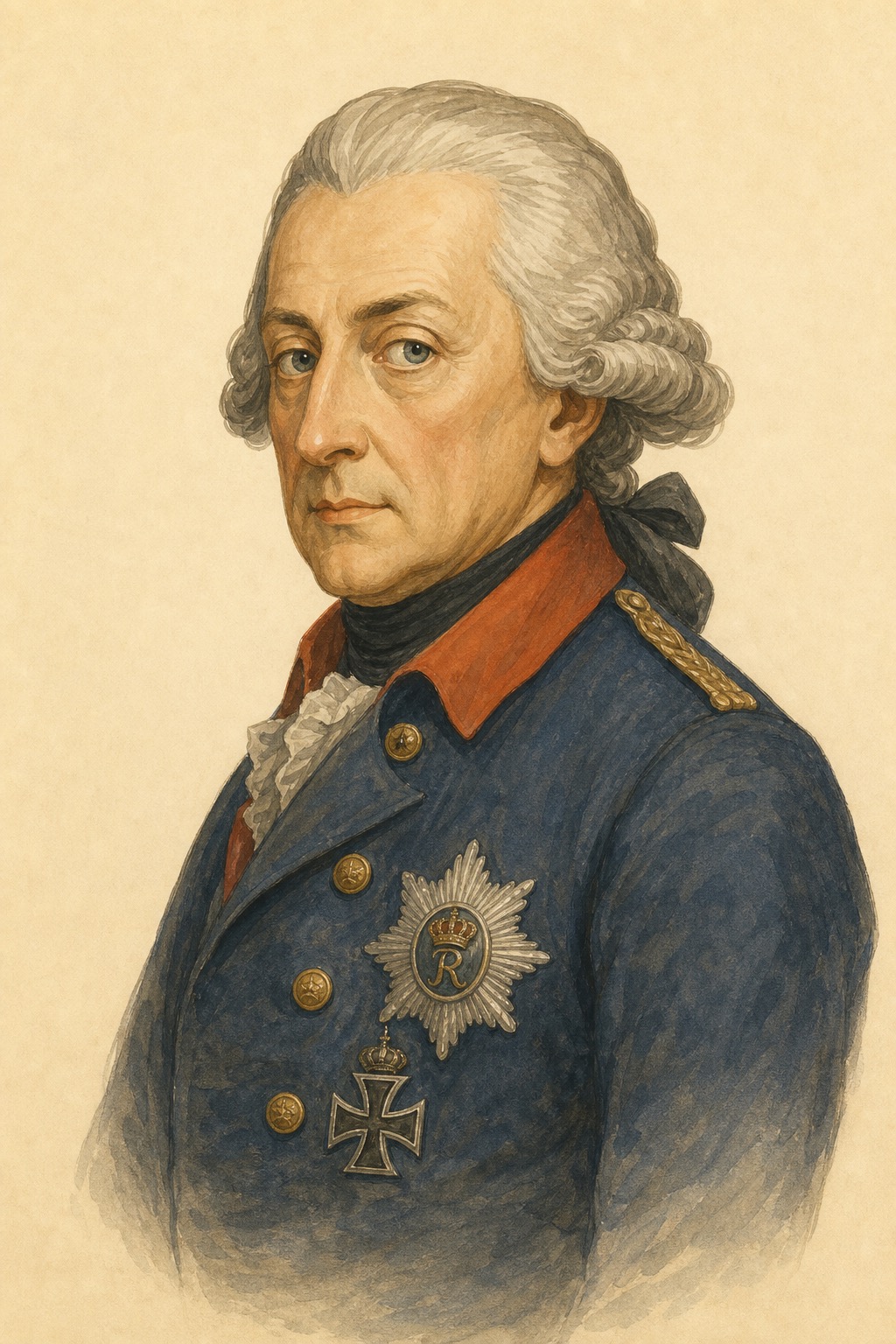
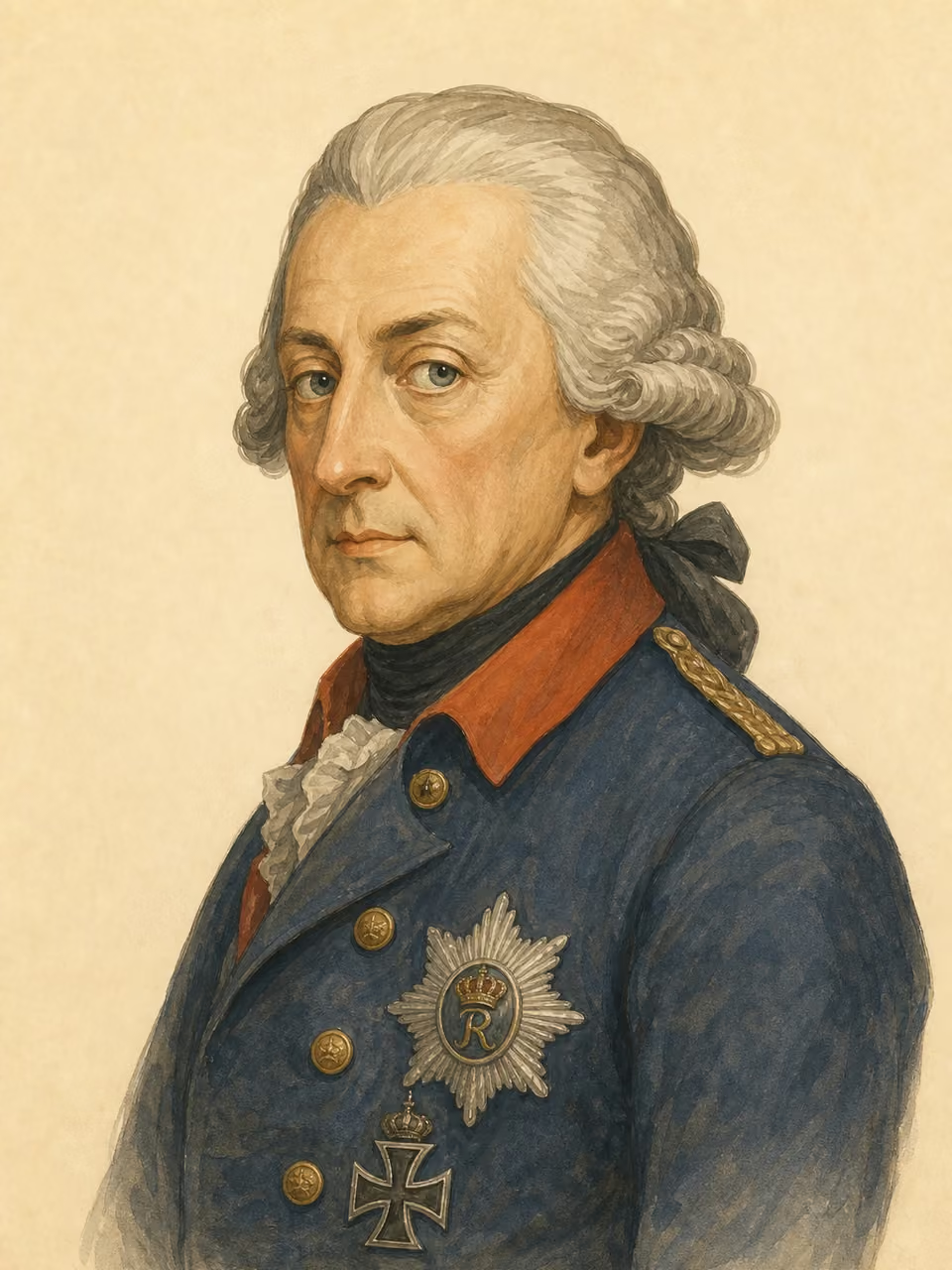
Frederick II of Prussia
historical figure in context
Frederick II turned Prussia into a major European power in the eighteenth century. He combined interest in Enlightenment culture with disciplined military and bureaucratic rule, making him a standard example of the so-called enlightened despot.
Related events
1864
Prelude
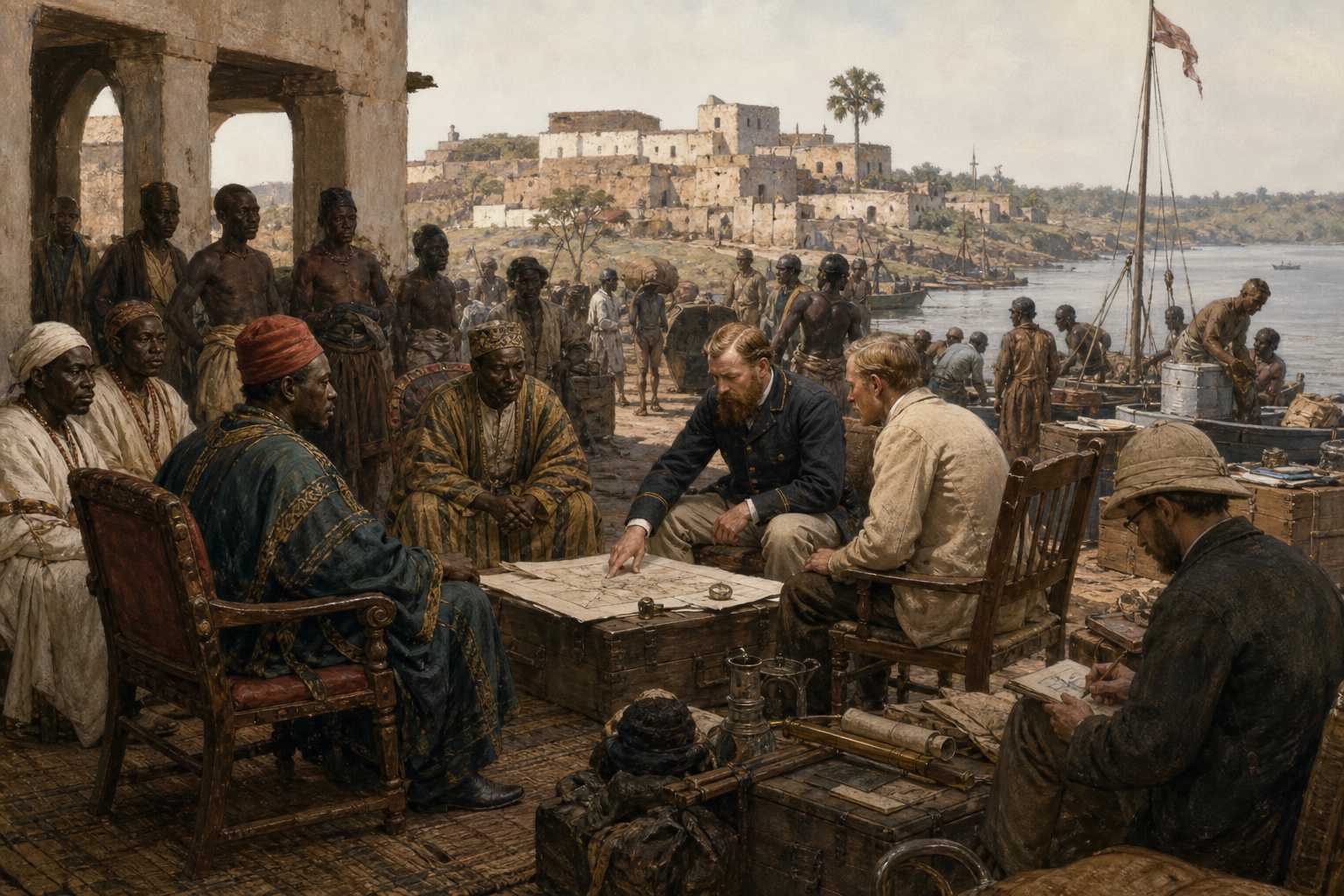
Prelude — Background: European expansion in Africa predated the meeting, while rivalry around the Congo basin involved Leopold II of Belgium, France, Portugal, and others. Bismarck's government convened the powers to contain conflict among them while securing German colonial interests. No representatives of African states or societies were invited.
c. 1883
Rising tension
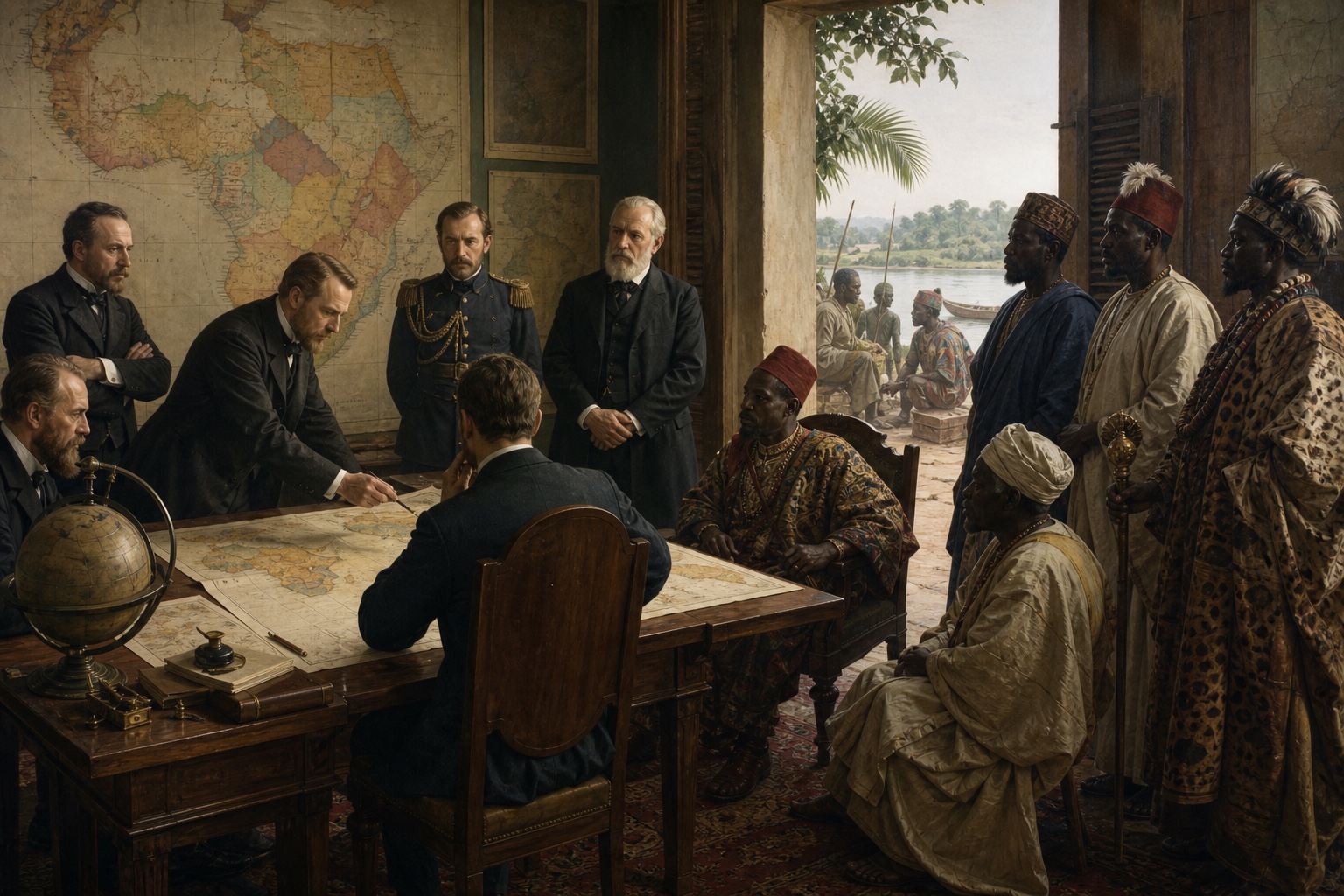
Rising tension — Build-up: Delegates negotiated free trade in the Congo basin, navigation on the Congo and Niger, a declaration against the slave trade, and notification of new coastal claims. The General Act's principle of effective occupation required a claimant to establish authority on the ground rather than rely on a paper claim alone.
1884–1885
Berlin Conference
Current event
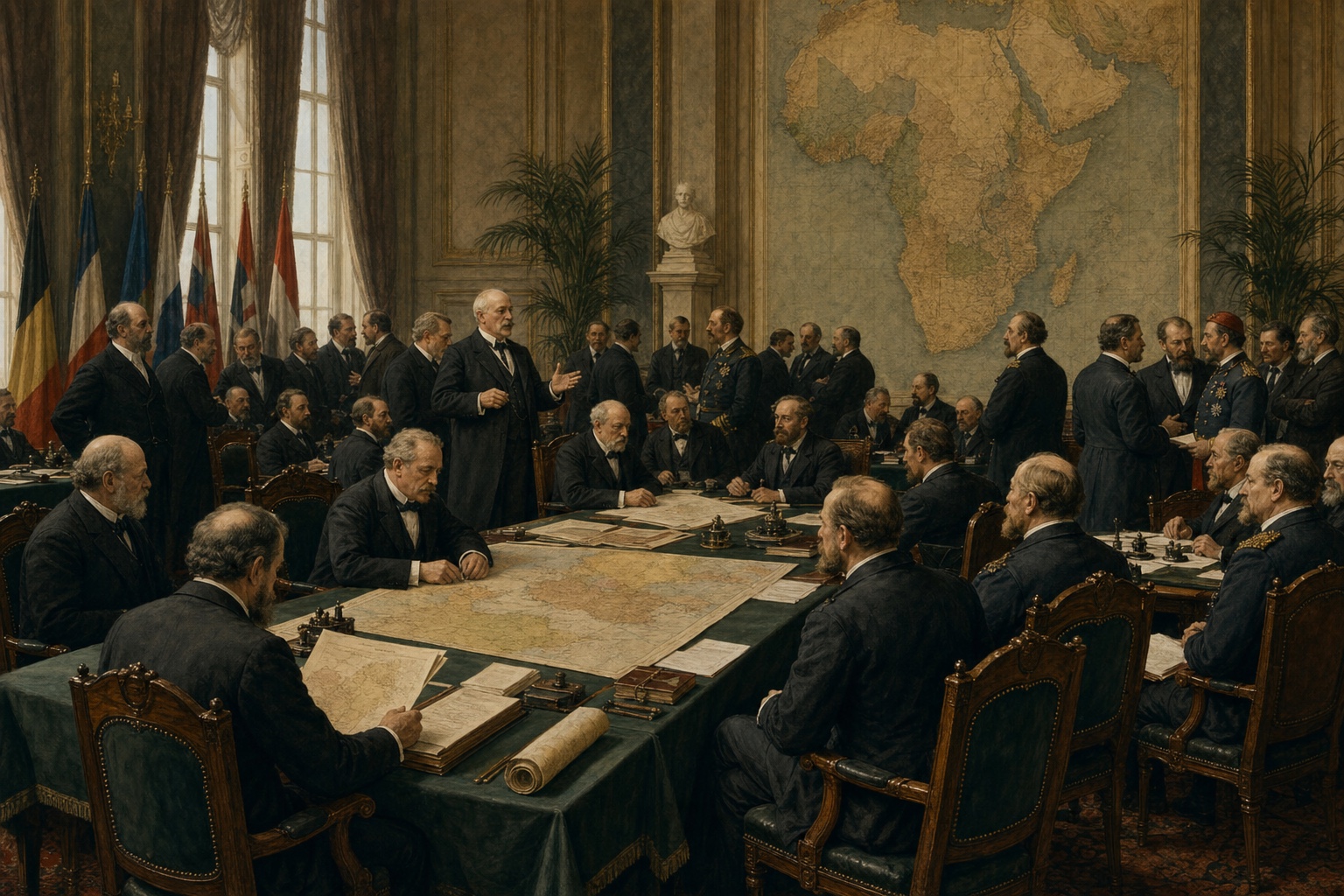
Berlin Conference — Central transition: The November 1884–February 1885 meeting at which fourteen states negotiated rules for commerce, navigation, and future colonial claims in Africa.
c. 1886
Immediate aftermath
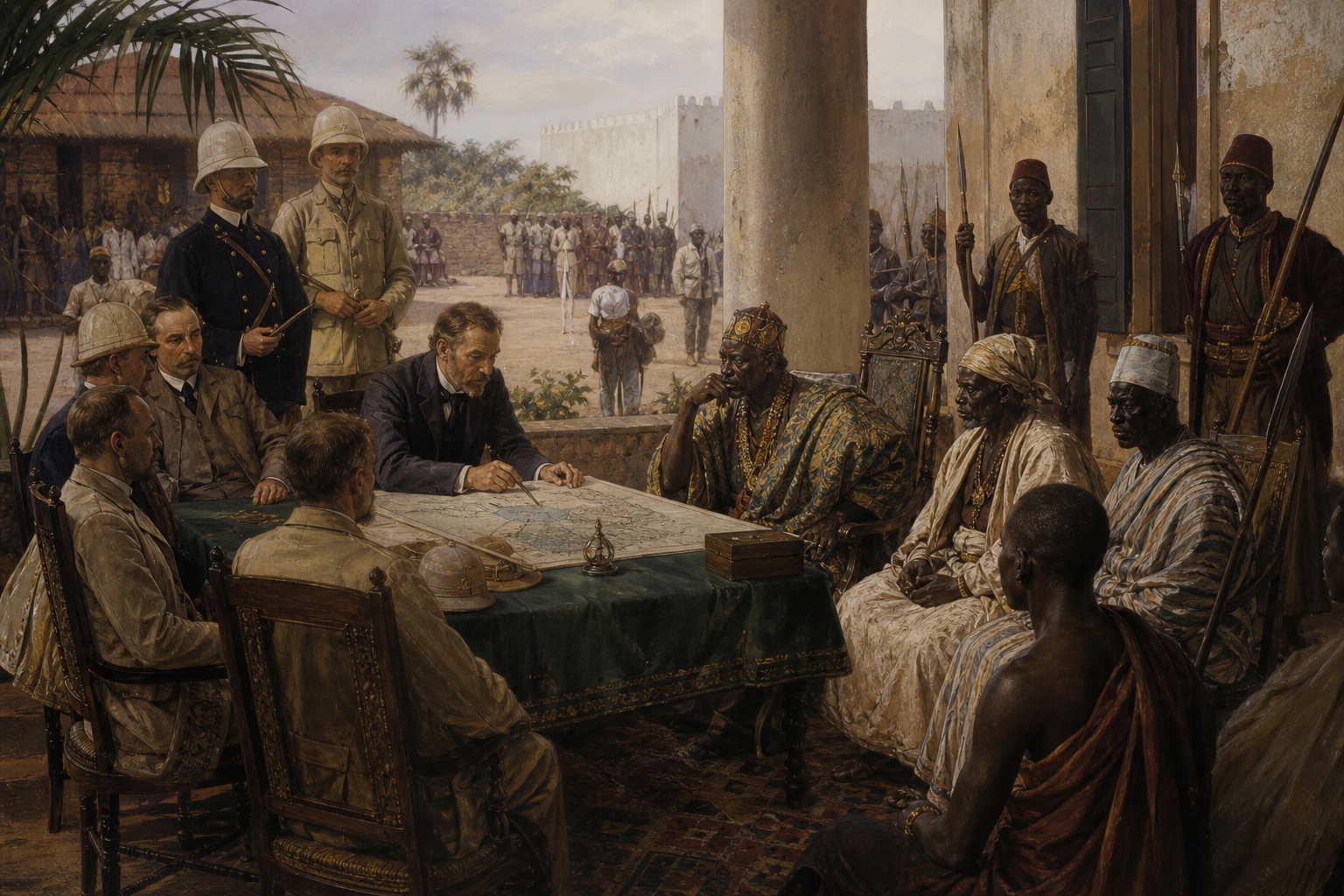
Immediate aftermath — Immediate result: The conference did not draw every African border around one table. It supplied a legal and diplomatic framework for accelerating colonial competition, while recognition of the Congo Free State advanced through parallel diplomacy. Military expeditions, coerced treaties, occupation, African resistance, and warfare subsequently turned claims into colonial rule.
c. 1895
Long-term significance
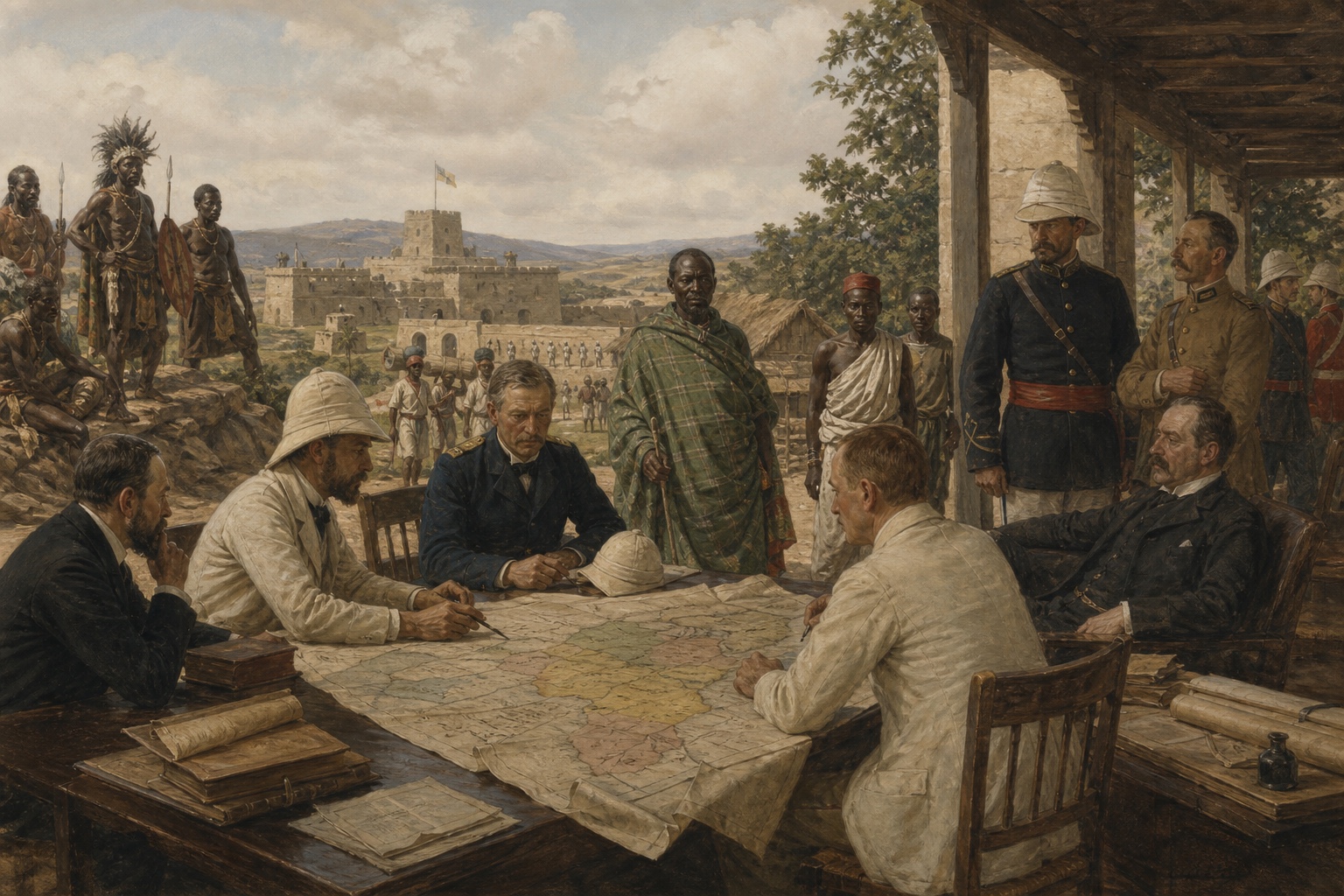
Long-term significance — Long-term significance: By excluding Africans and prioritizing order among imperial powers, the conference became a symbol of colonialism. Yet saying it instantly partitioned Africa obscures invasions already under way, the violent conquests that followed, and African negotiation and resistance. Its rules must be distinguished from the later process that enforced them. The connection to South Africa's anti-apartheid struggle is structural rather than direct: imperial conquest and land dispossession formed the wider order from which segregation and apartheid developed.


Sources
- Berlin Conference — General Act 2684414 (Archiv)archiv.diplo.deThis Archiv resource supports the chronology, setting, and course of Berlin Conference.
- Berlin Conference — Berlin Afrika Konferenz (Uni Potsdam)uni-potsdam.deThis Uni Potsdam resource supports the chronology, setting, and course of Berlin Conference.
- Berlin Conference — General Act Berlin Conference West Africa 26 February 1885 0 (Sahistory)sahistory.org.zaThis Sahistory resource supports the chronology, setting, and course of Berlin Conference.