
Carolingian Renaissance
c. 750–c. 900
From the late eighth through the ninth century, Carolingian courts and monasteries fostered a cultural reorganization through classical learning, manuscript production, and education.

- Period
- c. 750–c. 900
- Kind
- War
- Regions
- Africa
- Keywords
- learning · manuscripts · court · monastery · education
Follow the story · Four stages
Background
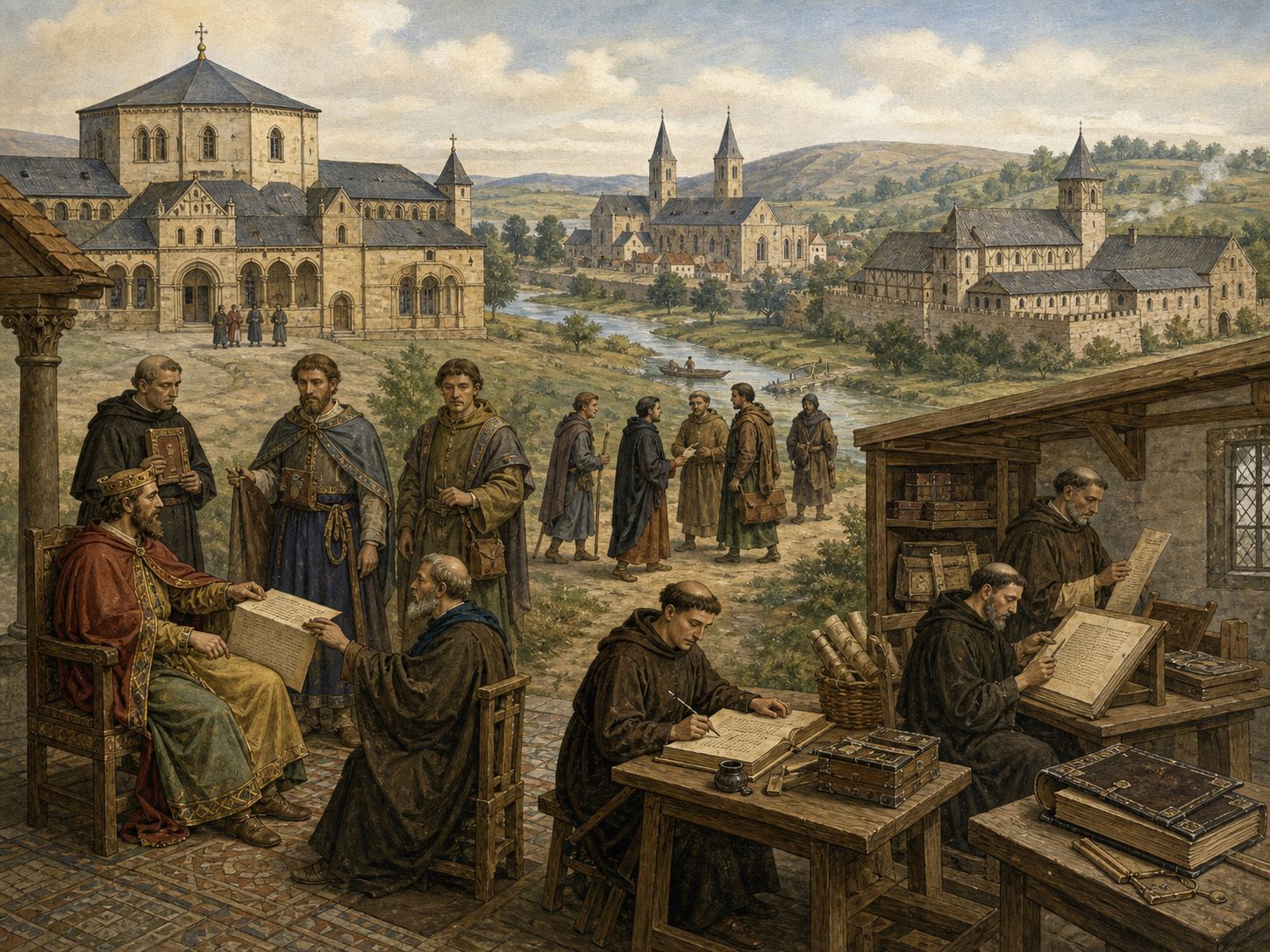
Frankish expansion and Christian governance required a shared learning infrastructure to train clergy, scribes, and teachers.
- Royal power and the church needed learning reorganized
- Courts and monasteries became centers of knowledge
- Manuscripts carried classical learning forward
Course
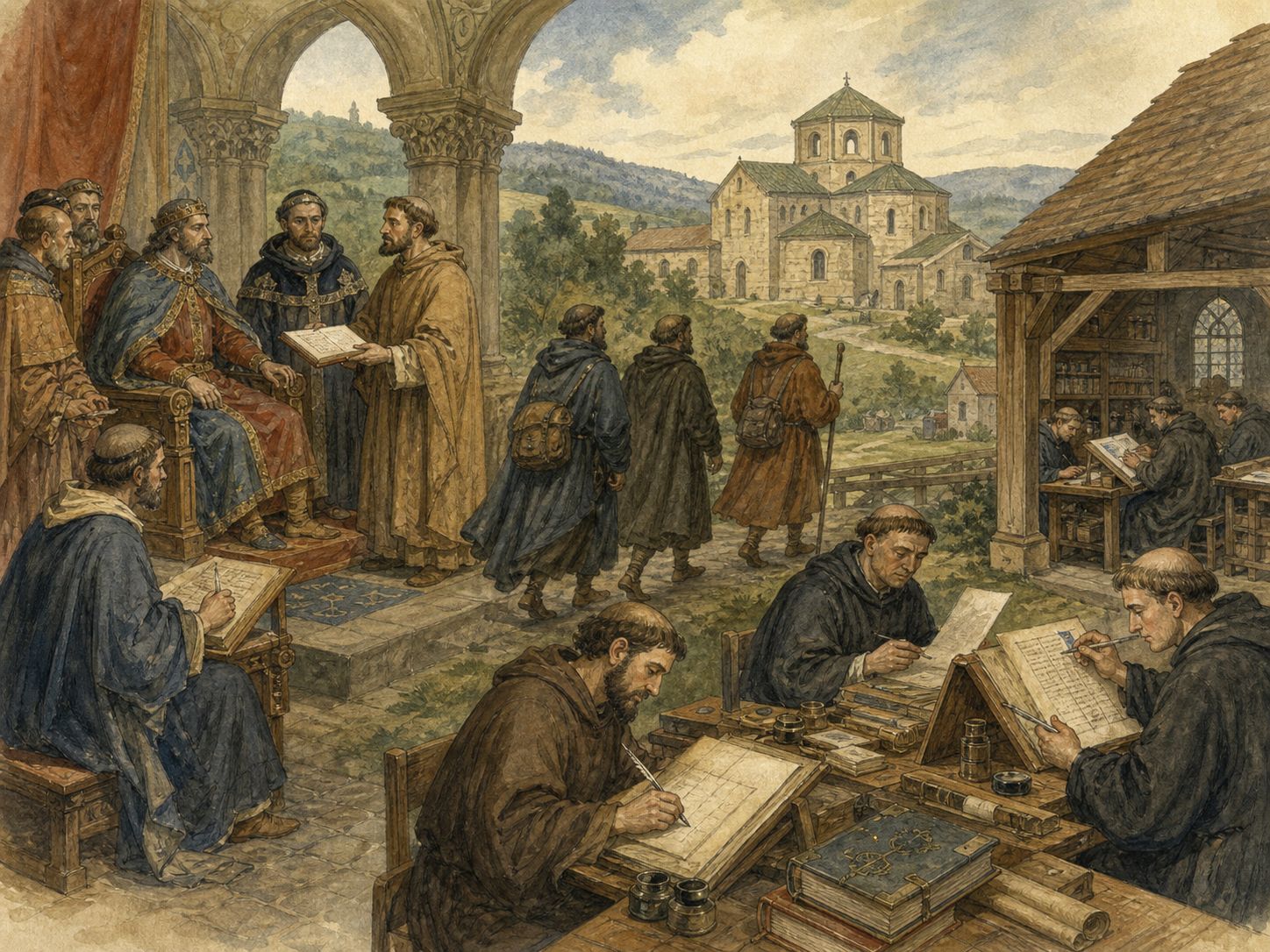
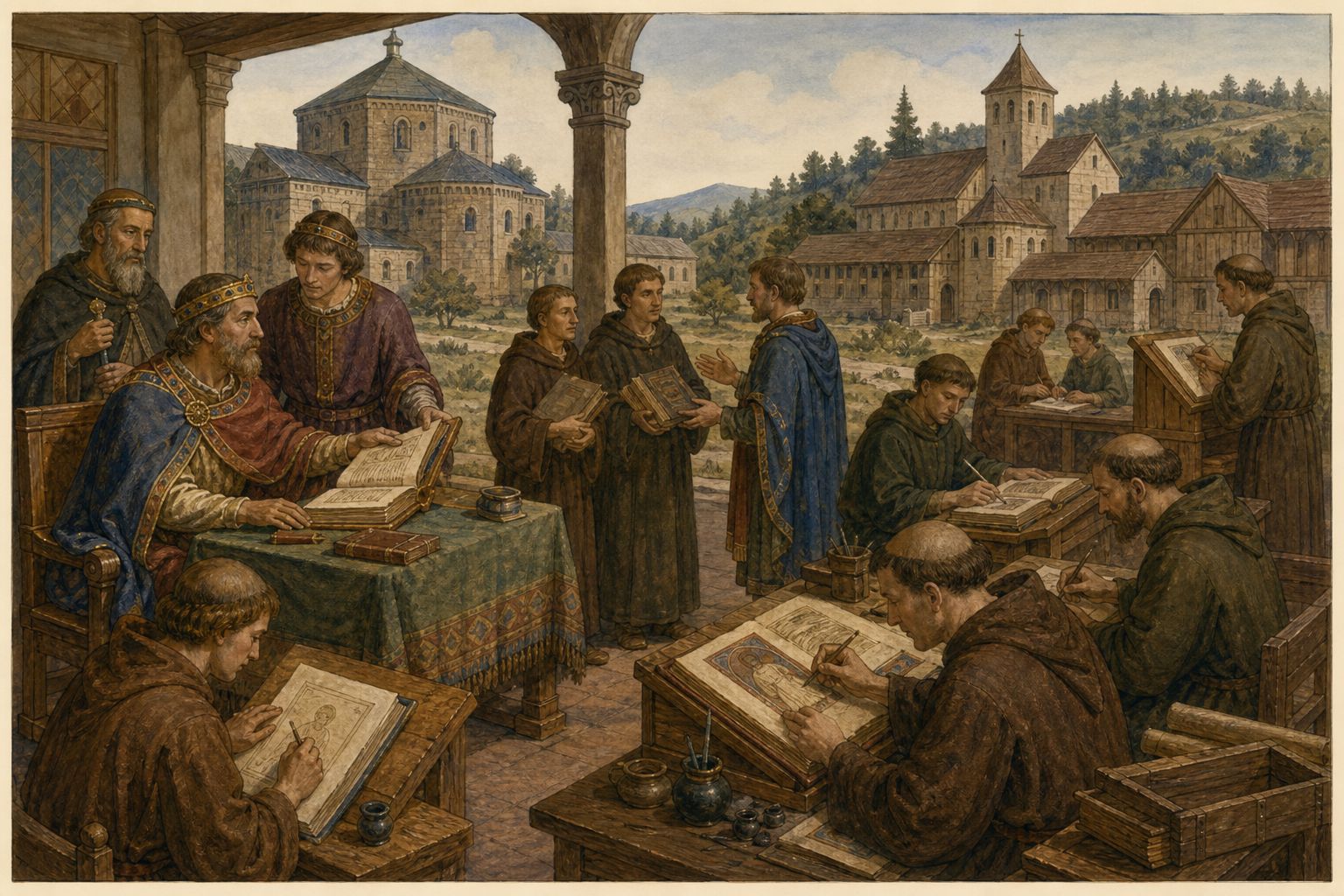
Scholars such as Alcuin gathered around Charlemagne’s court. Latin instruction, biblical correction, schools, and scriptoria then spread through courts and monasteries.
- Scholars gathered around the palace school
- Monastic scriptoria copied books
- Writing practices were aligned for education and administration
Outcome
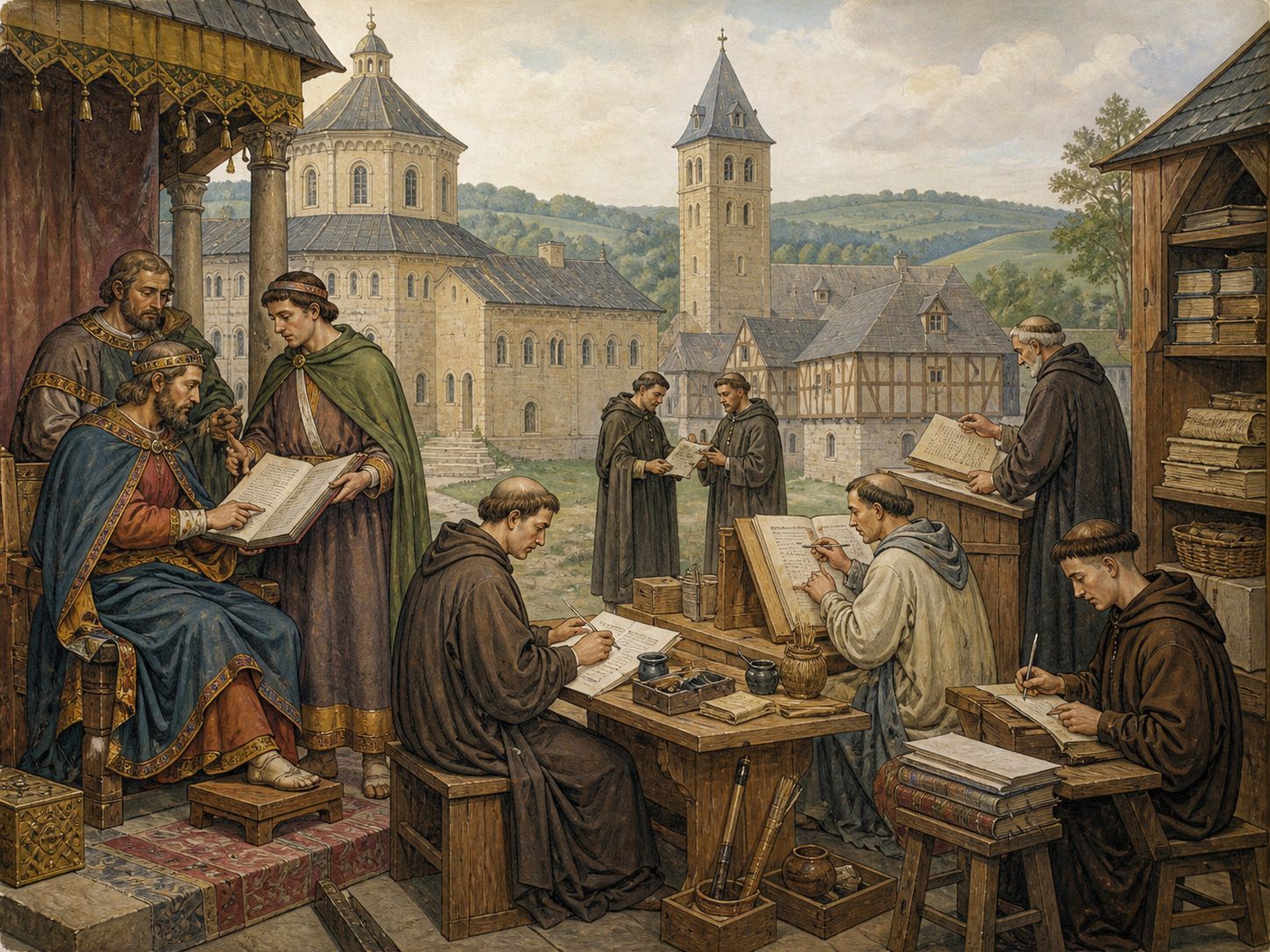
Political and religious centers such as Aachen strengthened the transmission of knowledge, while Carolingian minuscule and standardized liturgical books supported later learning.
- Institutions of learning and copying spread
- Carolingian minuscule supported written communication
- Western intellectual networks were reorganized
Historical significance
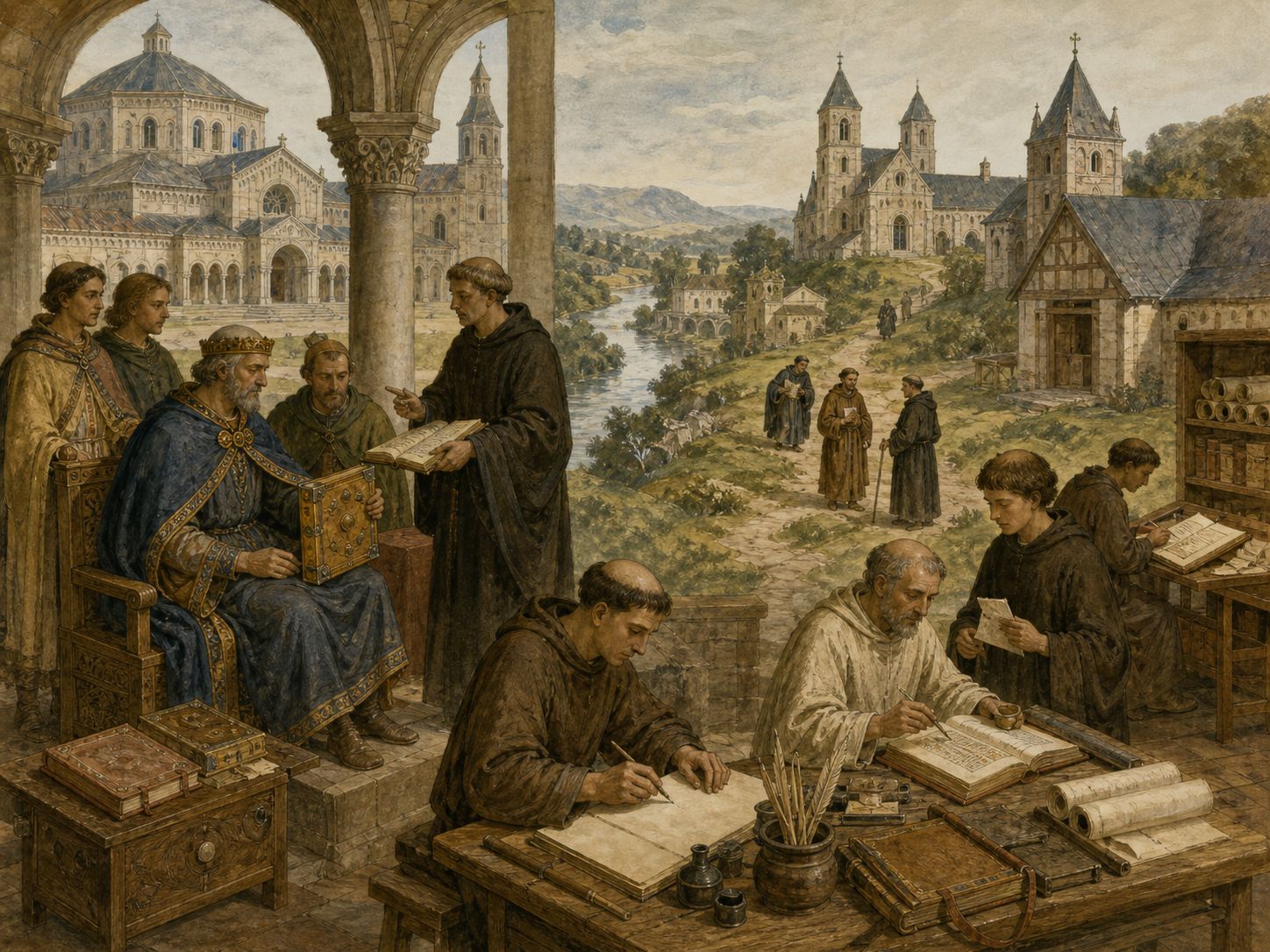
The movement joined the preservation of classical texts to Christian education, although its institutions remained concentrated among courts and clergy.
- It shaped the knowledge base of the medieval Latin world
- Its manuscripts influenced later education for centuries
- It shows the bond between kingship, church, and learning


Related figures
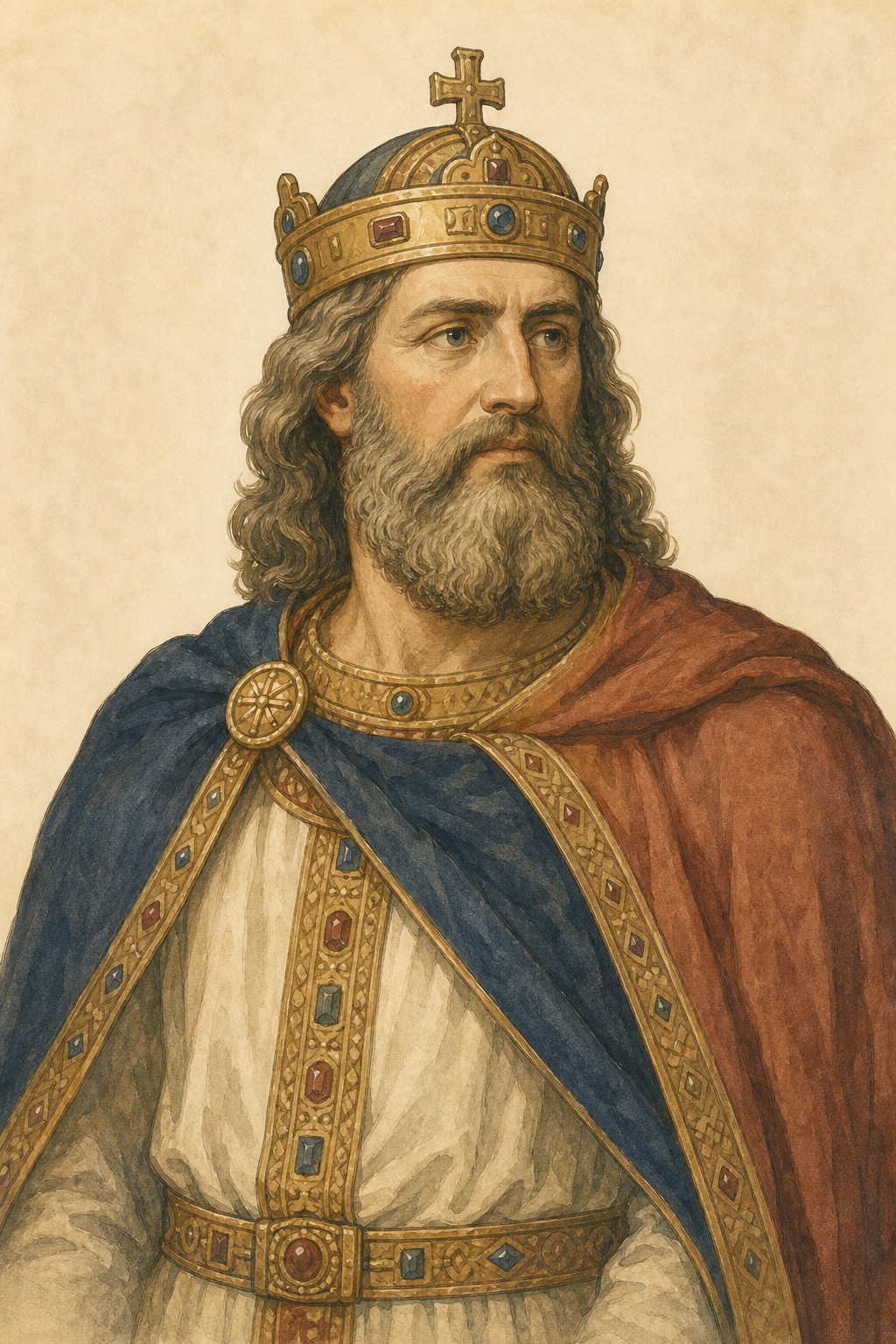
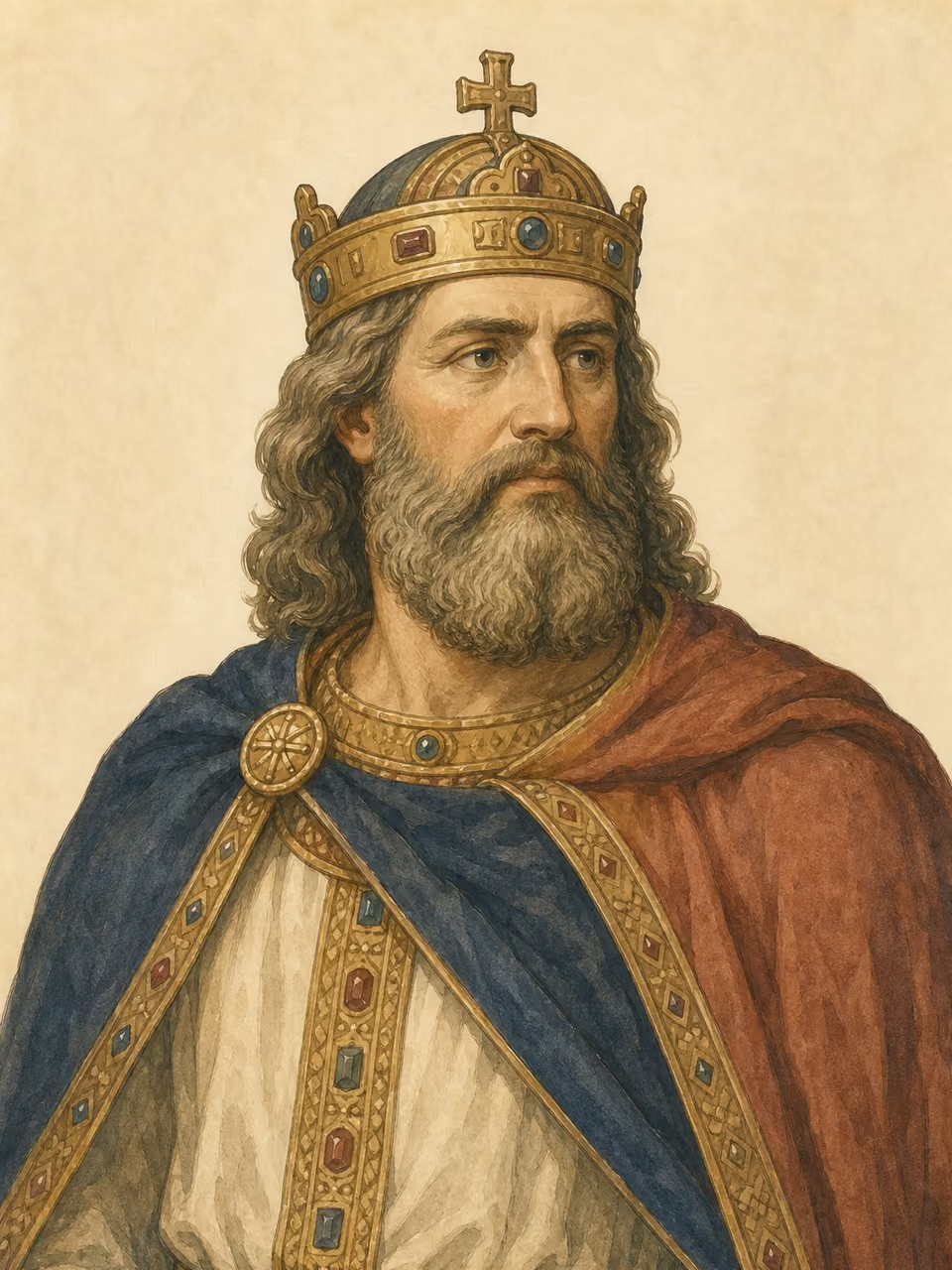
Charlemagne
Carolingian kingship
A ruler who linked court and church while reorganizing education and written administration.
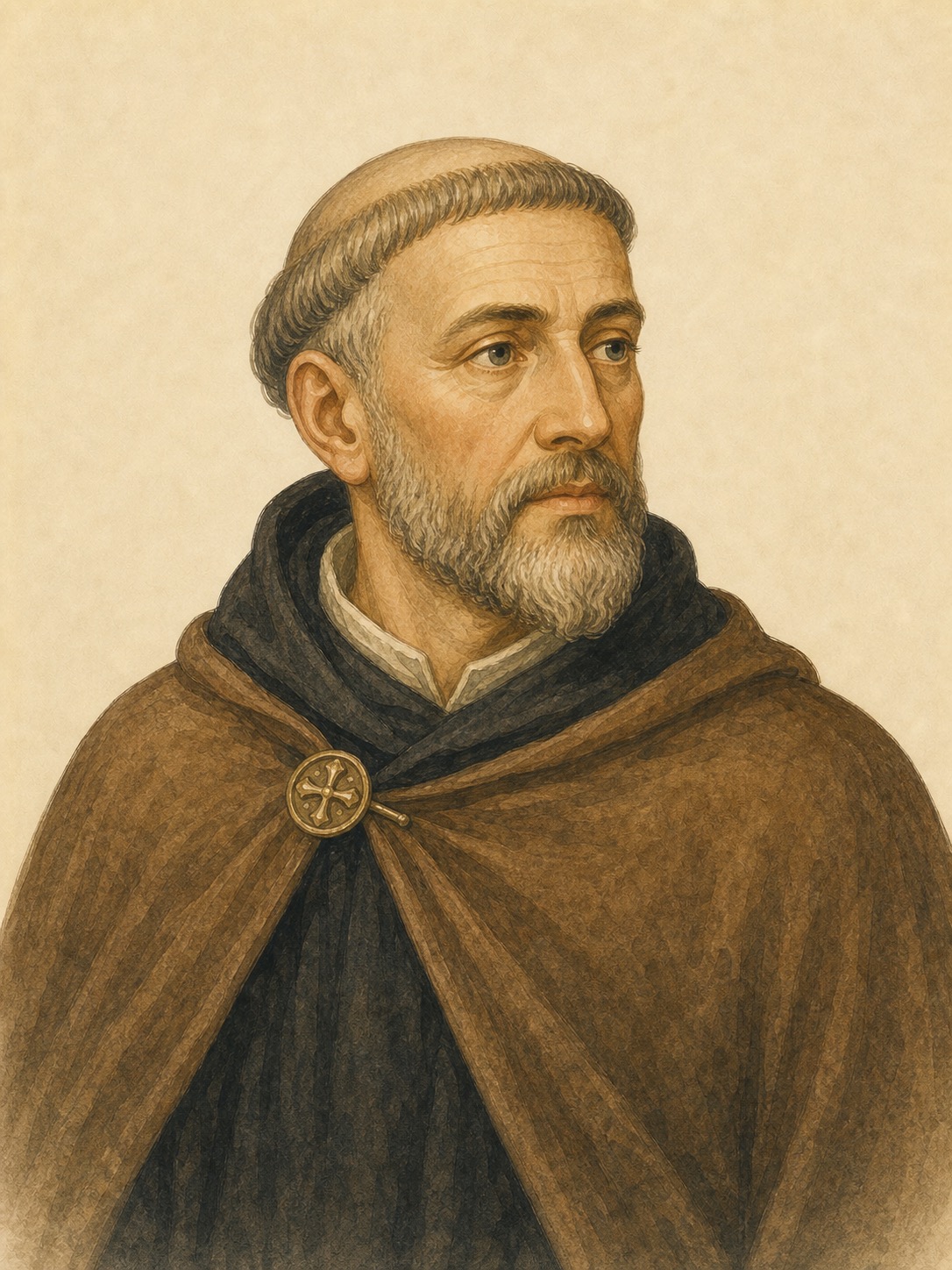
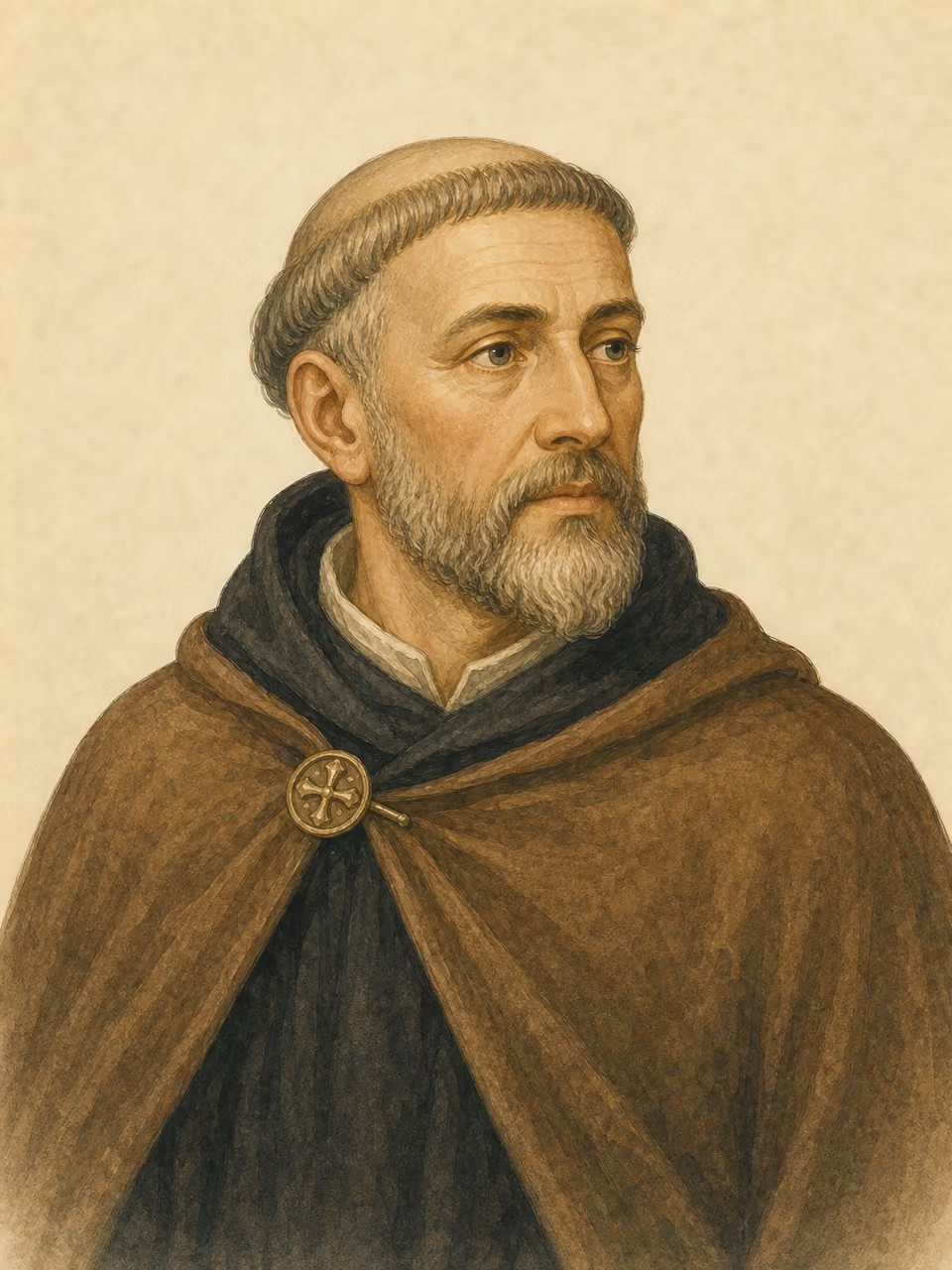
Alcuin
Palace school
A York-born teacher and scholar who helped organize learning and instruction.
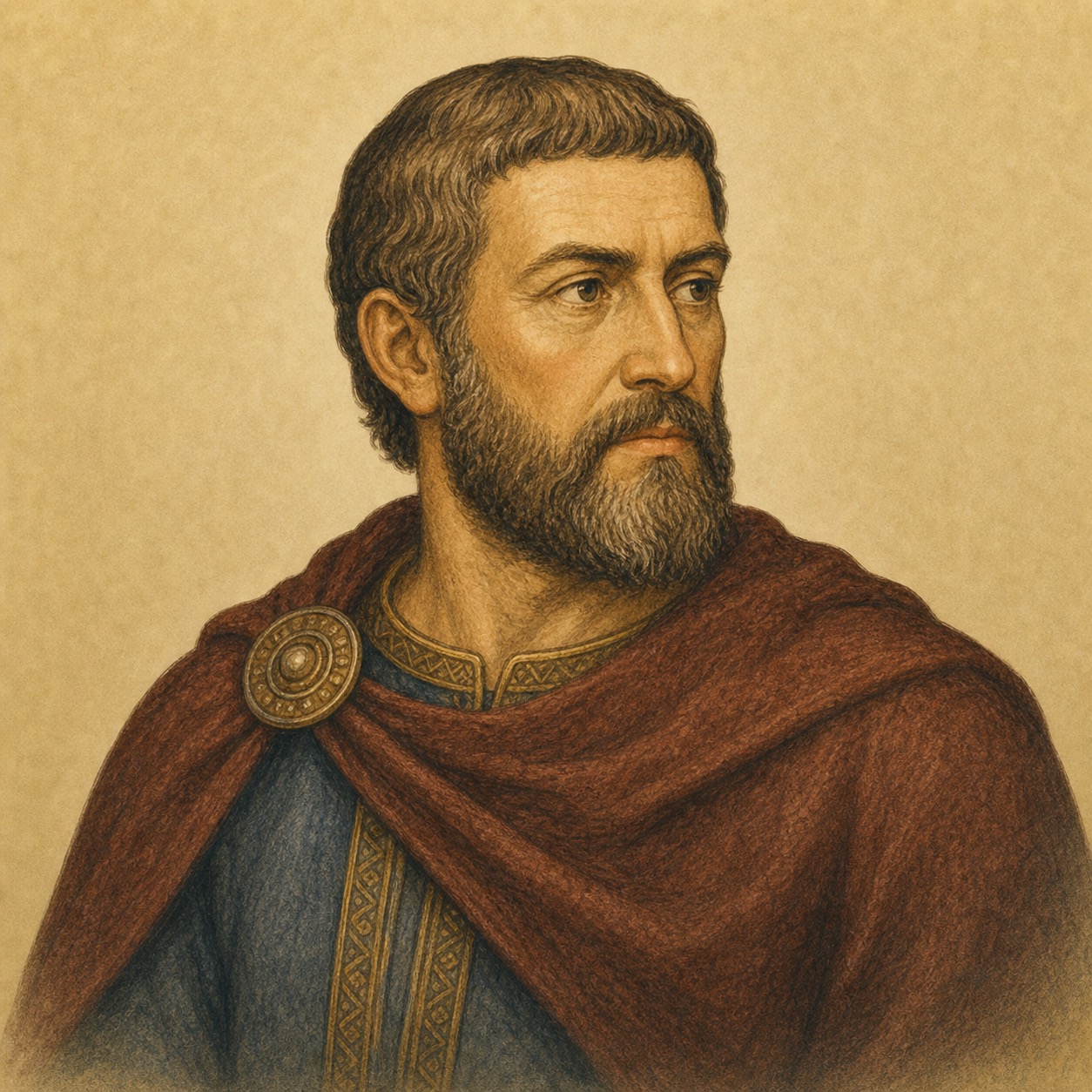
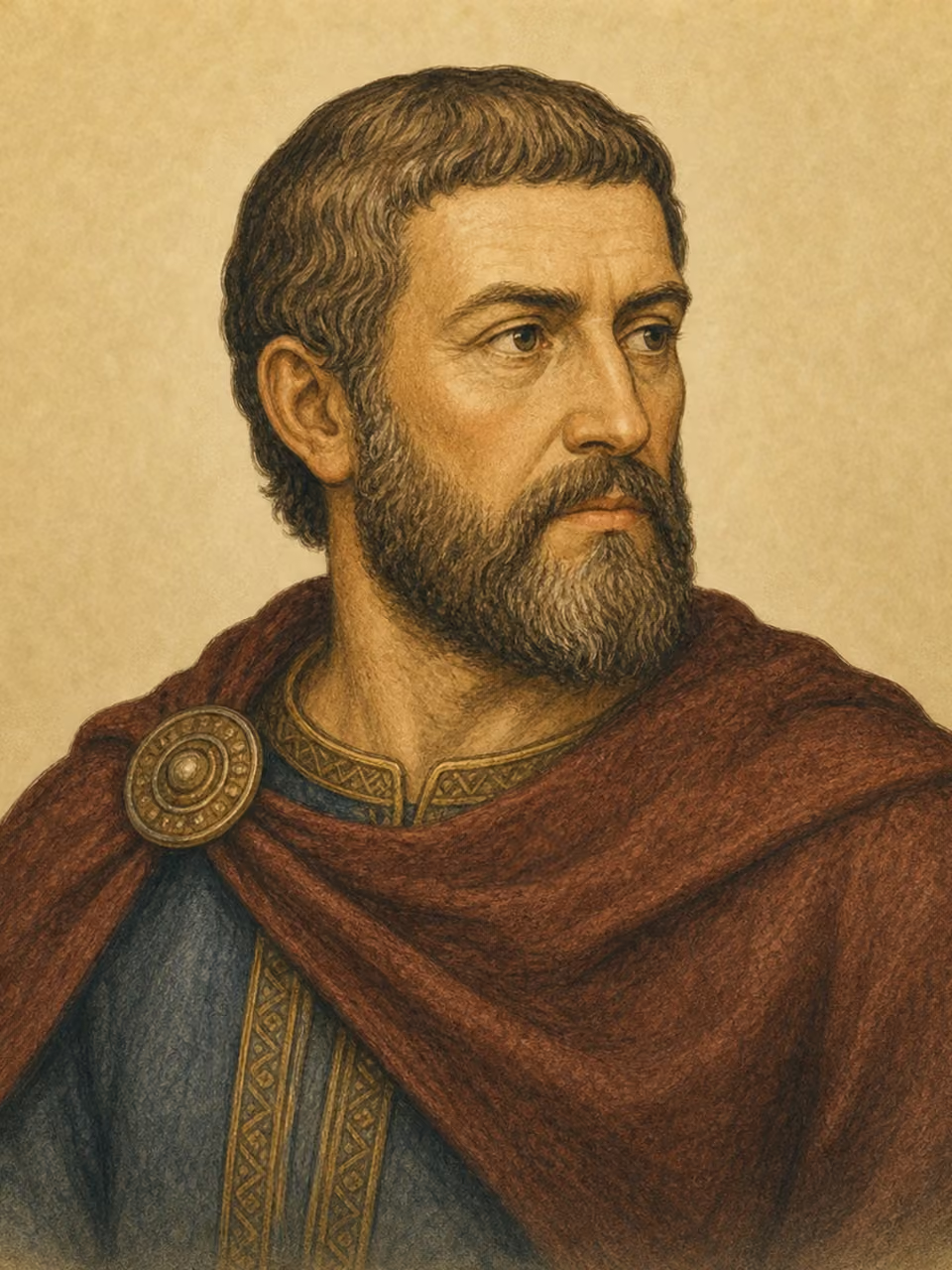
Charles Martel
Frankish realm
A mayor of the palace whose political foundations led toward Carolingian rule.
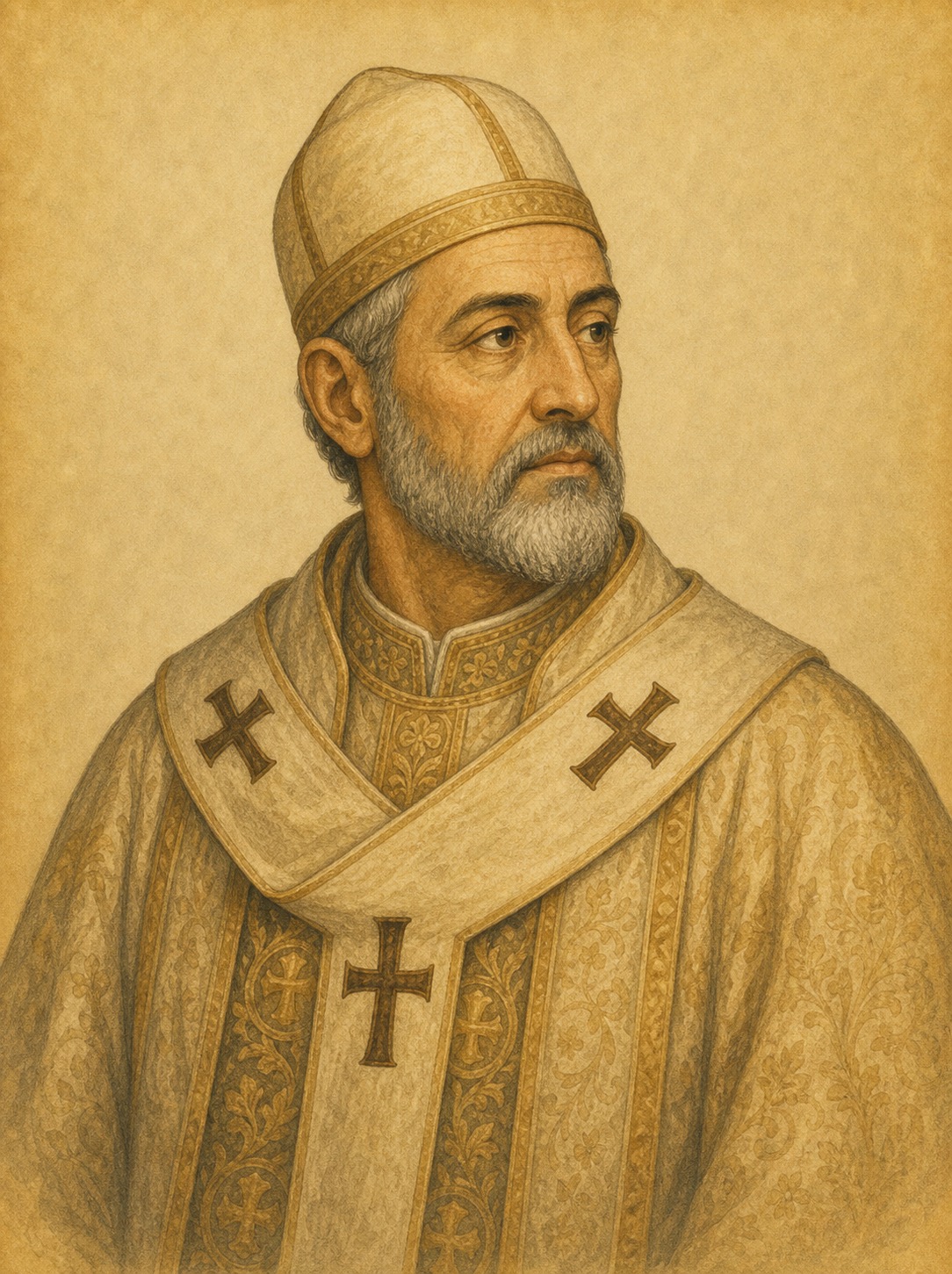
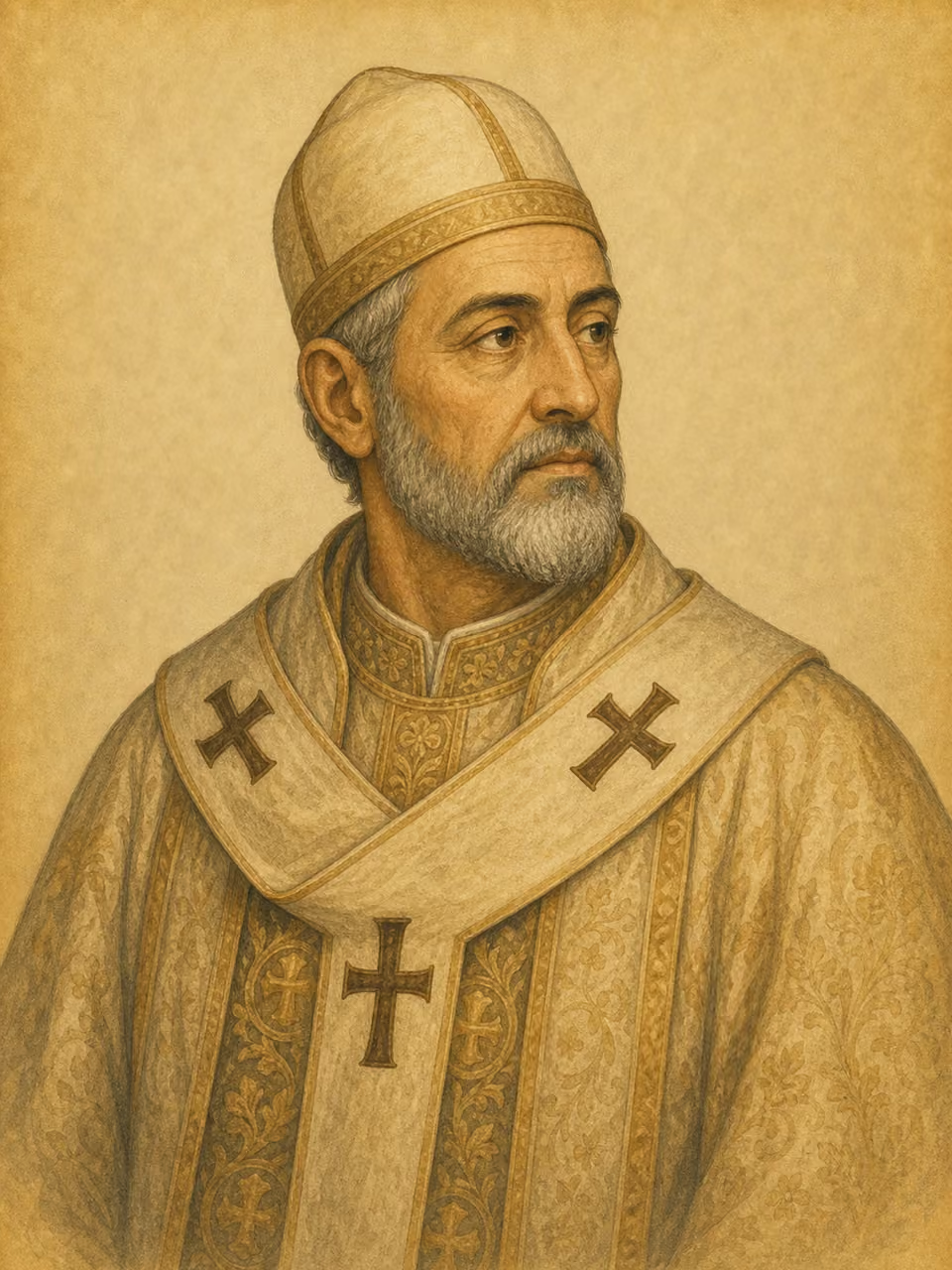
Leo III
Papacy
A pope who embodied the changing relationship between western kingship and the church.
Related events
c. 750–c. 800
Frankish expansion
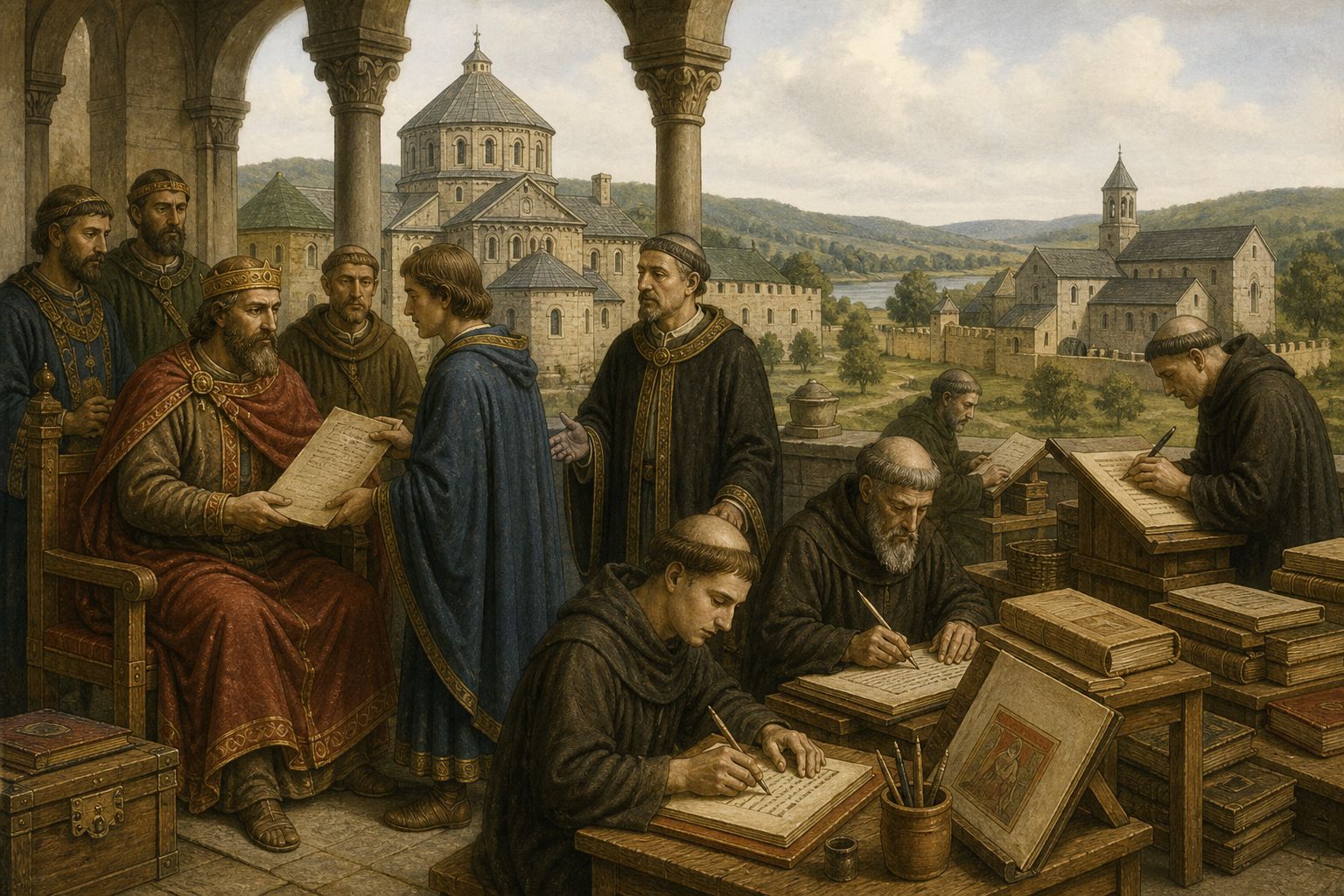
Territorial growth and church alliances created a political base for a wider culture of learning.
782
The palace school
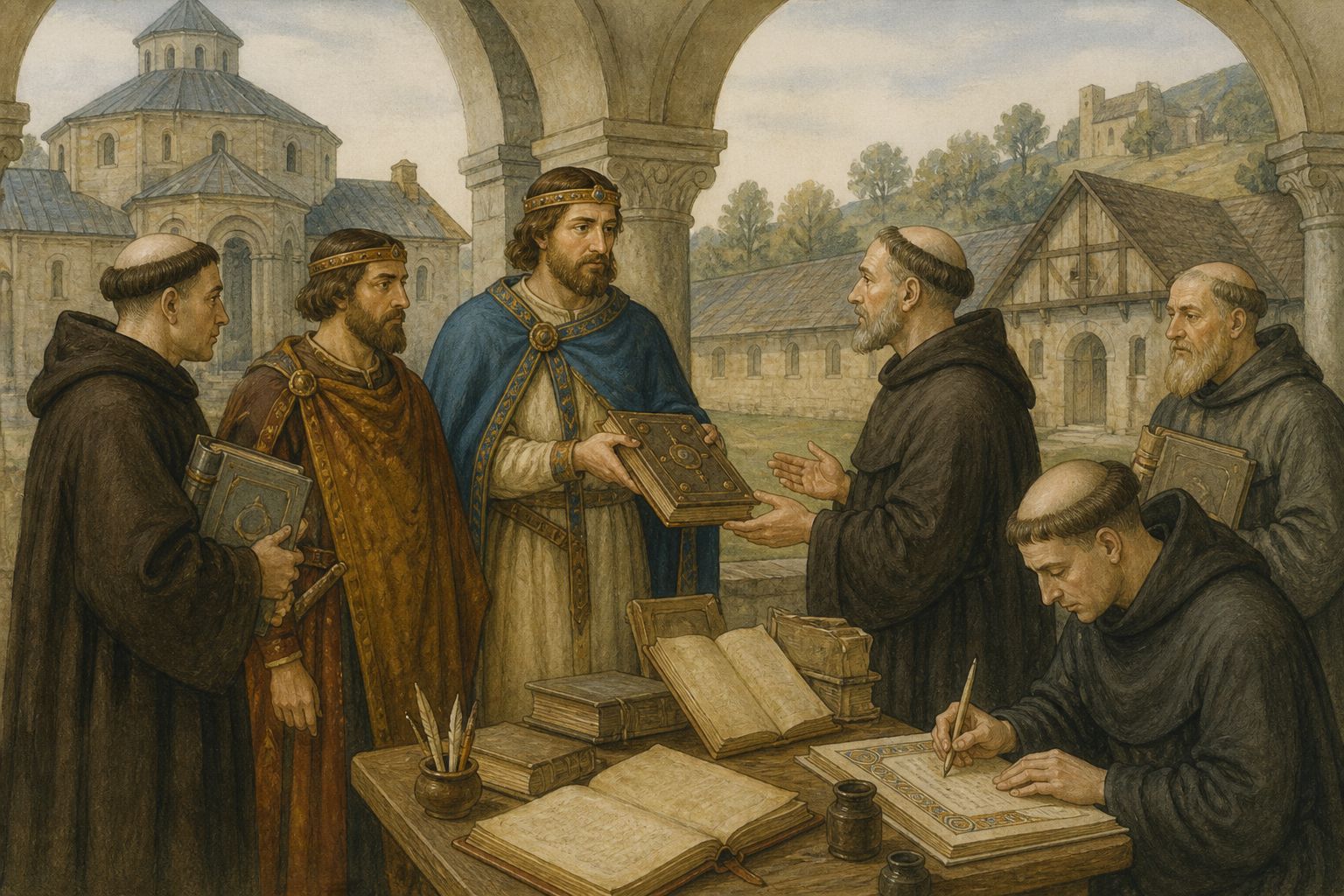
Teachers and scholars gathered at court, organizing the education of clergy and administrators.
c. 750–c. 900
Scriptoria at work
Current event
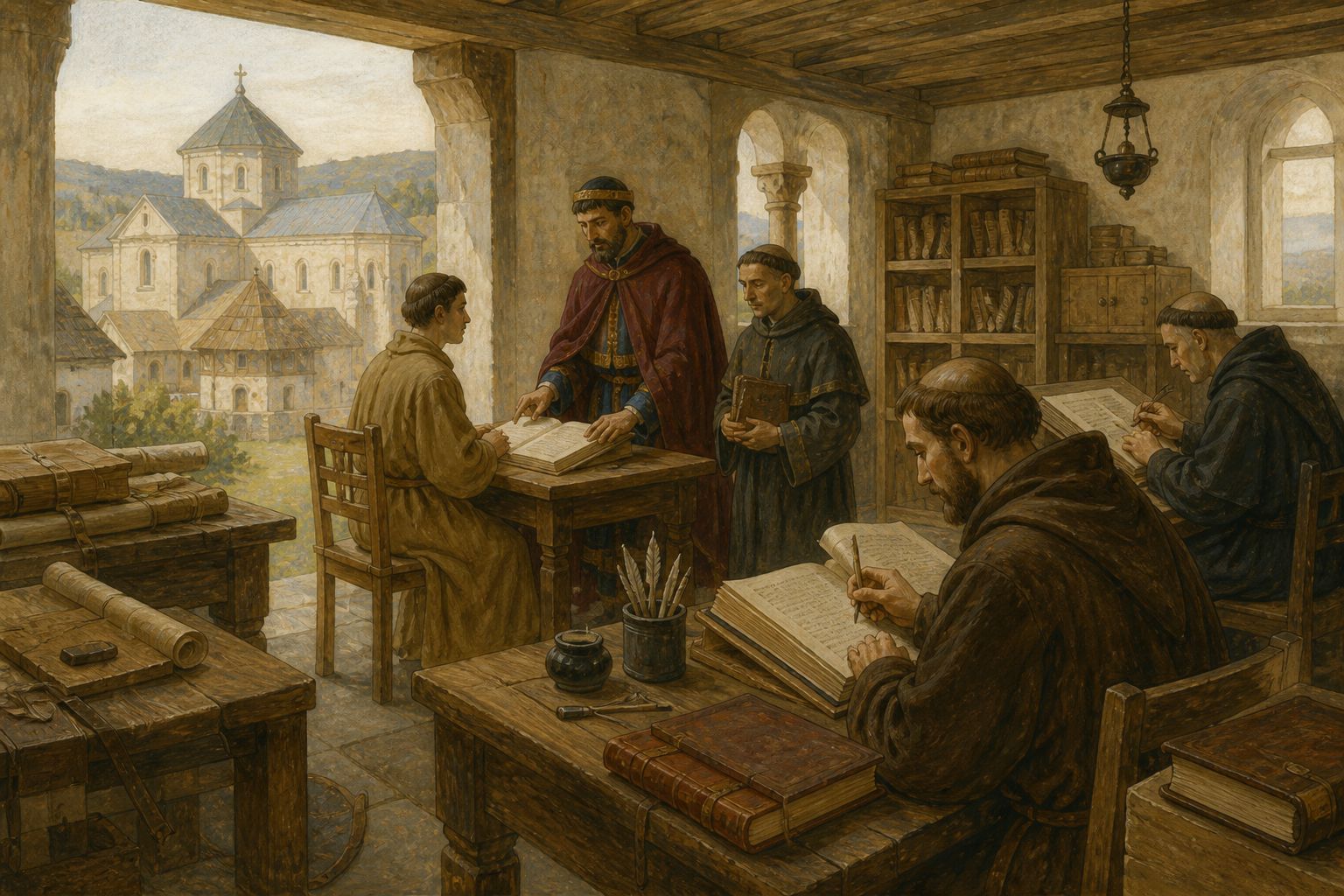
Monasteries and workshops copied classical and biblical books in increasingly ordered forms.
c. 800
A standardized script
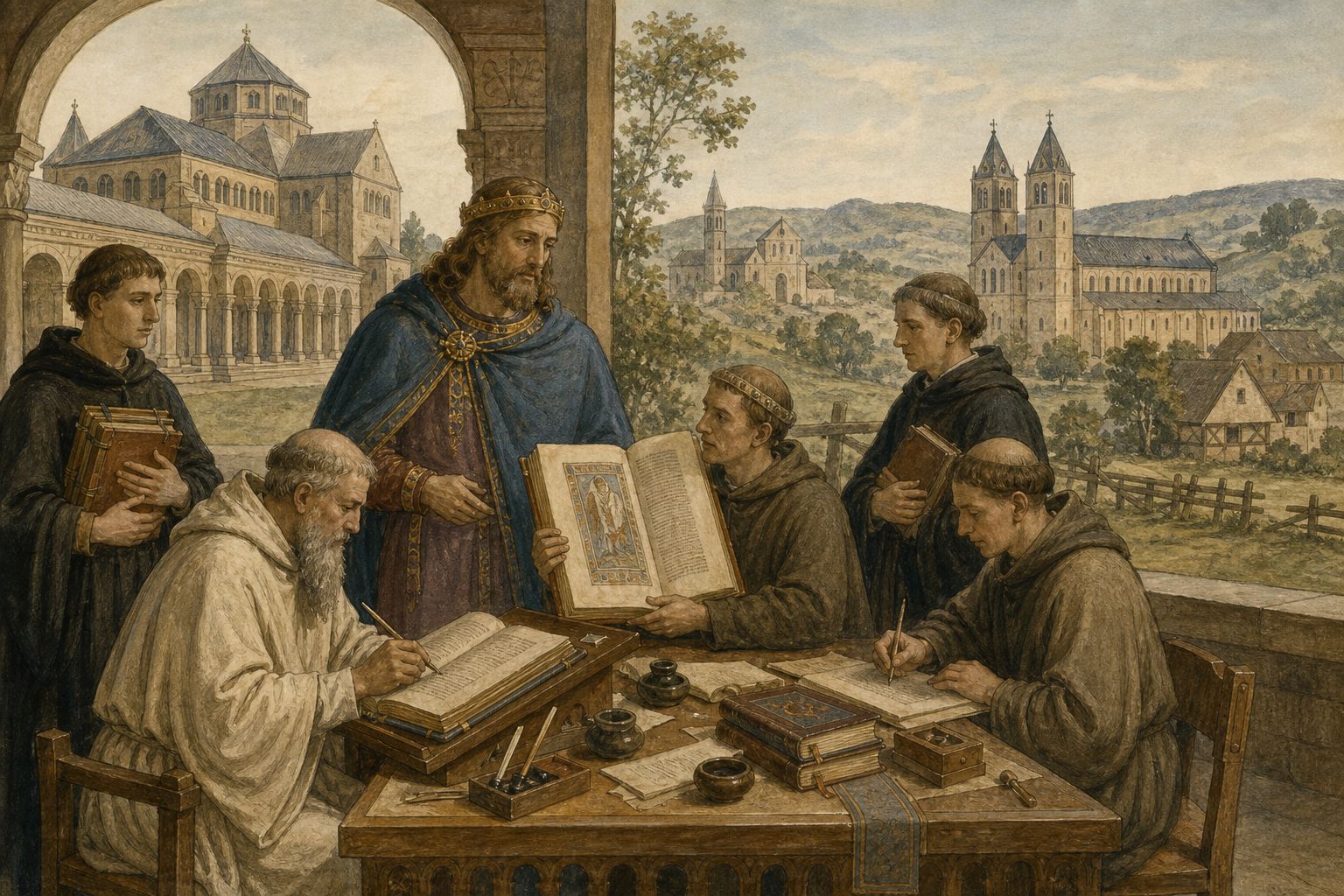
A clearer hand made documents easier to read, transmit, and use in study.
c. 900
A lasting legacy
Carolingian manuscripts transmitted much of the classical learning that survived into later centuries.


Sources
- Carolingian RenaissanceEncyclopaedia BritannicaA concise overview of the Carolingian revival of learning and its institutional setting.
- Carolingian RenaissanceThe Metropolitan Museum of ArtAn art-historical account of manuscripts, workshops, and court culture in the Carolingian period.
- Carolingian RenaissanceWorld History EncyclopediaA contextual summary of the period, its patrons, and its long-term cultural effects.