
Columbian Exchange
c. 1492–c. 1600
From 1492 into the sixteenth century, Atlantic voyages connected American, European, and African ecologies through the movement of crops, animals, people, commodities, and pathogens.

- Period
- c. 1492–c. 1600
- Kind
- War
- Regions
- South Asia
- Keywords
- Atlantic exchange · crops · colonialism · pathogens · coerced labor
Follow the story · Four stages
Background
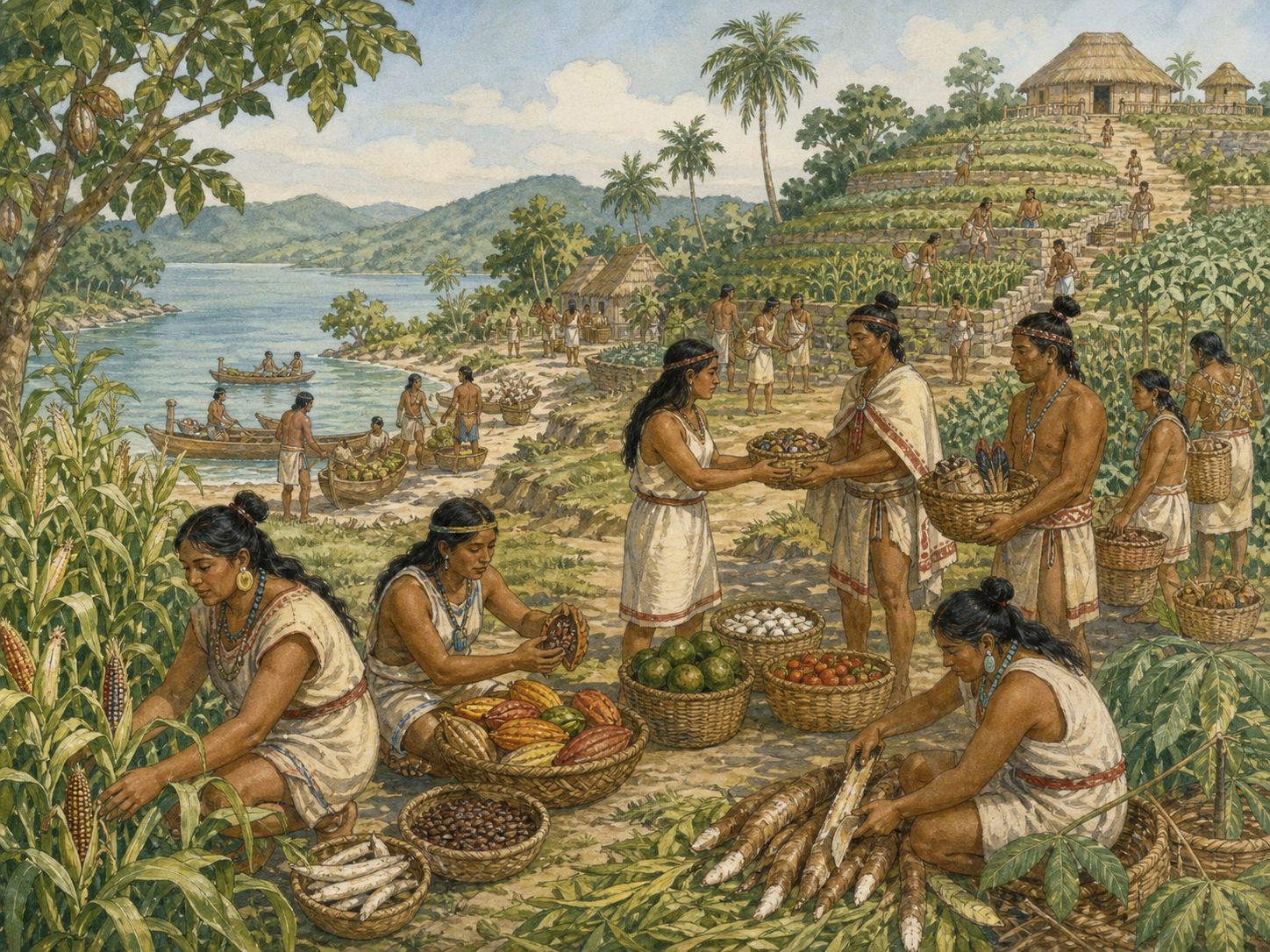
Indigenous American societies already cultivated diverse crops and maintained exchange networks, while European and African maritime worlds supplied ships, labor systems, and commercial institutions.
- Indigenous societies cultivated maize and cacao before Atlantic contact
- Caribbean communities maintained routes and exchange networks
- European and African maritime worlds supplied ships, labor, and commerce
Course
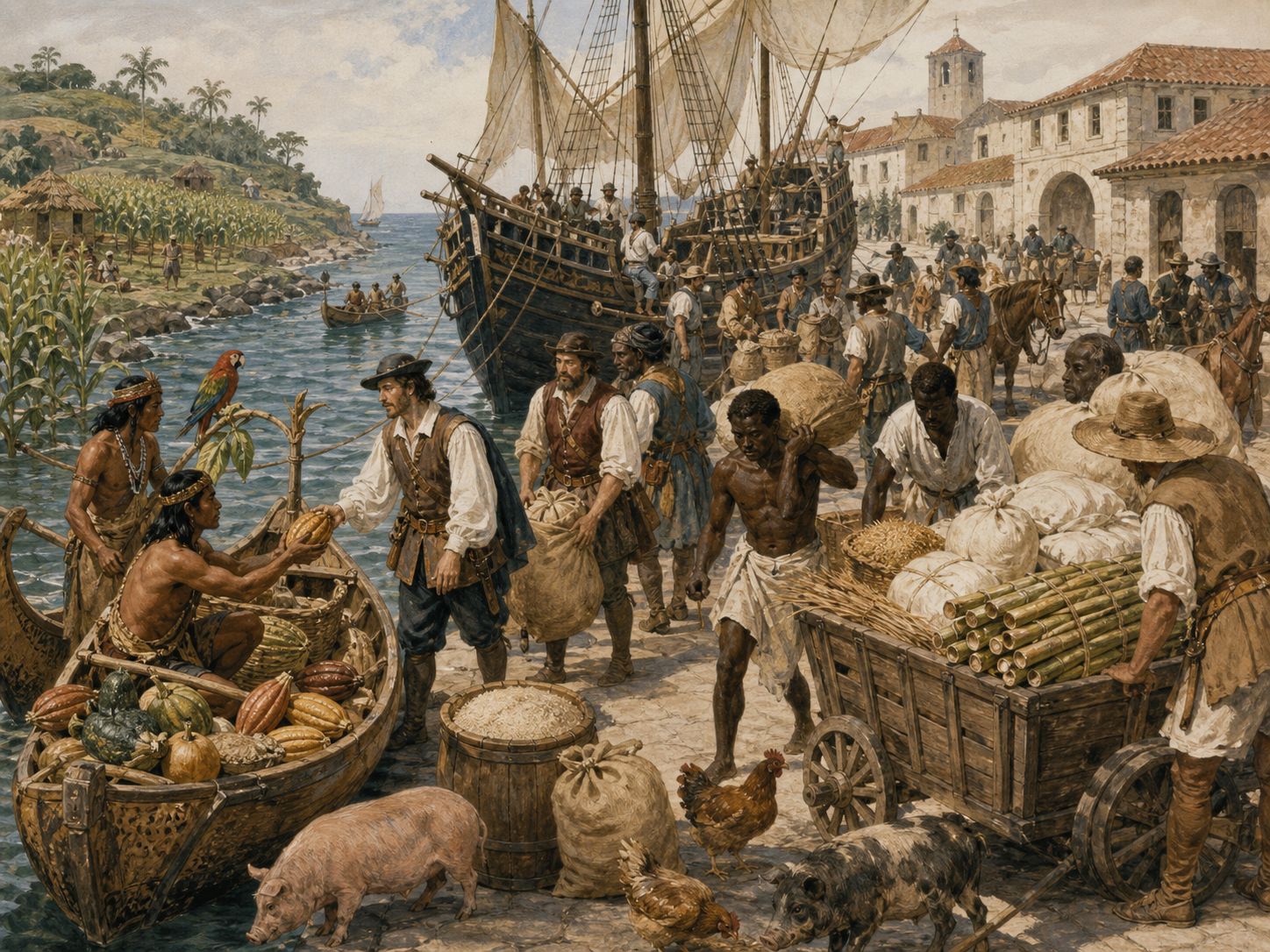
After voyages reached the Caribbean, maize, potatoes, cacao, and other crops moved east while wheat, sugar, horses, and diseases moved west; colonial trade and coercive labor expanded these transfers.
- Voyages after 1492 connected the Caribbean to Europe and Africa
- Crops, animals, people, commodities, and pathogens crossed the Atlantic
- Colonial trade and coerced labor expanded the scale of transfer
Outcome
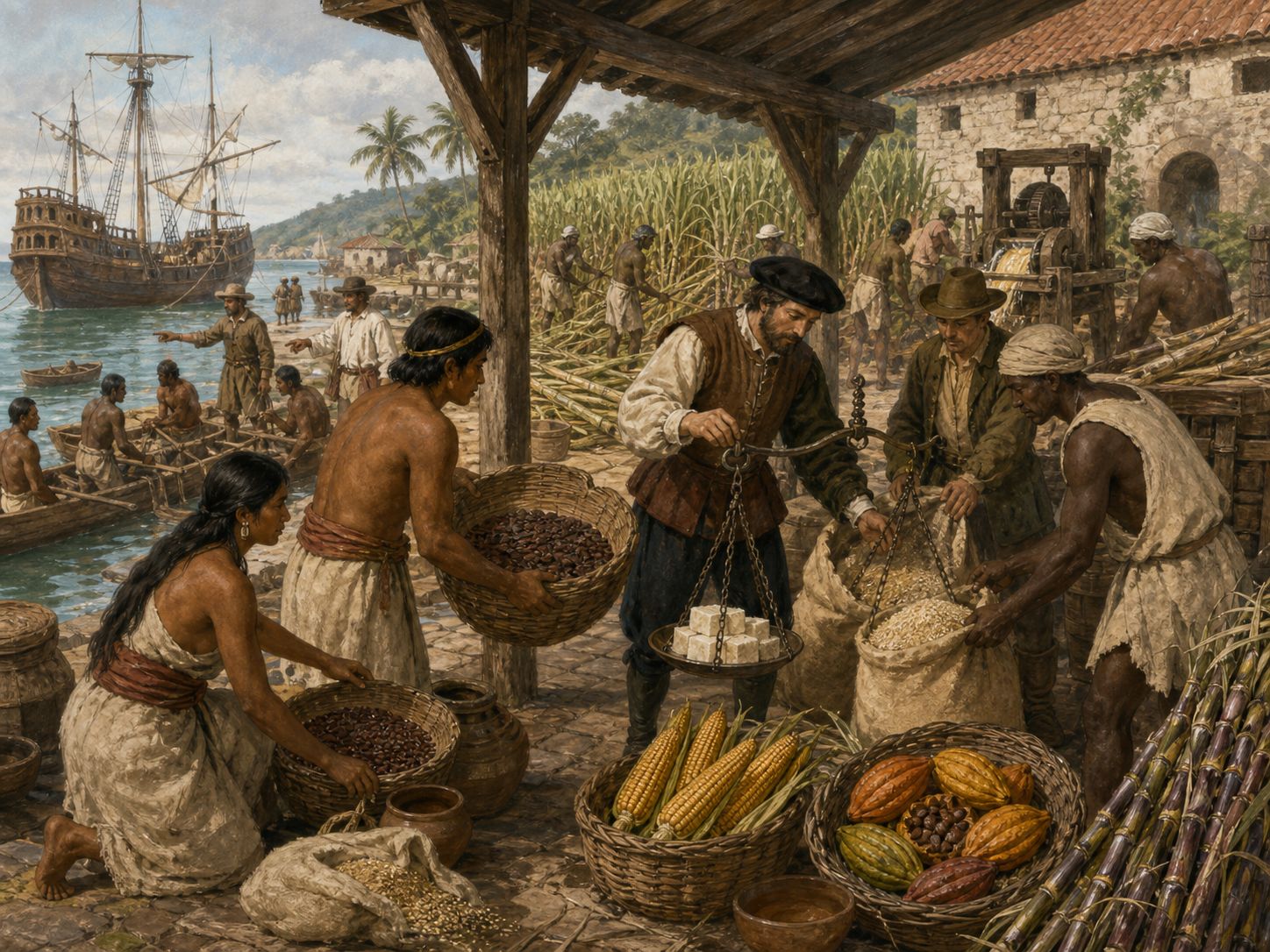
The exchange transformed diets, environments, economies, and populations across oceans, while conquest, epidemic disease, enslavement, and plantation production caused profound harm.
- Maize and cacao moved east while wheat and sugar moved west
- Diets, ecologies, economies, and populations changed across oceans
- Conquest, epidemic disease, enslavement, and plantations caused profound harm
Historical significance
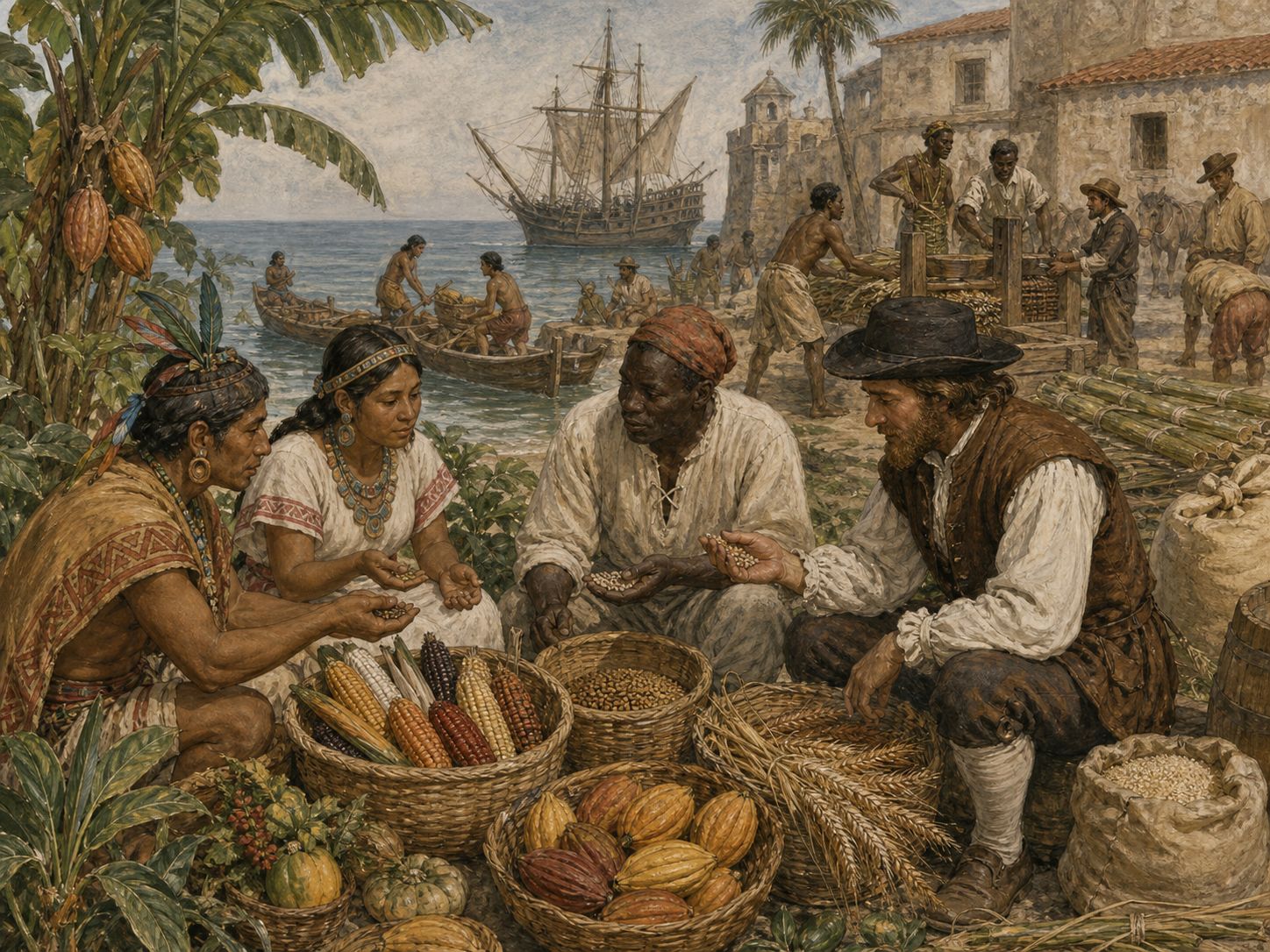
The term describes a connected ecological history, but it must not turn colonization into a neutral exchange or erase Indigenous knowledge and African agency.
- It made the Atlantic a framework for connected ecological history
- It shows why colonization cannot be described as a neutral exchange
- It restores Indigenous knowledge and African agency to the account


Related events
c. 1400–c. 1491
Pre-contact networks
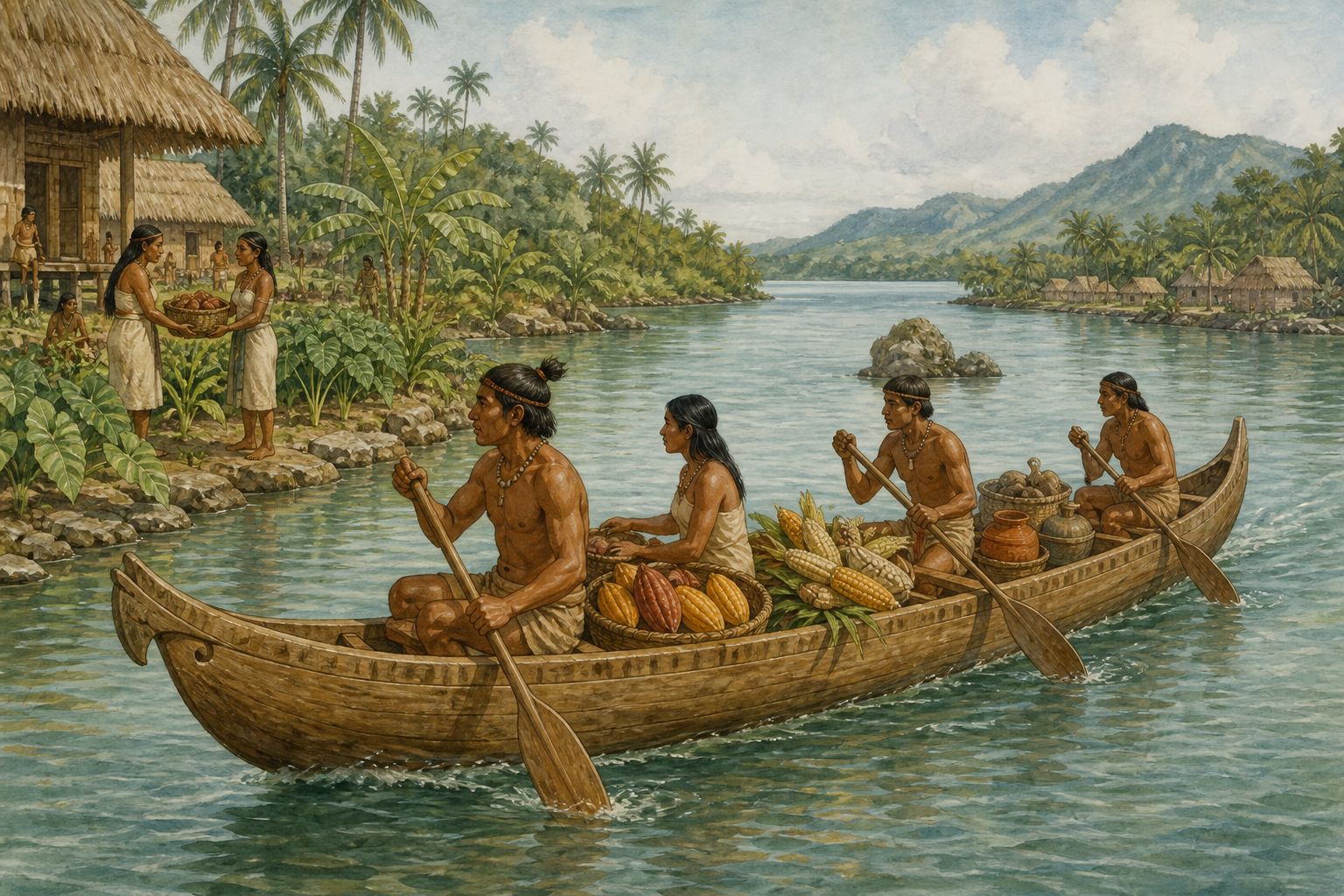
Indigenous communities connected crops, tools, and knowledge through regional waterways.
1492
Atlantic contact
Current event
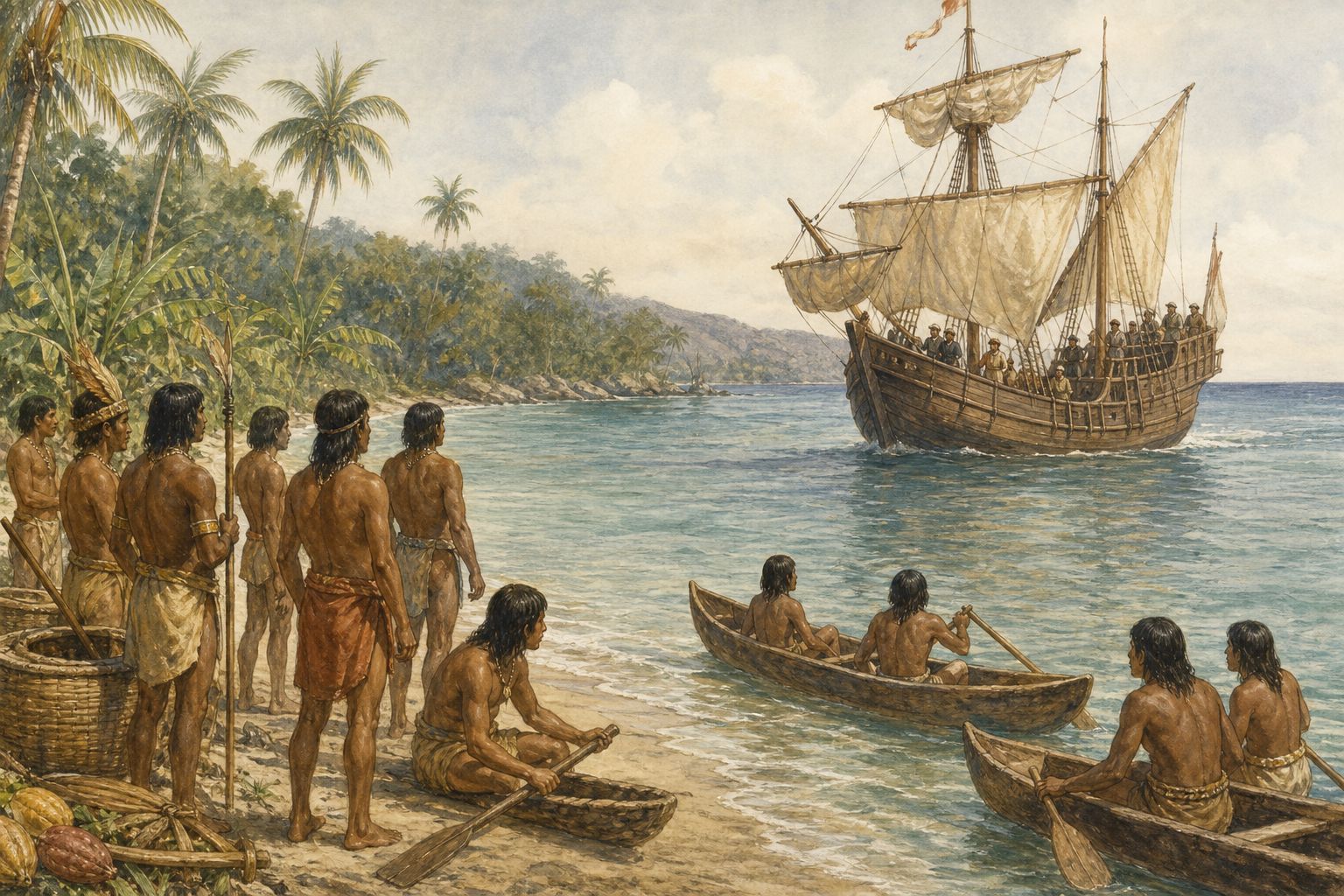
After 1492, European ships and Caribbean canoes formed new sites of contact.
c. 1493–c. 1600
Biological transfers
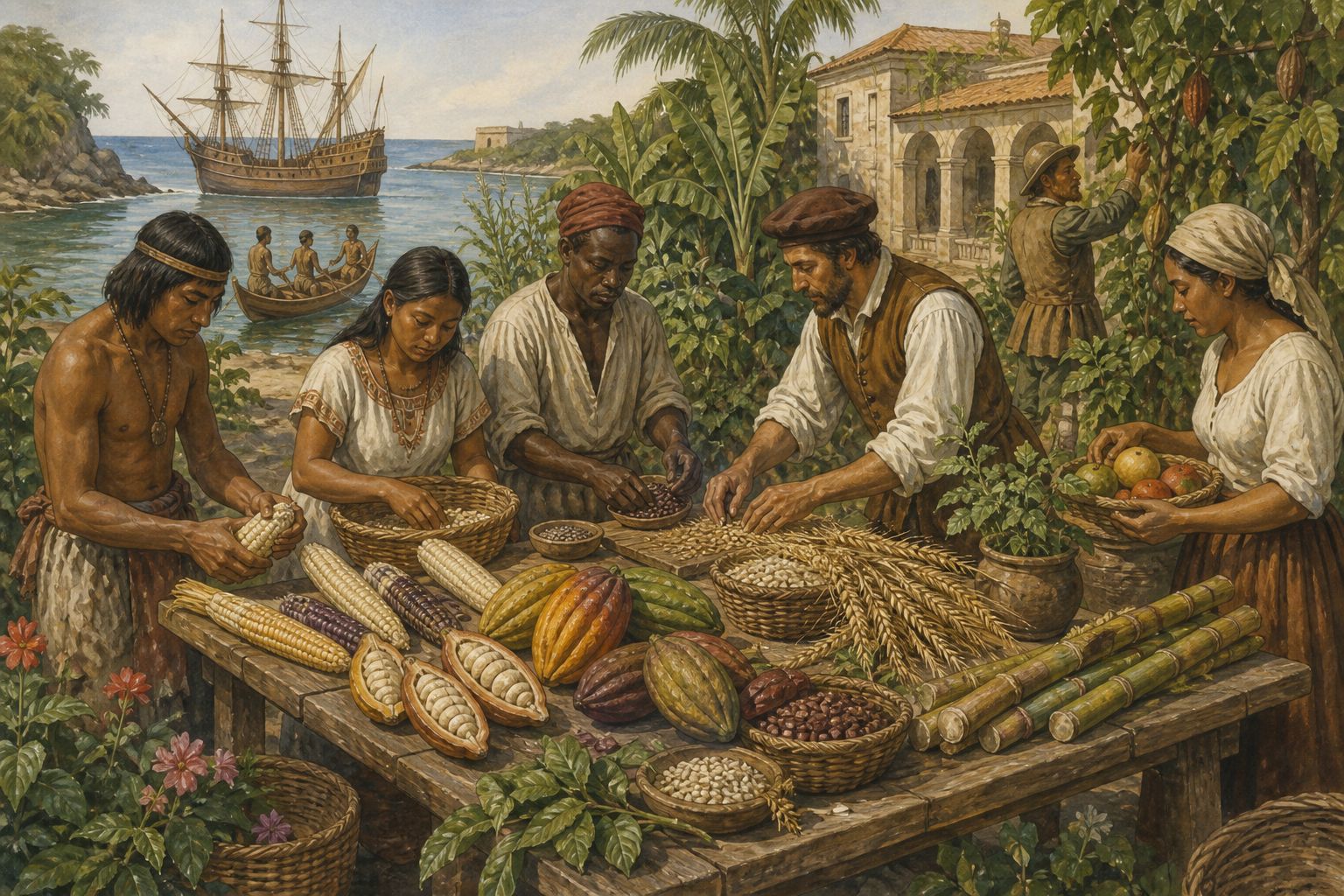
Crops, livestock, and pathogens crossed the Atlantic and reshaped food and environments.
c. 1500
Colonial labor
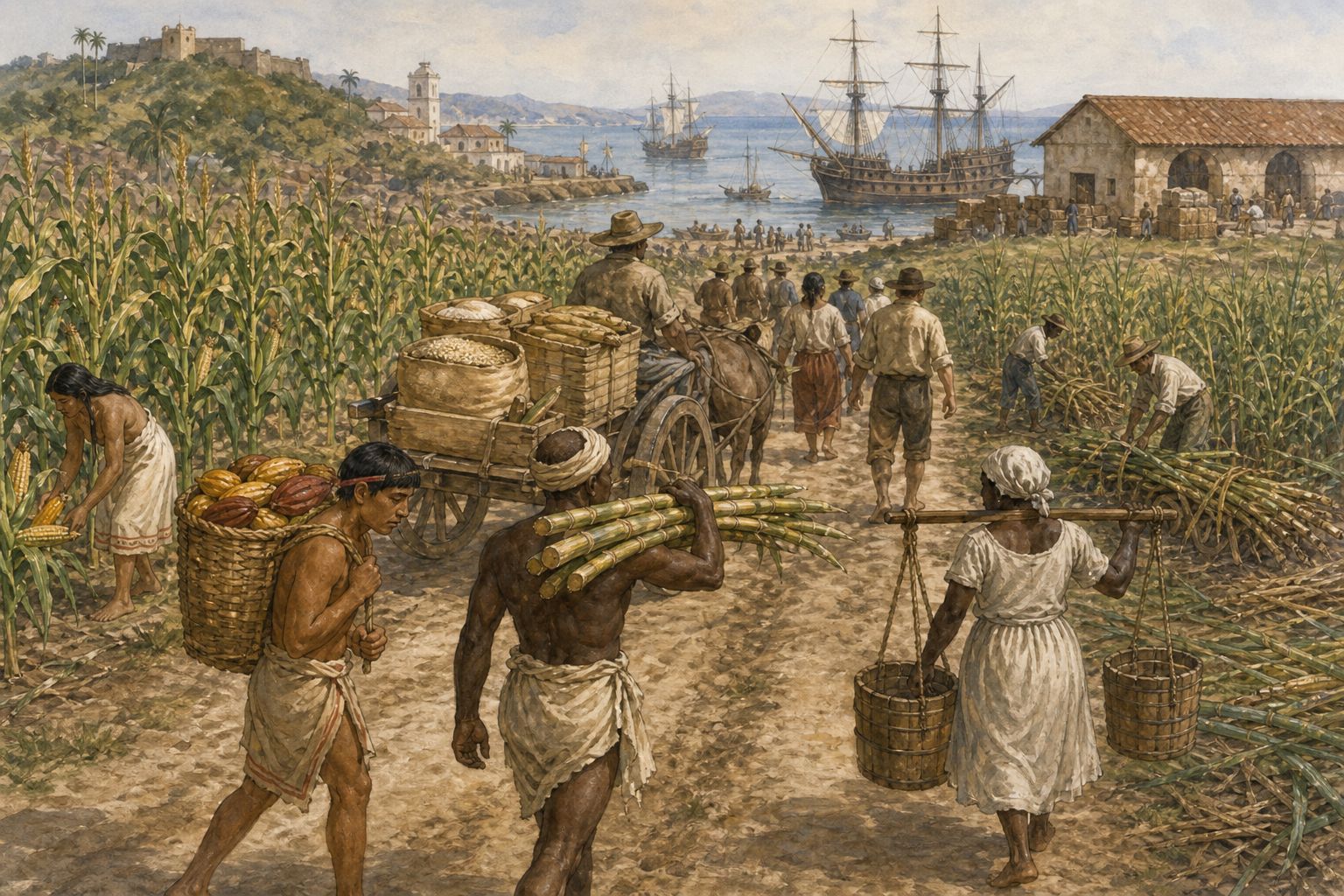
Trade routes between ports and plantations incorporated the coerced labor of Indigenous and African people.
c. 1600
Ecological legacy
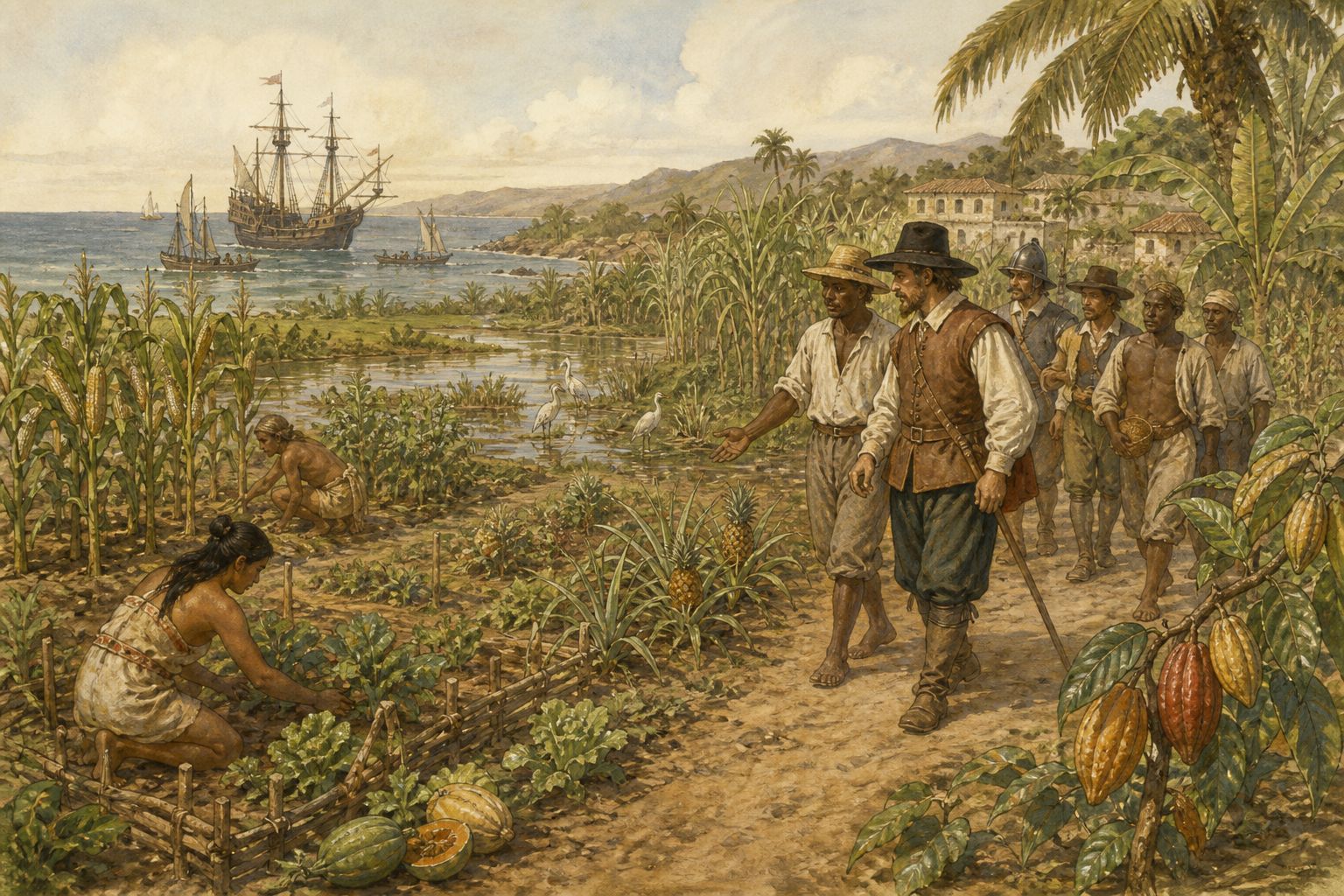
Introduced crops and altered landscapes left lasting effects on coastal societies and environments.


Sources
- Columbian exchangeEncyclopaedia BritannicaAn overview of the Columbian Exchange and the movement of crops, animals, and pathogens across the Atlantic.
- The Columbian ExchangeThe Metropolitan Museum of ArtContext for Atlantic contact, material culture, colonization, and the movement of foodways.
- Columbian ExchangeWorld History EncyclopediaA chronological summary of exchange, disease, colonial labor, and environmental change after 1492.