Dutch Revolt
1568–1609
From 1568 to 1609, armed revolt in the Netherlands became a war against Spanish Habsburg rule and, after northern cooperation, reached the Twelve Years' Truce.

- Period
- 1568–1609
- Kind
- Rebellion
- Regions
- Europe
- Keywords
- Netherlands · Spanish Habsburgs · religious persecution · northern provinces · Twelve Years' Truce · Dutch Republic
Follow the story · Four stages
Background
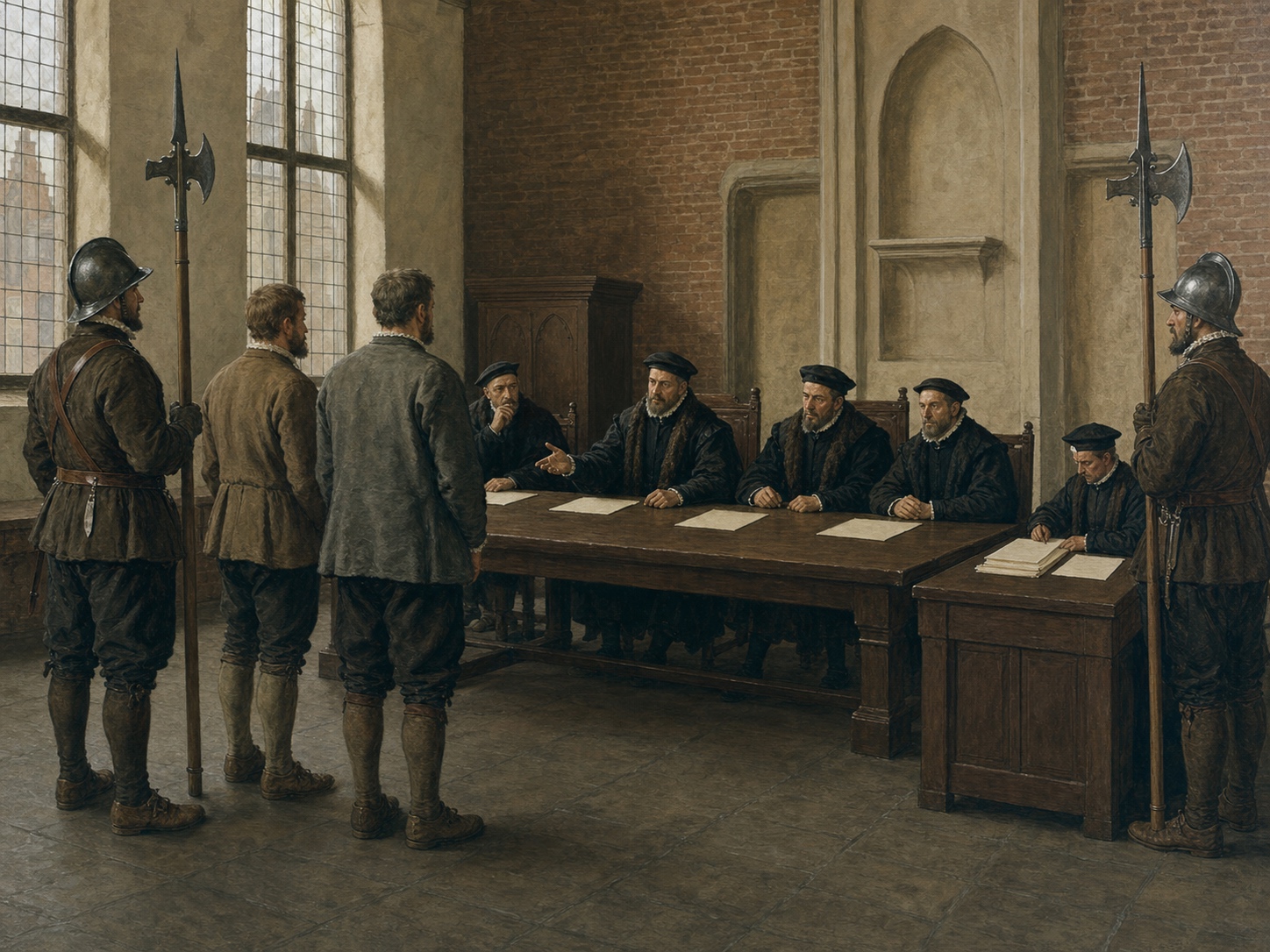
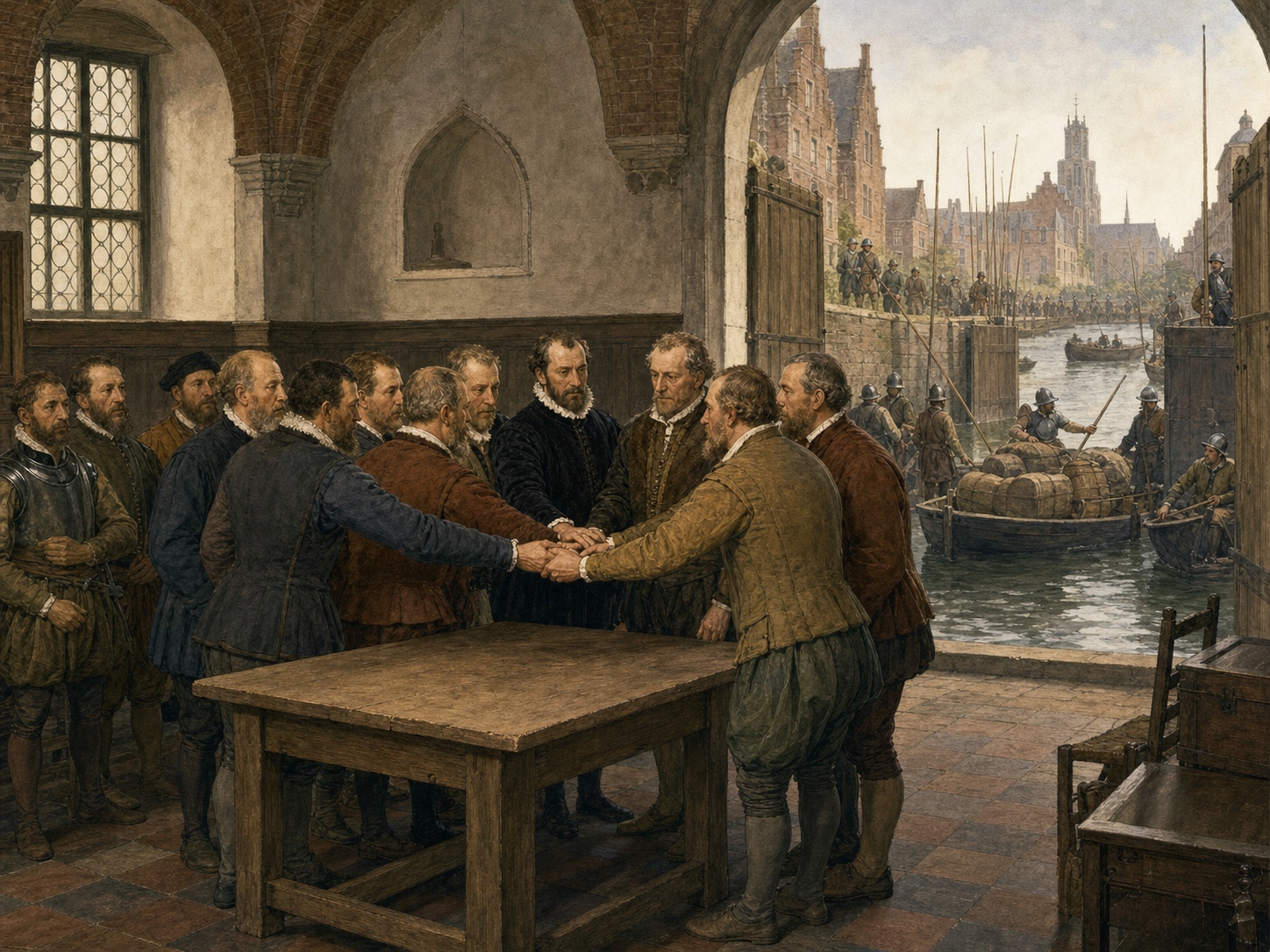
Resistance to Habsburg centralization, taxation, and religious persecution intensified; noble petitions and iconoclasm turned the crisis into armed conflict.
- Resistance to royal centralization and taxation
- Stricter Catholic control and religious persecution
- The noble petition and iconoclasm of 1566
Course
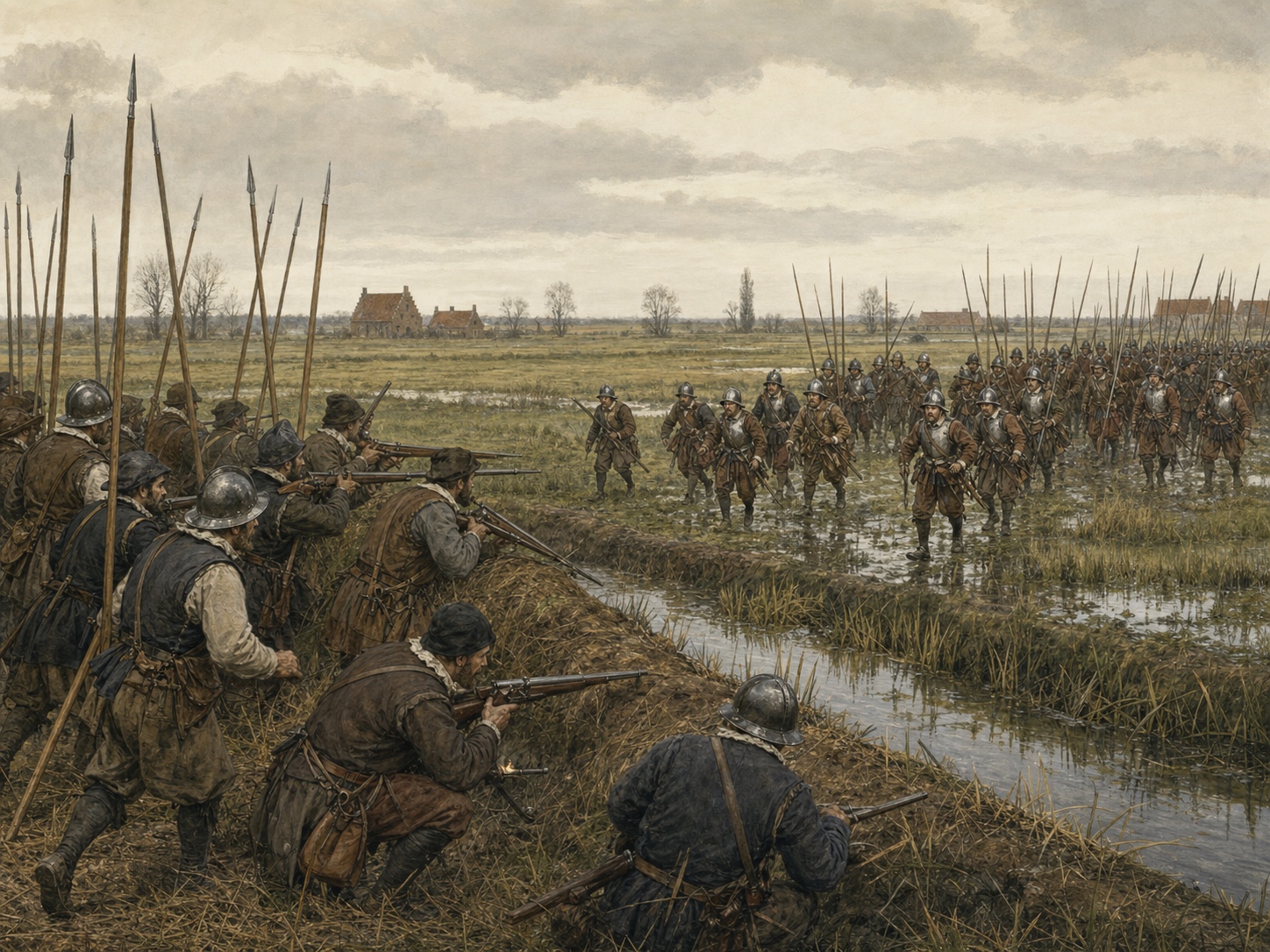
Revolt began in 1568, northern and southern unions divided in 1579, and the northern provinces abjured the king in 1581. Elizabeth I supported the rebels and sent English forces in 1585; the active boundary ends with the Twelve Years' Truce in 1609.
- Repression and armed revolt from 1568
- Separate northern and southern unions in 1579
- English military support from 1585
Outcome
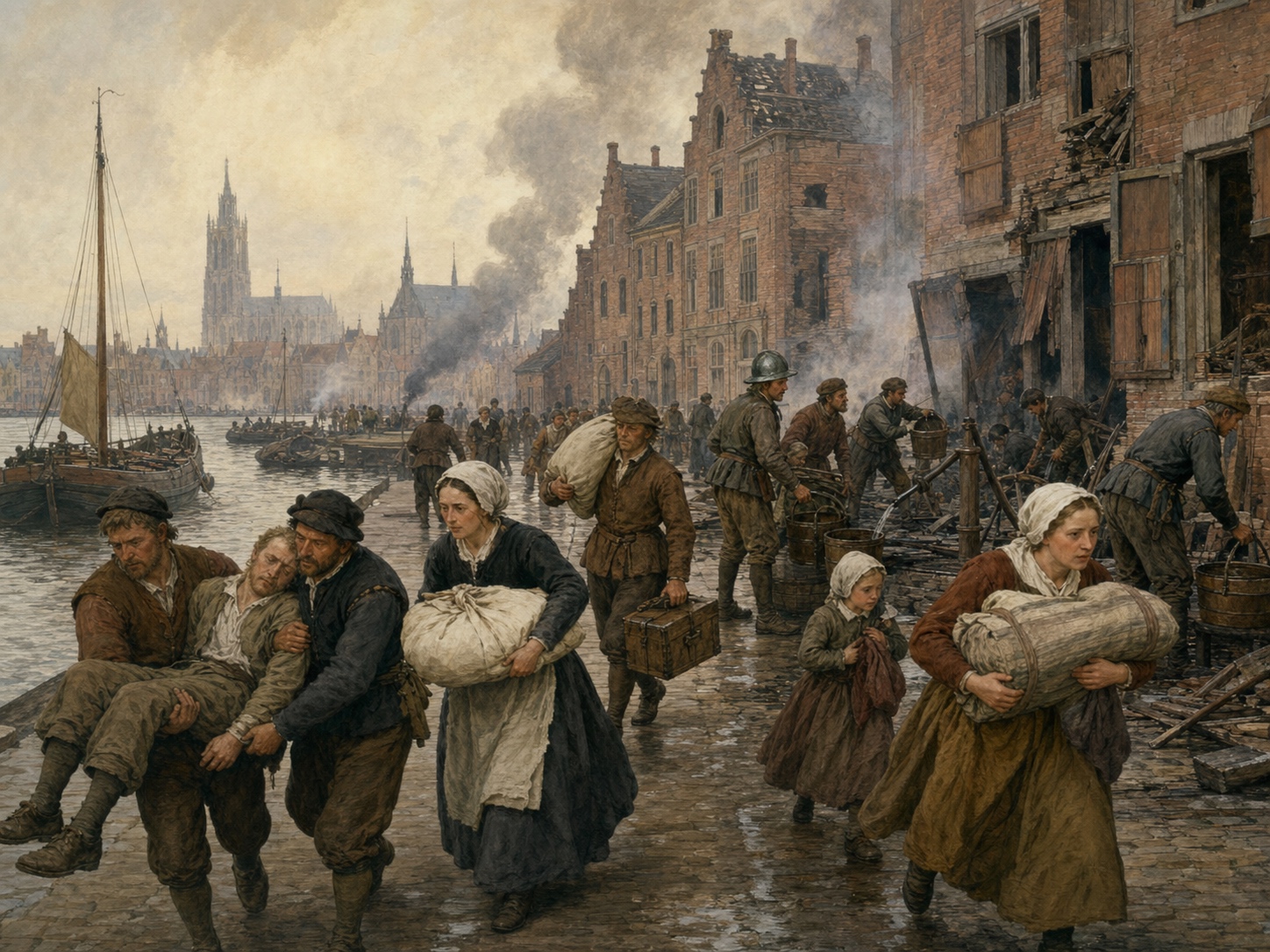
The northern provinces consolidated de facto independence while the south remained under Spanish Habsburg rule. The peace that formally recognized northern independence in 1648 is a later consequence beyond this event's active boundary.
- De facto independence consolidated in the north
- The south remaining under Spanish Habsburg rule
- The Twelve Years' Truce beginning in 1609
Historical significance
The revolt established the Dutch Republic in the north and entrenched its political and confessional separation from the Spanish-ruled south.
- The Dutch Republic established in the north
- A lasting political and confessional north–south division
- Formal recognition in 1648 as a later consequence


Related figures
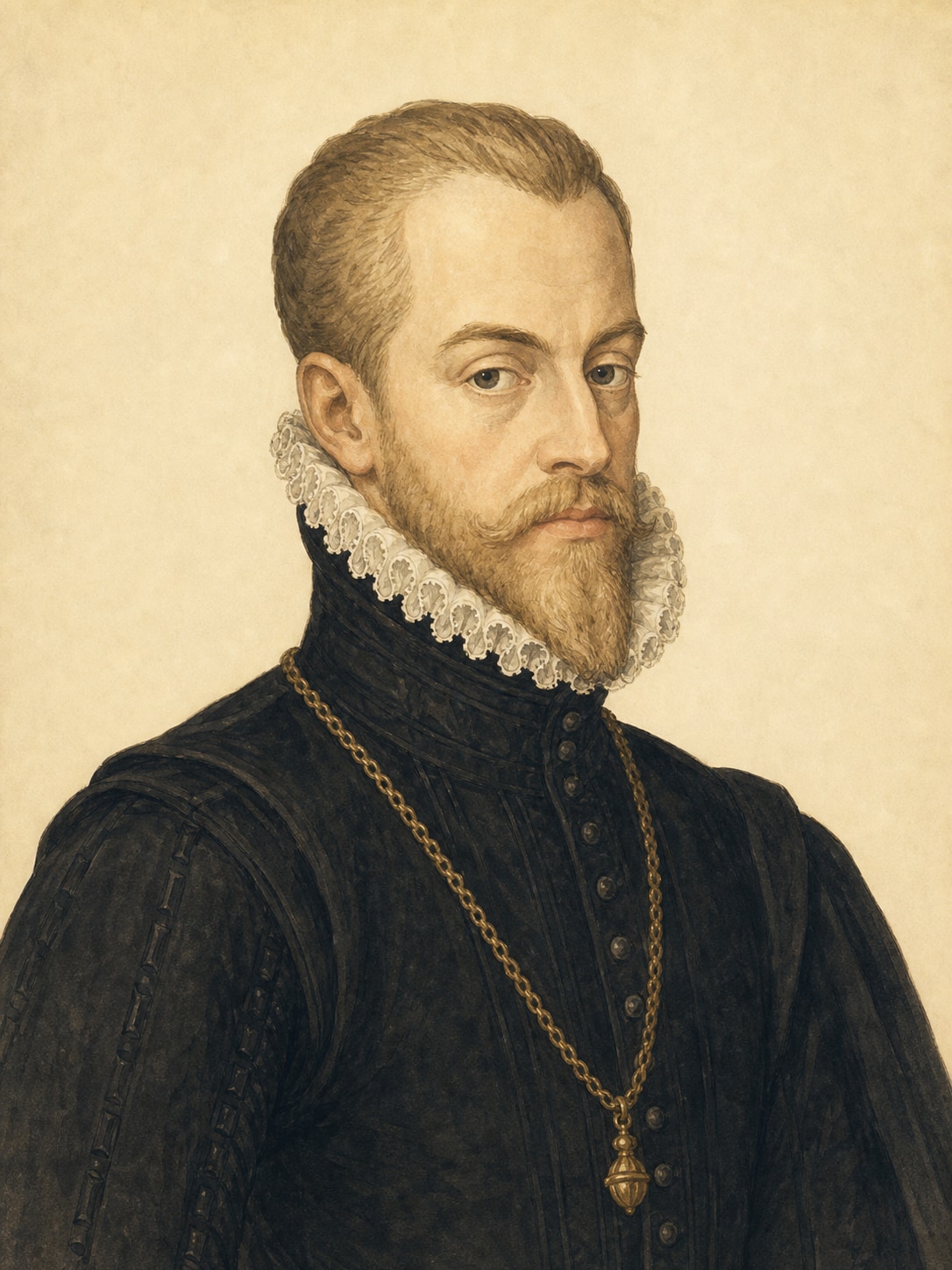
Philip II of Spain
Spanish king and sovereign
As sovereign of the Netherlands, he pursued centralization and responded to the revolt with military force. His leadership here concerns policy and military retaliation, not personal battlefield command.
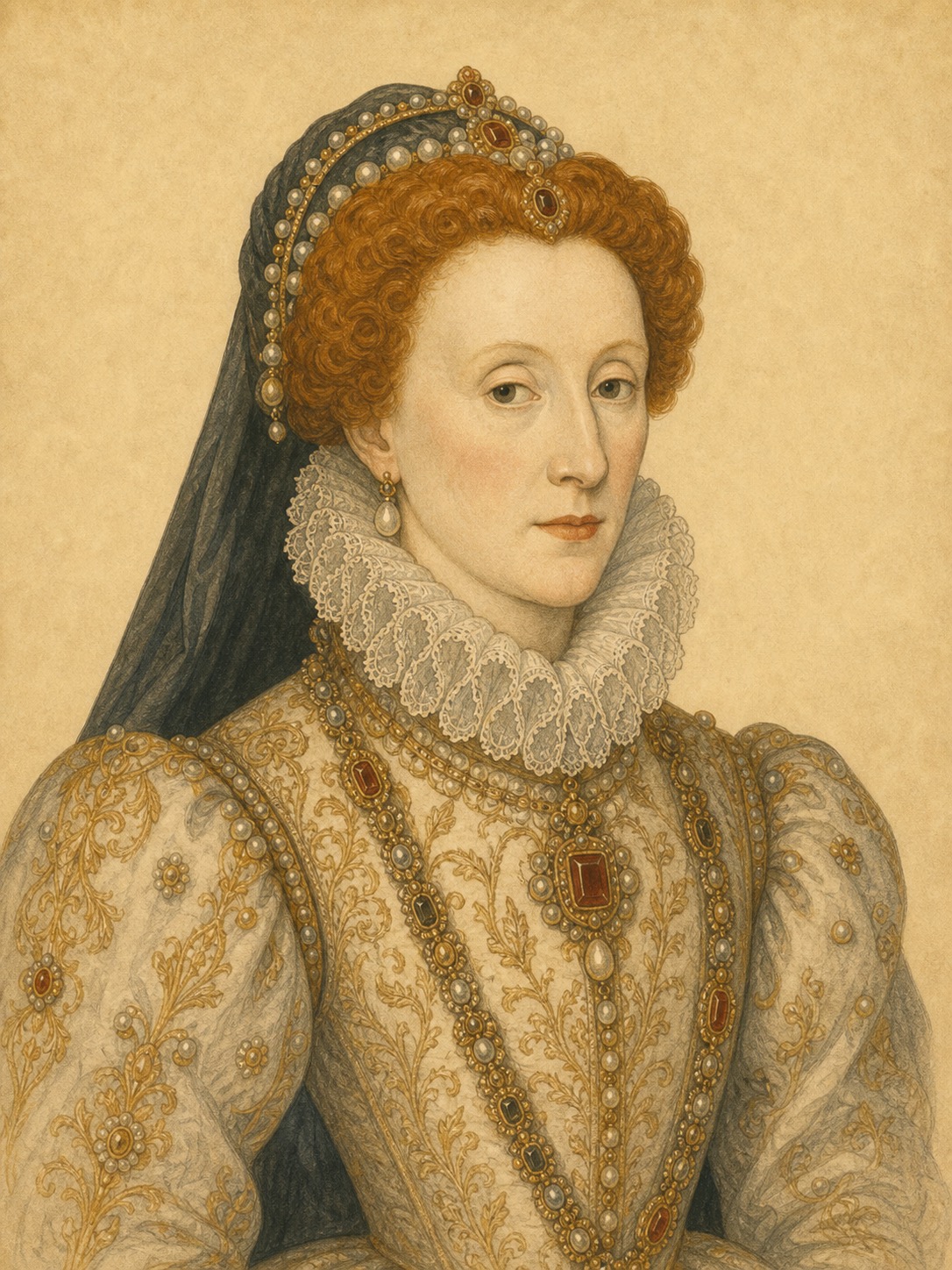
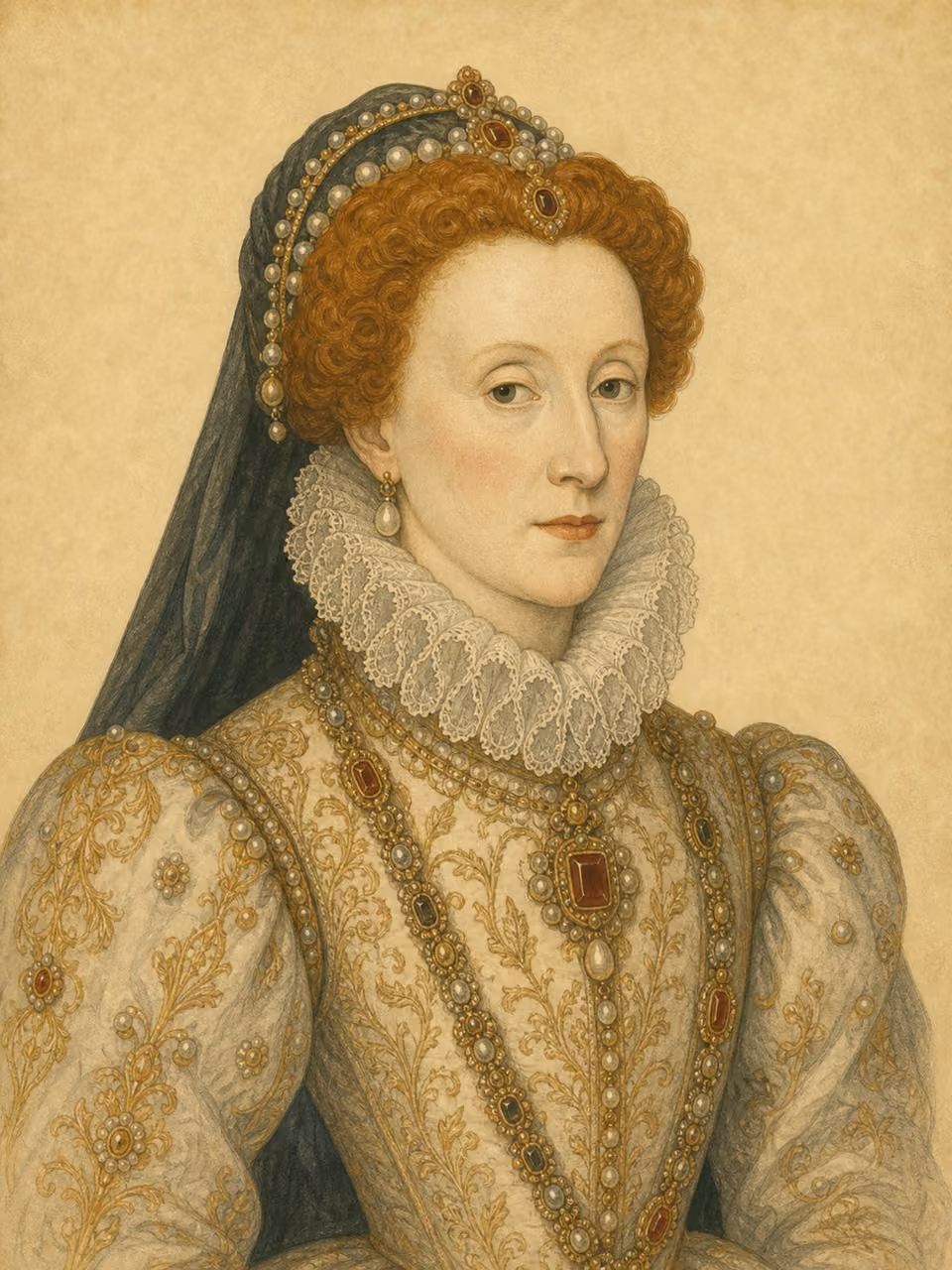
Elizabeth I
English queen and supporter
Under the Treaty of Nonsuch in 1585, she supported the rebel provinces and sent English forces. She participated through alliance and intervention rather than leading the Dutch revolt.
Related events
1555–1565
Centralization and persecution
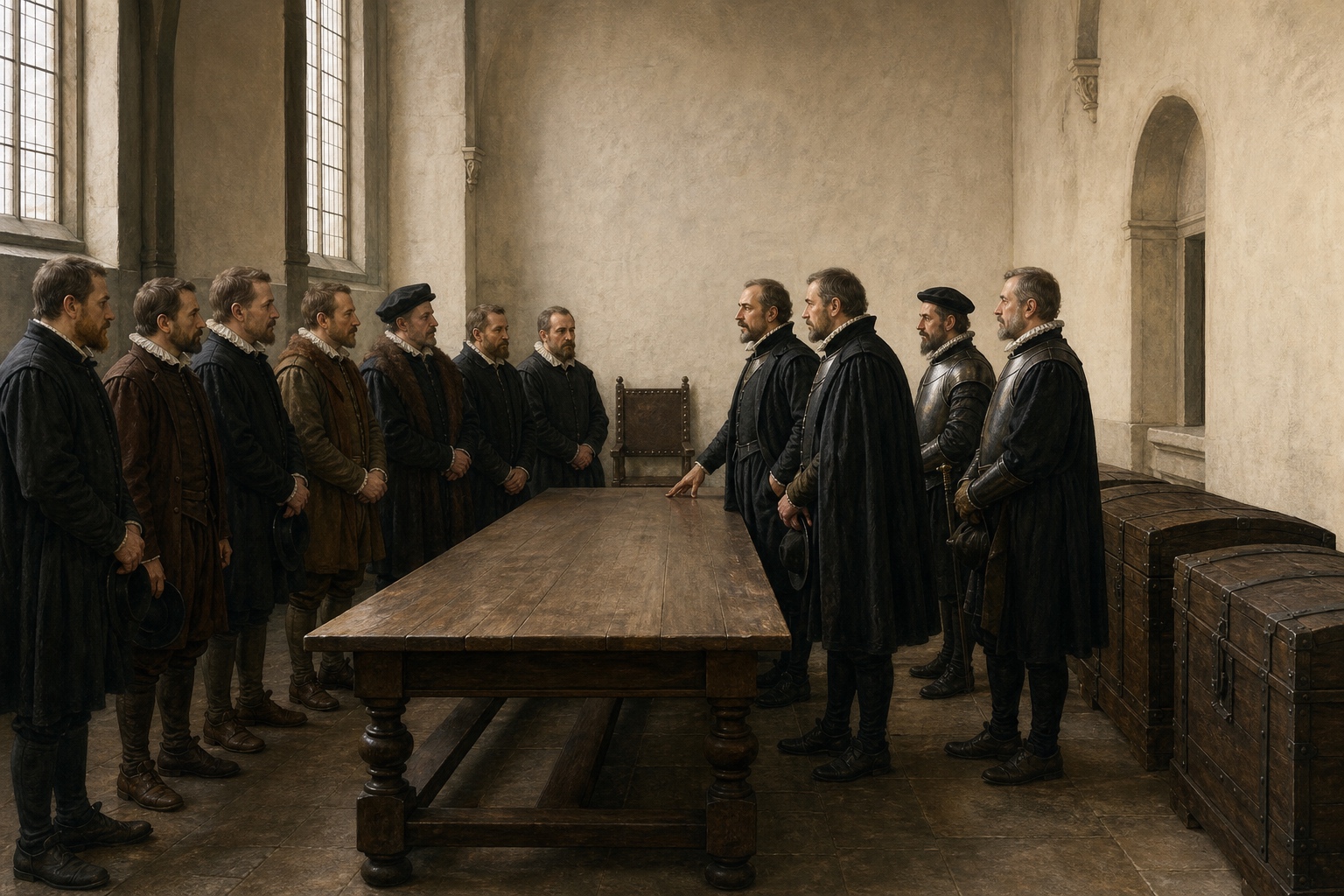
Resistance to centralization, taxation, and religious persecution intensifies across the Netherlands.
1565–1566
Petitions and iconoclasm
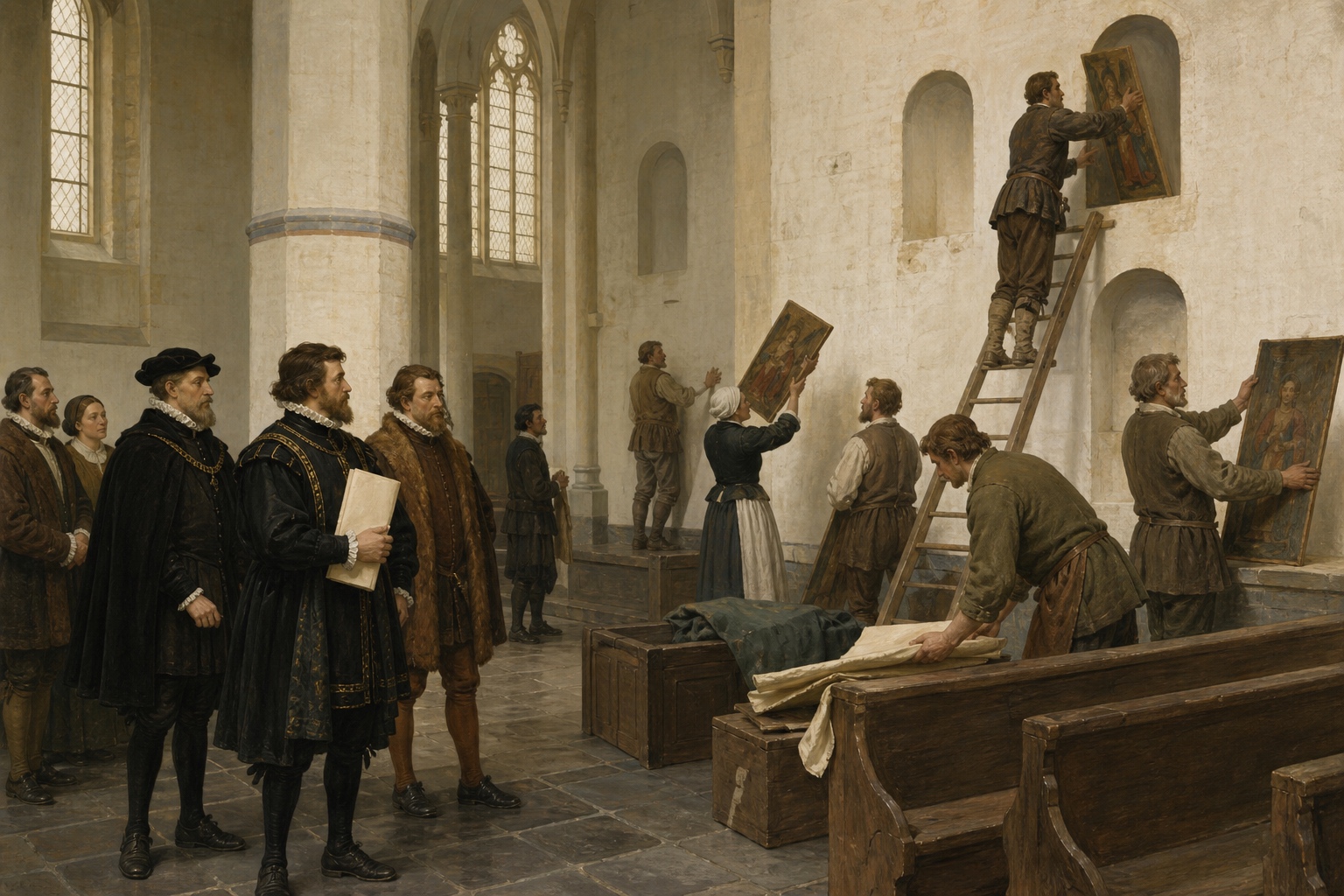
Noble petitions and iconoclasm turn accumulated grievances into an open political and religious crisis.
1568–1609
The Dutch Revolt
Current event
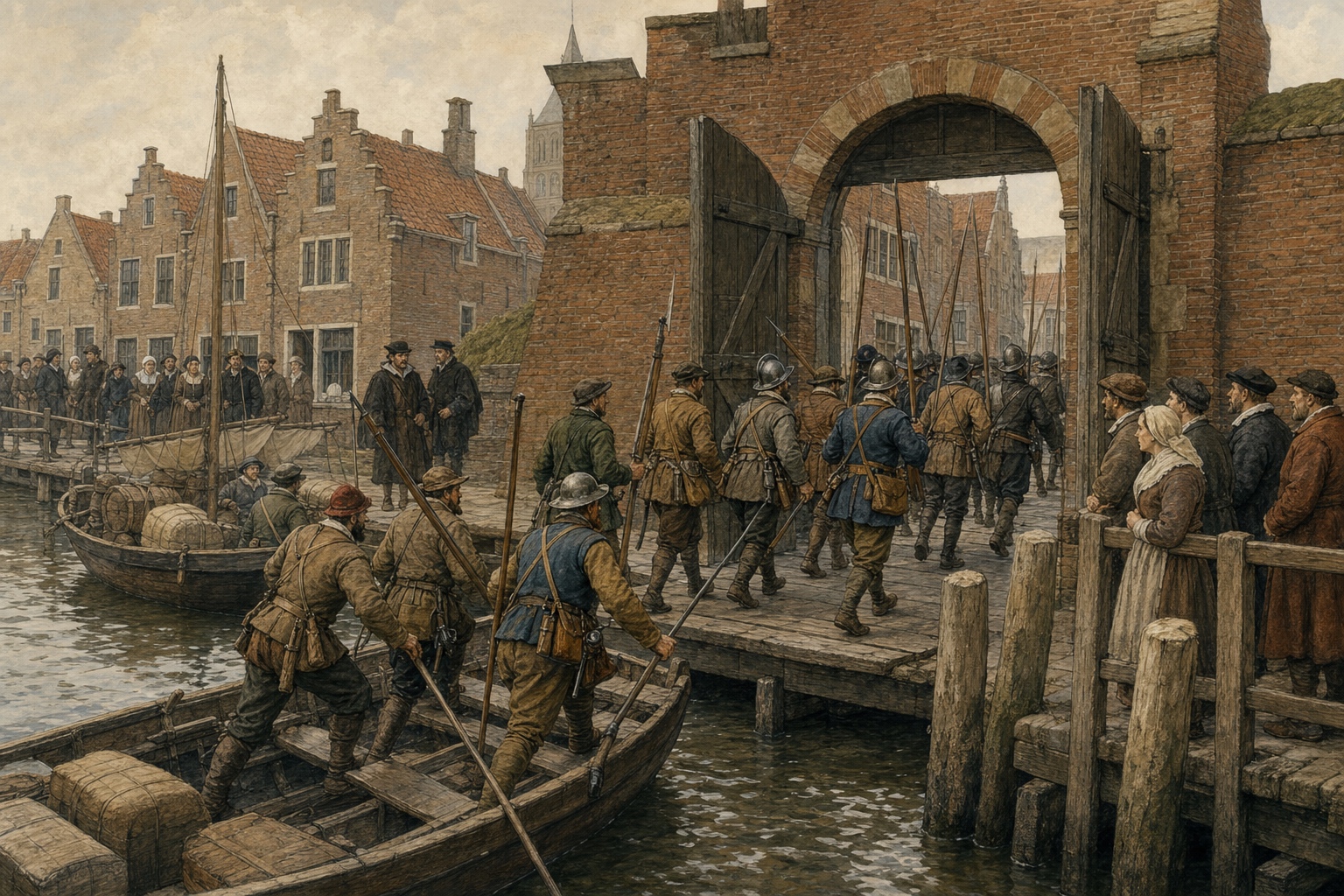
Armed revolt in 1568, northern union in 1579, abjuration in 1581, and foreign support lead to the Twelve Years' Truce in 1609.
1581–1648
Northern independence and southern rule
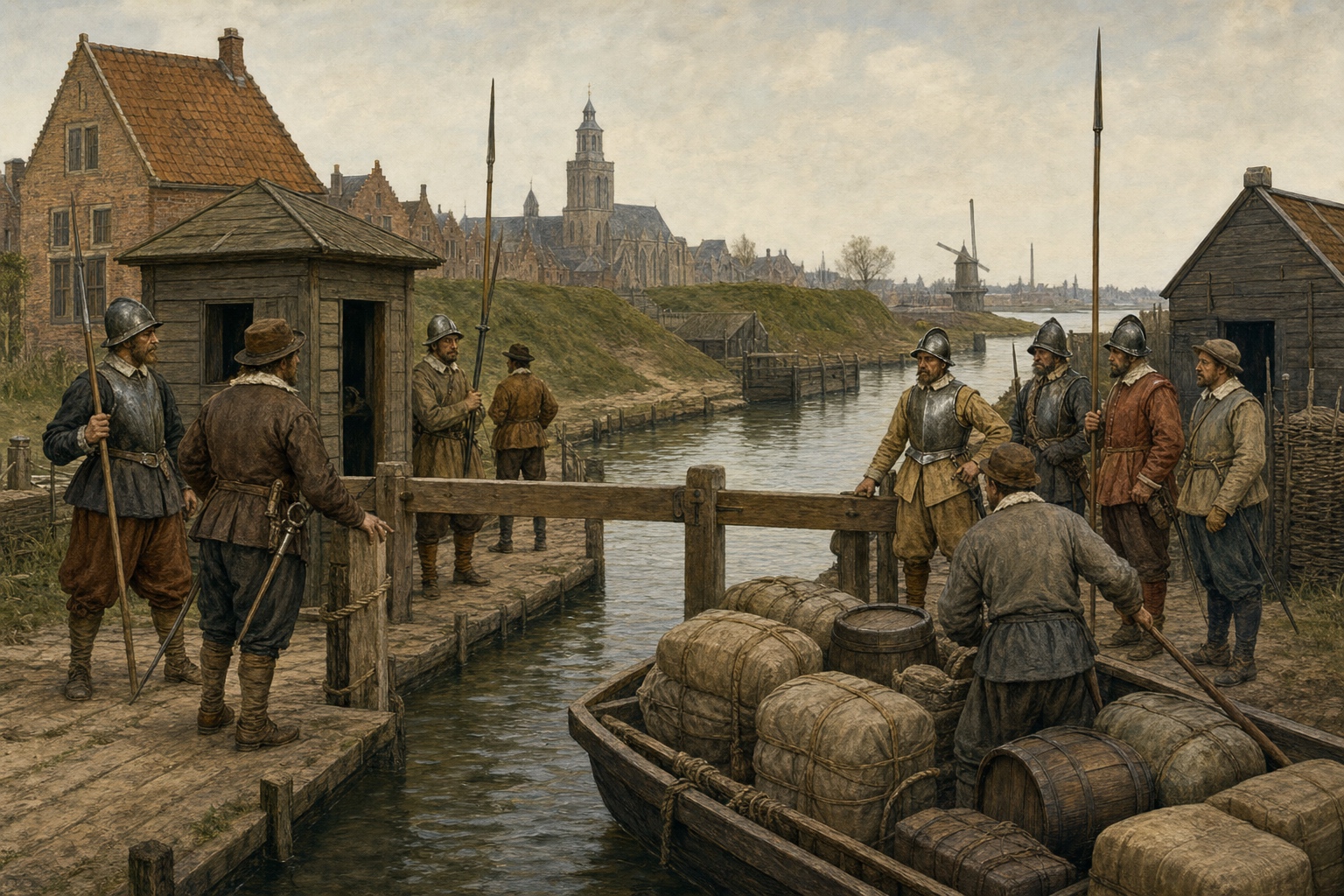
The northern provinces consolidate de facto independence while the south remains under Spanish Habsburg rule.
1648
Republic and Spanish Netherlands
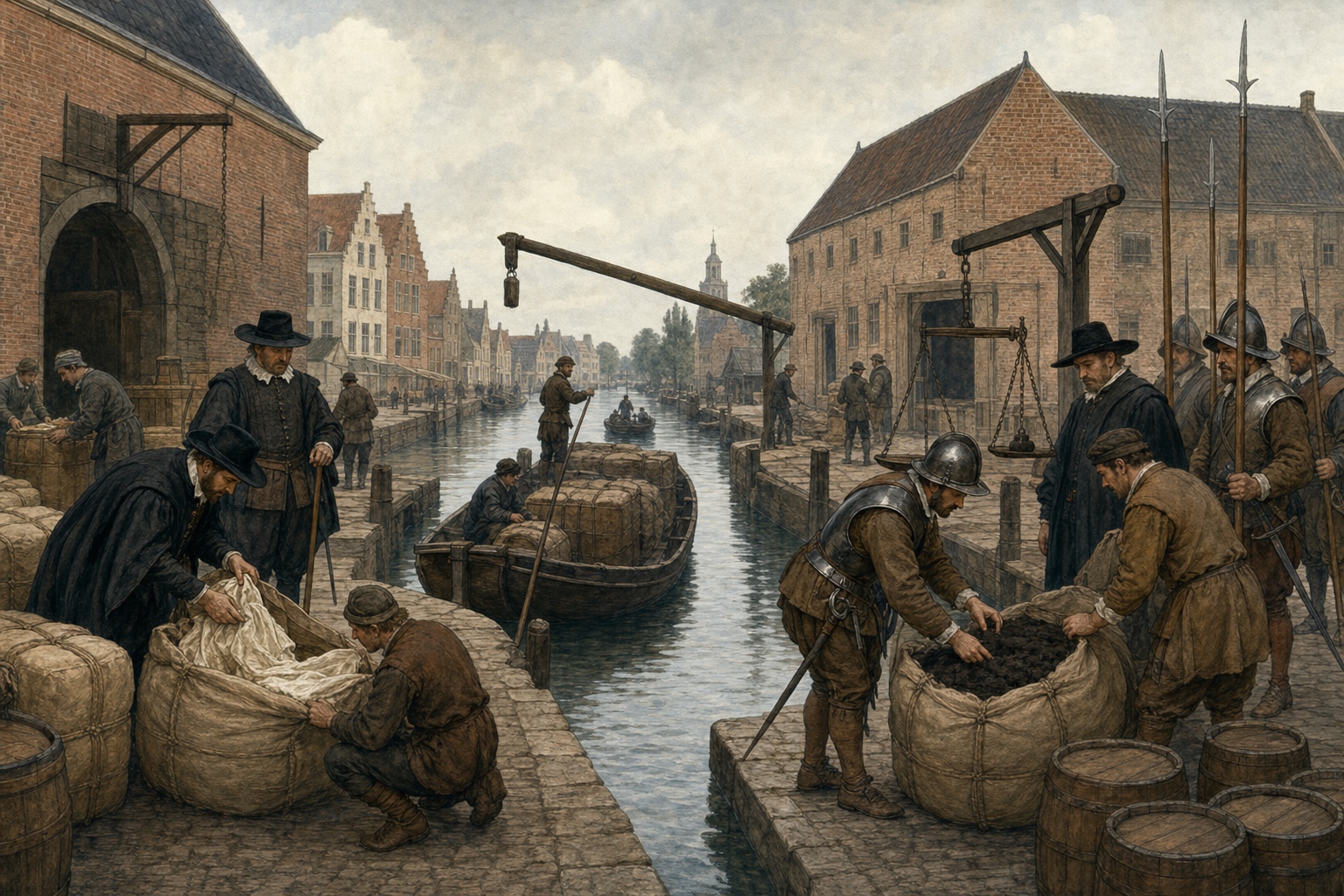
Formal recognition of northern independence entrenches the division between the Dutch Republic and Spanish Netherlands.


Sources
- Eighty Years' WarRijksmuseumA collection on the distinct Low Countries revolt and war and its period civic and military settings.
- InleidingLeiden University LibrariesAn overview of provincial privileges, taxation, religious intolerance, and resistance to royal centralization.
- The Dutch RevoltCanon van NederlandAn account of Philip II's policies, the noble petition, iconoclasm, the armed revolt from 1568, and the political sequence of 1579 and 1581.
- The Dutch RevoltRoyal House of the NetherlandsAn institutional account of Philip II's military response, northern resistance, and cooperation through the Union of Utrecht.
- Earl of Leicester to Sir Francis WalsinghamThe National Archives (UK)A contemporary source for the Treaty of Nonsuch, Elizabeth I's support, and the dispatch of English forces in 1585.
- The RepublicCanon van NederlandAn account of the Twelve Years' Truce in 1609, the de facto north–south division, and formal recognition in 1648 as a later consequence.