
Indonesian National Revolution
1945–1949
After Japan’s surrender, Sukarno and others proclaimed independence, and the republic resisted Dutch recolonization until sovereignty was transferred.

- Period
- 1945–1949
- Kind
- Revolution
- Regions
- Southeast Asia
- Keywords
- Indonesian National Revolution · Java and the Indonesian archipelago · 1945 proclamation · Dutch recolonization · sovereignty transfer · decolonization
Follow the story · Four stages
Background
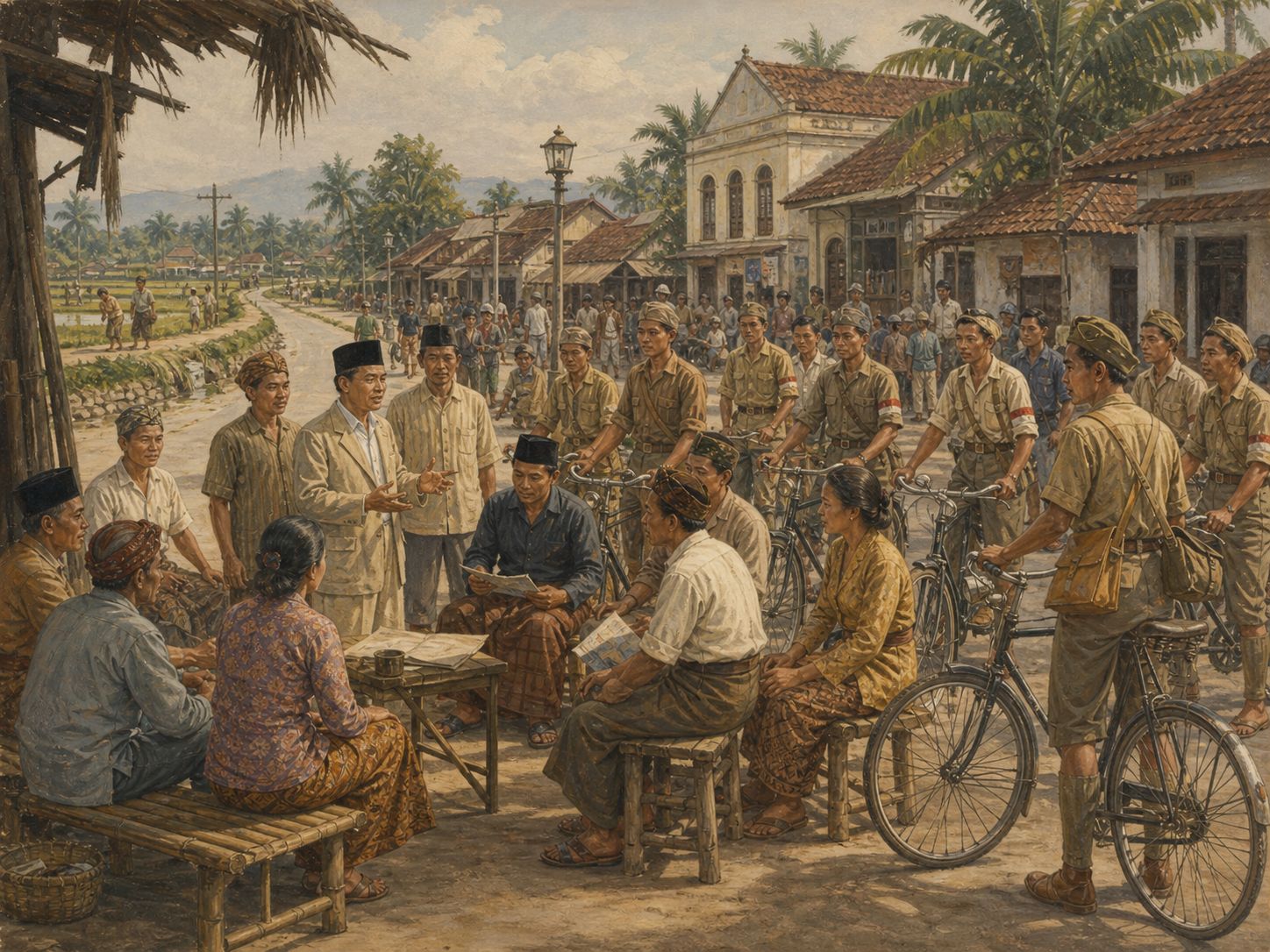
Political, social, and commercial changes around Java and the Indonesian archipelago formed the setting: After Japan’s surrender, Sukarno and others proclaimed independence, and the republic resisted Dutch recolonization until sovereignty was transferred.
- The power vacuum created by Japan's defeat in 1945
- The struggle over sovereignty and Dutch recolonization
- Independence movements linking Java's cities and countryside
Course
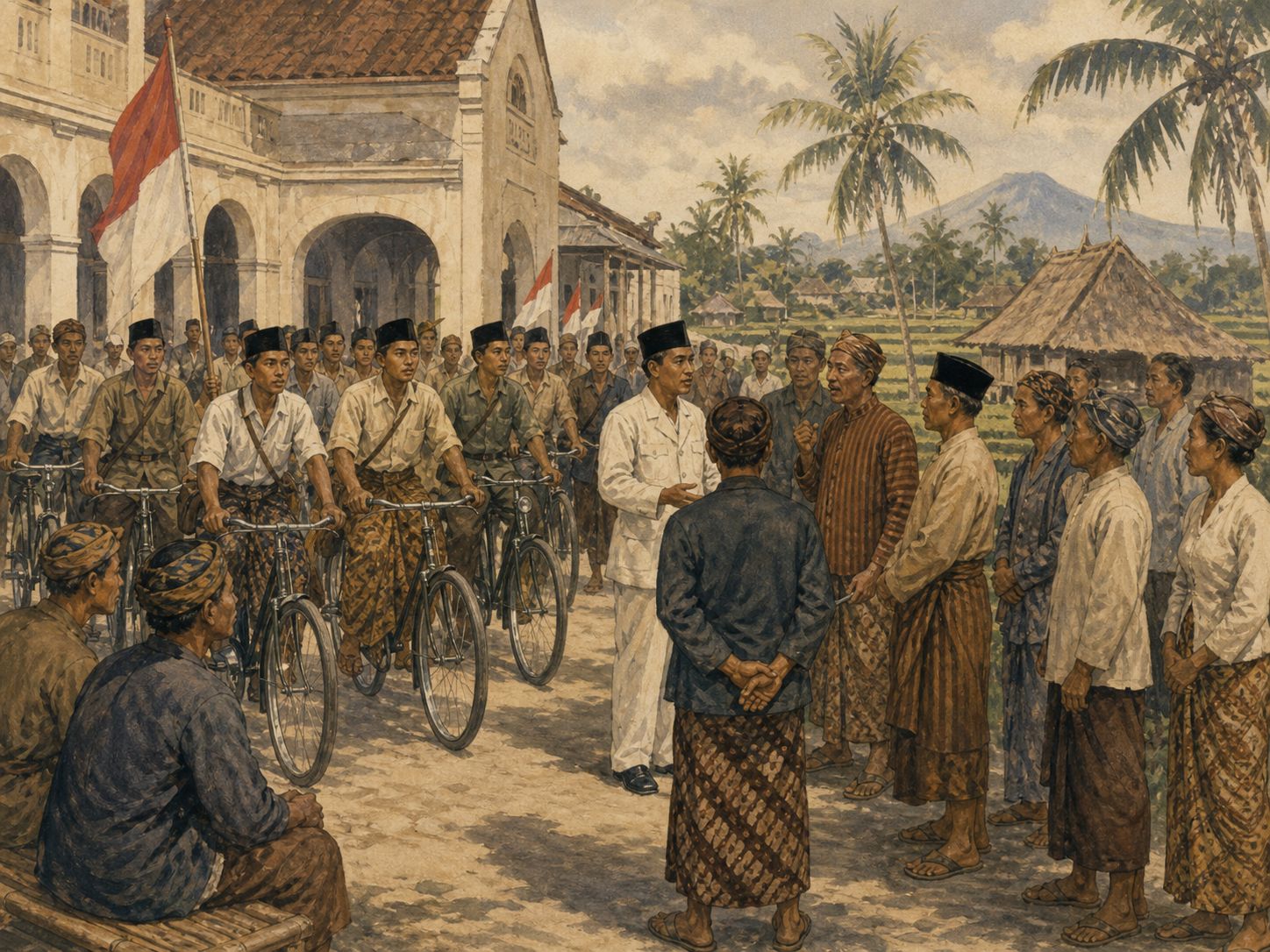
After Japan’s surrender, Sukarno and others proclaimed independence, and the republic resisted Dutch recolonization until sovereignty was transferred. The choices of the participating powers and responses of local communities shaped the course.
- The proclamation of independence on 17 August 1945
- Armed conflict and negotiation between the republicans and Dutch-backed forces
- A sovereignty struggle fought through diplomacy as well as battle
Outcome
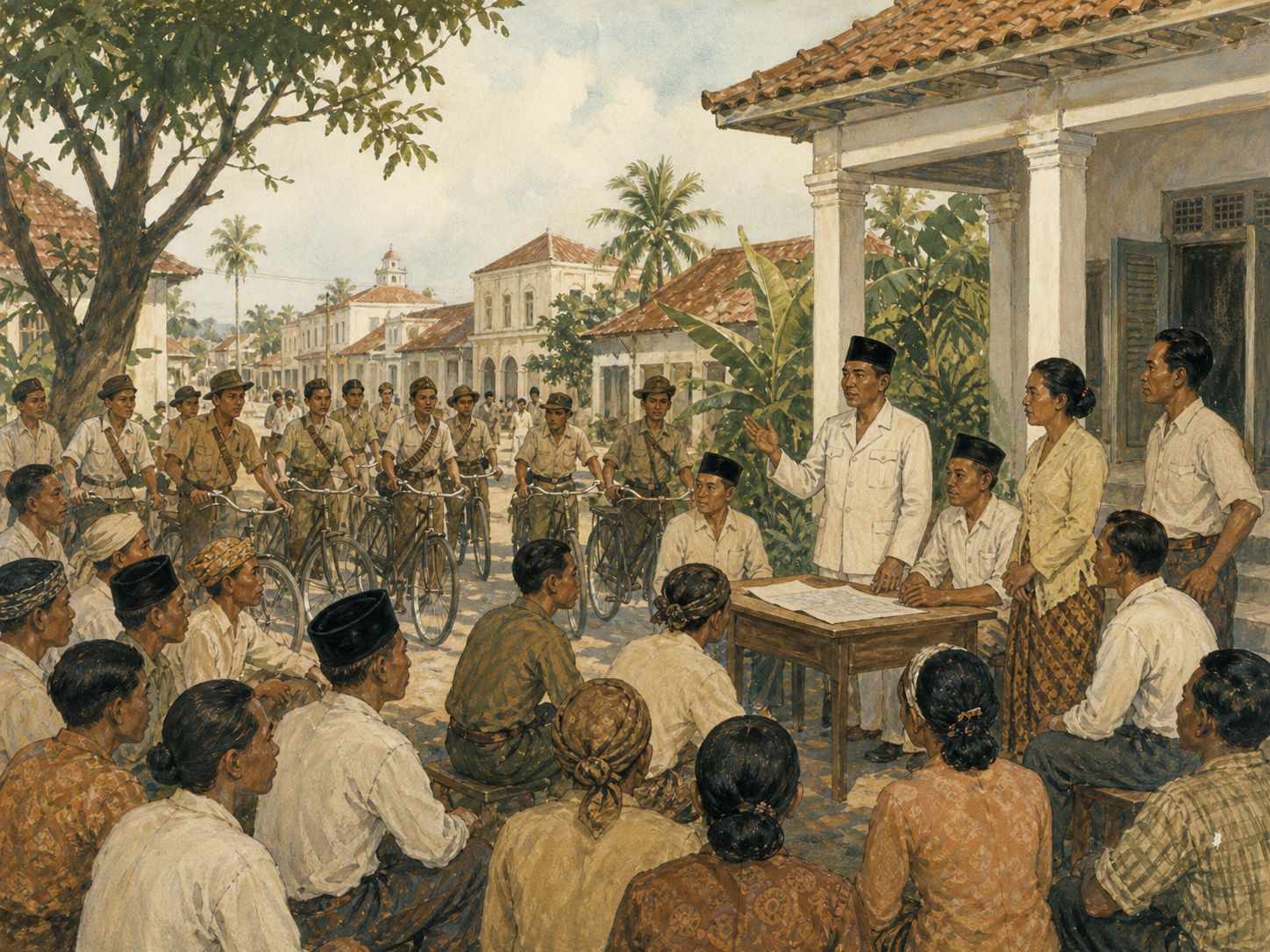
As a result, It became a major example of postwar decolonization and state formation in Southeast Asia.
- The 1949 transfer of sovereignty to Indonesia
- Displacement, casualties, and political reordering after the war
- The challenges of building institutions and social unity
Historical significance
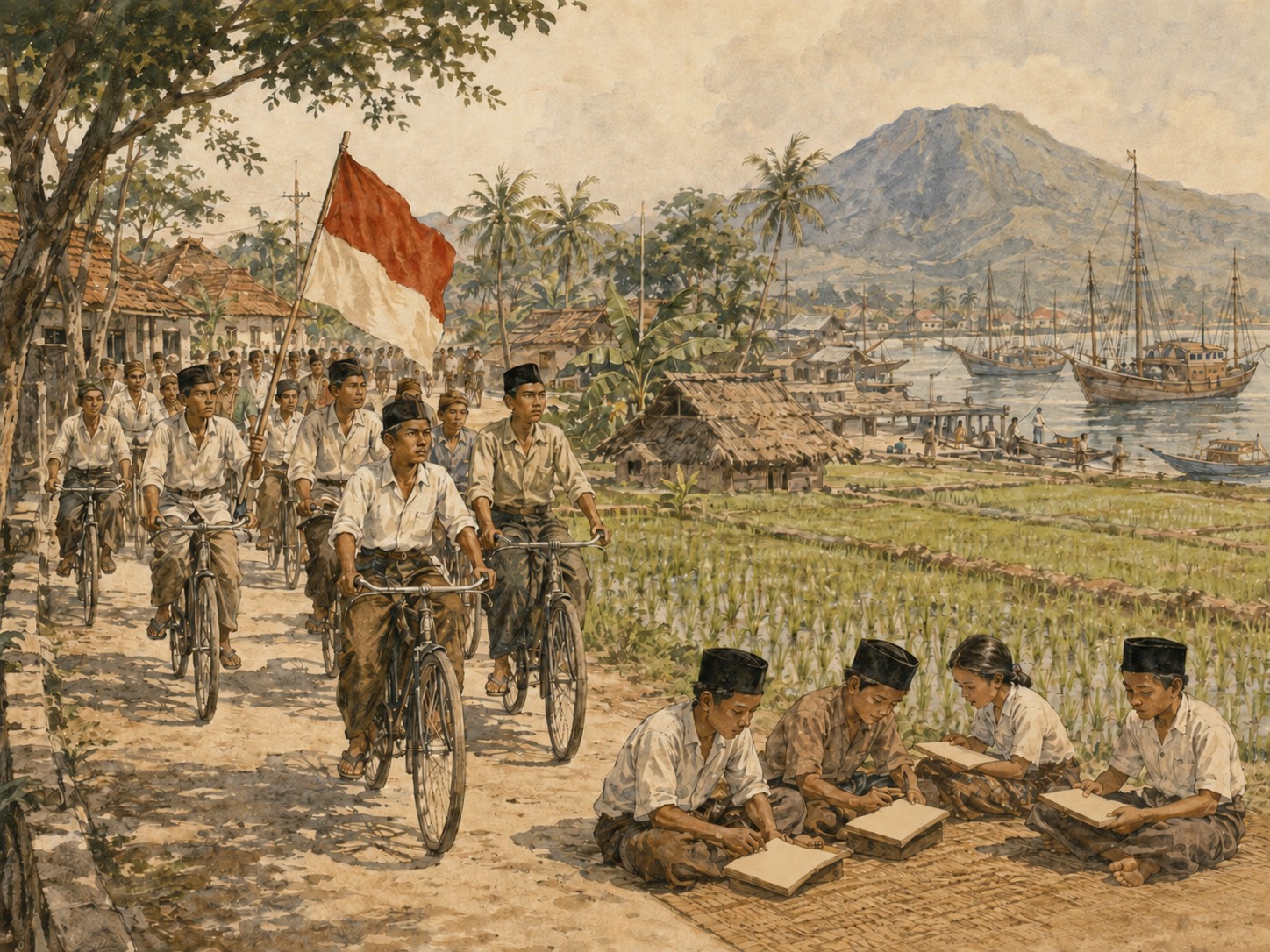
The significance of this event lies in the fact that it became a major example of postwar decolonization and state formation in southeast asia.
- Decolonization viewed through both armed struggle and diplomacy
- Nation-building across Java and the wider archipelago
- The continuing memory of independence in a plural society


Related figures
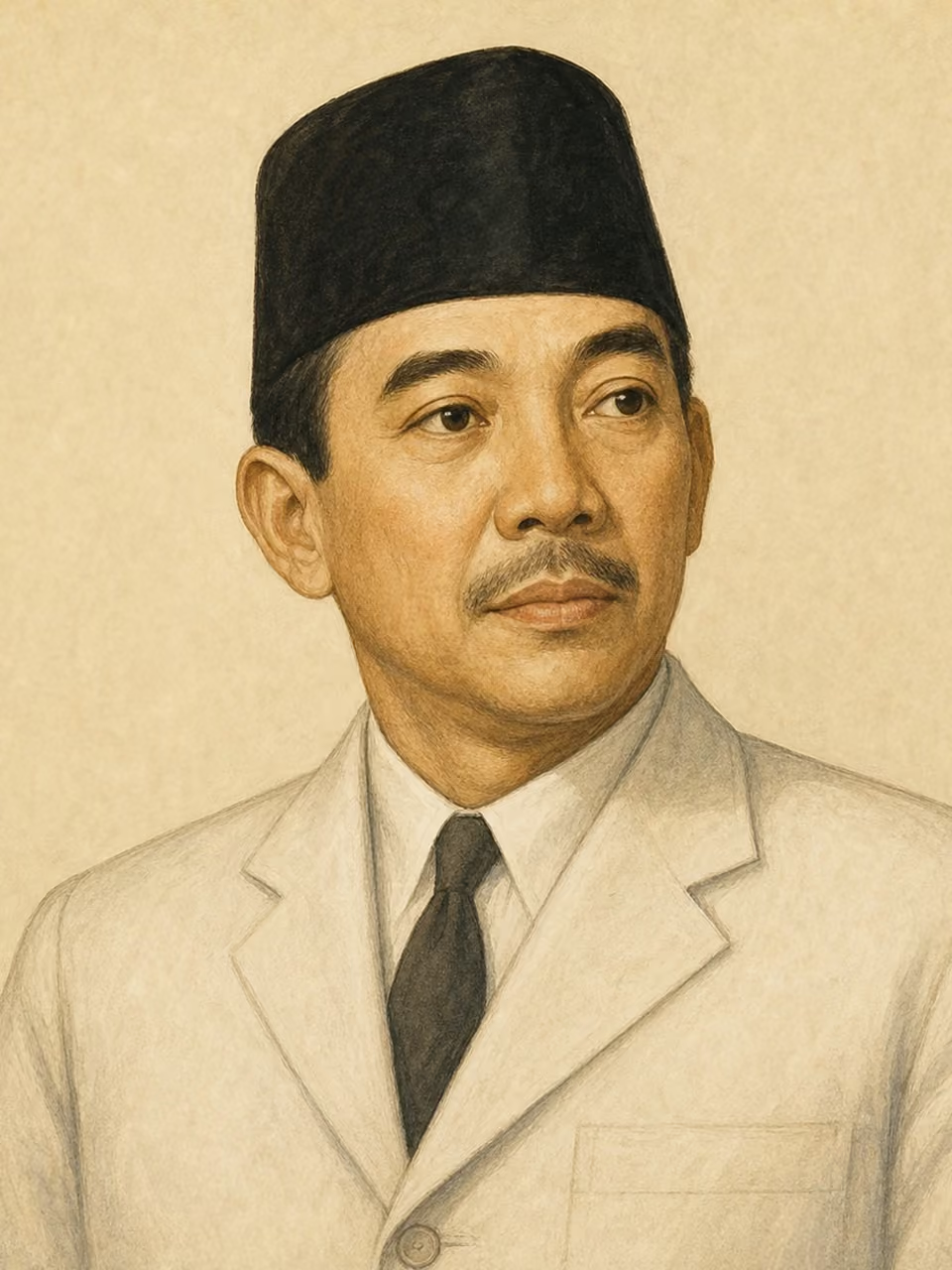
Related events
c. 1945
Colonial rule and nationalism
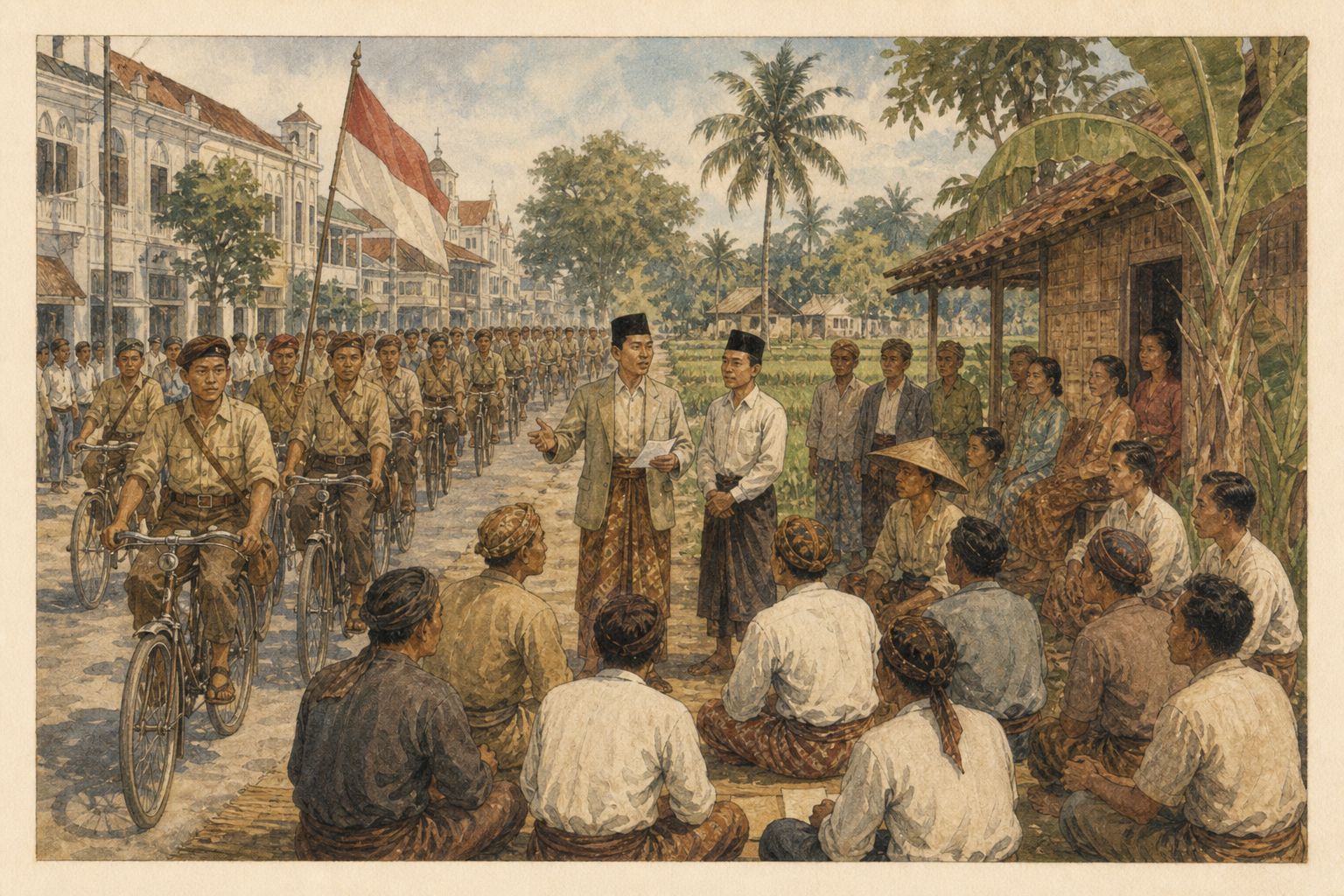
Dutch colonial rule and the growth of Indonesian nationalism created the conditions for the Indonesian National Revolution.
c. 1945
Defeat and proclamation
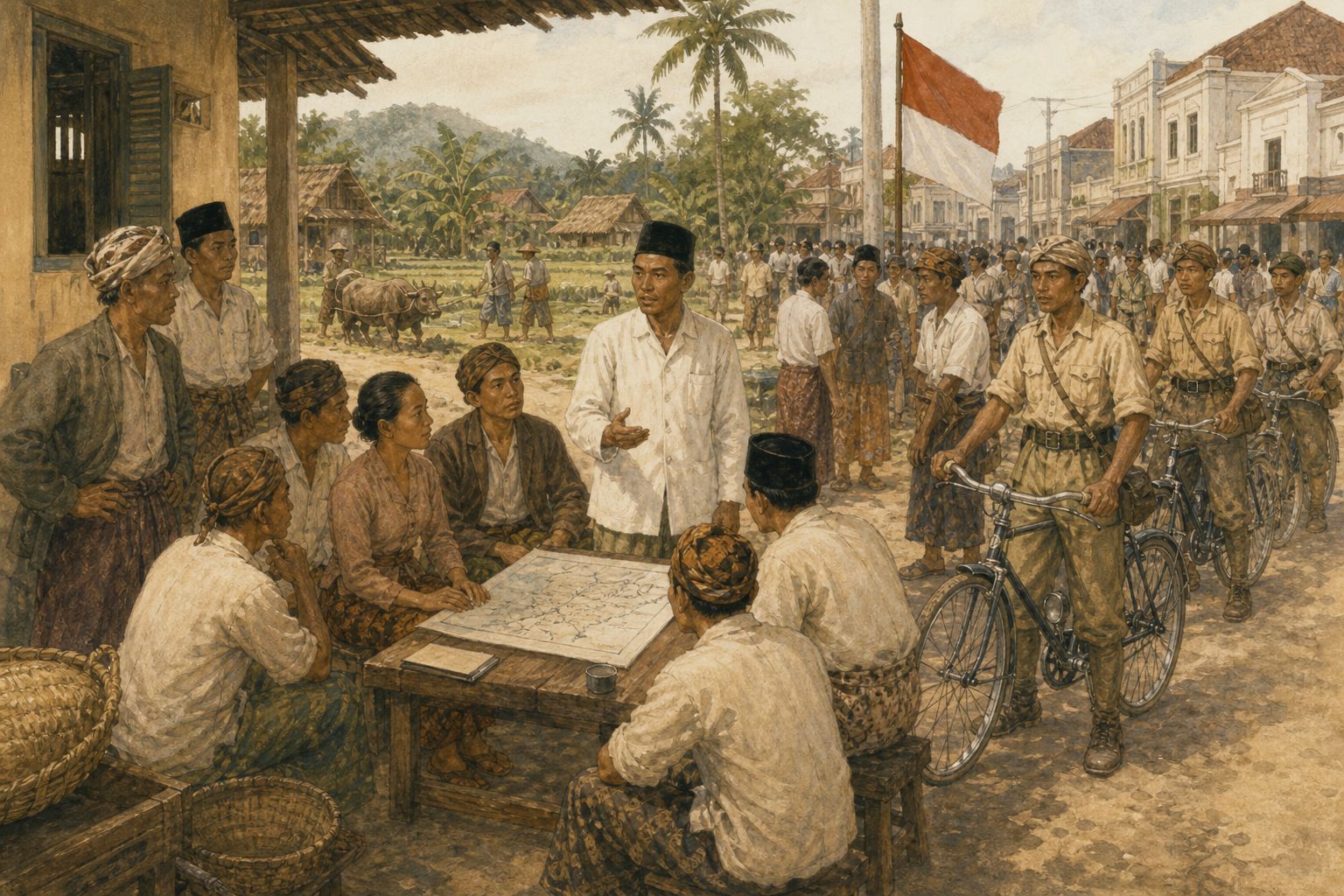
After Japan's defeat in 1945, Sukarno and Hatta proclaimed independence on 17 August and established the republic's political claim.
1945–1949
War and diplomacy
Current event
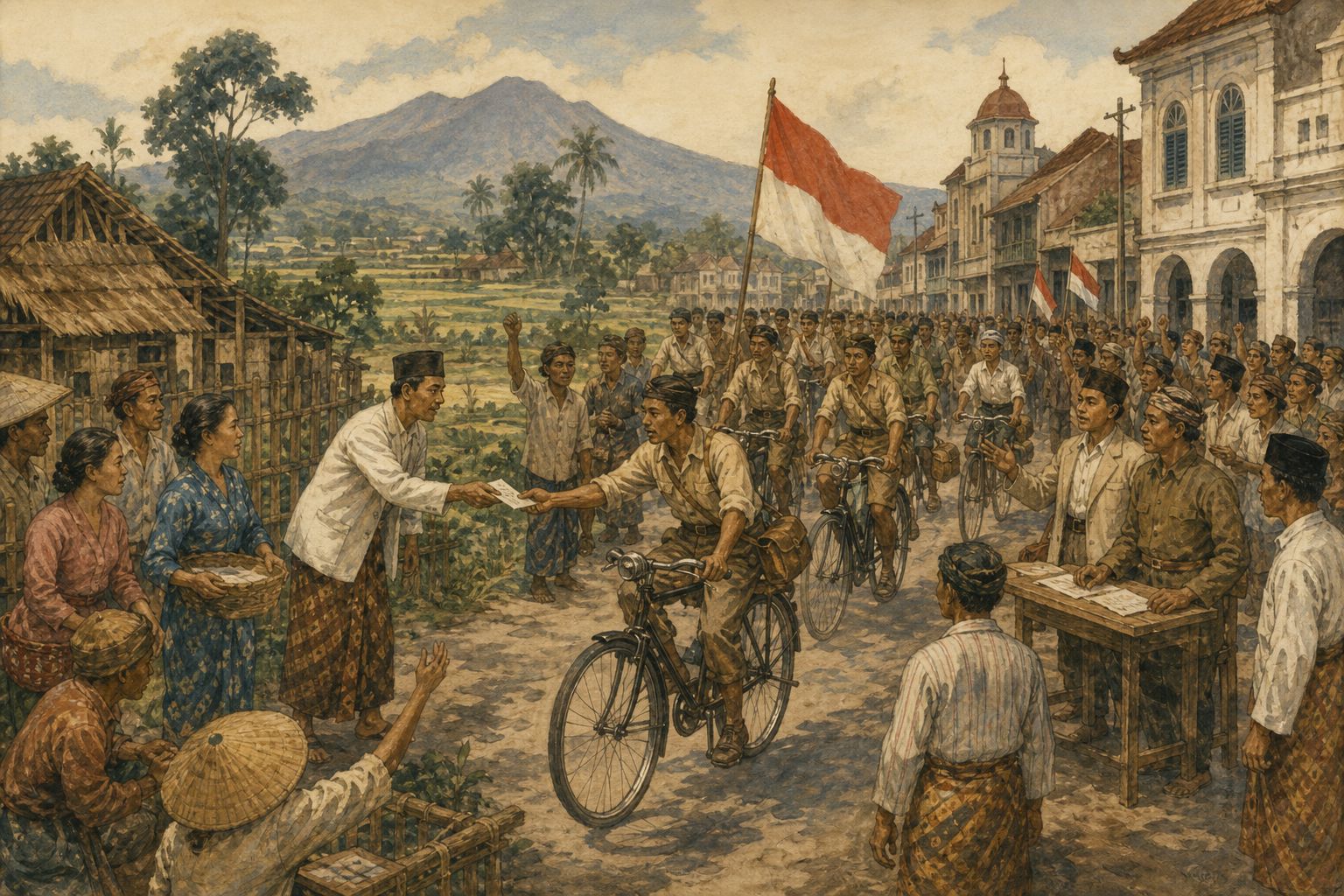
From 1945 to 1949, the republicans defended independence in Java and used fighting and negotiation to secure a path to sovereignty.
c. 1949
Transfer of sovereignty
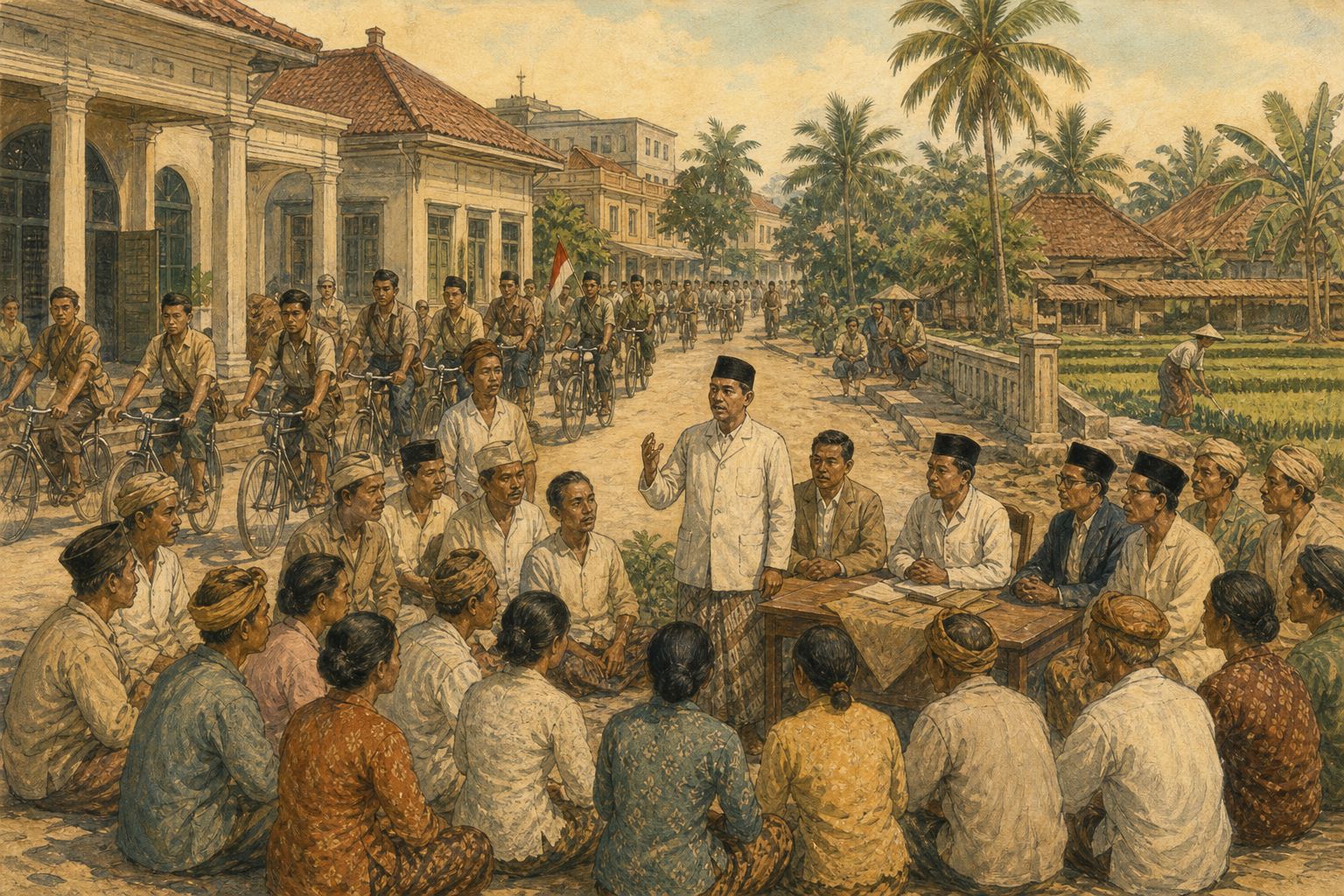
After the Hague Round Table Conference, the Netherlands transferred sovereignty to Indonesia in 1949 and nation-building began.
c. 1975
A decolonization legacy
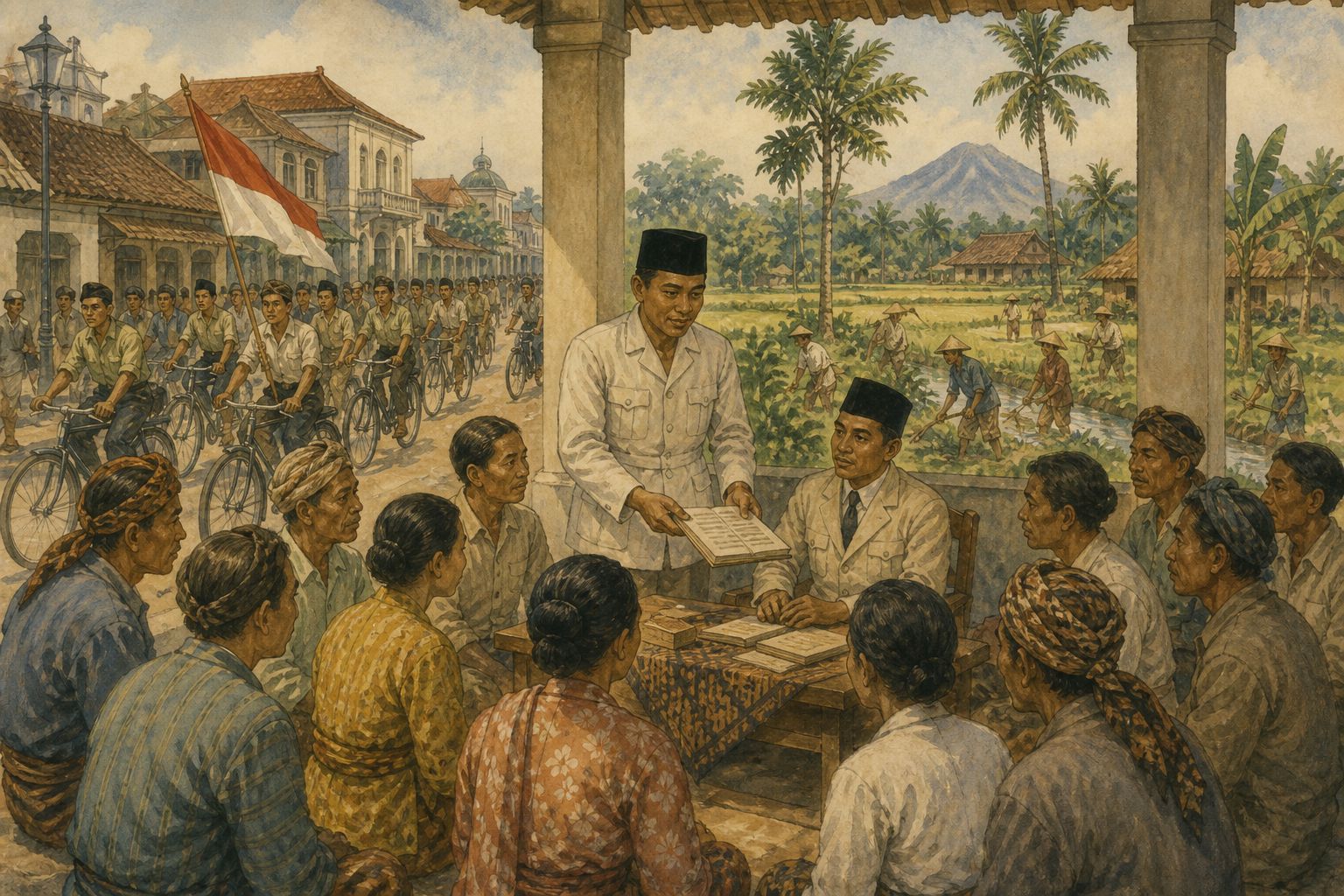
The revolution continued to shape Indonesian politics and society through debates over sovereignty, unity, and the memory of colonial rule.


Sources
- Indonesian National Revolution: chronology and settingwww.daiichi-g.co.jpUsed to cross-check the chronology and geographical setting of Indonesian National Revolution.
- Indonesian National Revolution: historical backgroundwww.britannica.comUsed to verify the actors, course, and consequences associated with Indonesian National Revolution.
- Indonesian National Revolution: identifier and related recordswww.wikidata.orgUsed to cross-check the identifier and related records for Indonesian National Revolution.