
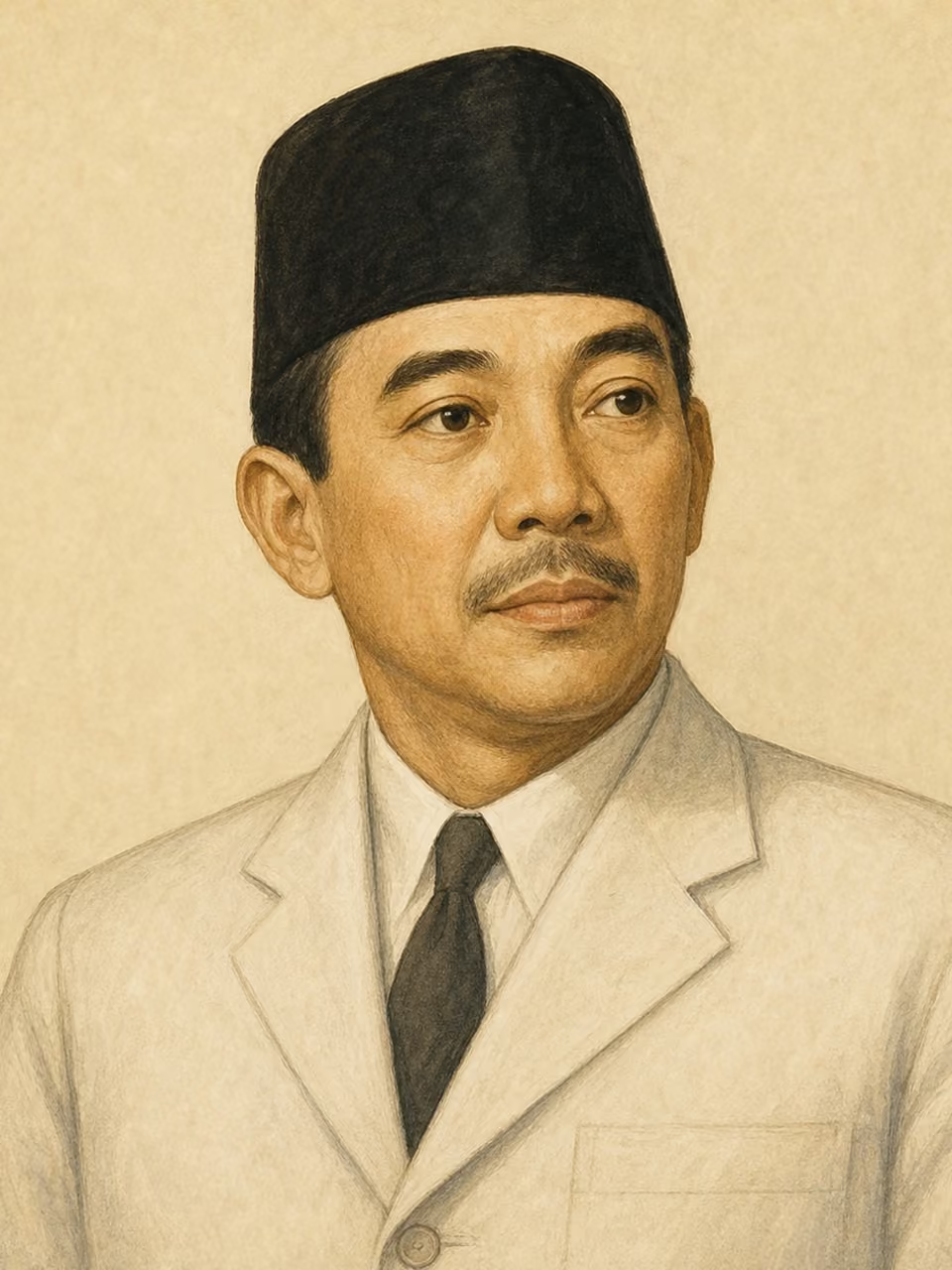
Sukarno

Portrait: AI-generated imagined likeness

Sukarno

Politician · revolutionary

Years
1901–1970
Birthplace
Indonesia
Birth polity
Dutch East Indies
Era
Modern
Field
Politics
Occupations
Politician · revolutionary

Leader of Indonesian independence and the country's first president. He opposed Dutch colonial rule and called for the integration of a multiethnic state. He is important for considering decolonization and Third World diplomacy.

View in catalog

Historical context

Places

  • Jakarta

    Work

Events

  • Indonesian National Revolution

    1945–1949

    Revolution · Leader

Origins

Origins map
Birth country
Birth country
Indonesia

Map: Natural Earth (PD)

Biography

Early life

Born in the Dutch East Indies, he joined nationalist politics while receiving technical education. Gifted in speech and organization, he was watched by colonial authorities and experienced imprisonment and exile.

Achievements

He declared independence in 1945 and achieved state independence through war and negotiation with the Netherlands. Through the Bandung Conference and related efforts, he advanced diplomacy for newly independent states that would not be subordinate to either the United States or the Soviet Union.

Character & anecdotes

Sukarno took a strong interest in architecture and staging, using national ceremonies and the capital's landscape as political symbols. He valued the power of language to describe diverse islands as one nation.

Historical Impact

Sukarno's politics show the difficulties faced by a state emerging from colonial rule while confronting unity, development, and Cold War diplomacy at once. Assessments differ, including over his turn toward authoritarianism, but he is an entry point to twentieth-century Asian decolonization.