
Rise of the Kingdom of Aksum
c. 100–c. 600
From roughly the first through sixth centuries CE, highland Aksum linked inland farming, gold, and ivory to the Red Sea port of Adulis and became the center of a kingdom connecting Africa, southern Arabia, and the Mediterranean and Indian Ocean worlds.

- Period
- c. 100–c. 600
- Kind
- Political event
- Regions
- Africa, Middle East
- Keywords
- Kingdom of Aksum · Red Sea trade · Adulis · King Ezana · Geʿez · Christianity
Follow the story · Four stages
Background
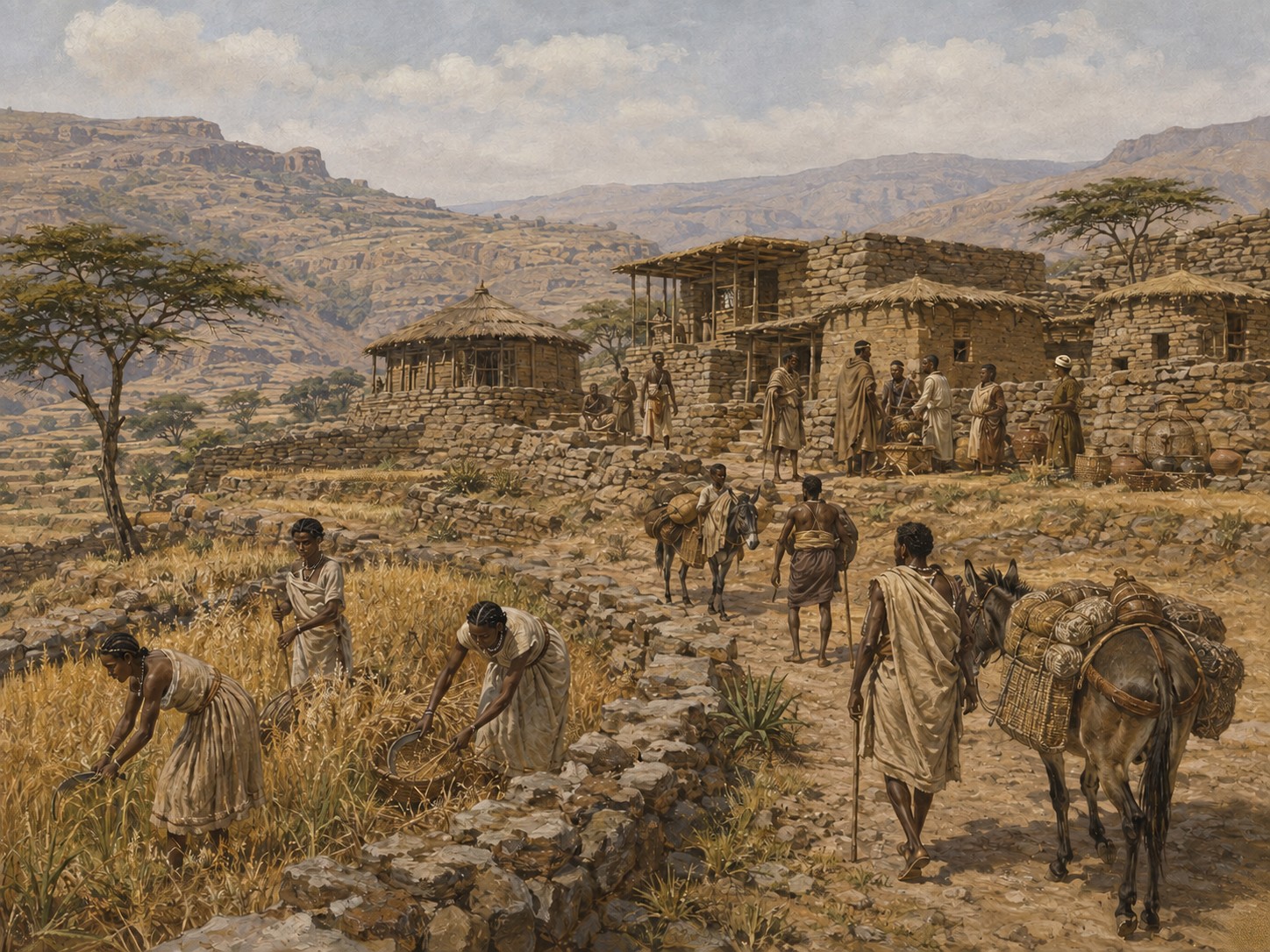
Settlements developed on the fertile Tigray plateau from the fourth and third centuries BCE, absorbing contacts with southern Arabia while forming a distinct local society. About 150 kilometers inland, Aksum occupied a strategic position between agricultural districts and the Red Sea port of Adulis.
- Permanent settlements grew on the fertile Tigray plateau from the fourth and third centuries BCE.
- Contacts with southern Arabia were absorbed into a distinct society and emerging kingship around Aksum.
- The inland capital stood between agricultural districts and the Red Sea port of Adulis.
Course
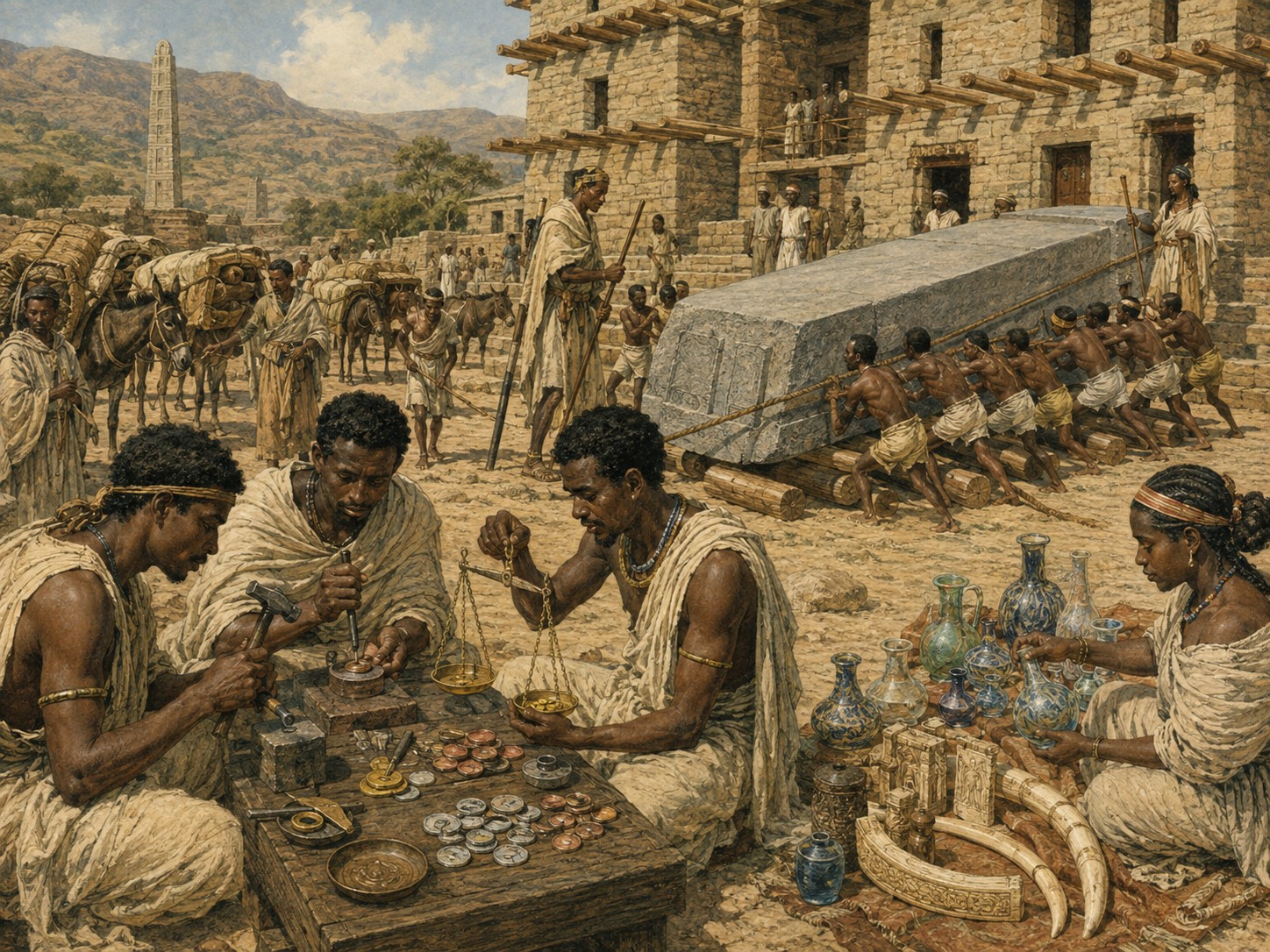
The first-century Periplus of the Erythraean Sea records trade through Adulis and an inland ruler. From the third century, Aksumite kings struck gold, silver, and copper coins and raised monumental stelae and tombs; in the fourth century, King Ezana expanded the realm and adopted Christianity.
- The first-century Periplus of the Erythraean Sea records commerce through Adulis and an inland ruler.
- From the third century, Aksumite kings issued gold, silver, and copper coins and raised monumental stelae and tombs.
- In the fourth century, King Ezana expanded the realm and linked royal authority with Christianity.
Outcome
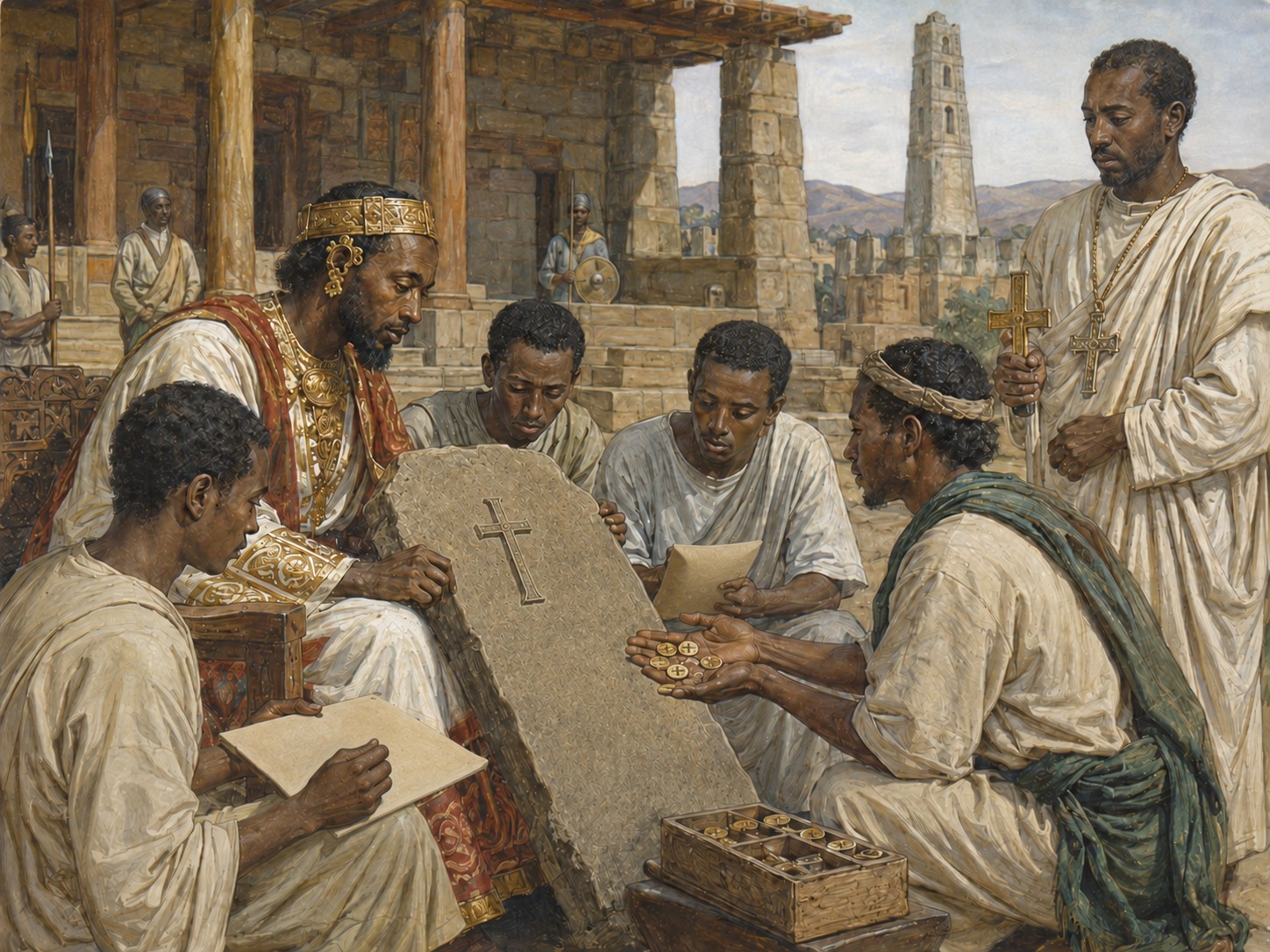
By the fifth and sixth centuries, Aksum projected power across the northern Ethiopian and Eritrean highlands, the Red Sea coast, and parts of southern Arabia. Inscriptions in Greek, Sabaean, and Geʿez and coins bearing the cross document its far-reaching commerce and changing kingship.
- By the fifth and sixth centuries, Aksum was a major power spanning Northeast Africa and the Red Sea.
- The kingdom exported ivory and gold while importing manufactured and luxury goods from Mediterranean and Indian Ocean networks.
- Multilingual inscriptions and coins bearing the cross preserve evidence of its commerce and changing kingship.
Historical significance
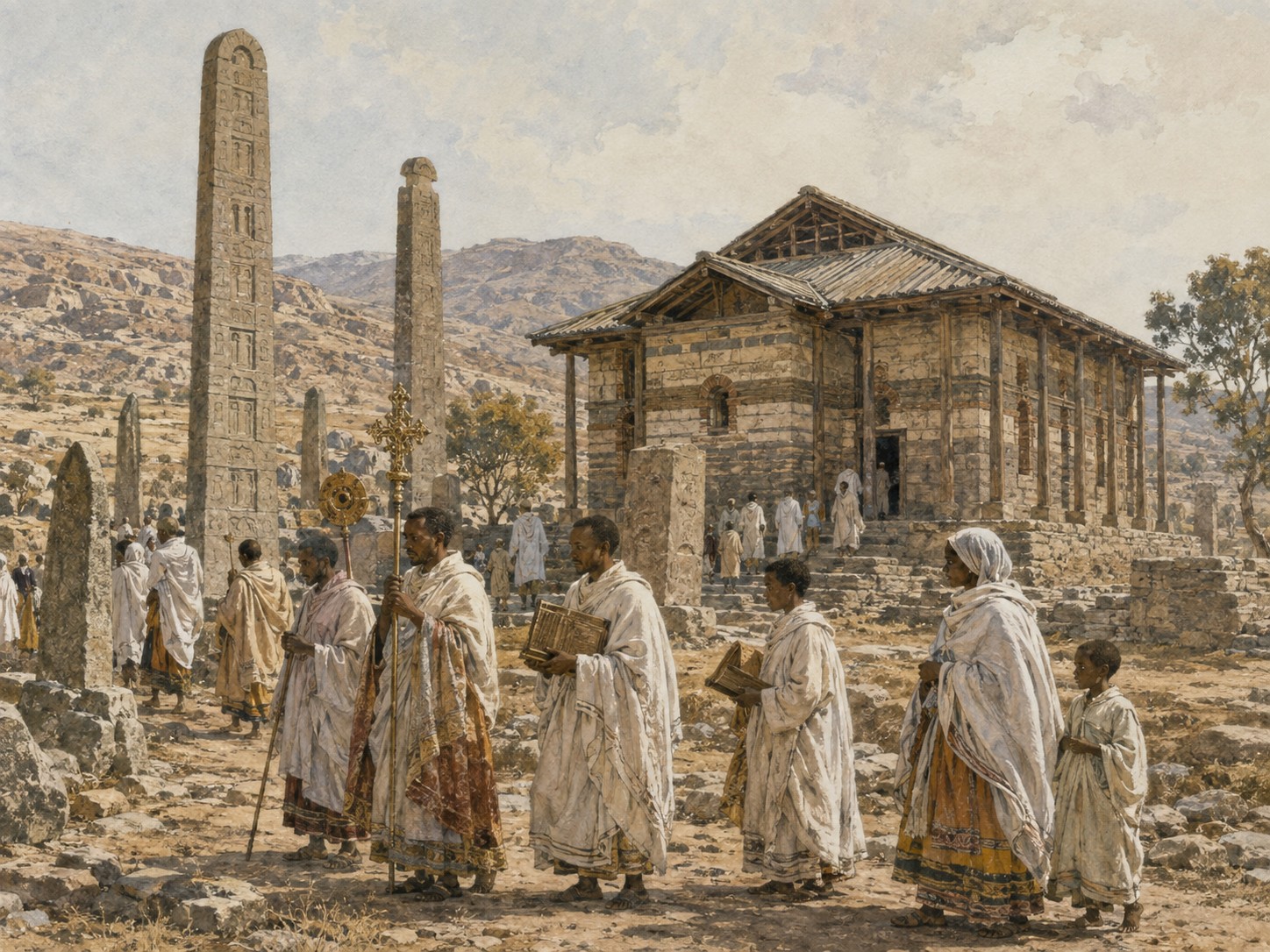
Aksum was among the earliest sub-Saharan African states to issue its own coinage and to bind Christianity to royal authority. Its political center declined as Red Sea trade conditions changed after the seventh century, but Geʿez writing, stone monuments, Orthodox Christianity, and Aksum’s role as a coronation place endured in Ethiopia.
- Aksum was among the earliest sub-Saharan African states to issue its own coinage.
- Geʿez writing, monumental stonework, and Orthodox Christian traditions endured in later Ethiopian society.
- Although its political centrality declined after the seventh century, Aksum remained a remembered place of imperial coronation.


Related events
c. 300 BC
Early highland settlements
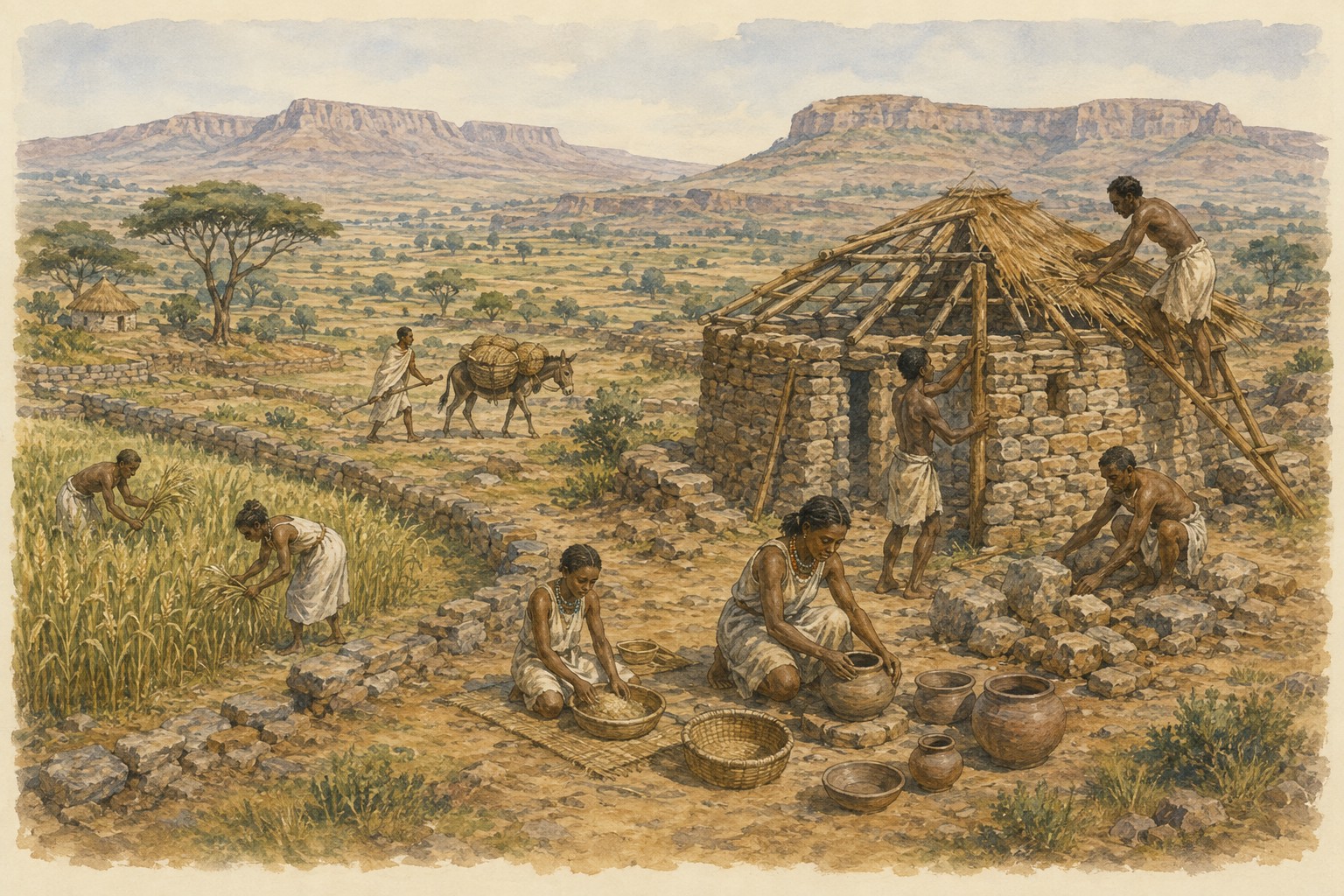
From the fourth and third centuries BCE, permanent settlements expanded on the fertile Tigray plateau and created an agricultural base for the later capital.
c. 100
Connection to Red Sea trade
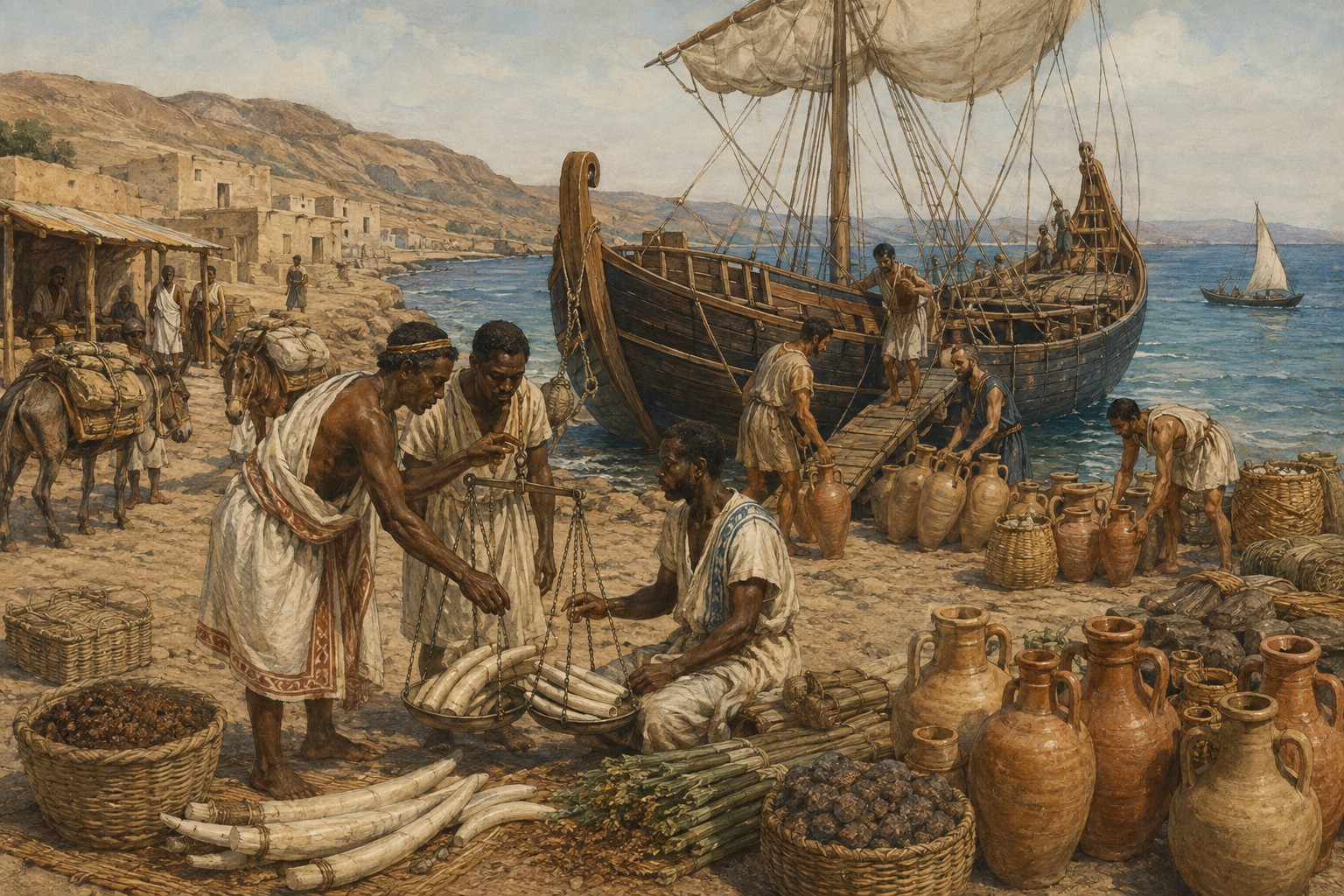
By the first century CE, commerce in ivory, gold, and other goods through Adulis connected the inland kingship to long-distance maritime routes.
c. 100–c. 600
Kingdom at its height
Current event
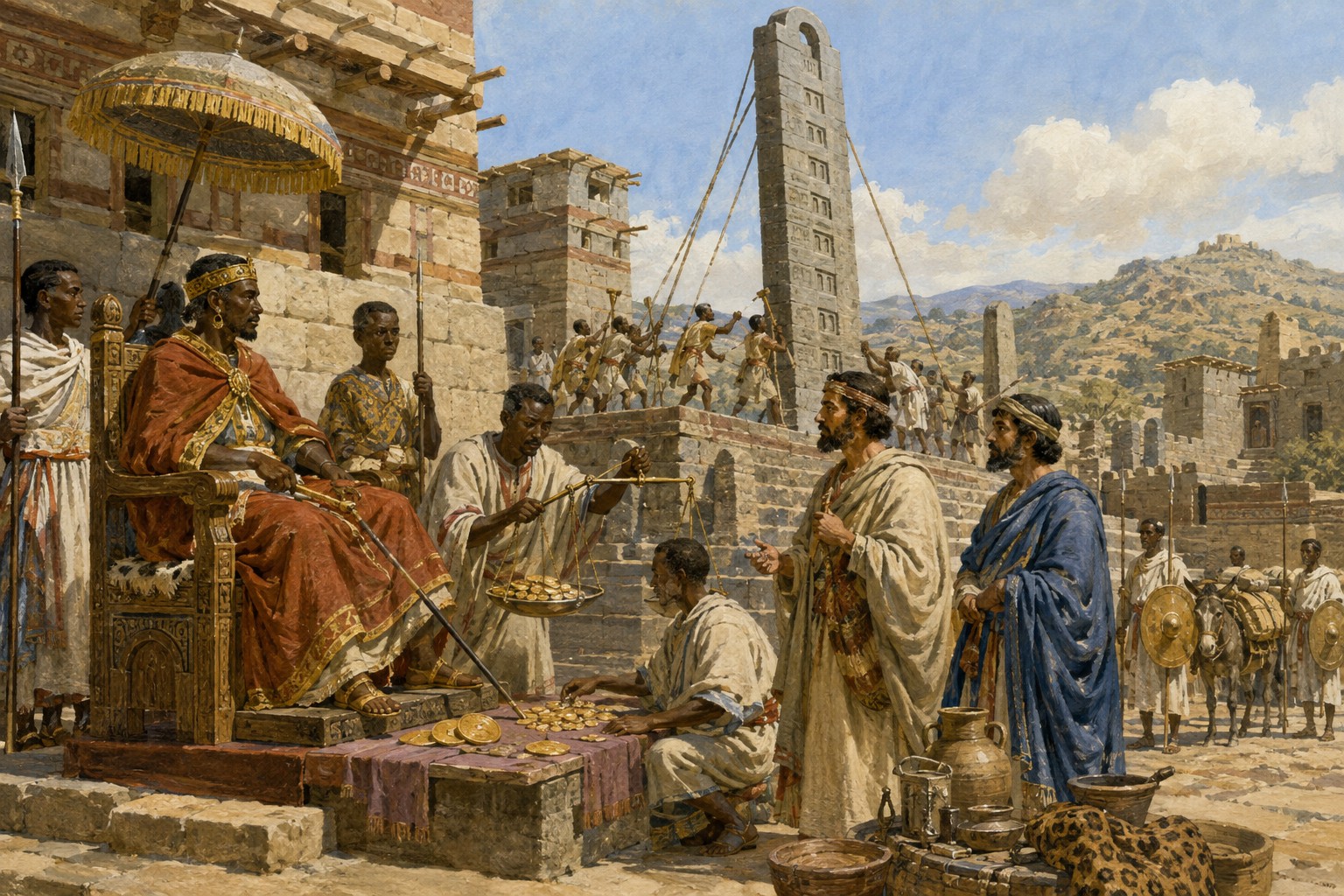
From the third through sixth centuries, coinage, monumental stelae, royal tombs, and multilingual inscriptions displayed royal power; Christianity was adopted under Ezana.
c. 600
Changing trade conditions
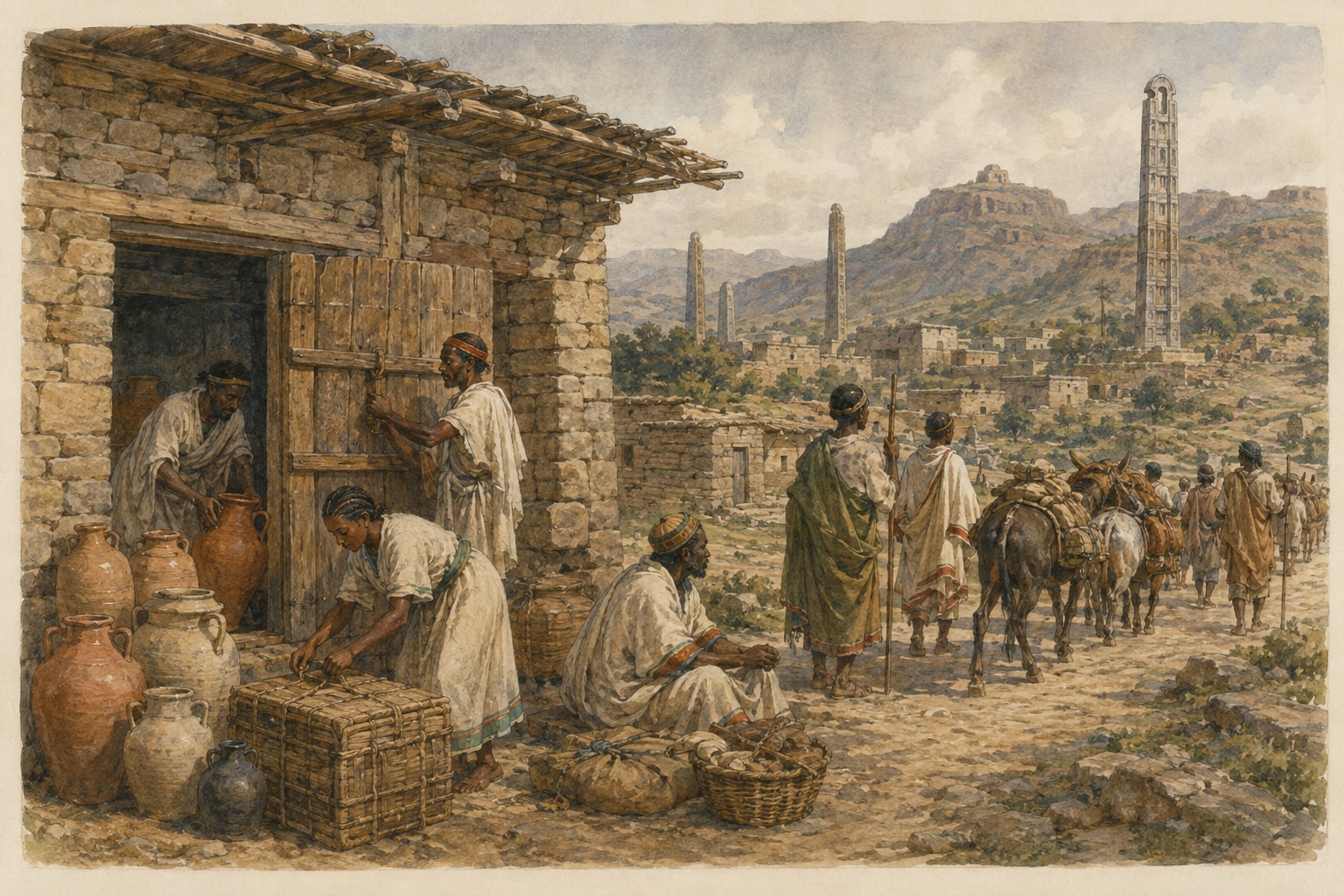
During the sixth and seventh centuries, shifts in Red Sea power and commerce after Aksumite intervention in southern Arabia weakened the kingdom’s external position.
c. 700
Enduring Ethiopian legacy
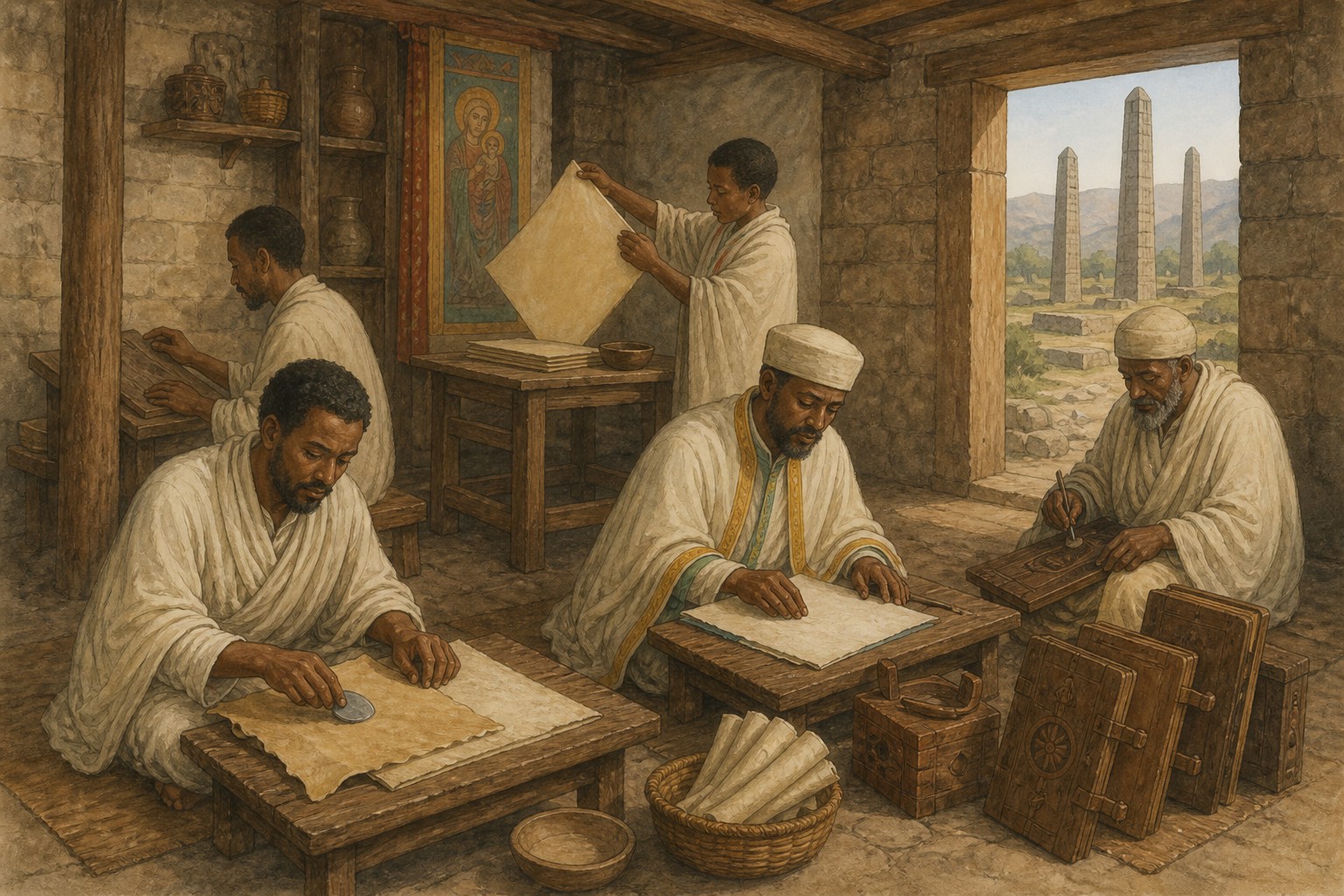
After political centrality declined, Geʿez culture, Orthodox Christianity, the stelae, and the memory of coronations at Aksum continued.


Sources
- Daiichi Gakushusha — World History Timelinewww.daiichi-g.co.jpThe world-history timeline provides a broad chronological cross-check for the rise and regional setting of Aksum.
- Encyclopaedia Britannica search — Rise of the Kingdom of Aksumwww.britannica.comBritannica’s search index is used to locate reference coverage for the kingdom’s chronology, setting, and historical development.
- Wikidata search — Rise of the Kingdom of Aksumwww.wikidata.orgWikidata’s search index is used to cross-check identifiers and find related records for the Kingdom of Aksum.