
Paris Peace Conference and the Versailles Settlement
1919–1920
The Allied conference from January 1919 to January 1920 that negotiated post-First World War treaties and an international settlement. It concerns the making of the Versailles system, not the war itself.

- Period
- 1919–1920
- Kind
- Conference
- Regions
- Europe, Africa, Middle East, East Asia
- Keywords
- Versailles · Council of Four · reparations · mandates · League of Nations
Follow the story · Four stages
Background
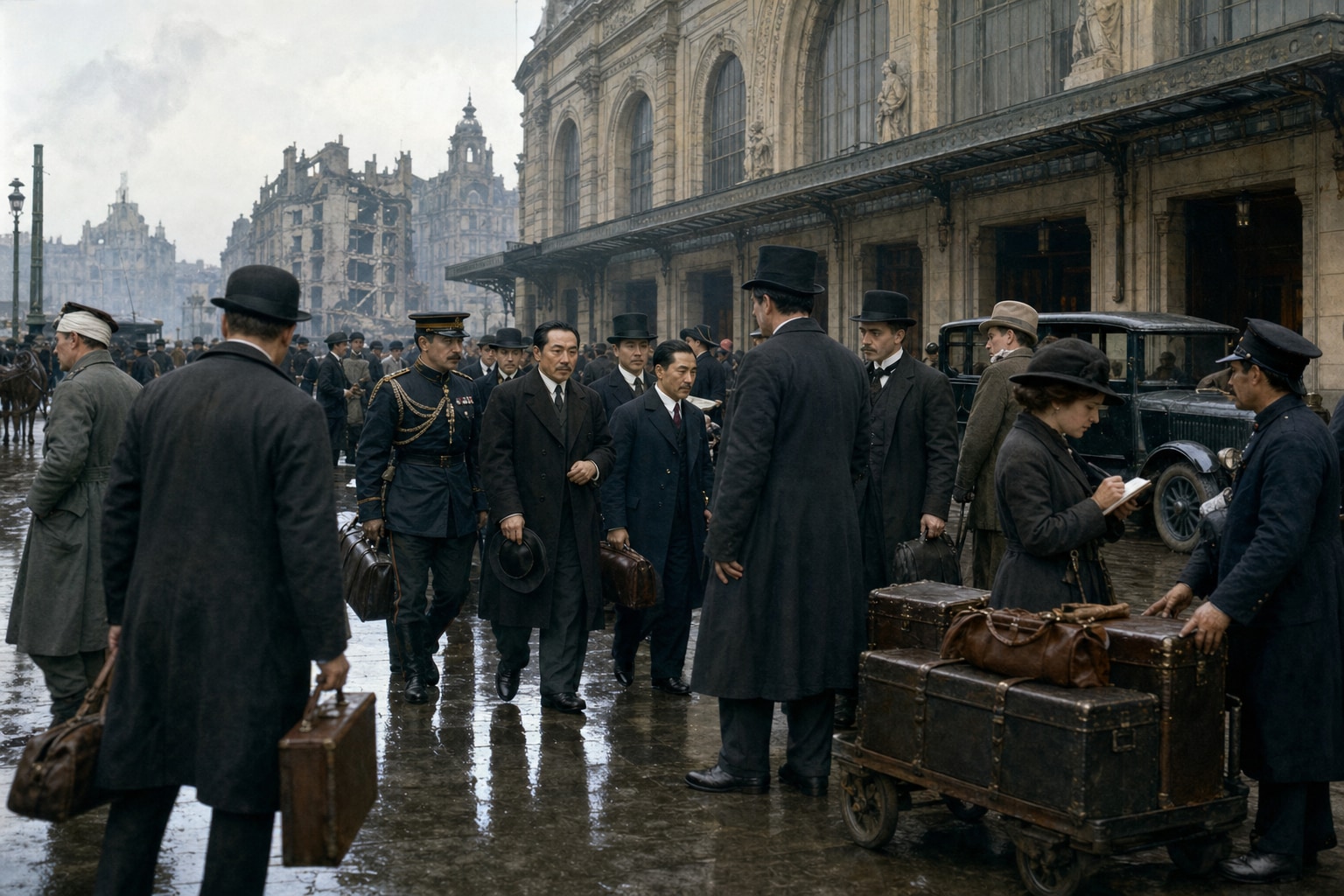
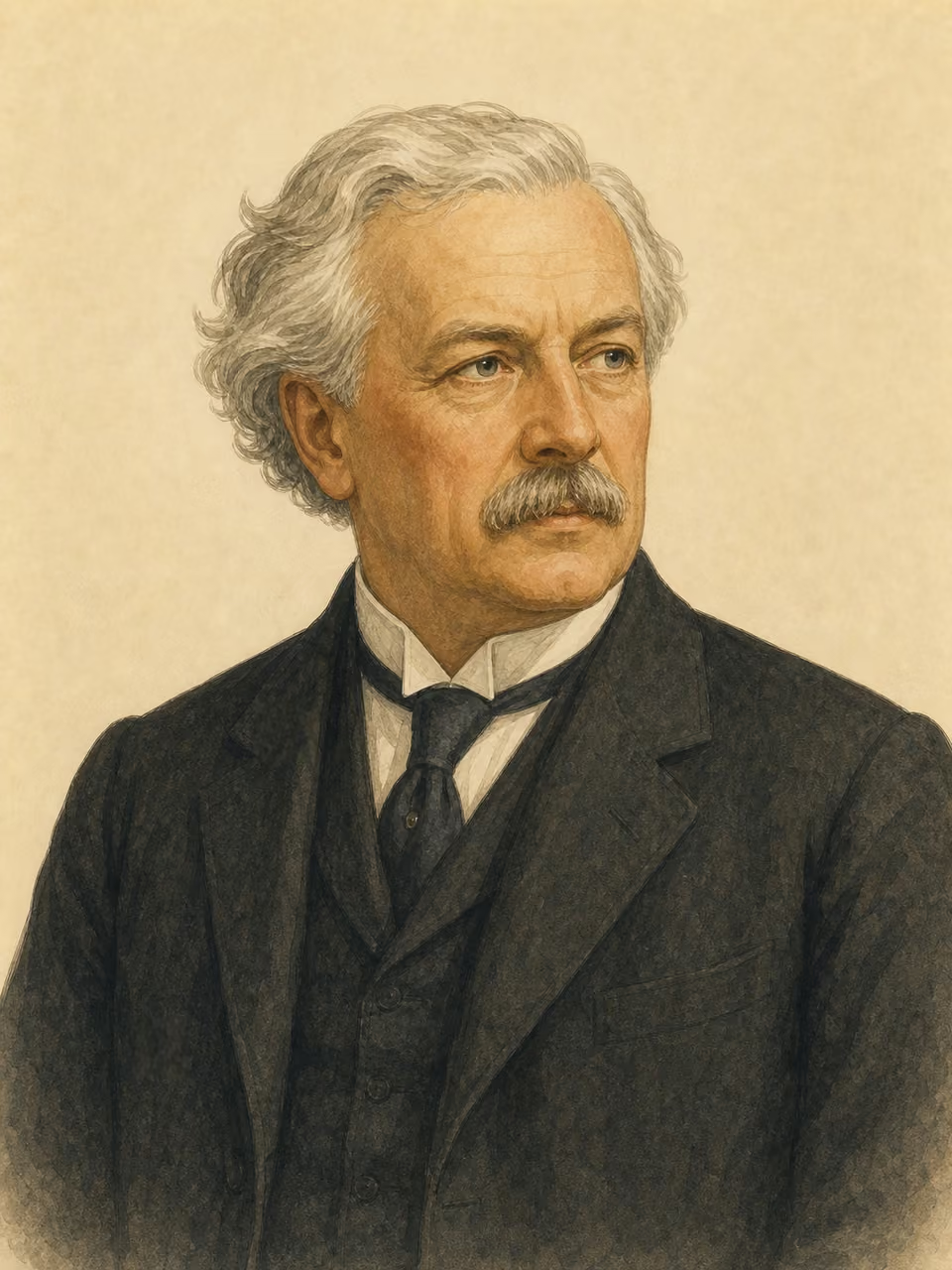
Imperial collapse and the armistices left competing claims over territory, security, reparations, and self-determination. Victorious leaders including British prime minister David Lloyd George controlled the central bargaining, while defeated states and many colonial claimants were excluded.
- Four years of industrial war ended with millions dead, damaged economies, and the collapse of the German, Austro-Hungarian, Ottoman, and Russian empires.
- The armistice stopped fighting on the Western Front in November 1918 but left the peace terms unsettled.
- Wartime promises and claims to self-determination brought governments and petitioners to Paris with competing expectations.
Course
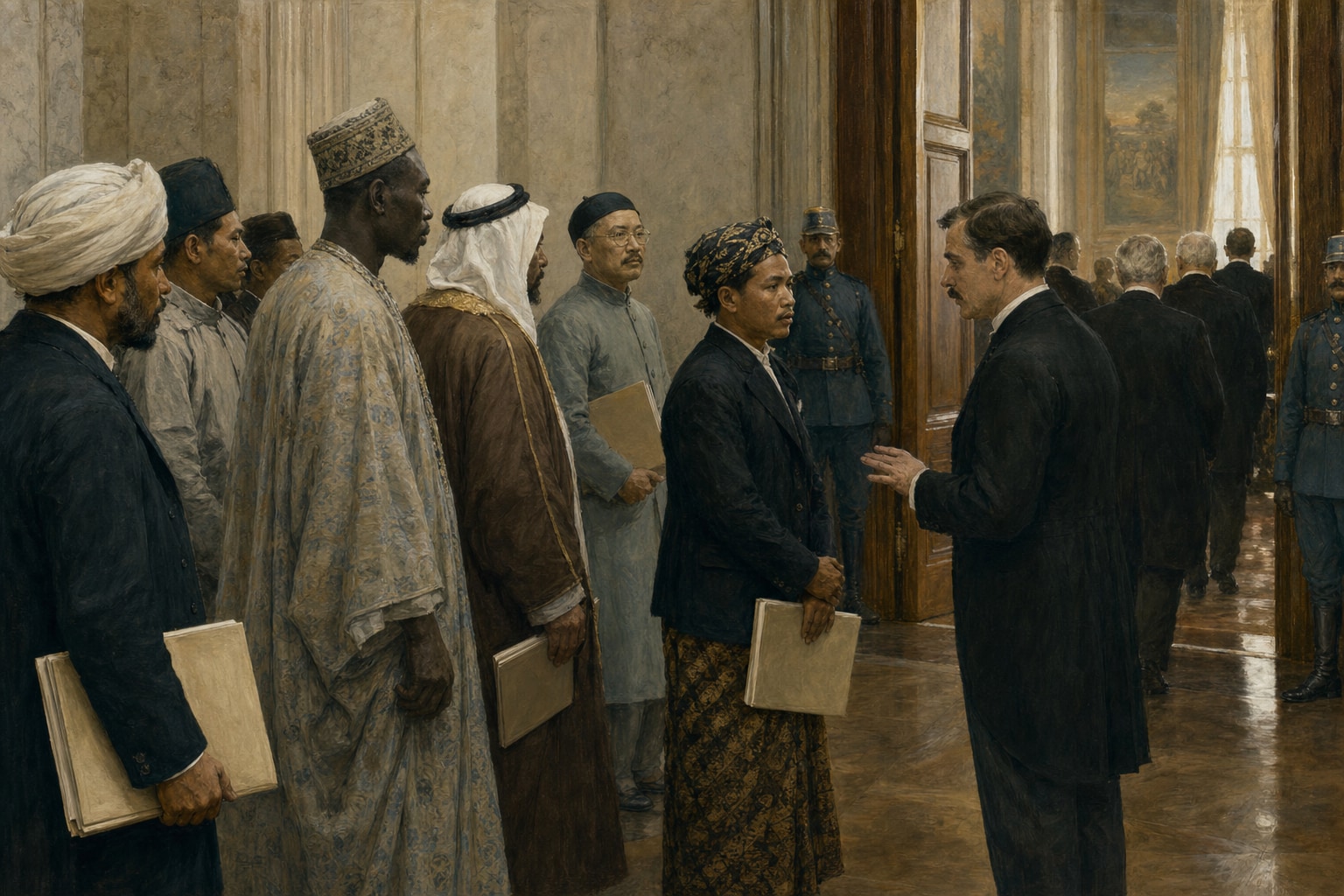
The leading powers negotiated peace with Germany, new borders, mandates over former colonies and Ottoman lands, and the League Covenant. Chinese and colonial petitions for equality or self-determination were treated selectively when they conflicted with imperial interests.
- Delegations from more than thirty countries met in Paris, but the leading Allied powers controlled the central negotiations.
- Woodrow Wilson, Georges Clemenceau, David Lloyd George, and Vittorio Orlando formed the Council of Four for many key decisions.
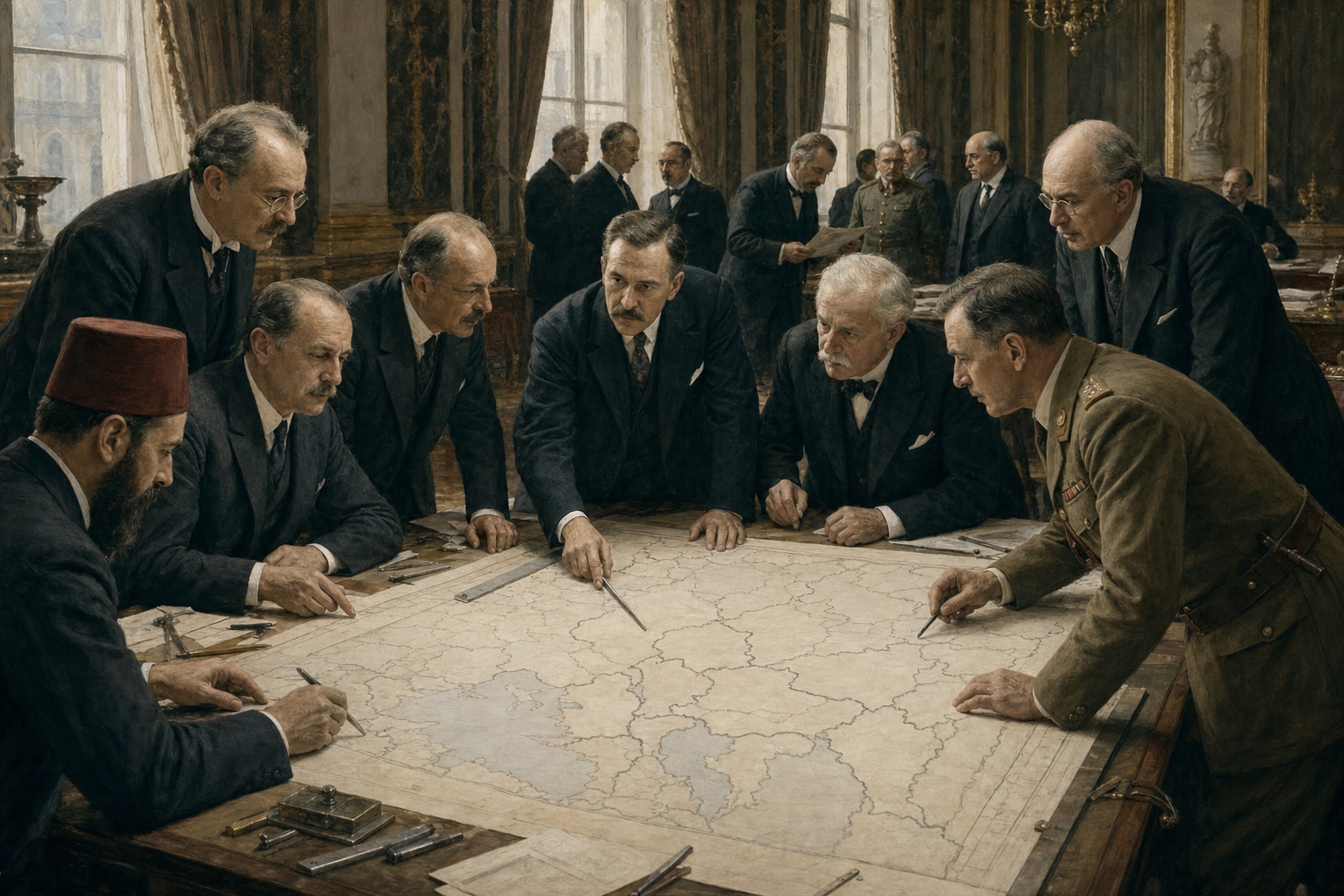
- Security, reparations, borders, colonial mandates, and access to the new international order produced repeated disputes.
Outcome
The Versailles and related treaties, new borders in Europe and the Middle East, mandates, and the League framework emerged. US nonparticipation, opposition among defeated states, and ambiguous security guarantees weakened enforcement.
- The conference produced separate treaties with the defeated powers, beginning with the Treaty of Versailles with Germany.
- New states and borders emerged in Europe, while former German and Ottoman territories were placed under mandate systems.
- The League of Nations was created as a framework for collective security and began work in 1920.
Historical significance
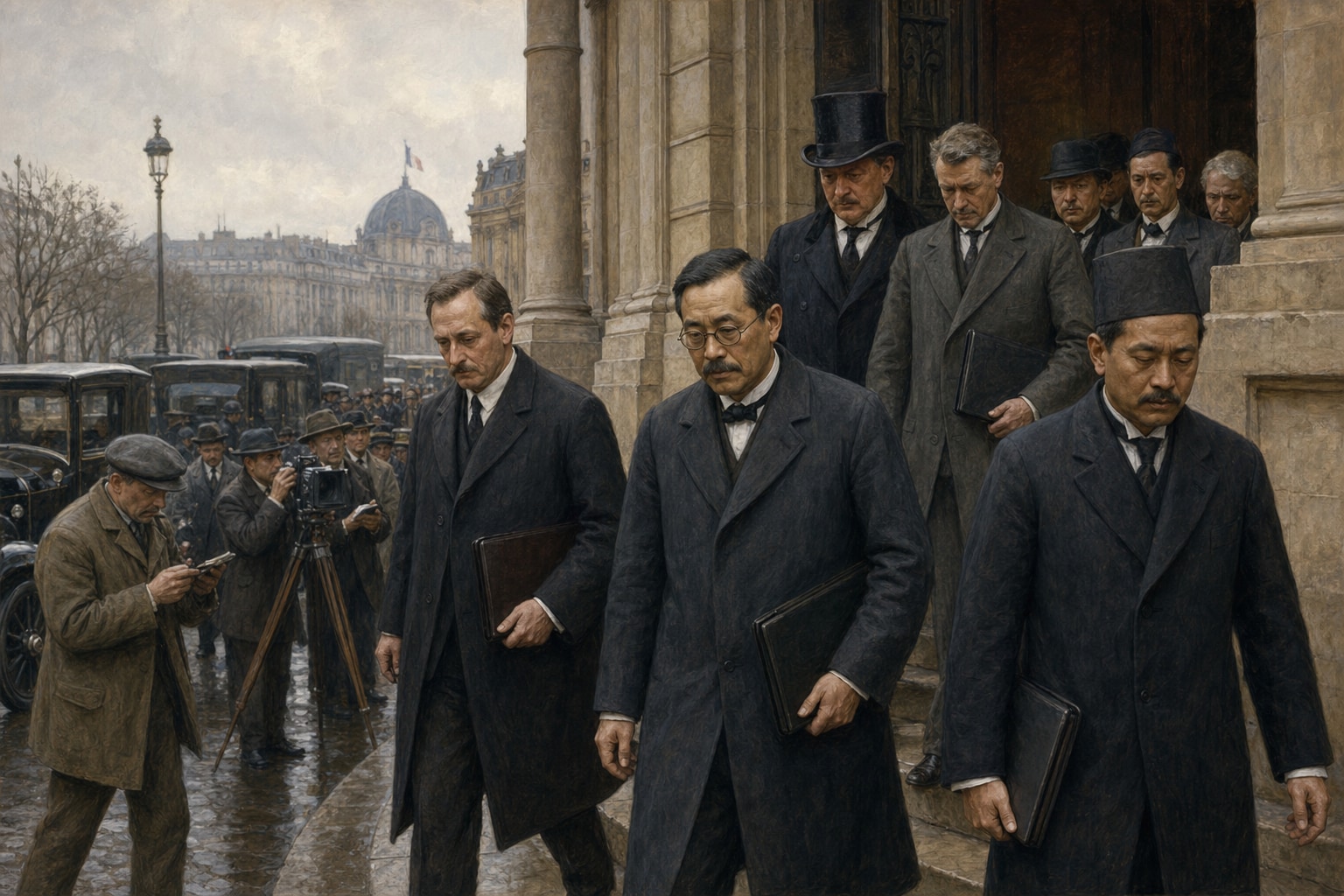
The conference reshaped borders and institutions for international cooperation but did not apply self-determination universally. Reparations, minority disputes, colonial rule, and enforcement limits destabilized the interwar order.
- The settlement redesigned political maps but applied self-determination unevenly, especially outside Europe.
- Germany and other excluded or dissatisfied groups challenged the legitimacy and burdens of the agreements.
- The League lacked the participation and enforcement power needed to guarantee the entire settlement.


Related figures
Related events
1914–1918
First World War
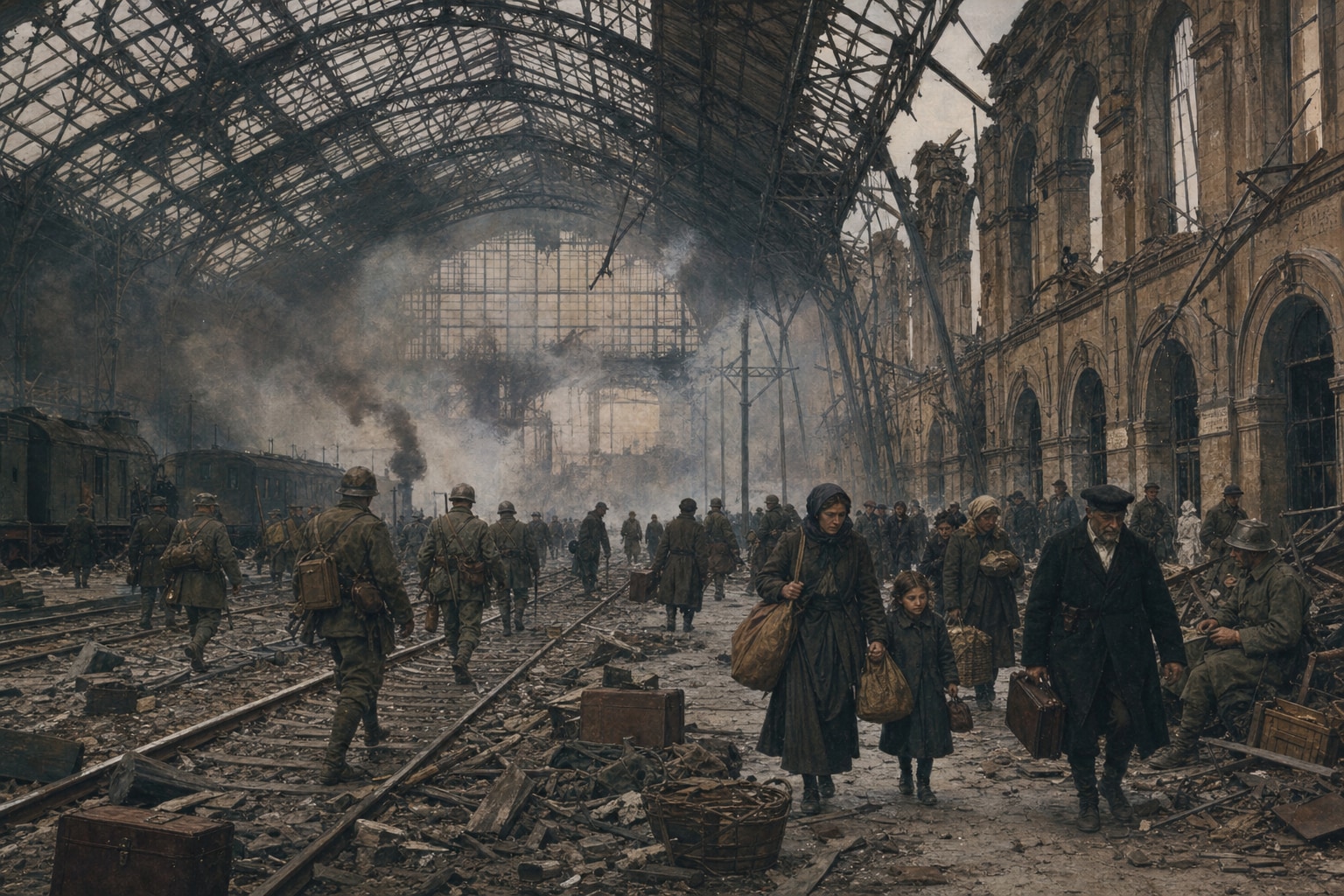
Industrialized warfare devastated societies and brought four empires to collapse.
1918
Armistice of 11 November
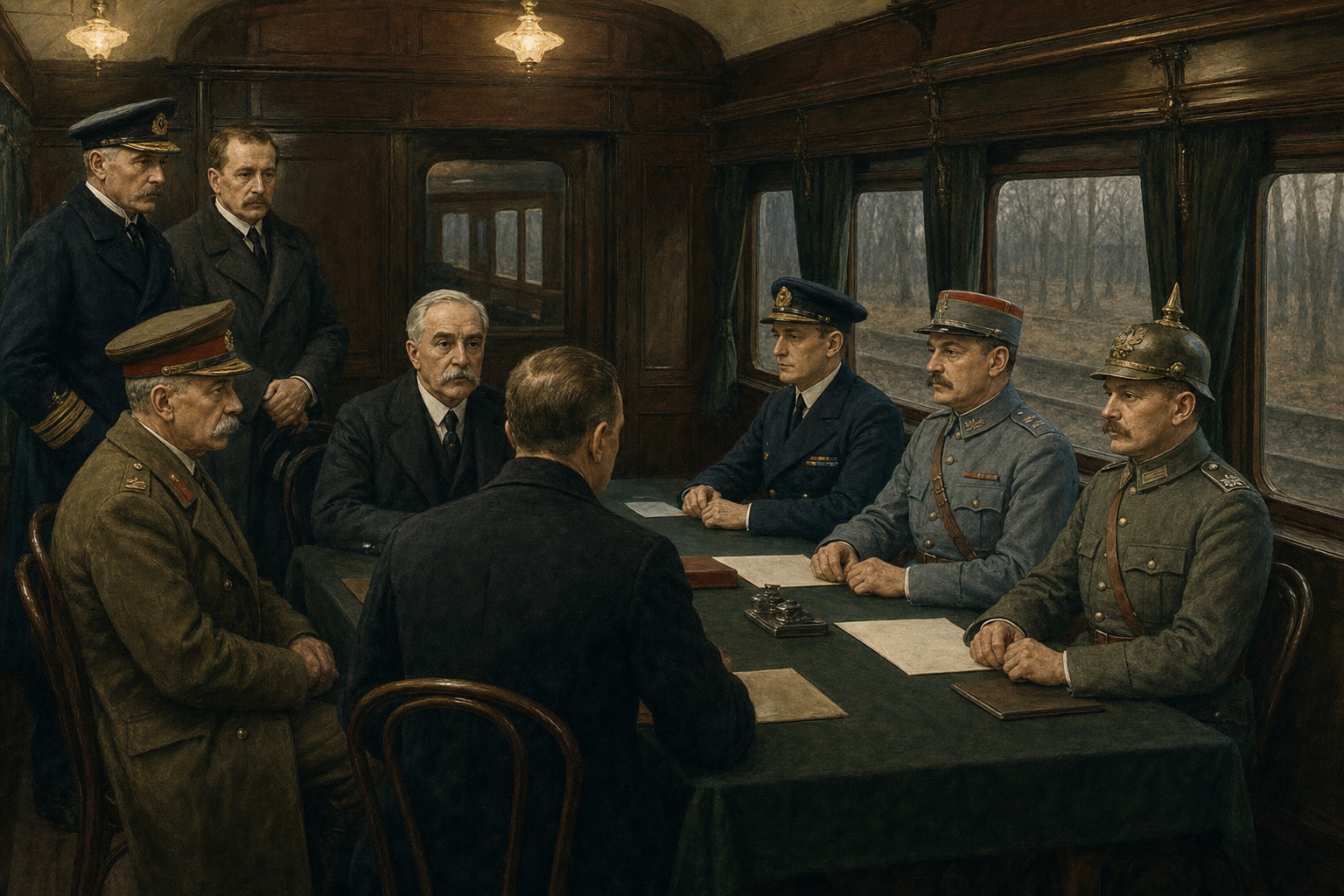
Germany and the Allies agreed to stop fighting while a final peace settlement remained to be negotiated.
1919–1920
Paris Peace Conference
Current event
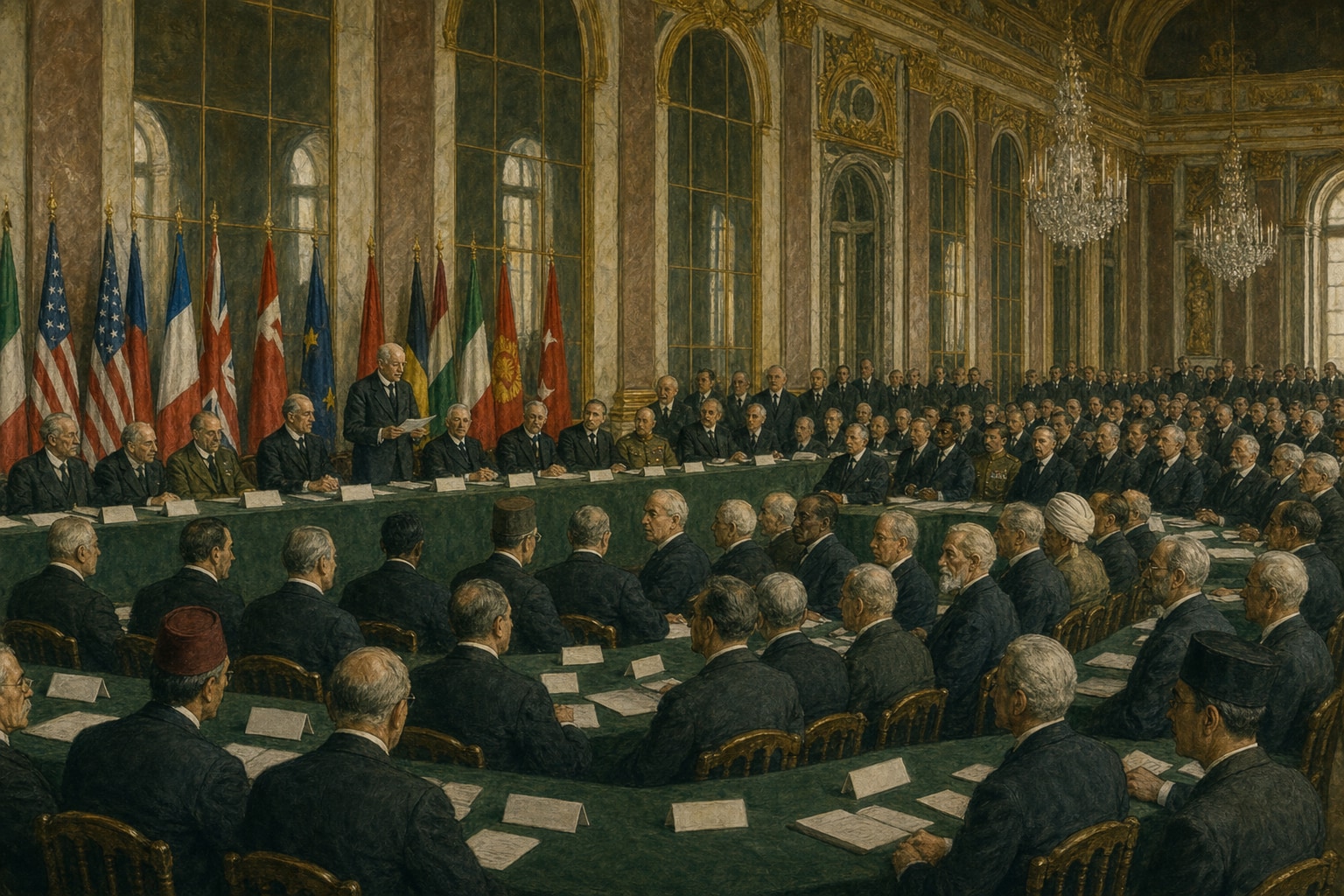
Delegations met to determine treaties, borders, reparations, mandates, and a new international organization.
1919
Treaty of Versailles signed
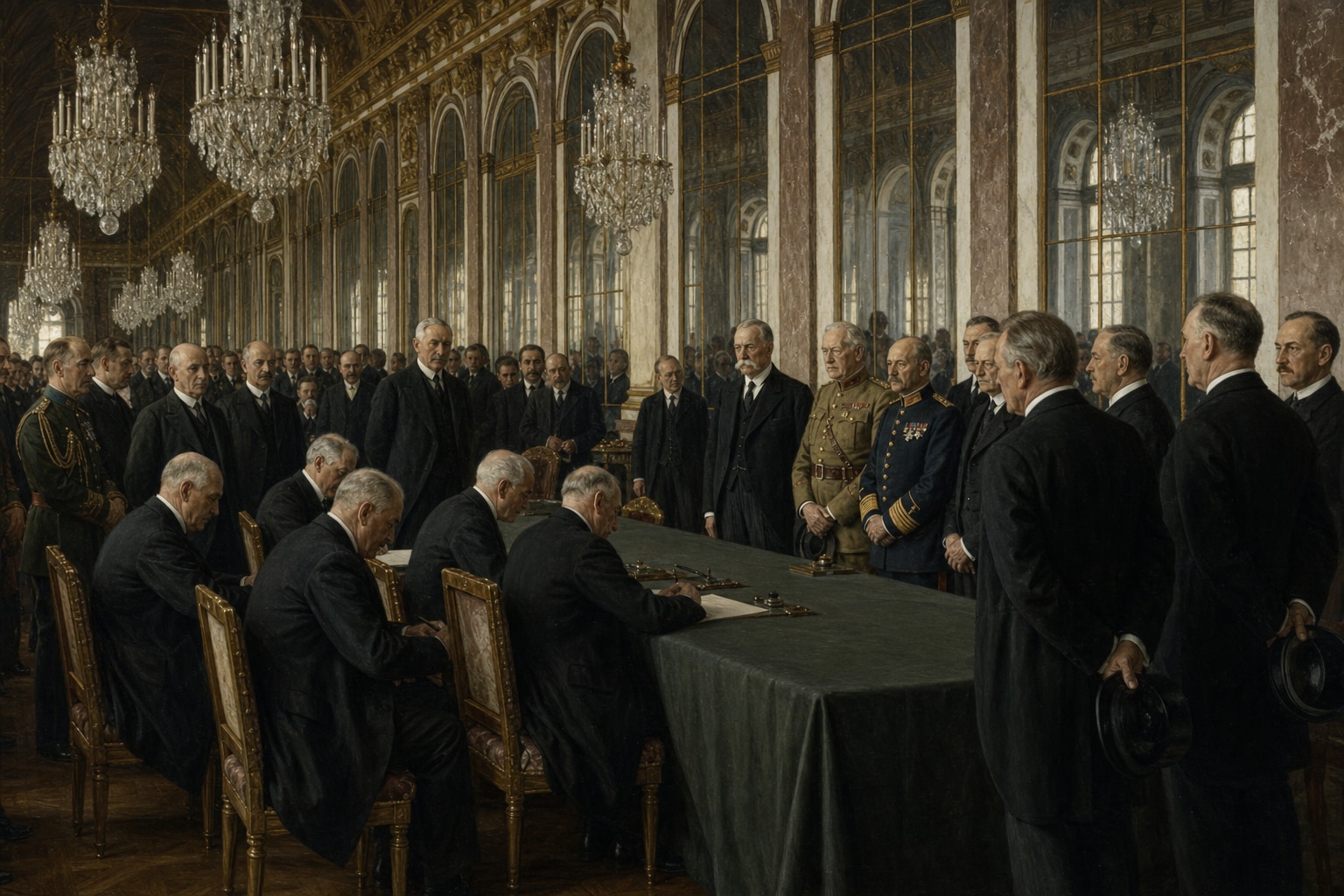
Germany and the Allied powers signed the principal treaty in the Hall of Mirrors at Versailles.
1920
League of Nations begins
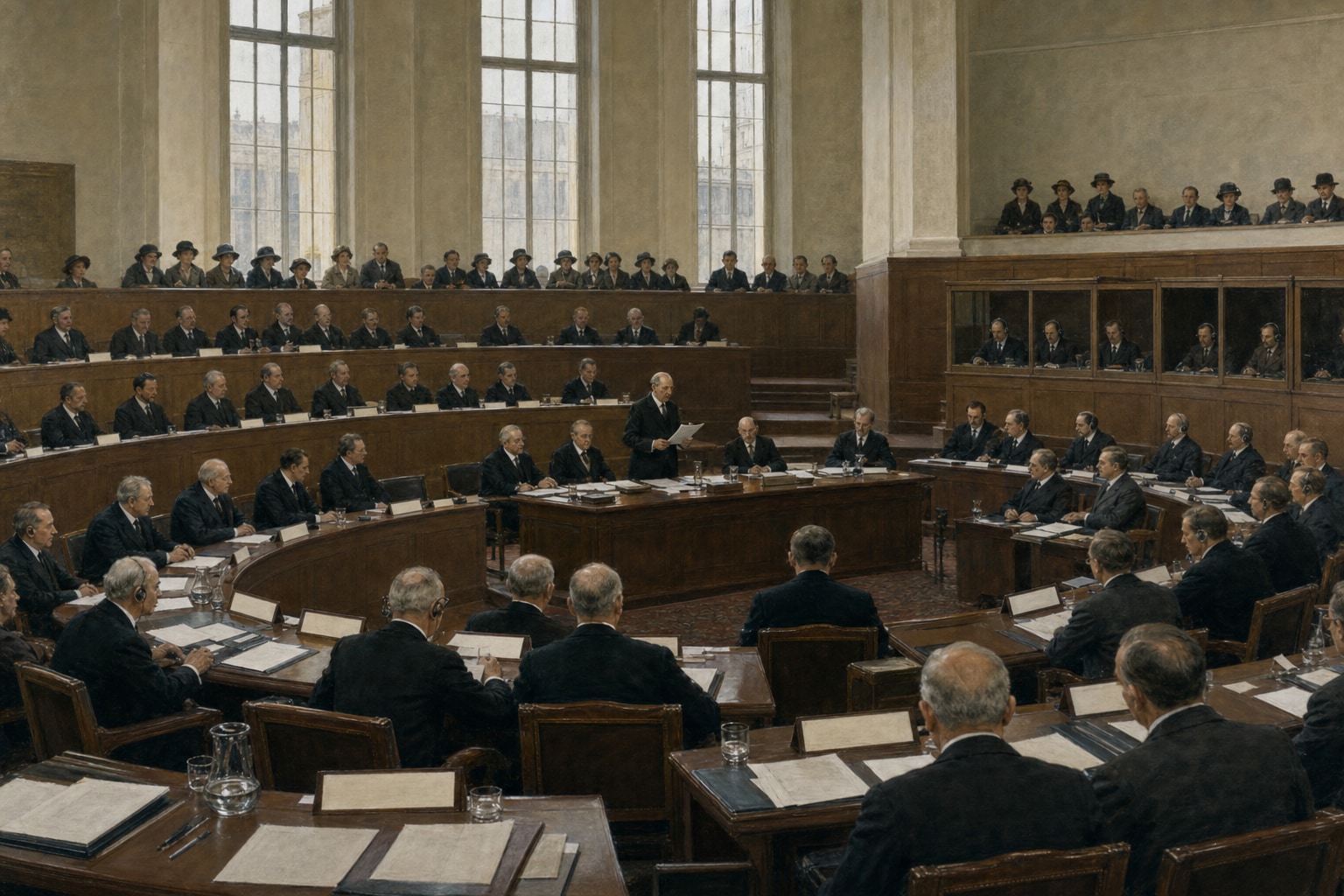
The new organization started work as a forum for collective security and international cooperation.


Sources
- The Paris Peace Conference and the Treaty of VersaillesOffice of the Historian, U.S. Department of StateAn official overview of the major negotiators, competing aims, and Treaty of Versailles.
- Paris Peace Conference (1919–1920)WikipediaA general reference for delegations, commissions, treaties, mandates, and the League's creation.
- Paris Peace ConferenceLibrary of CongressA visual and historical account of the conference, its leaders, and public setting.