Peloponnesian War
431 BC–404 BC
From 431 to 404 BCE, the Athenian-led Delian League and the Spartan-led Peloponnesian League fought for primacy in the Greek world.

- Period
- 431 BC–404 BC
- Kind
- War
- Regions
- Europe
- Keywords
- Athens · Sparta · Peloponnesian League · Sicilian Expedition · Thucydides
Follow the story · Four stages
Background
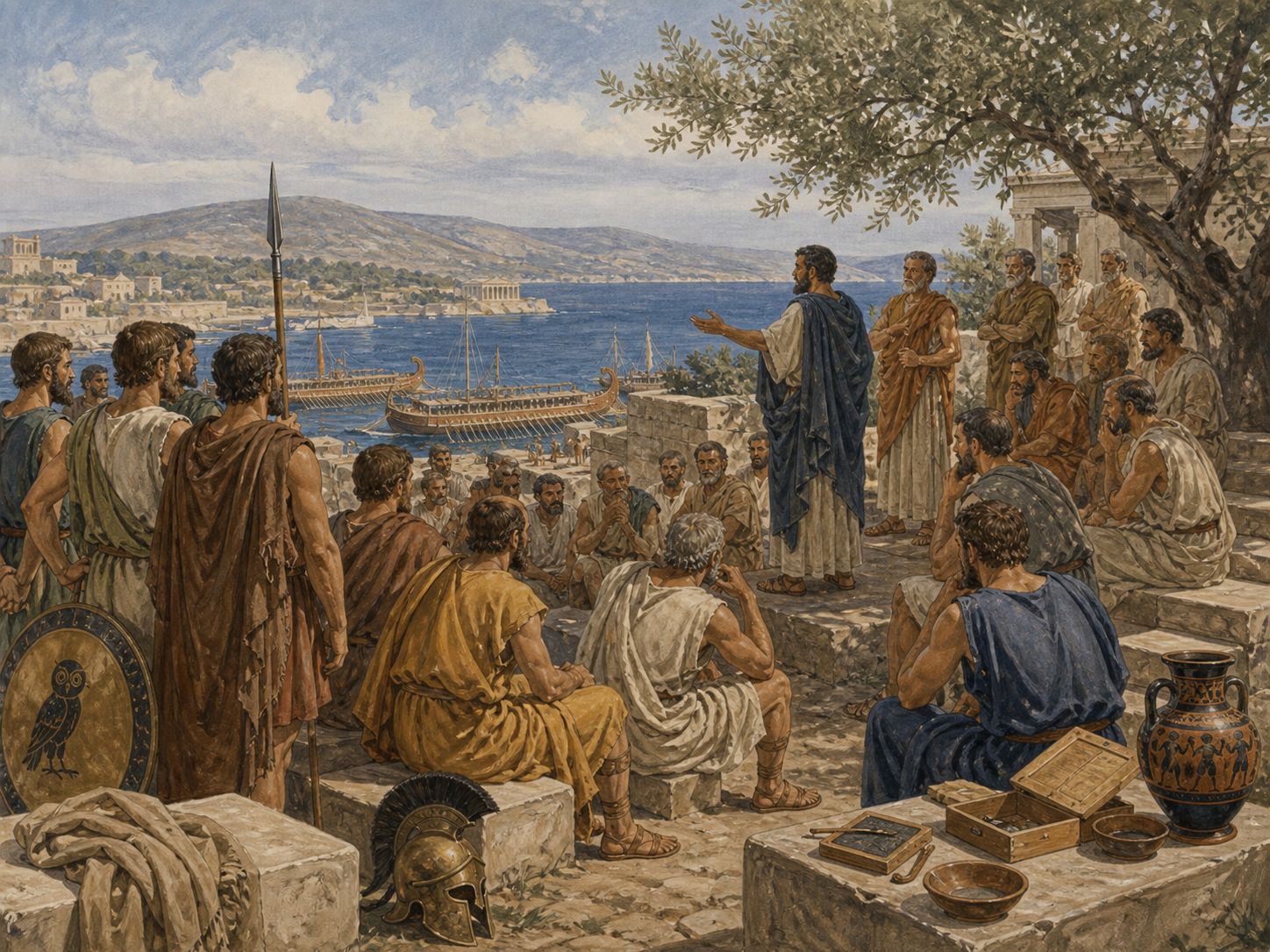
After the Persian Wars, Athens's maritime empire and Sparta's alliance network stood in parallel. Conflicts involving Corinth, Corcyra, and Potidaea strained the Thirty Years' Peace.
- Athens extended a maritime alliance across the Aegean
- Sparta and the Peloponnesian League opposed that power
- Competing alliances and interests raised the pressure
Course
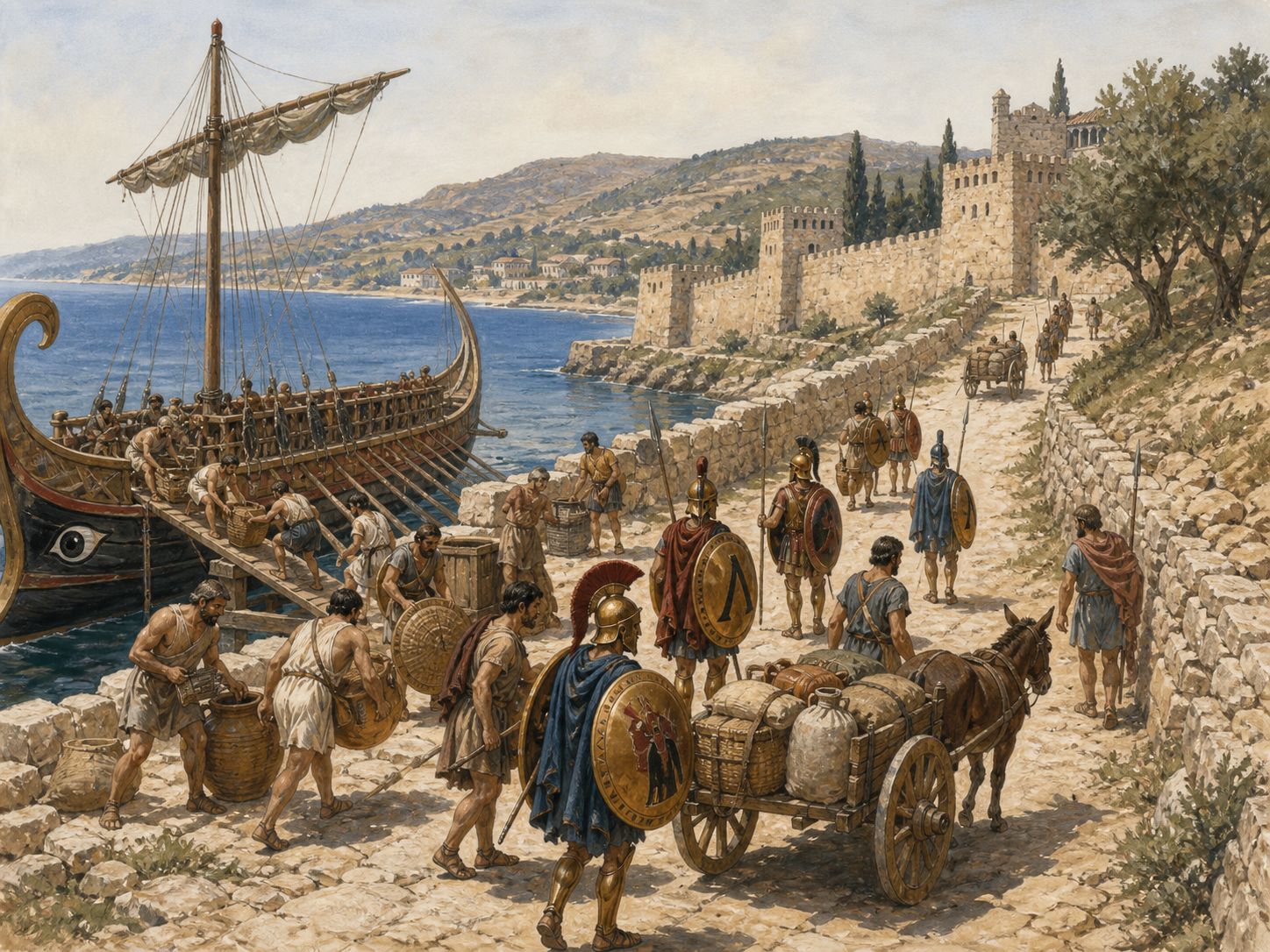
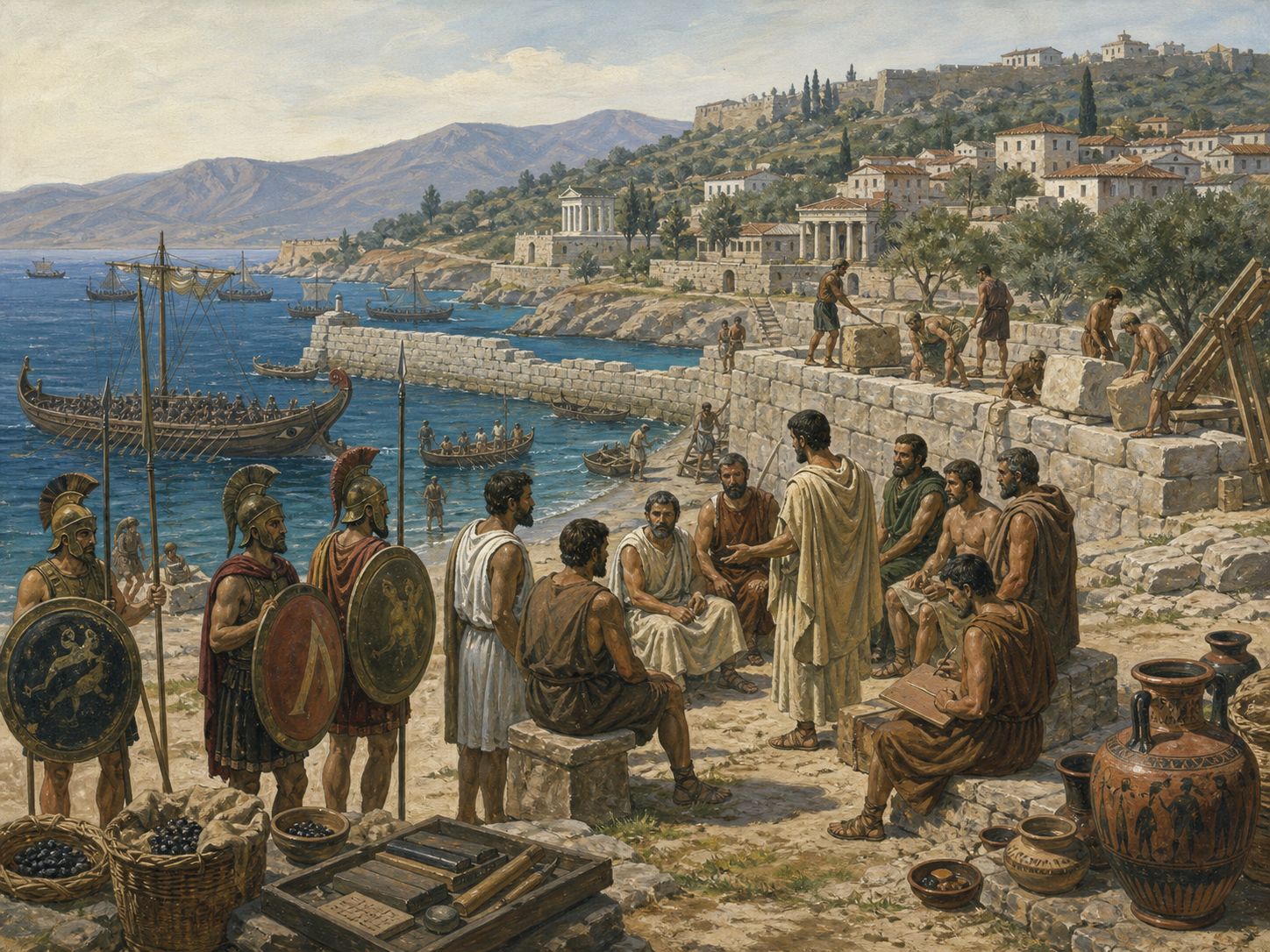
Athens relied on its walls and navy while Spartan armies invaded Attica. Plague, Pylos, the Peace of Nicias, the Sicilian expedition, and the occupation of Decelea preceded a Spartan fleet financed by Persia that forced Athens toward defeat.
- War began in 431 BCE
- Plague, the Sicilian Expedition, and naval fighting shifted the balance
- Athens gradually exhausted its resources and allies
Outcome
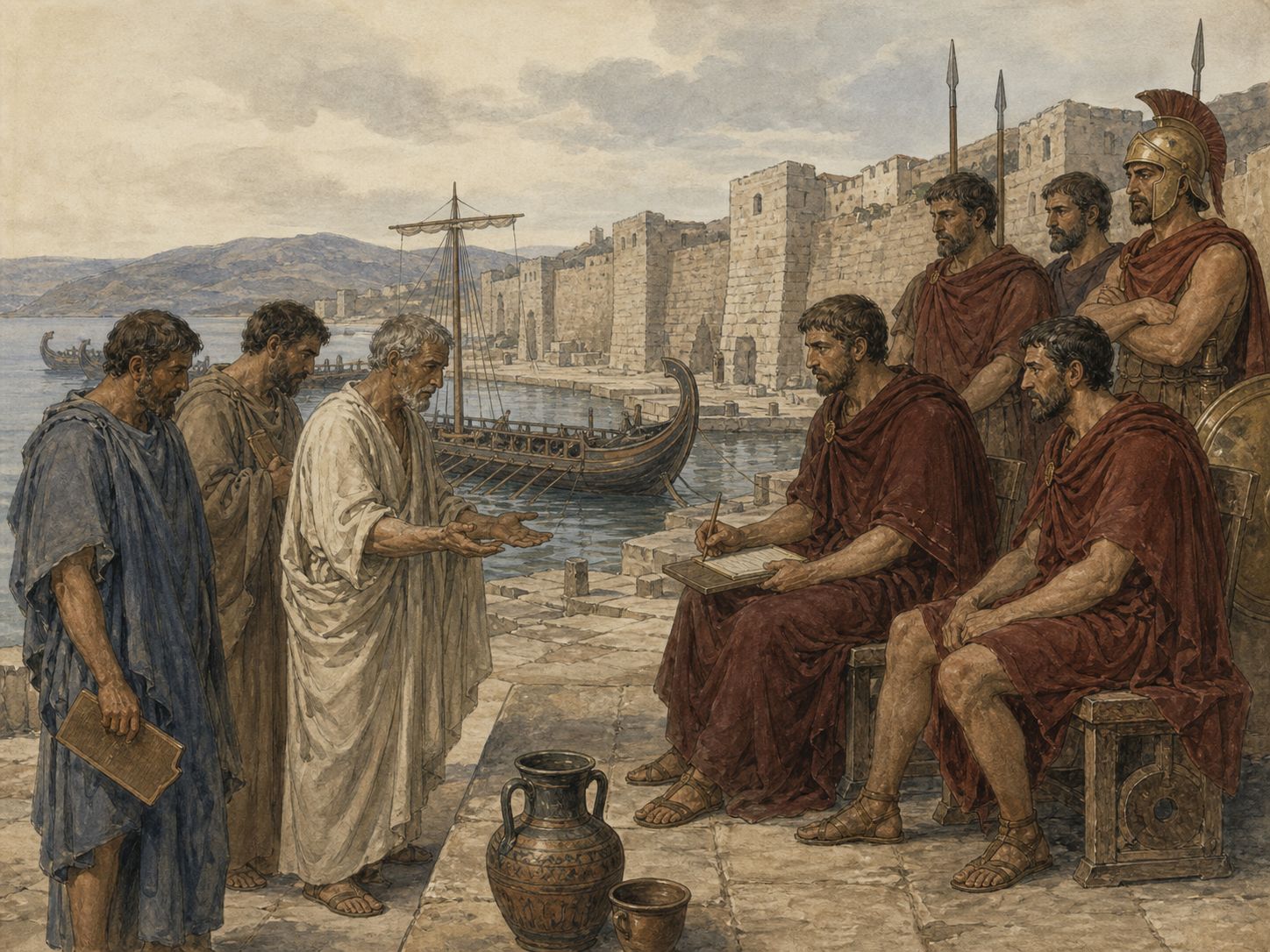
Athens surrendered in 404 BCE, losing its Long Walls and fleet, and the Delian League was dissolved. Sparta gained a brief hegemony, but the exhausted poleis remained divided.
- Athens surrendered in 404 BCE
- Sparta briefly became the leading power in the Greek world
- The war depleted the population, finances, and politics of the poleis
Historical significance
The war exposed the risks of linking alliances, empire, democracy, and oligarchy. Athens's defeat and Sparta's short-lived supremacy helped create the conditions for the later rise of Macedon.
- It left a framework for thinking about naval and land power
- Thucydides' account became a classic of international politics
- It changed the balance of the polis world for generations


Related figures
Related events
c. 478 BC
Two alliance systems
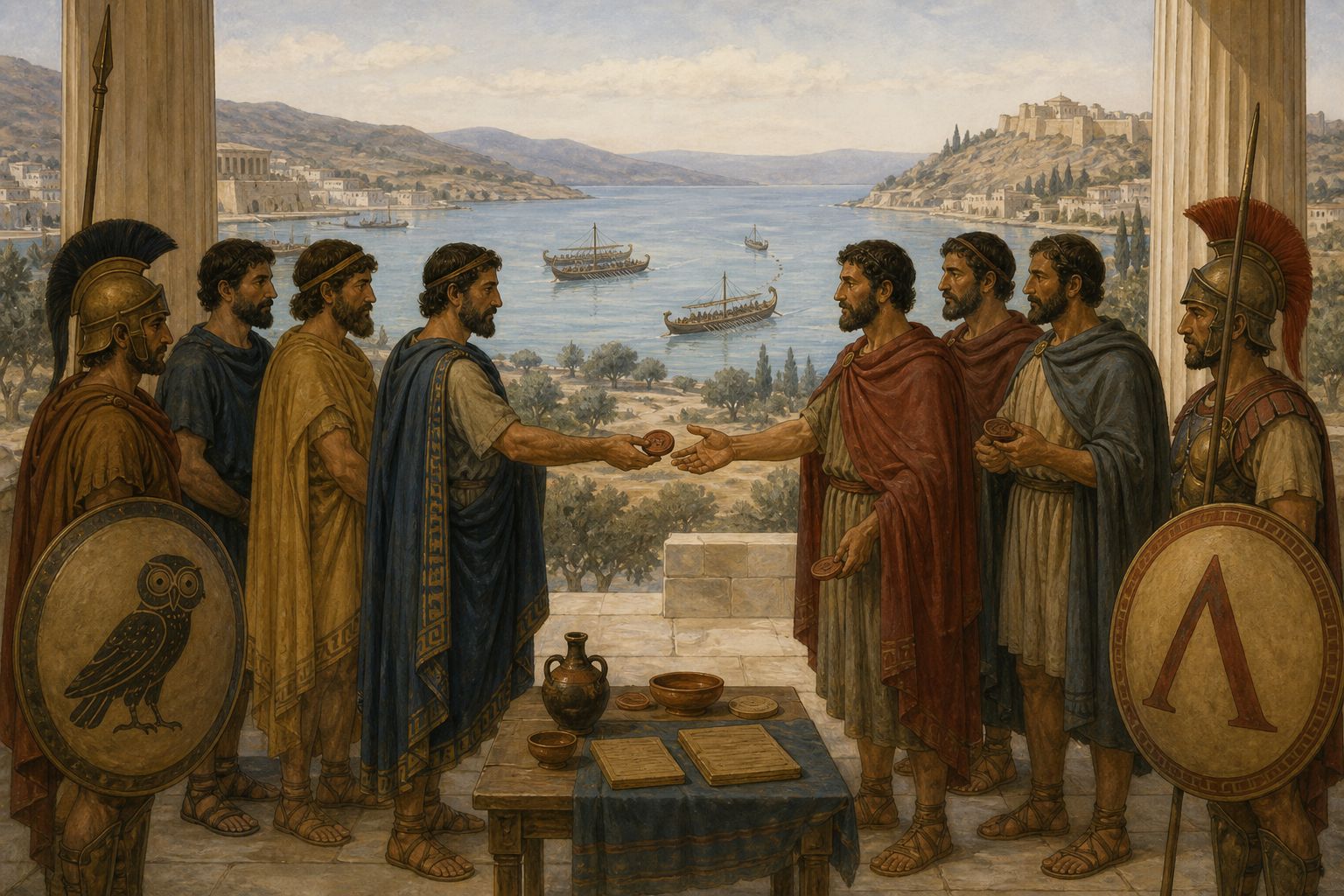
The Delian and Peloponnesian Leagues divided influence across the Aegean and mainland Greece.
c. 433 BC
Peace begins to fray
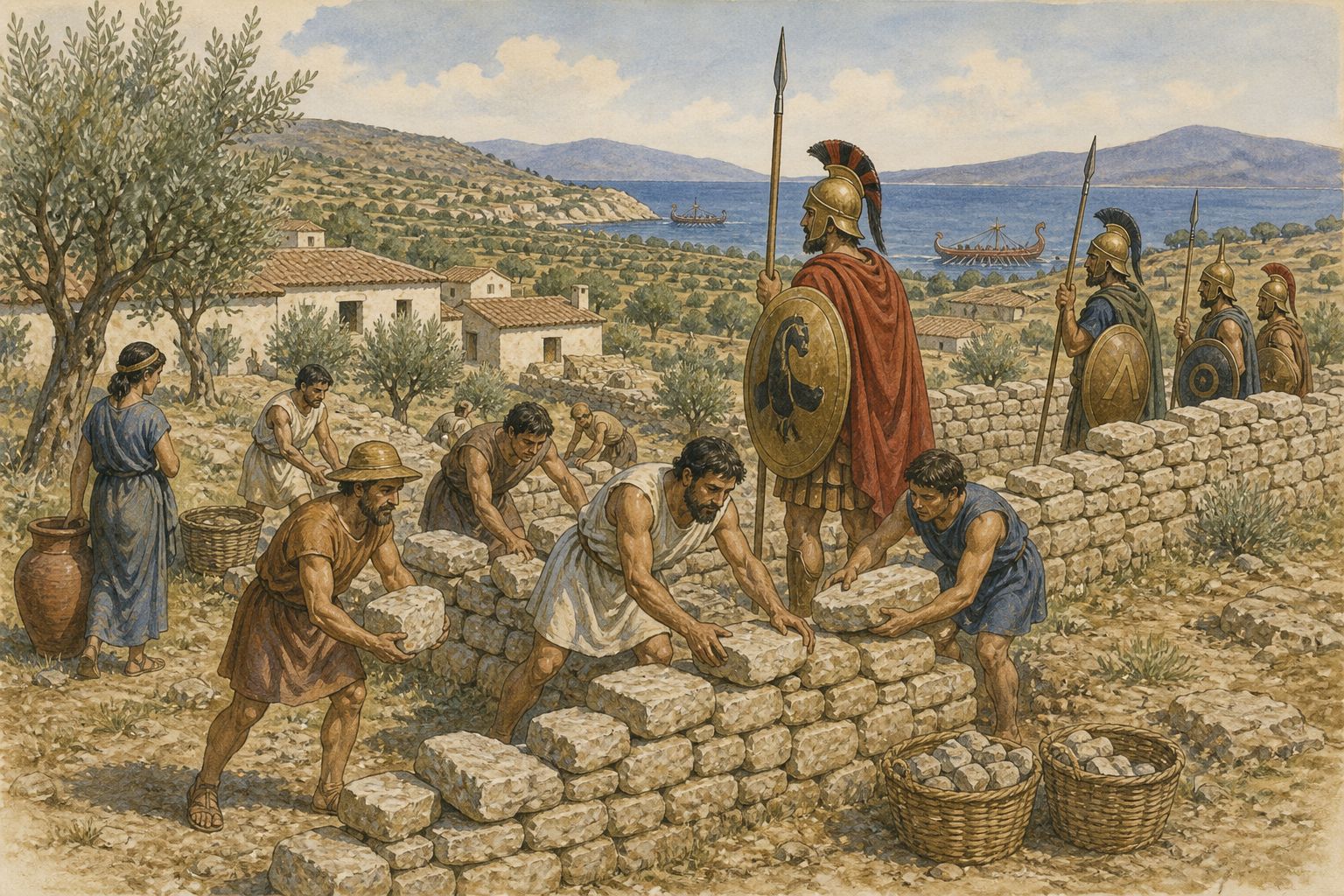
Conflict around Corinth and Athenian pressure destabilized the Thirty Years’ Peace.
c. 431 BC–c. 404 BC
The long war
Current event
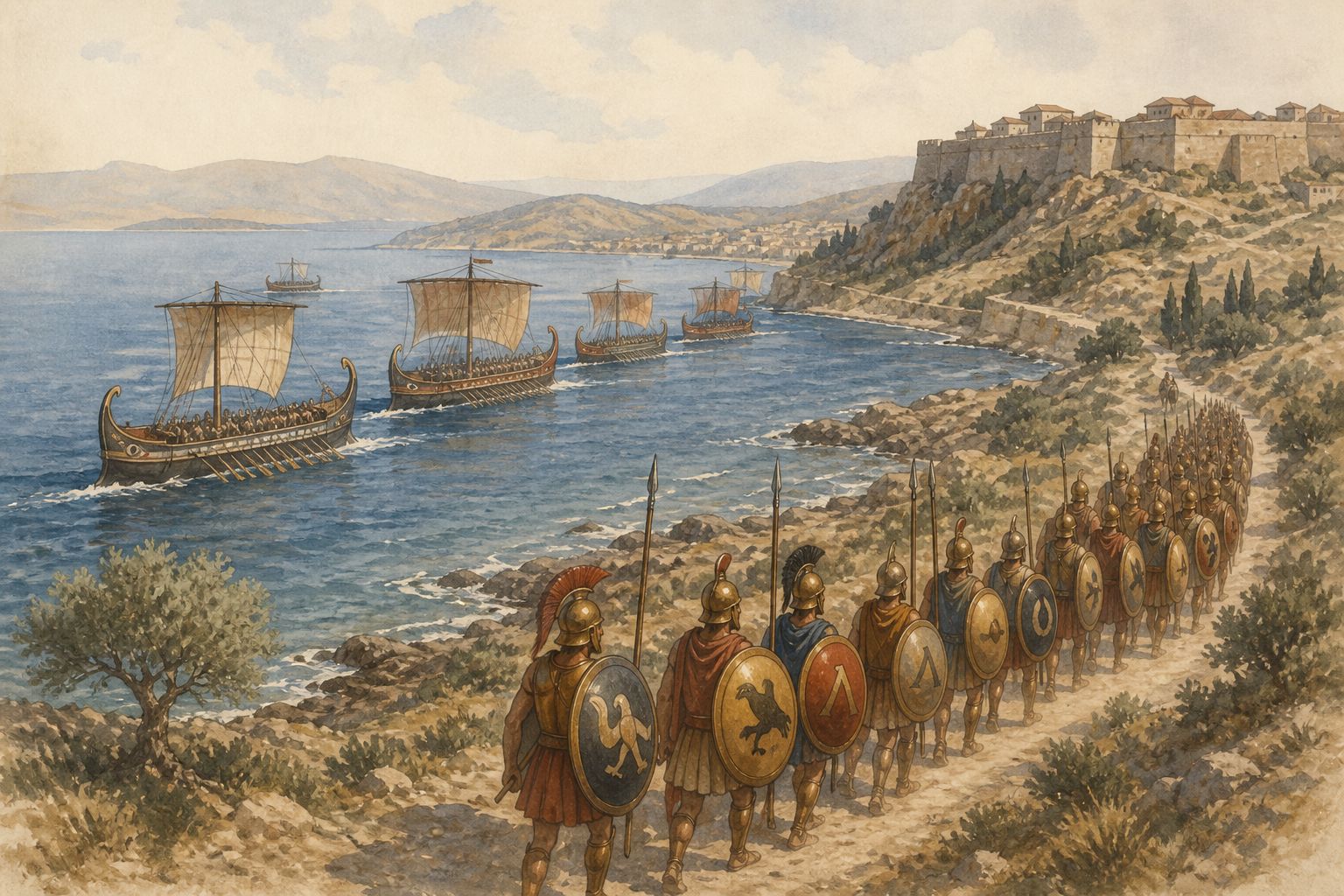
Plague, expeditions, and naval blockades combined as war lasted from 431 to 404 BCE.
404 BC
Athens surrenders
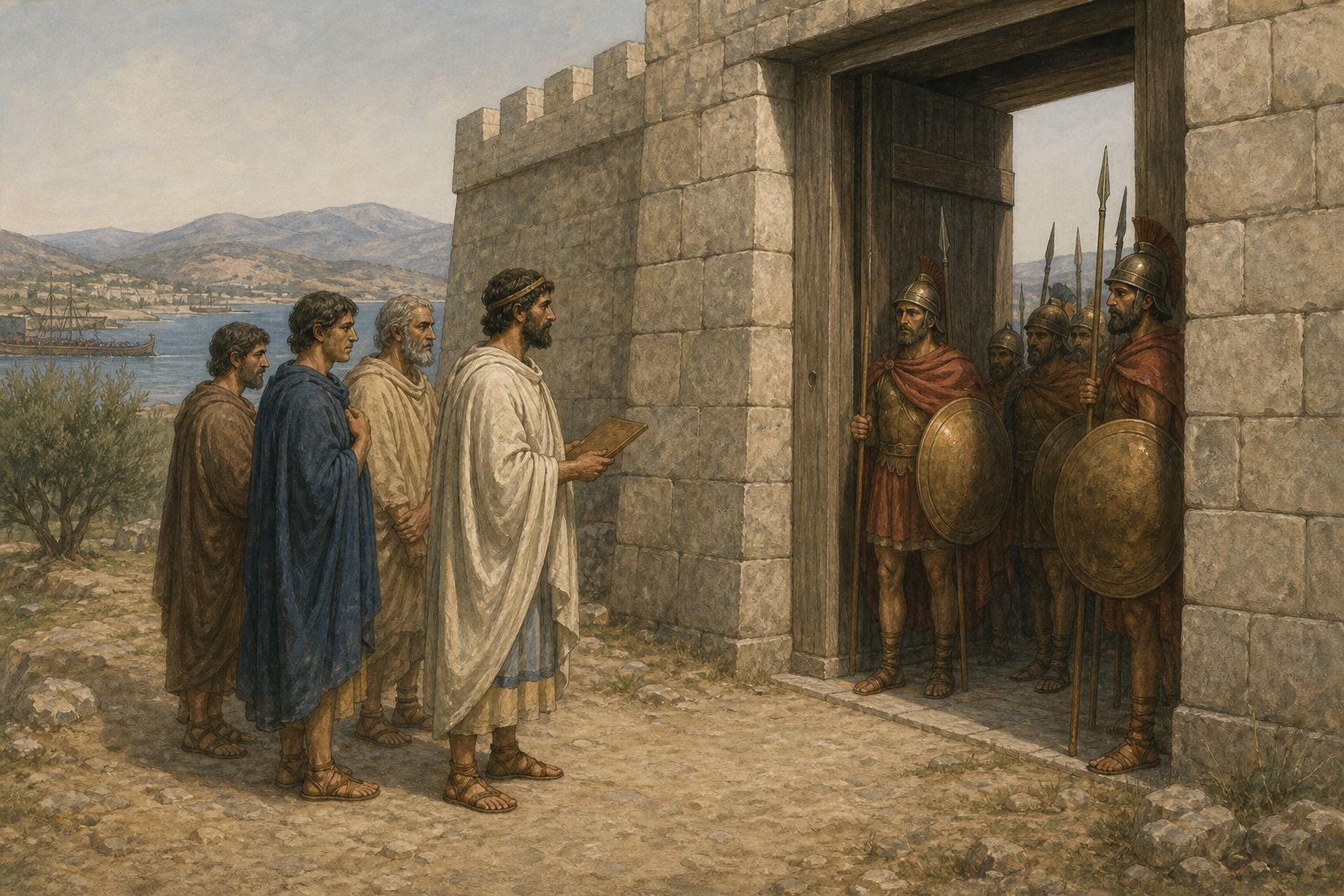
After losing the fleet and the resources of its maritime empire, Athens accepted Spartan terms.
c. 404 BC–c. 371 BC
Spartan hegemony
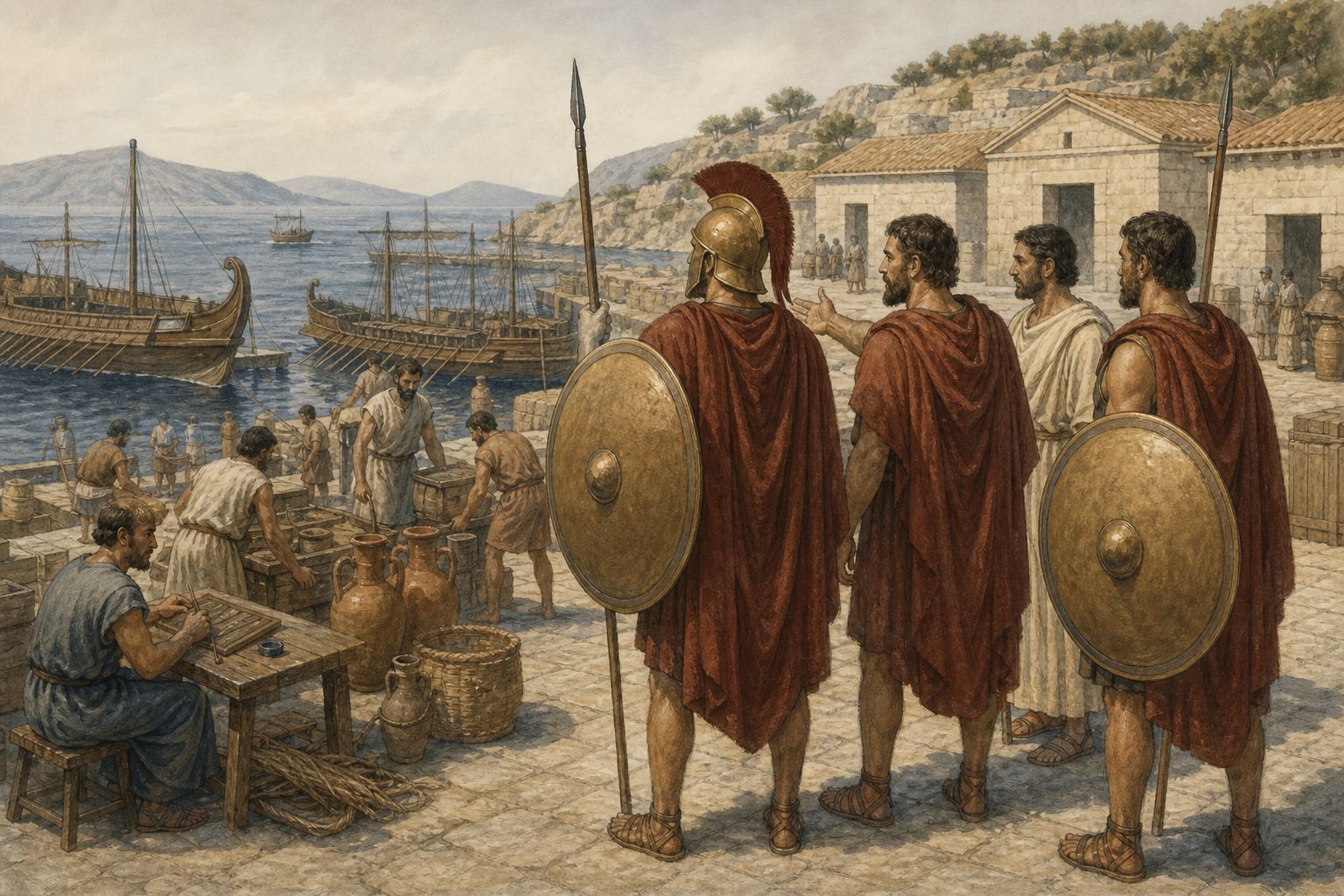
Sparta extended its influence after victory, but its hegemony proved unstable and provoked new rivalry.


Sources
- Peloponnesian WarPerseus Digital LibraryPrimary-text material for reading the war through Thucydides.
- Introduction to the Peloponnesian WarUniversity of St AndrewsEducational overview of the conflict’s setting and major phases.
- Art Humanities: Complete ReaderColumbia UniversityContext for the political and cultural world of classical Greece.