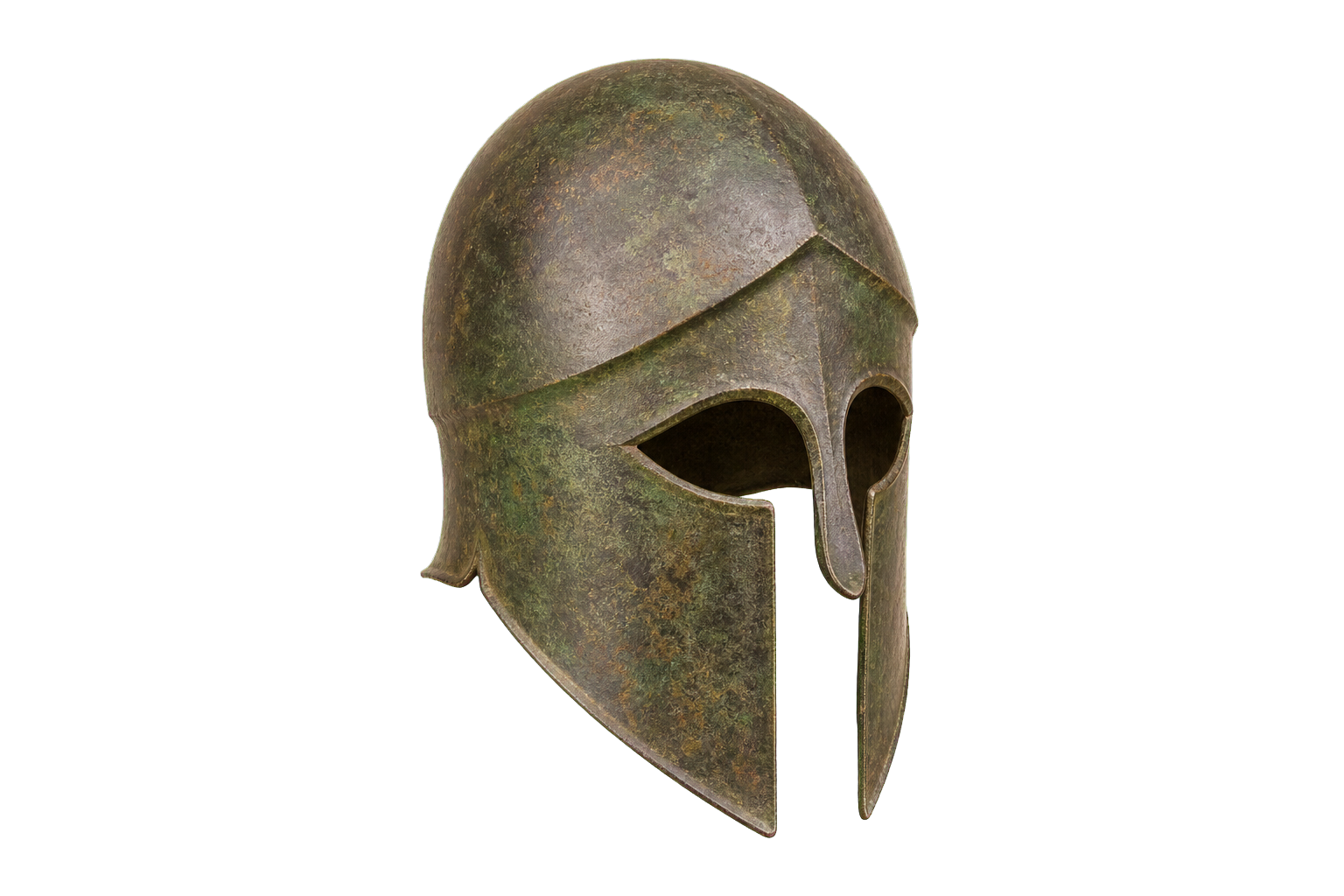
Second Persian Invasion of Greece
480 BC–479 BC
The 480–479 BCE campaign in which forces of the Achaemenid king Xerxes I invaded mainland Greece and fought a coalition of Greek city-states.

- Period
- 480 BC–479 BC
- Kind
- War
- Regions
- Europe, Middle East
- Keywords
- Persian Wars · poleis · navy · empire · source criticism
Follow the story · Four stages
Background
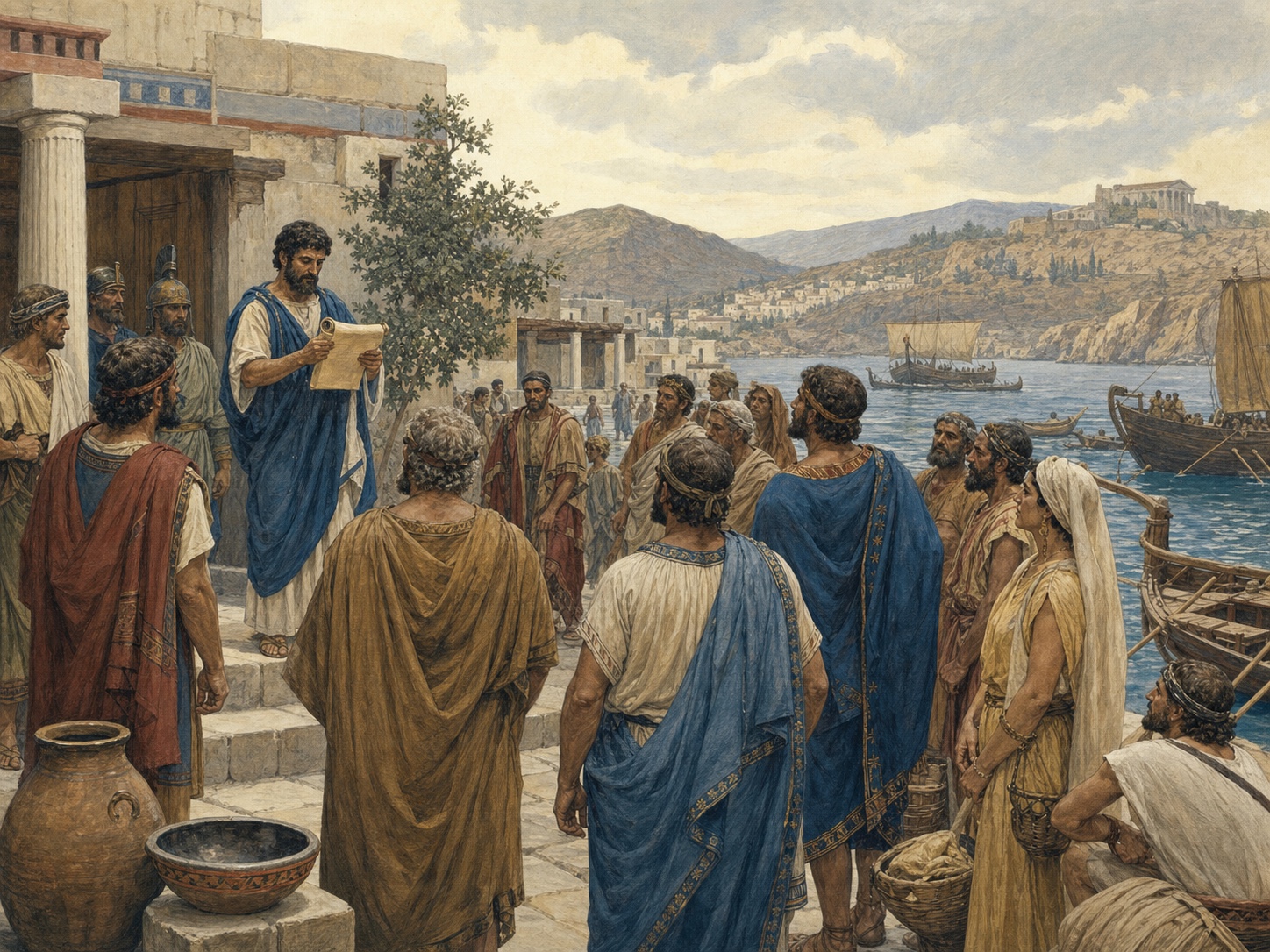
After the Ionian Revolt and the Persian defeat at Marathon, the Achaemenid court still sought to secure its authority and prestige around the Aegean. Xerxes assembled a large land army and fleet, crossed the Hellespont, and advanced south through Greece.
- The Ionian Revolt sharpened tensions between Persia and the Greek cities
- The Achaemenid court prepared a major land and sea expedition
- Independent poleis sought a framework for common defense
Course
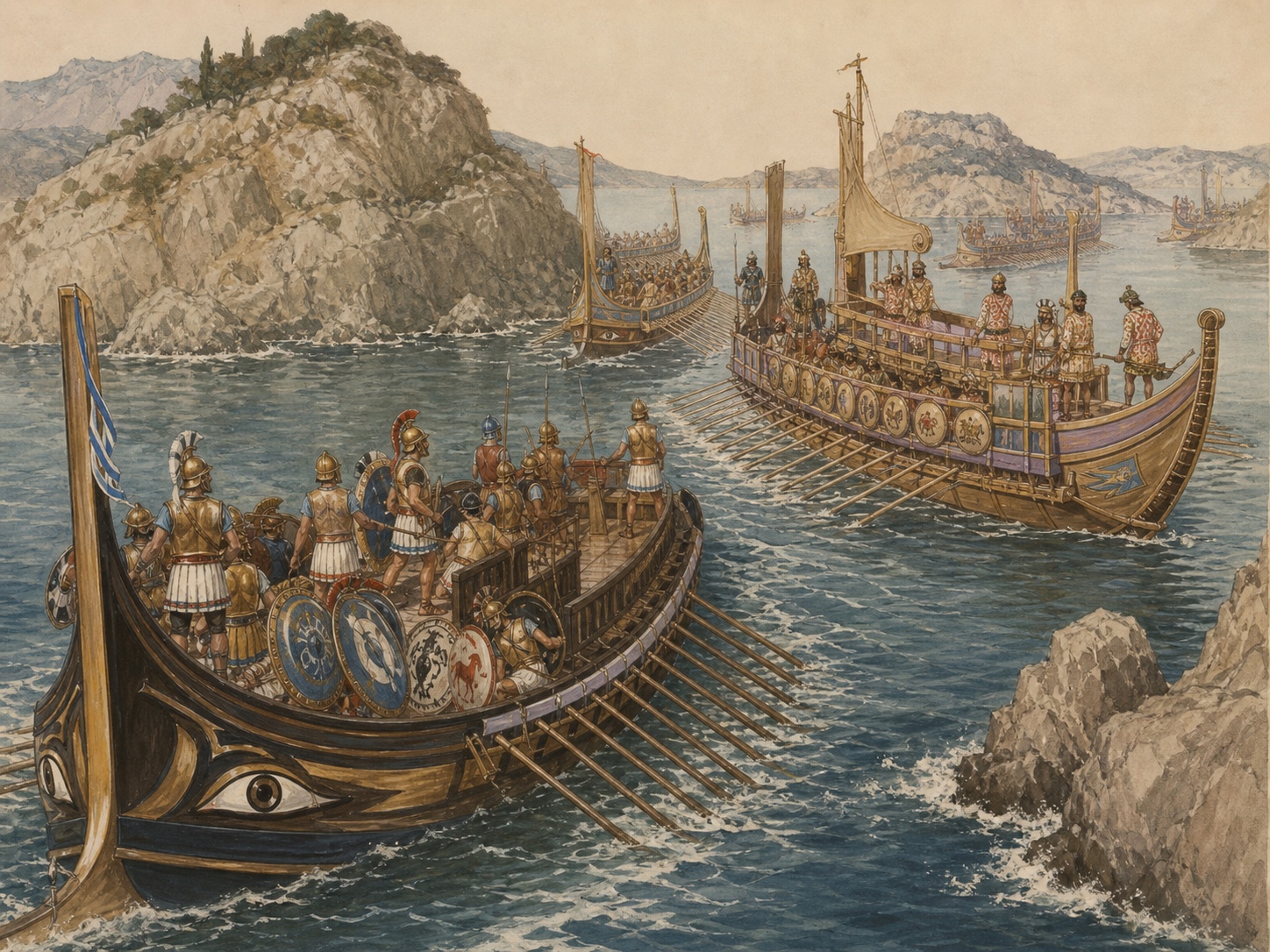
Persian forces broke through at Thermopylae and occupied an evacuated Athens. The allied Greek fleet then won at Salamis, and in 479 Greek forces defeated the remaining invasion army at Plataea while another victory followed at Mycale.
- Xerxes I's army crossed the Hellespont and moved south
- Athens was occupied after the pass at Thermopylae was forced
- The allied Greek fleet used the constricted waters of Salamis
Outcome
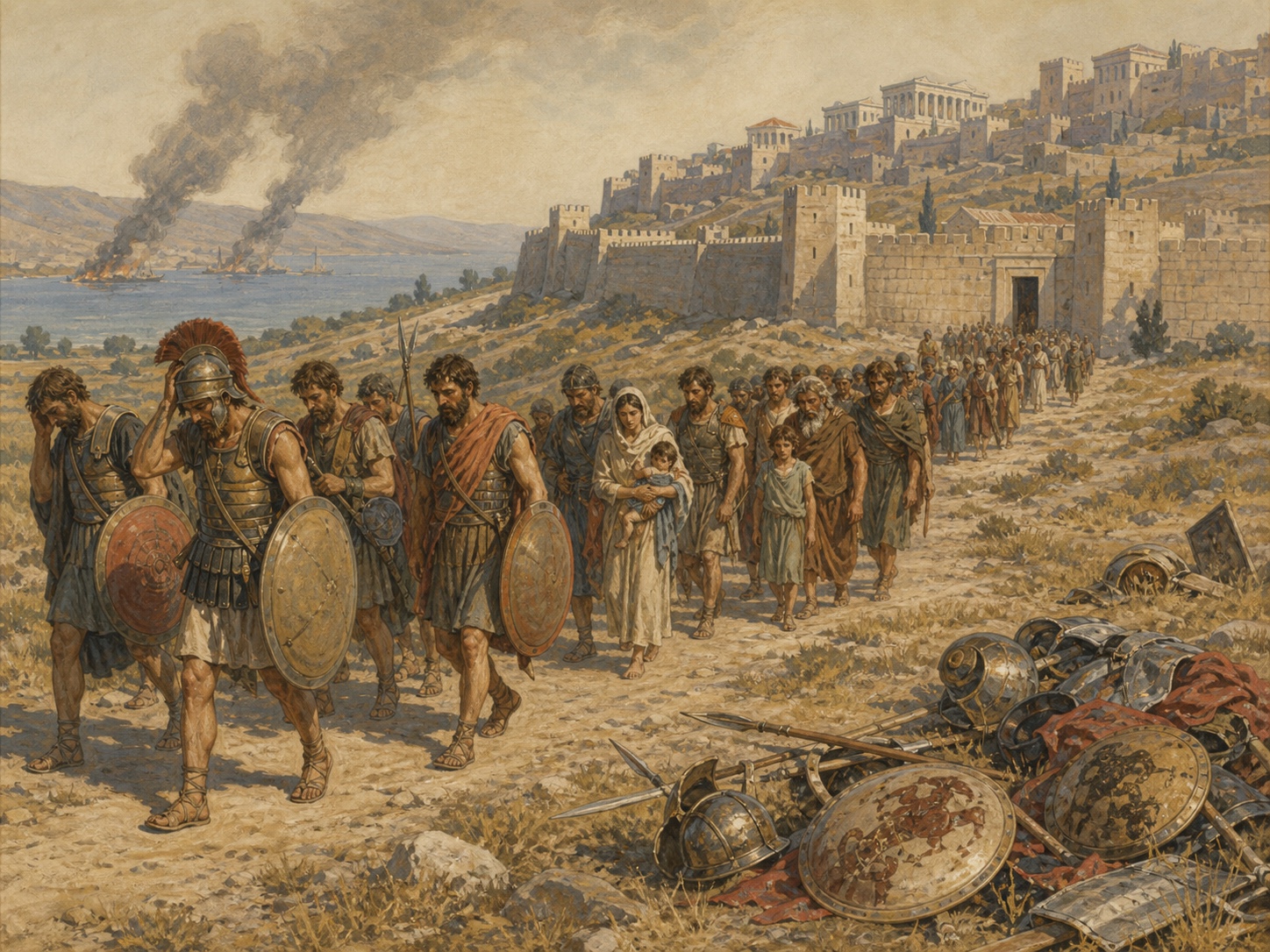
The invasion withdrew without bringing mainland Greece under Achaemenid rule. Conflict did not simply end there: Greek and Persian powers continued to fight and negotiate, especially around the islands and cities of the eastern Aegean.
- The Persian invasion failed to conquer mainland Greece and withdrew
- Greek forces also prevailed at Plataea and Mycale
- Fighting and diplomacy continued in the eastern Aegean
Historical significance
The victories strengthened Athenian naval influence and helped lead to the Delian League. Most detailed narratives survive from Greek authors, so reported numbers, motives, and heroic episodes must be distinguished carefully from what the evidence can establish.
- Athenian naval power and political influence grew
- Conditions developed for the later Delian League
- The surviving victor-side narratives require critical reading


Related figures
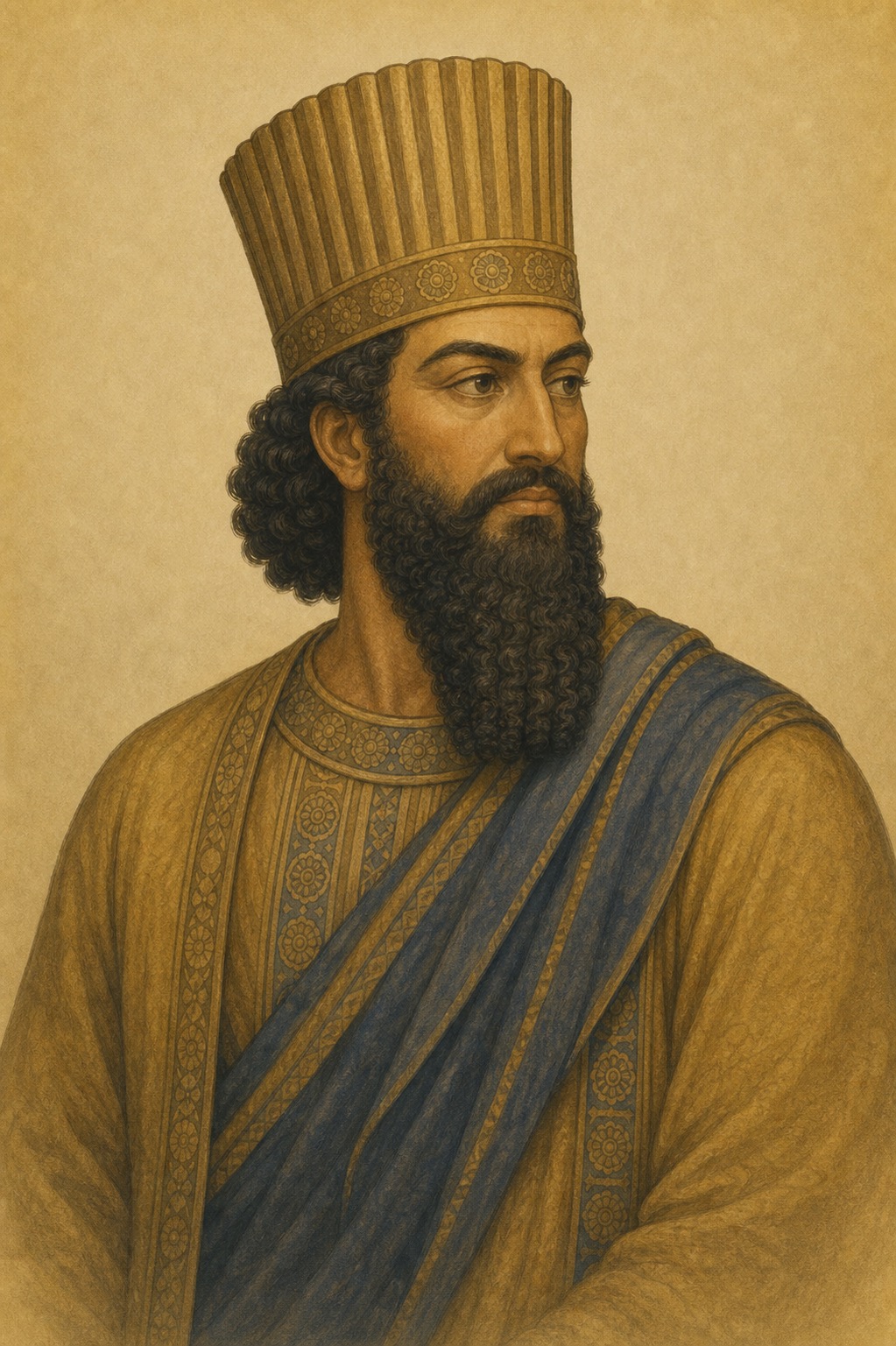
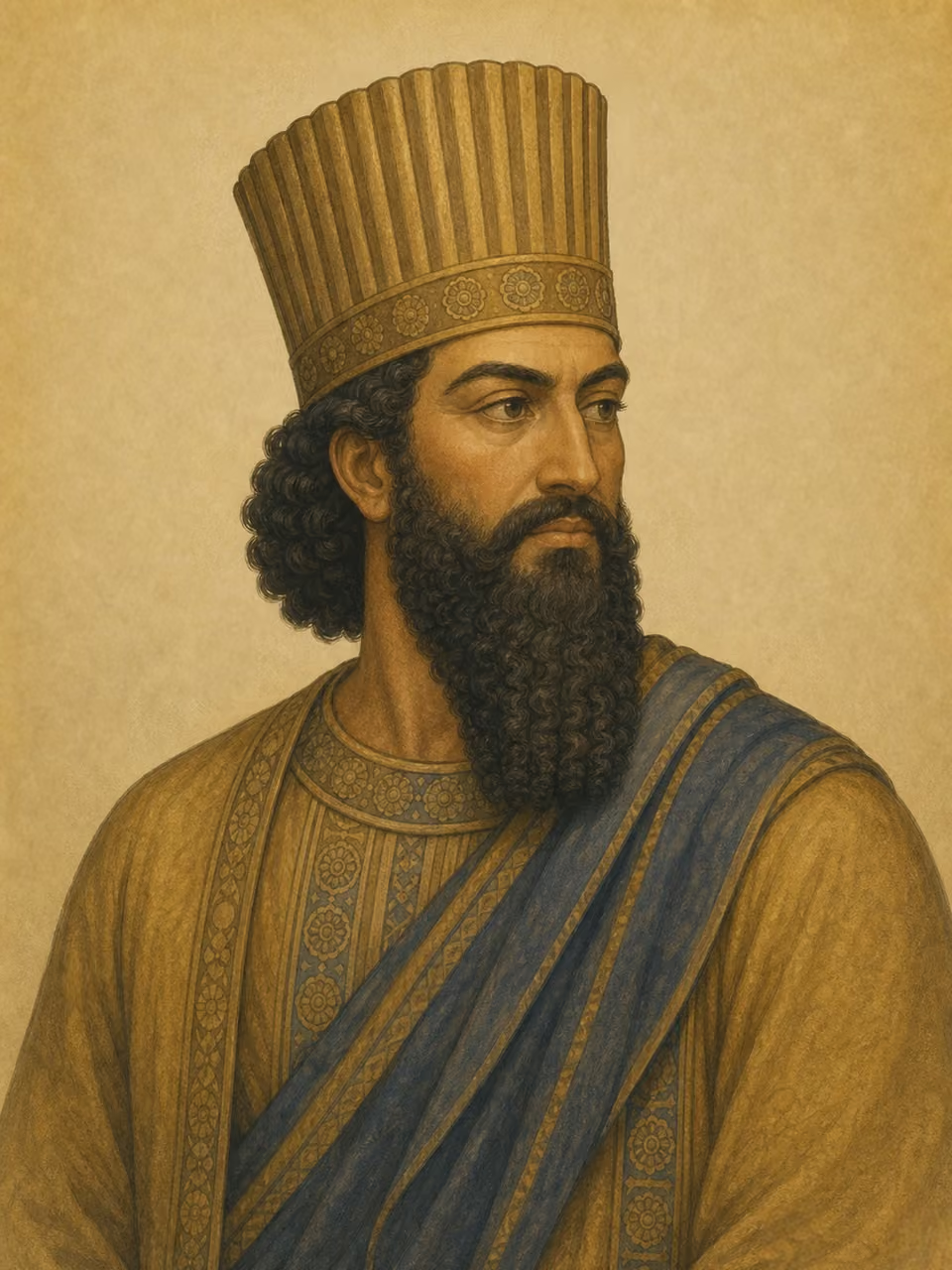
Xerxes I
Achaemenid king
He led the large land and sea invasion of Greece, embodying the expedition's imperial purpose and political prestige.
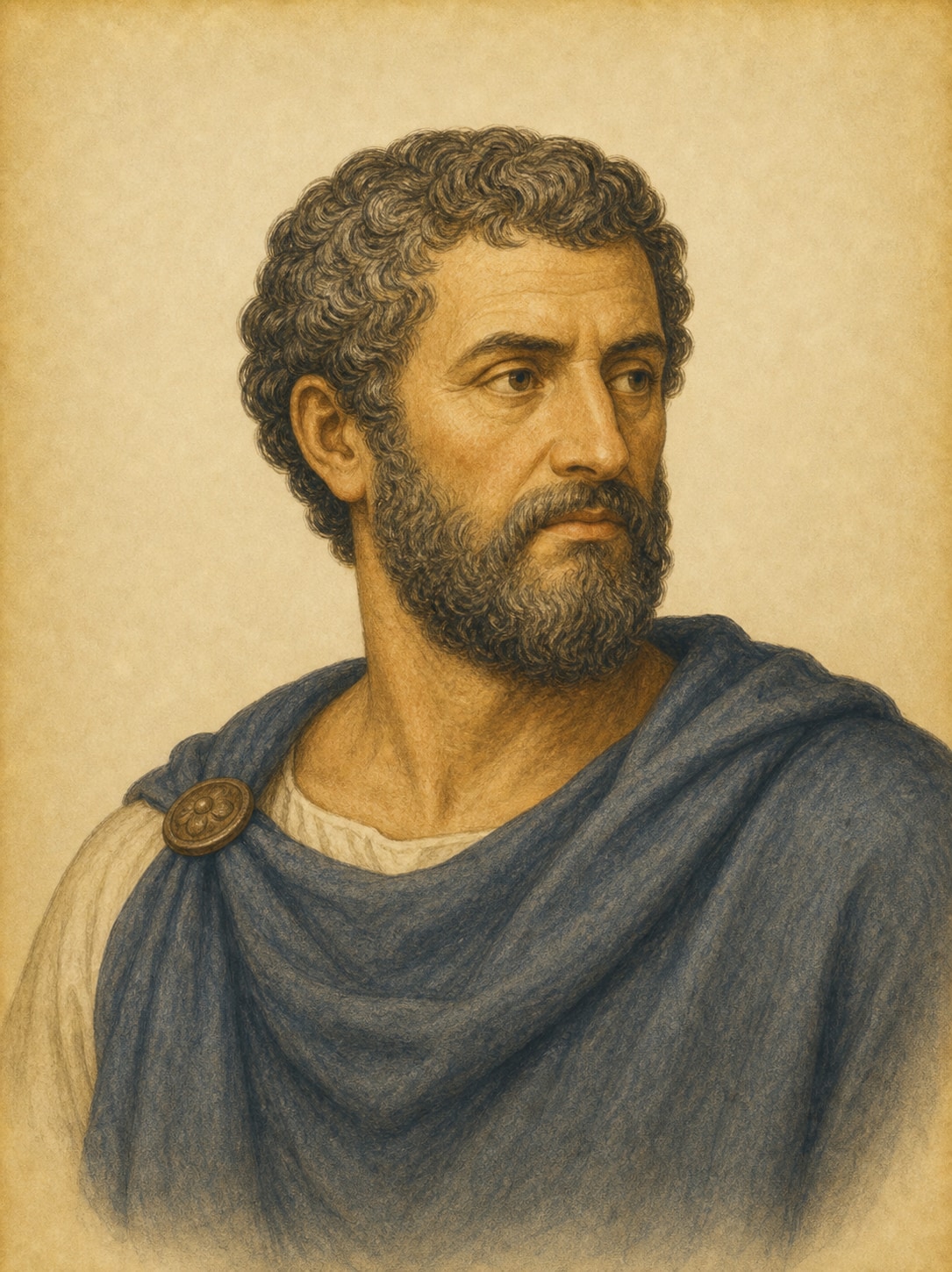
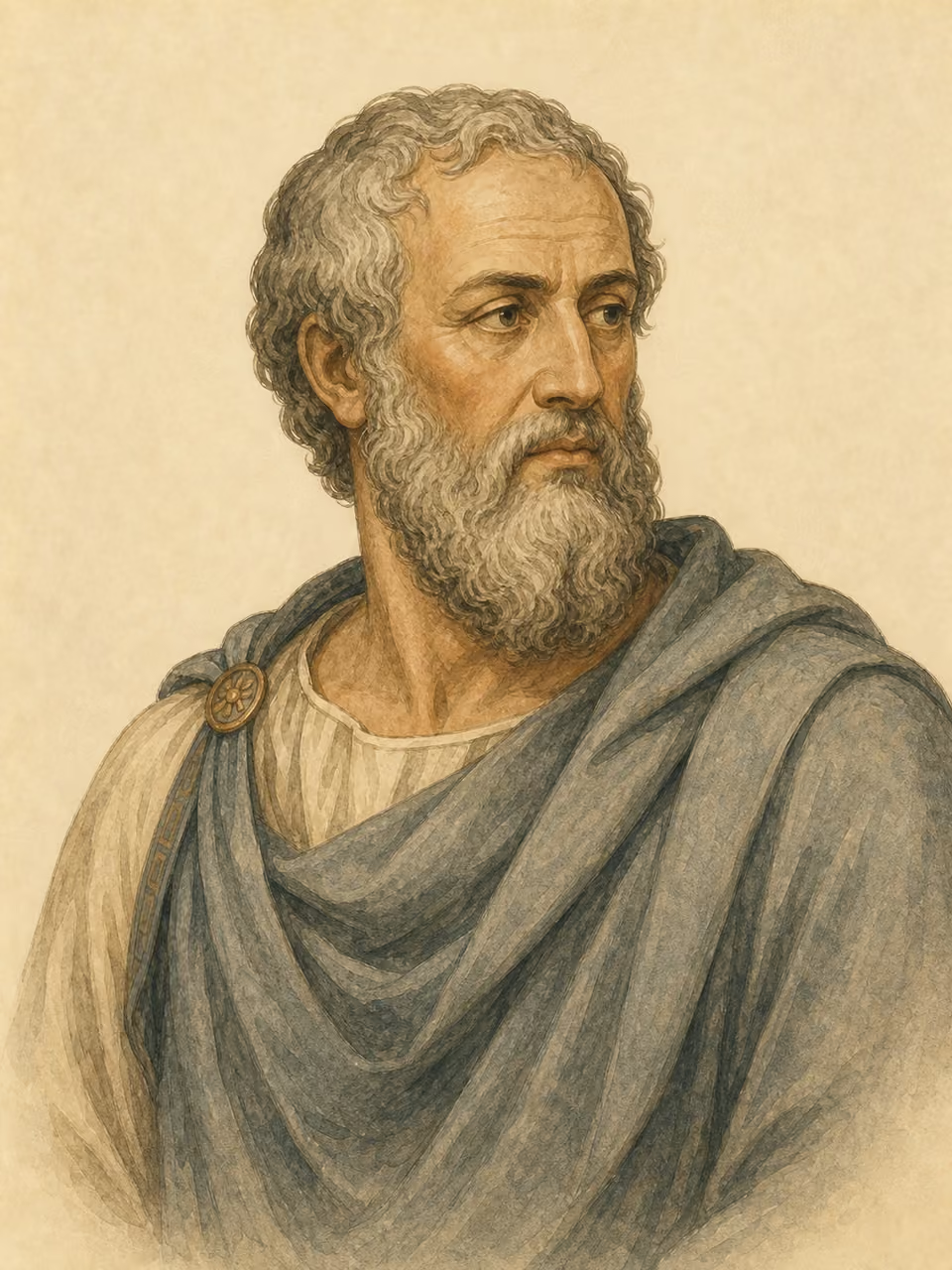
Themistocles
Athenian politician and commander
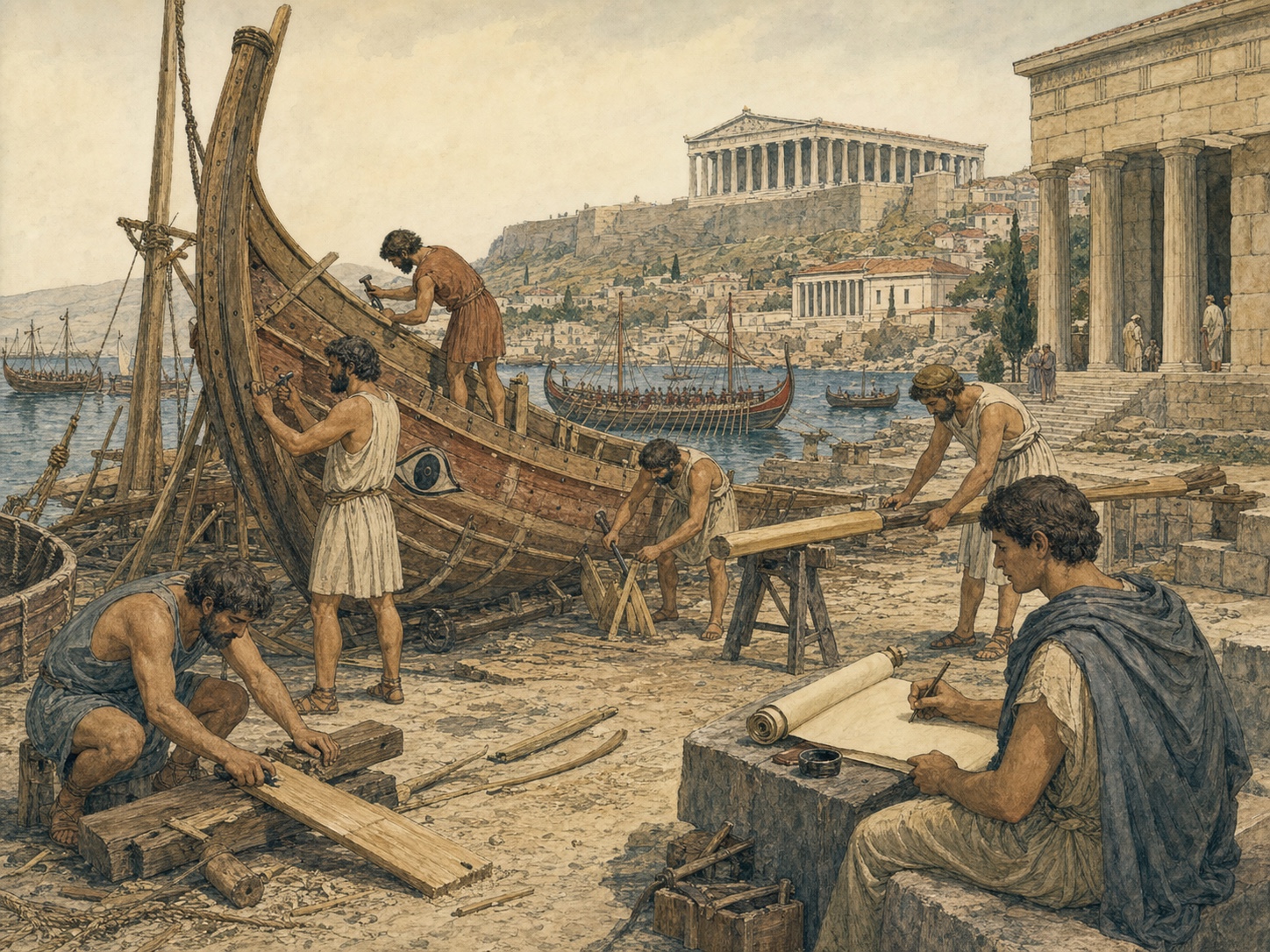
He promoted naval construction and helped create the conditions for a Greek battle in the waters around Salamis.
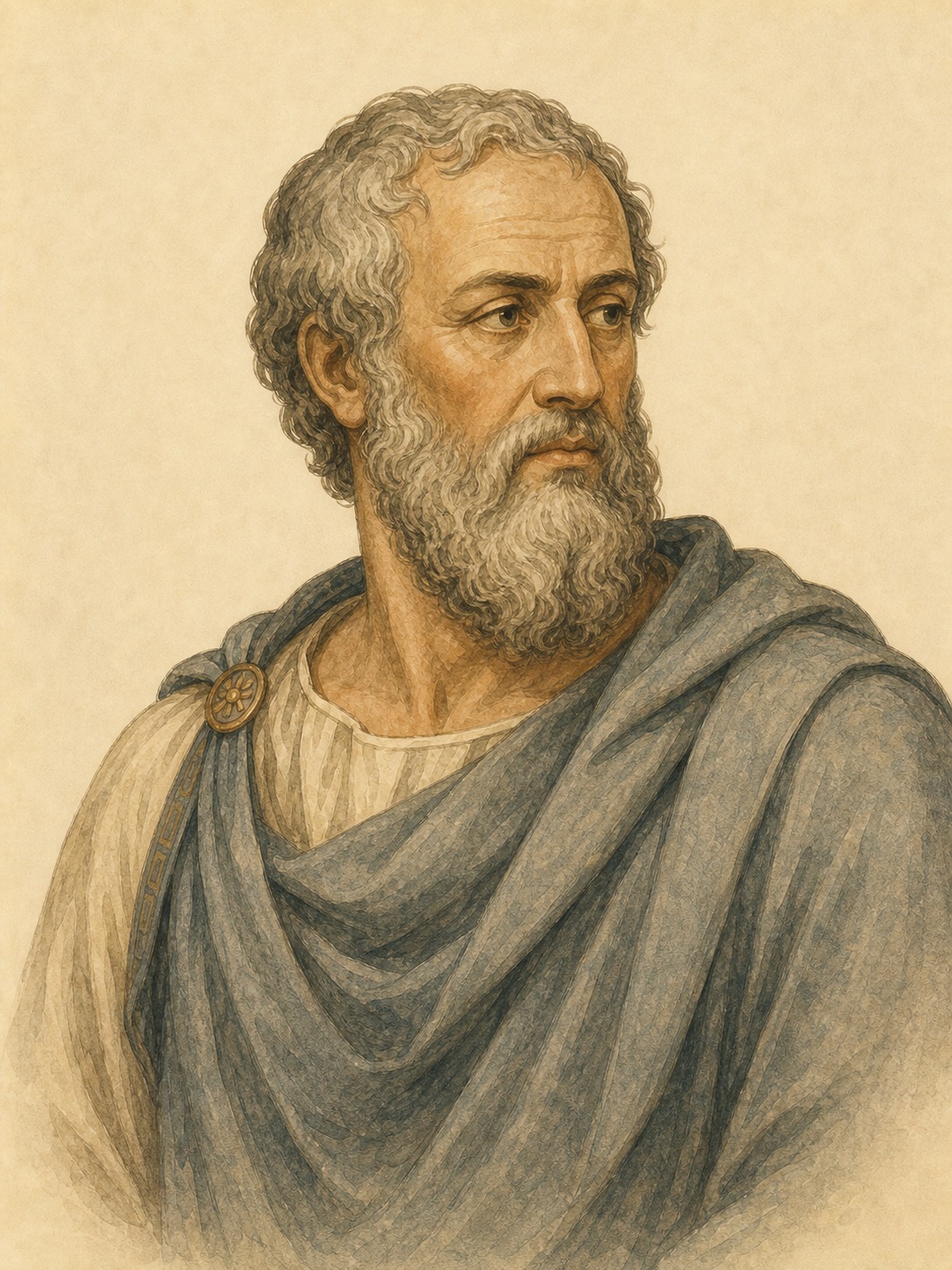
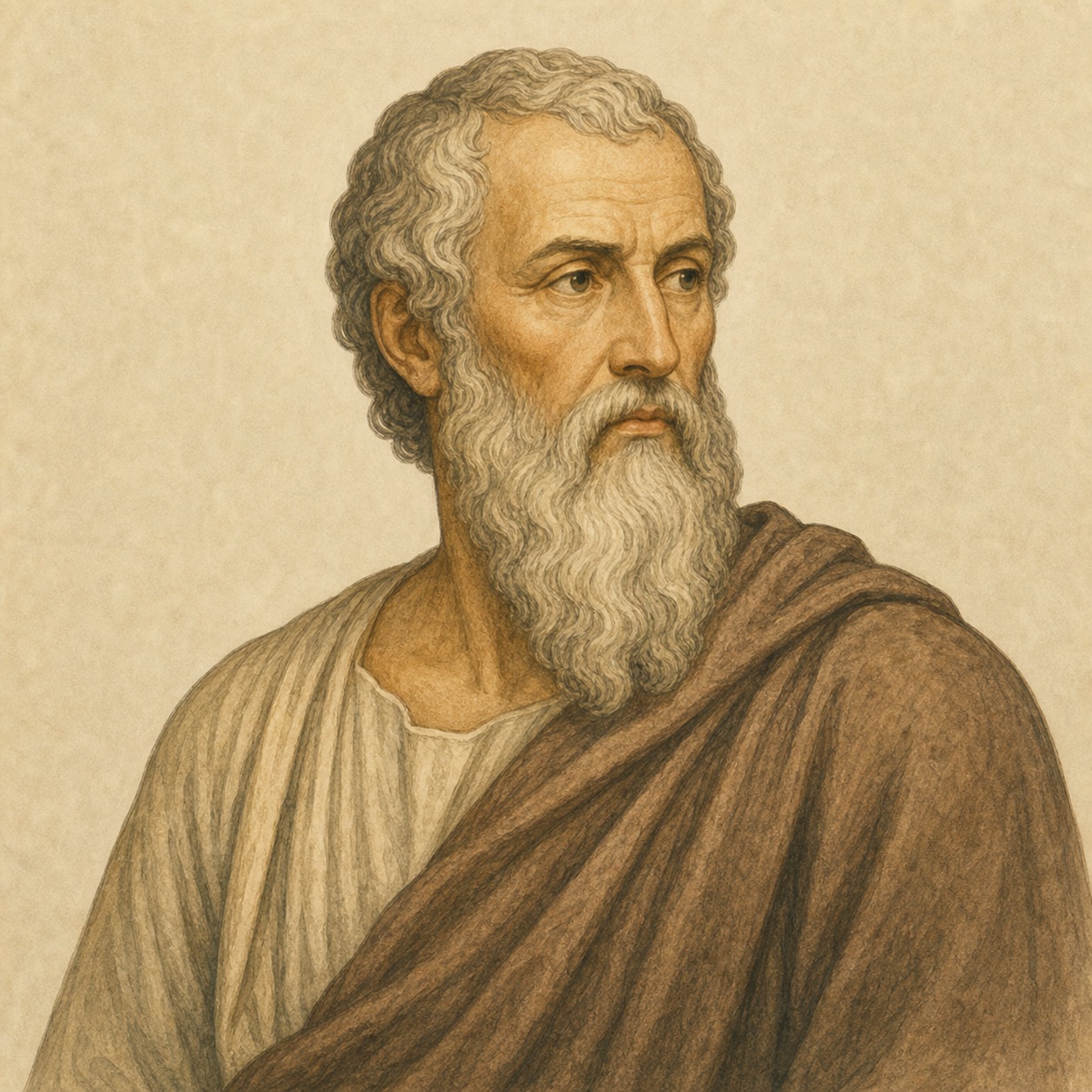
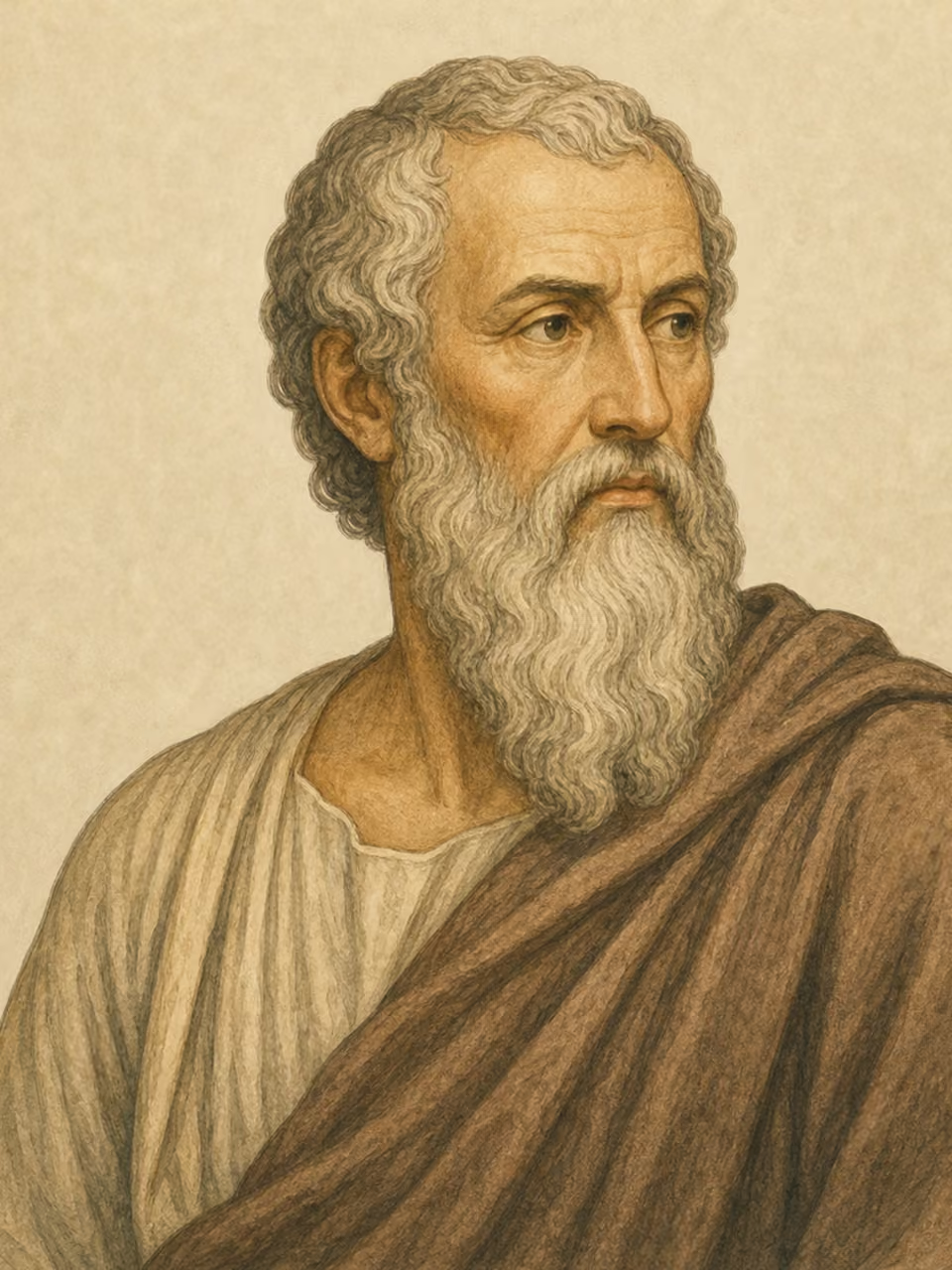
Herodotus
Historian
His detailed account of the Persian Wars preserves traditions while also inviting scrutiny of narrative bias.
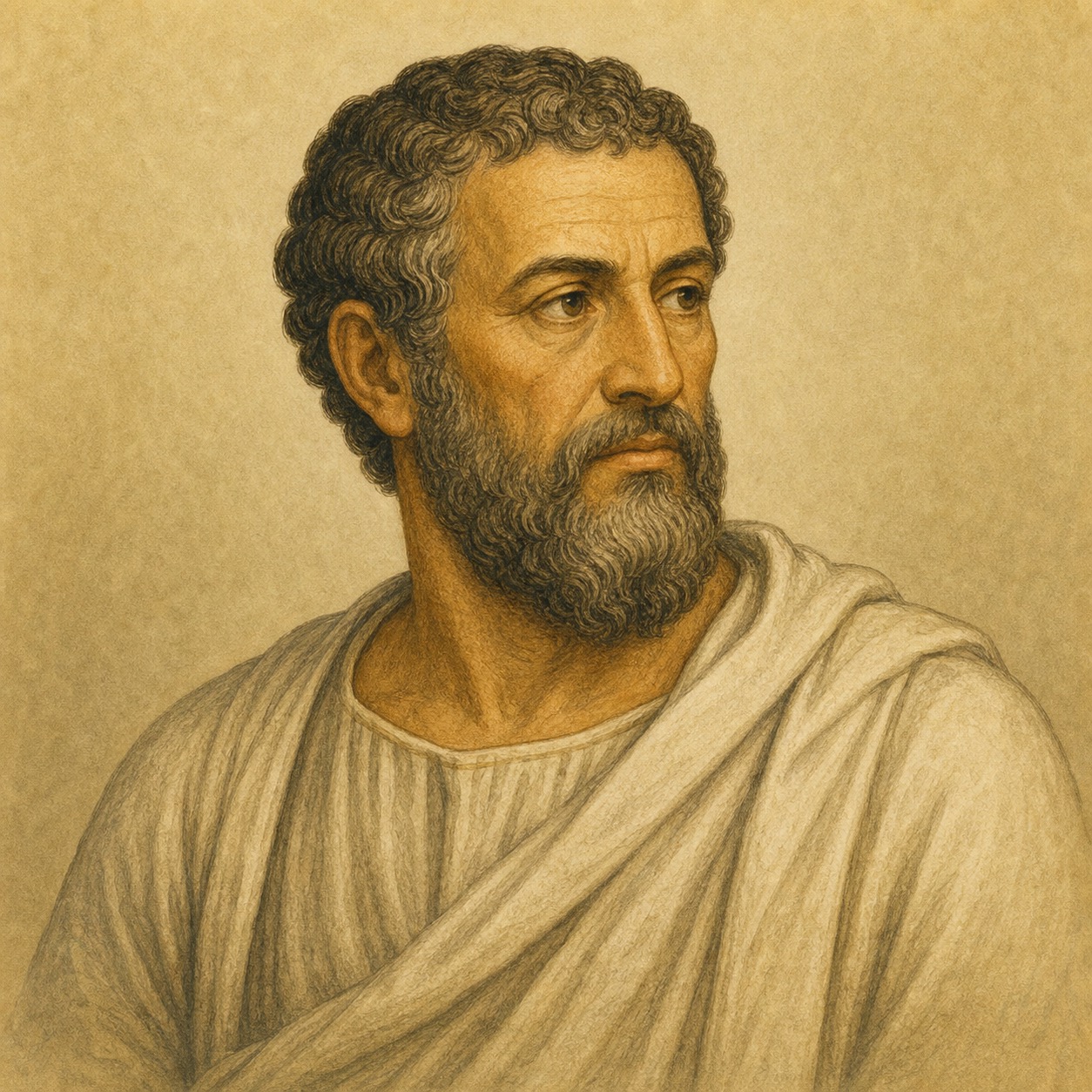
Aeschylus
Tragedian
A contemporary of the wars, he represented the grief of the defeated Persian side in The Persians.
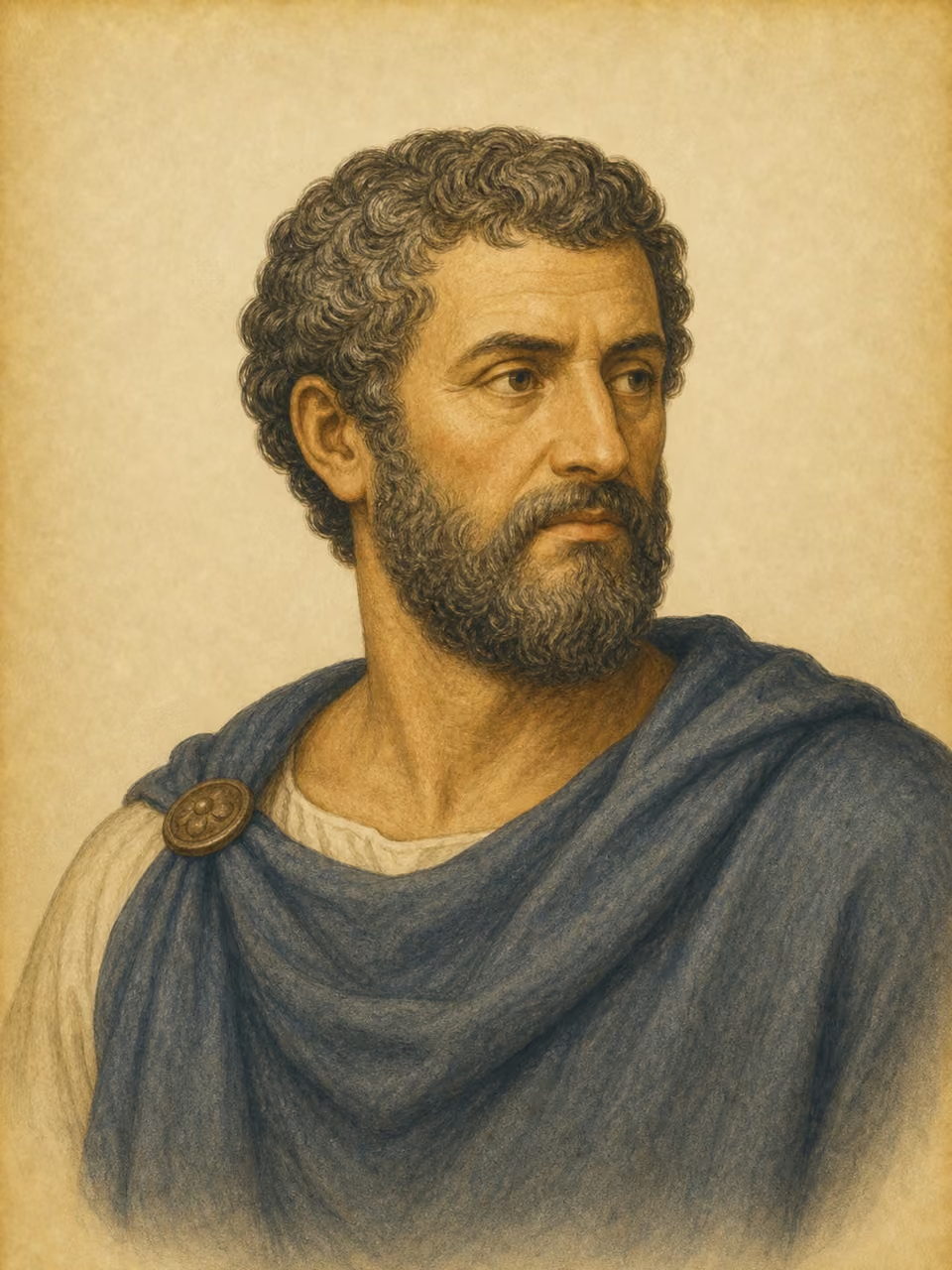
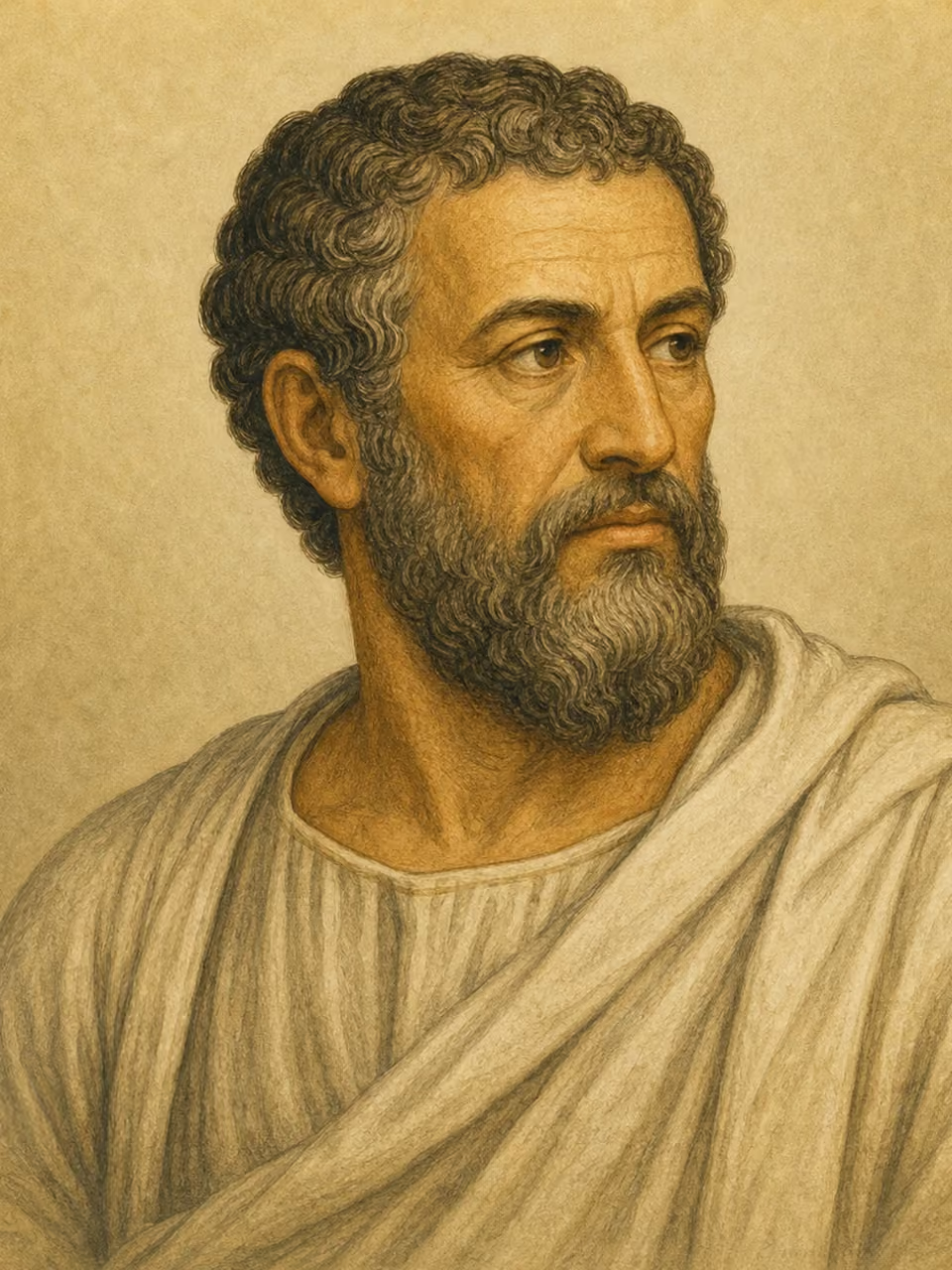
Cleisthenes
Athenian reformer
His earlier reorganization of Athenian civic politics formed part of the political background for collective defense.
Related events
499 BC
Ionian Revolt
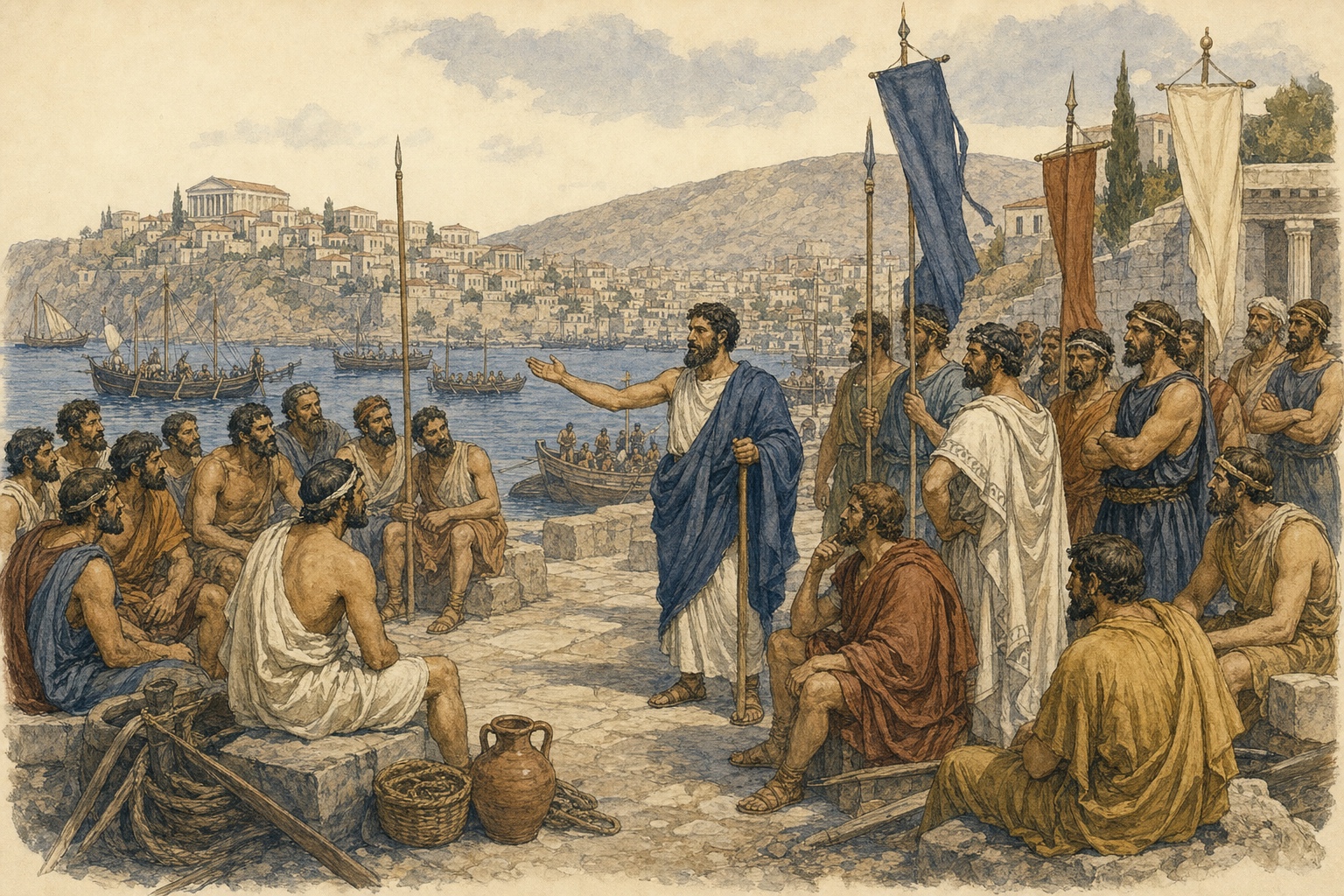
Greek cities in Asia Minor rebelled against Achaemenid rule, and intervention by Athens and Eretria deepened the later conflict.
490 BC
Battle of Marathon
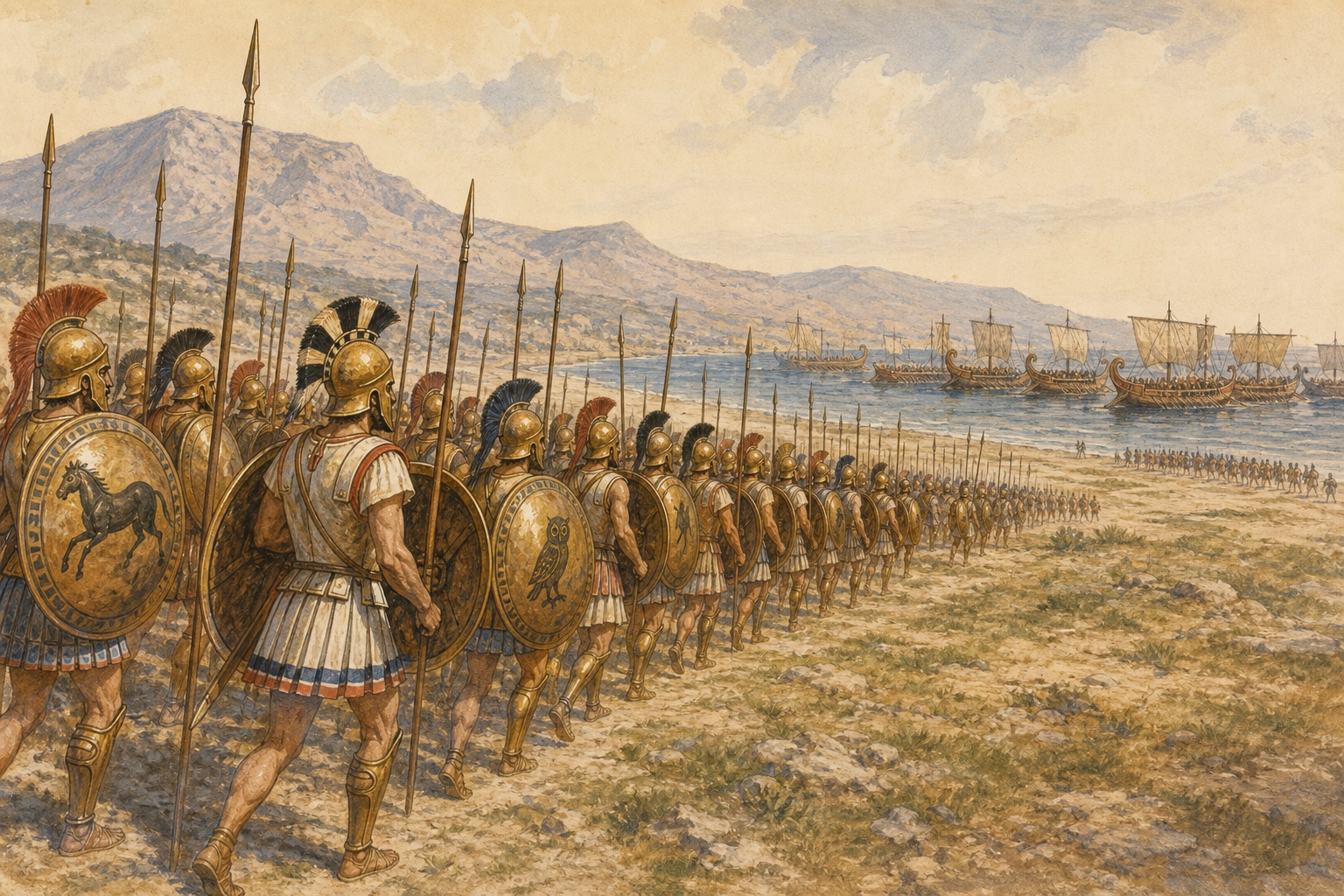
In 490 BCE, Athenian forces repelled Darius I's expedition, helping set the context for a larger invasion.
c. 480 BC–c. 479 BC
Second Persian Invasion
Current event
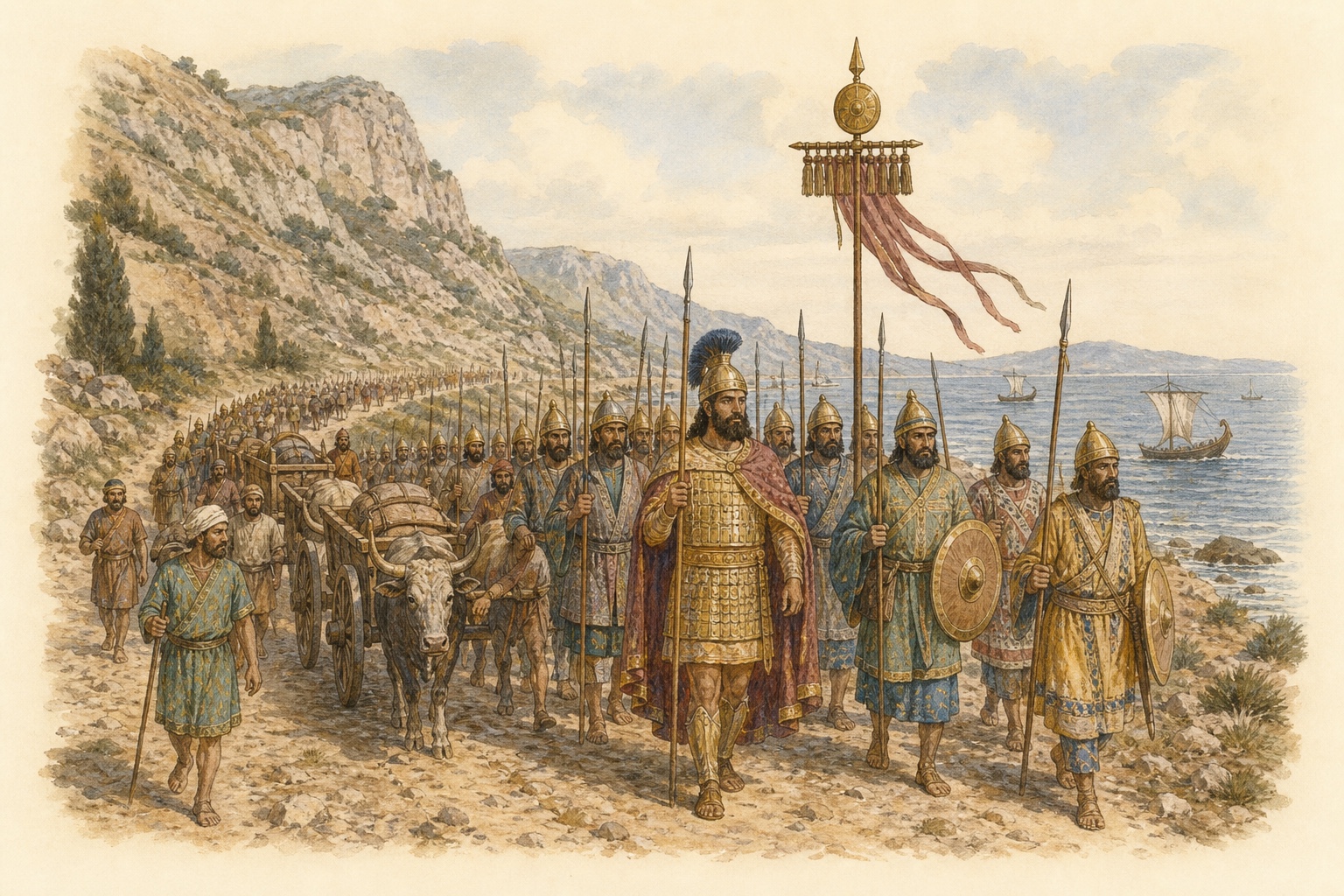
From 480 to 479 BCE, Xerxes I's invasion and the Greek counteroffensive formed the central period of this dossier.
480 BC
Battle of Salamis
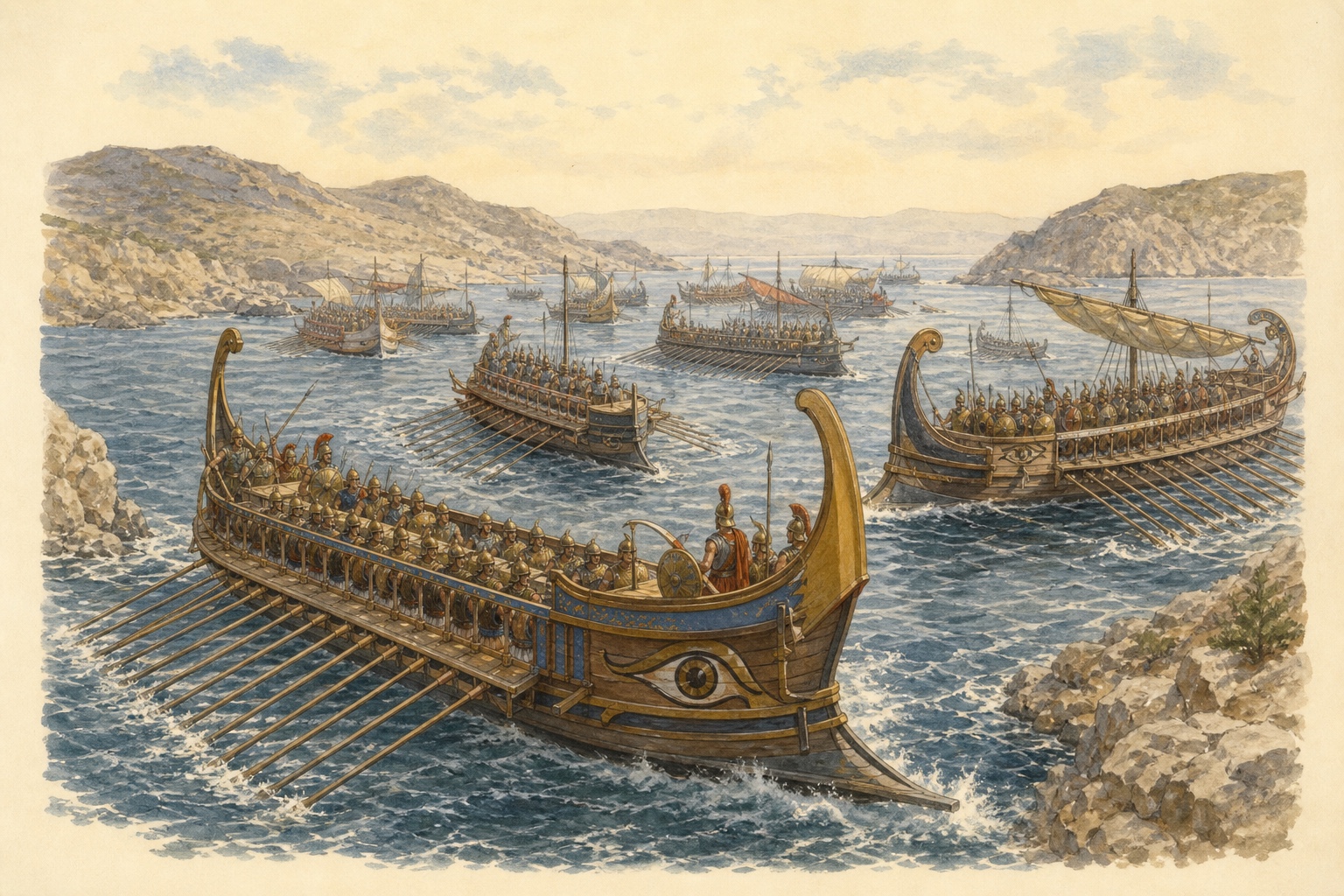
The allied Greek fleet defeated the Persian fleet in confined waters and changed the course of the invasion.
479 BC
Battle of Plataea
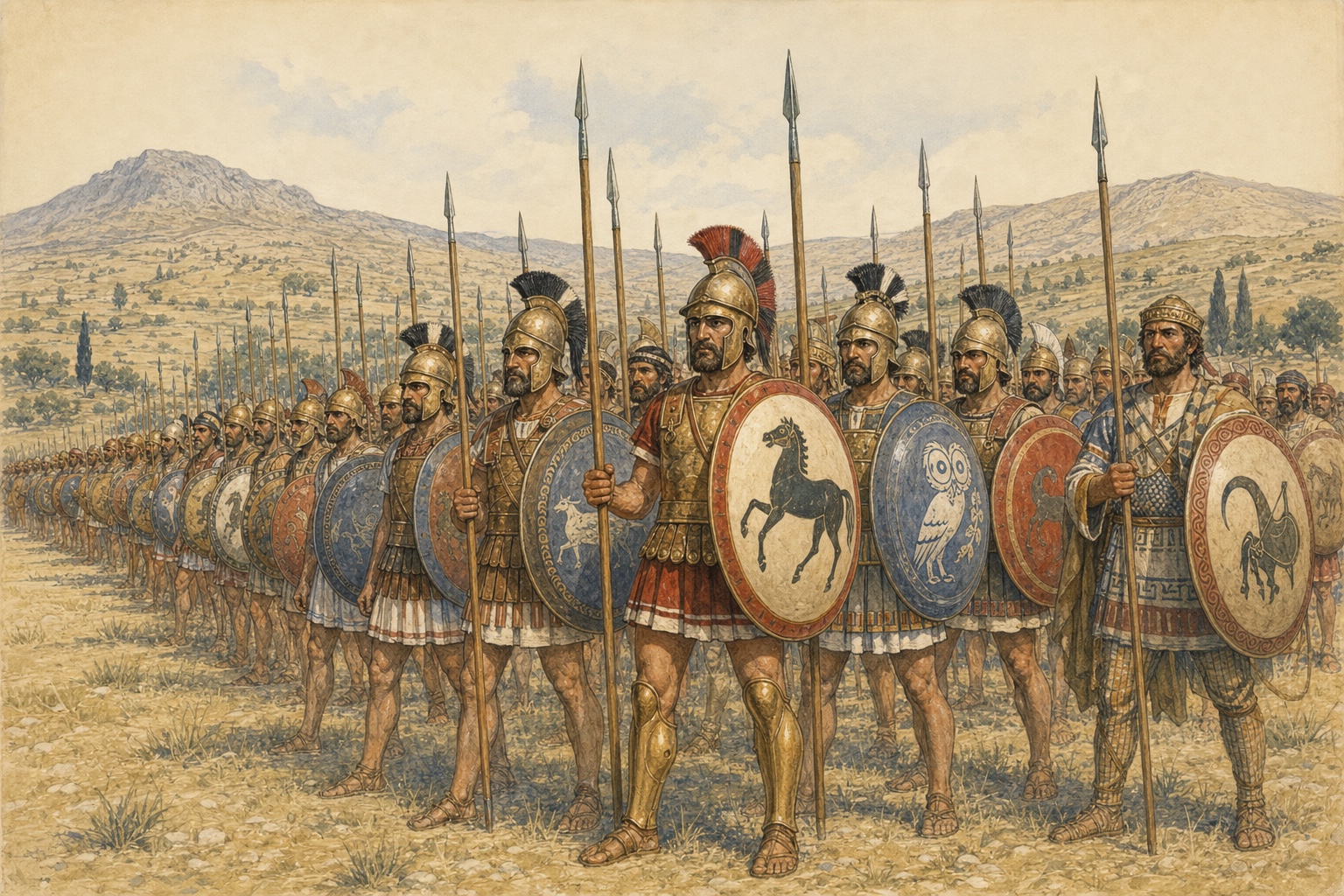
In 479 BCE, Greek forces defeated the remaining Persian field army and ended the invasion of mainland Greece.


Sources
- Greece i. Greco-Persian Political RelationsEncyclopaedia IranicaA research encyclopedia account of relations from the Ionian Revolt through the Persian Wars.
- SalamisEncyclopaedia IranicaA specialist reference entry for Salamis and the maritime conflict between Greece and Persia.
- The Histories, Book 8Perseus Digital LibraryA primary-text resource for Herodotus's ancient narrative around Salamis.