
South African War
1899–1902
From 1899 to 1902, the British Empire fought the Transvaal and Orange Free State over power in southern Africa.

- Period
- 1899–1902
- Kind
- War
- Regions
- Africa
- Keywords
- imperialism · mining capital · guerrilla warfare · scorched earth · Union of South Africa
Follow the story · Four stages
Background
Imperial competition after the gold discoveries, the Uitlander franchise dispute, and the failed Jameson Raid deepened conflict between Britain and the Boer republics.
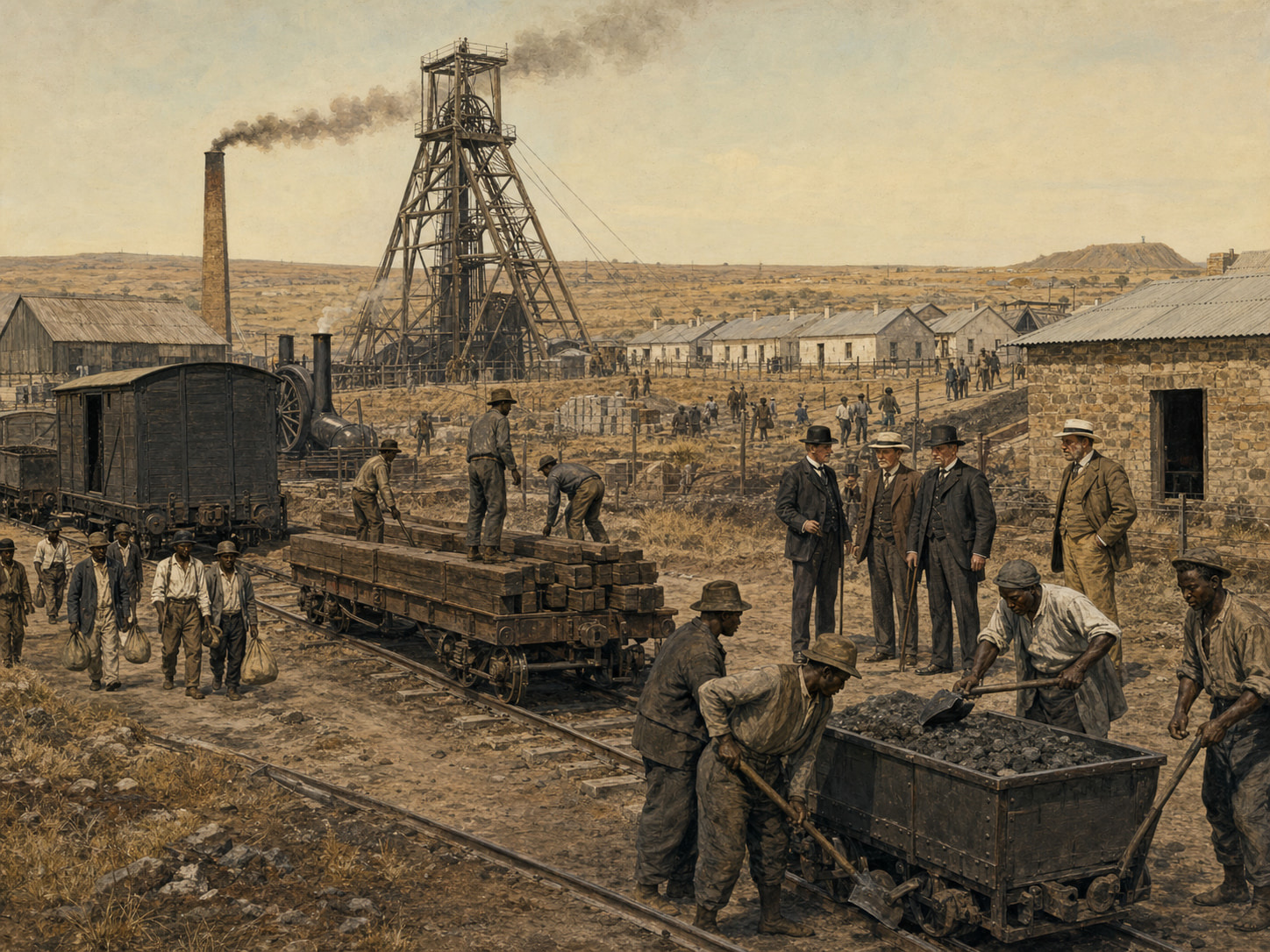
- Diamond mining after 1867 and the 1886 Witwatersrand gold discovery drew railways, capital, and migrants inland, transforming the regional balance of power.
- Britain pursued an imperial confederation of the Cape Colony and Natal with the Boer republics, while the Transvaal sought to preserve its independence.
- The mining economy depended on the mobility and low-paid labor of Black workers, whose rights and experiences were marginalized in political negotiations before and after the war.
Course
After Boer offensives and sieges, British forces occupied the capitals. The war shifted to guerrilla fighting met by scorched earth, blockhouses, and camps.
- The Transvaal and Orange Free State entered the war in October 1899; after early sieges and British defeats, reinforced British forces occupied the republics' principal towns in 1900.
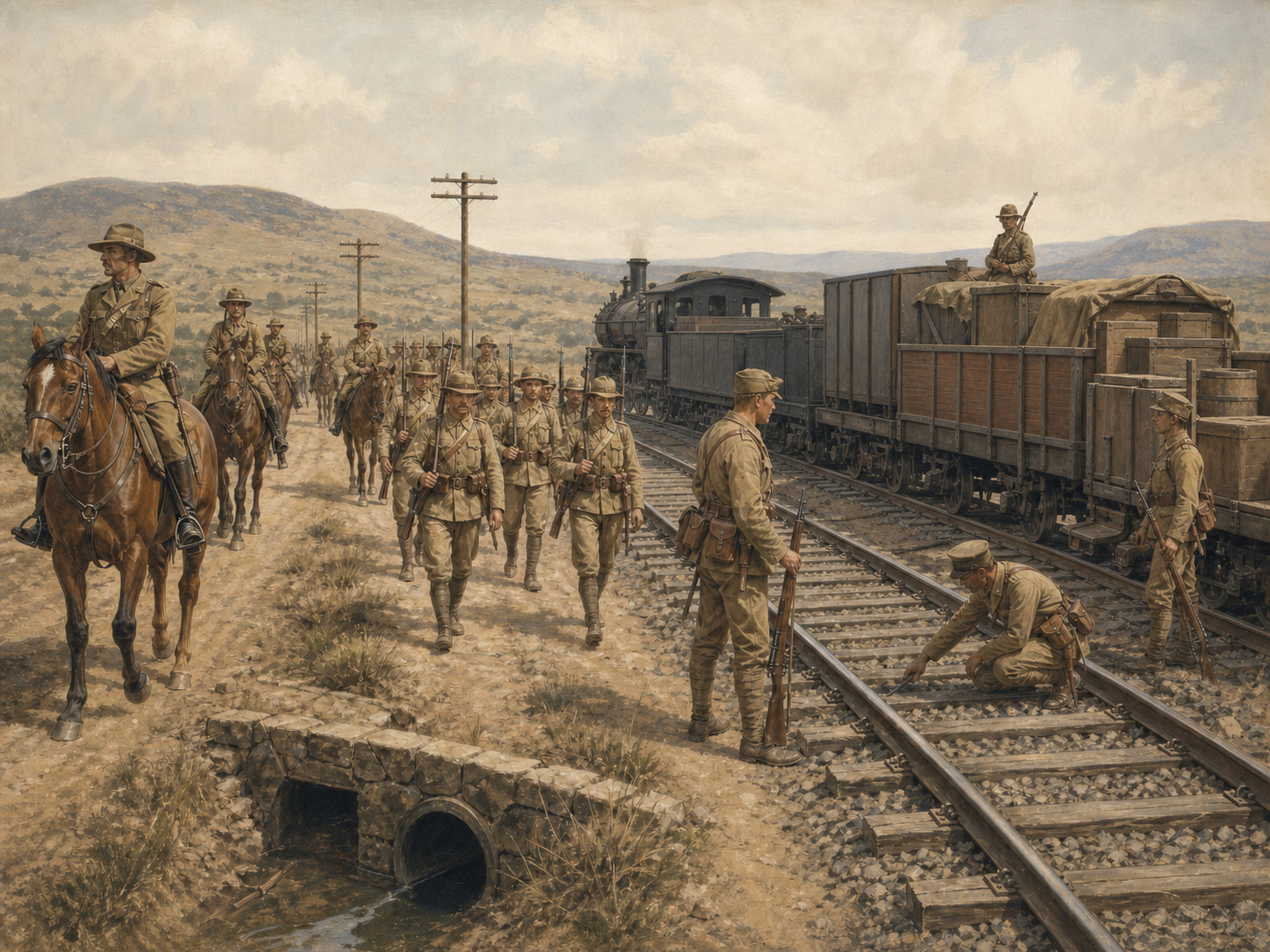
- When Boer commandos continued guerrilla warfare, British forces tried to sever their support through railway blockhouses and barbed wire, farm burning, and the forced confinement of civilians.
- Black Africans and Indians also served as scouts, sentries, transport workers, builders, and stretcher-bearers, while facing unequal treatment and danger within the same war.
Outcome
The 1902 Peace of Vereeniging brought the republics under British sovereignty; reconstruction and limited self-government preceded their incorporation into the 1910 Union.
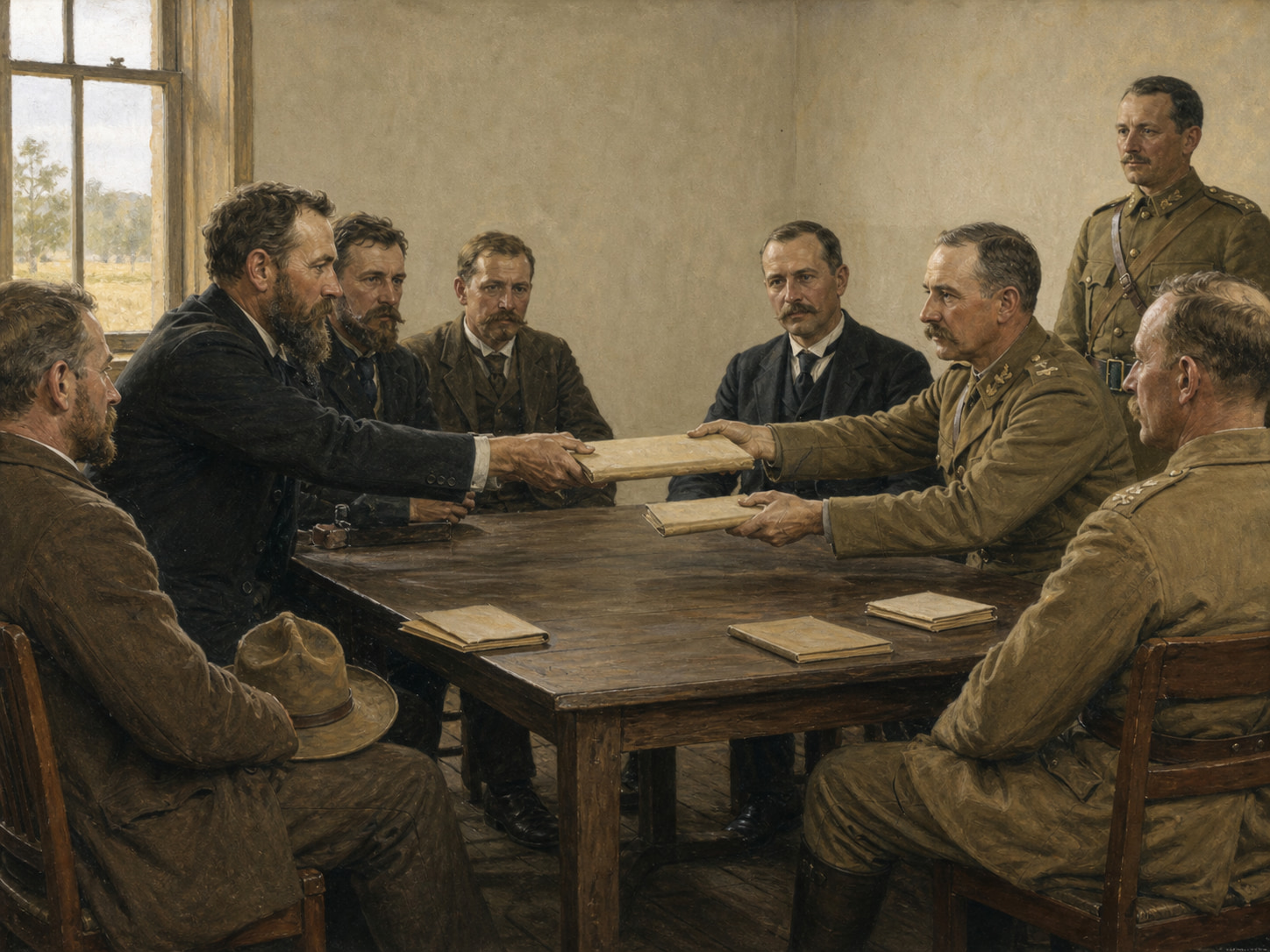
- Under the Treaty of Vereeniging on 31 May 1902, the Boer republics accepted British sovereignty and the Transvaal and Orange Free State were incorporated into the empire.
- The war brought extensive death and loss not only to soldiers but also to farm families and to Boer and Black African women, children, and families confined in separate camp systems.
- The settlement prioritized self-government among white settlers and deferred Black political rights, so it was not a peace that established political inclusion.
Historical significance
The war devastated soldiers and civilians and advanced imperial unification, while the postwar order and Union excluded the non-white majority from political power.
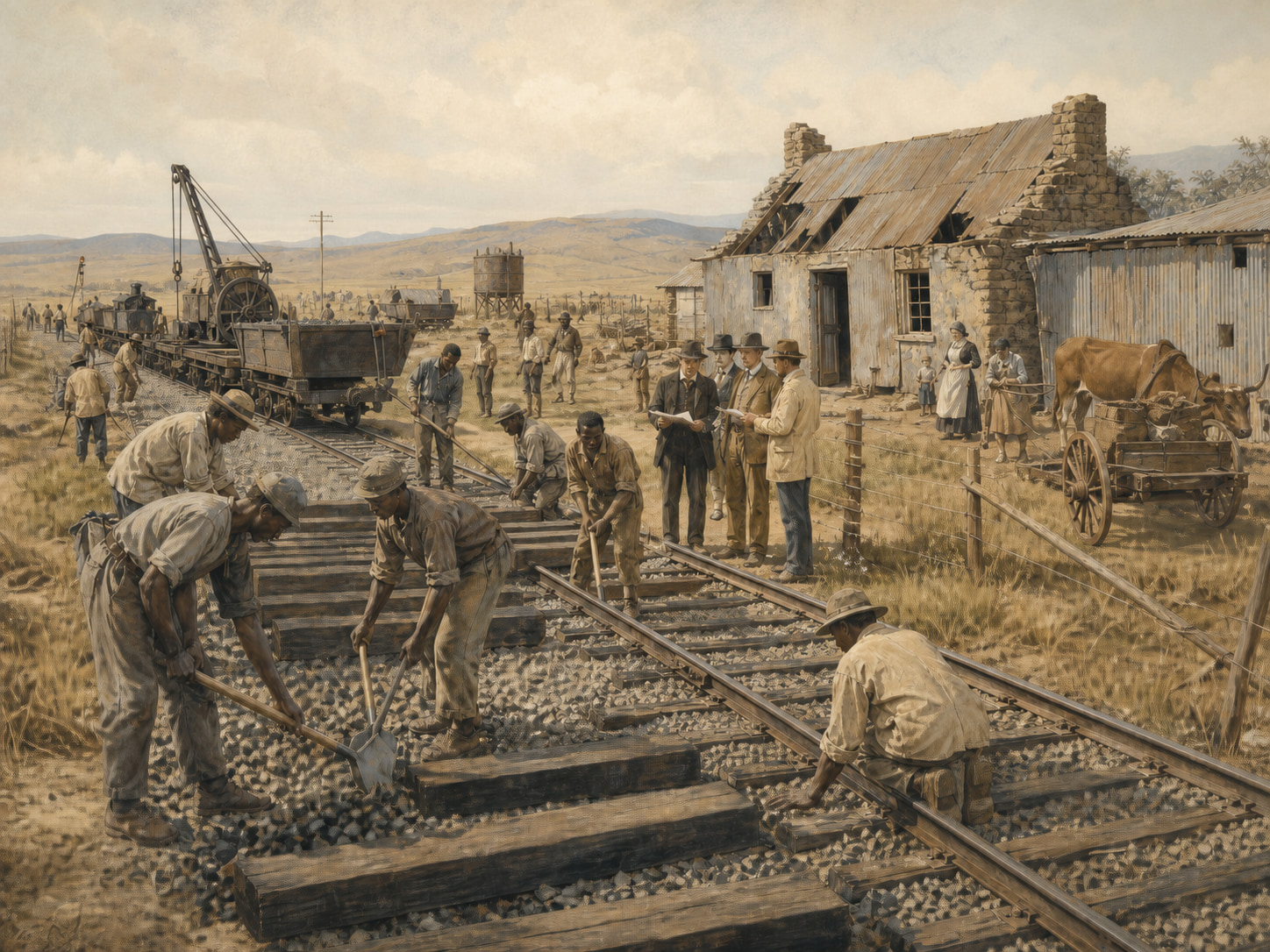
- Postwar reconstruction restored railways and mines while advancing self-government in the former republics and cooperation between English-speaking and Afrikaner white political forces.
- The 1910 Union of South Africa joined four colonies but largely excluded Black, Coloured, and Indian people from constitution-making and national political power, entrenching white rule.
- The war's memory requires attention not only to military outcomes but also to imperialism, mining capital, scorched-earth warfare, camps, and Black participation and exclusion.


Related figures
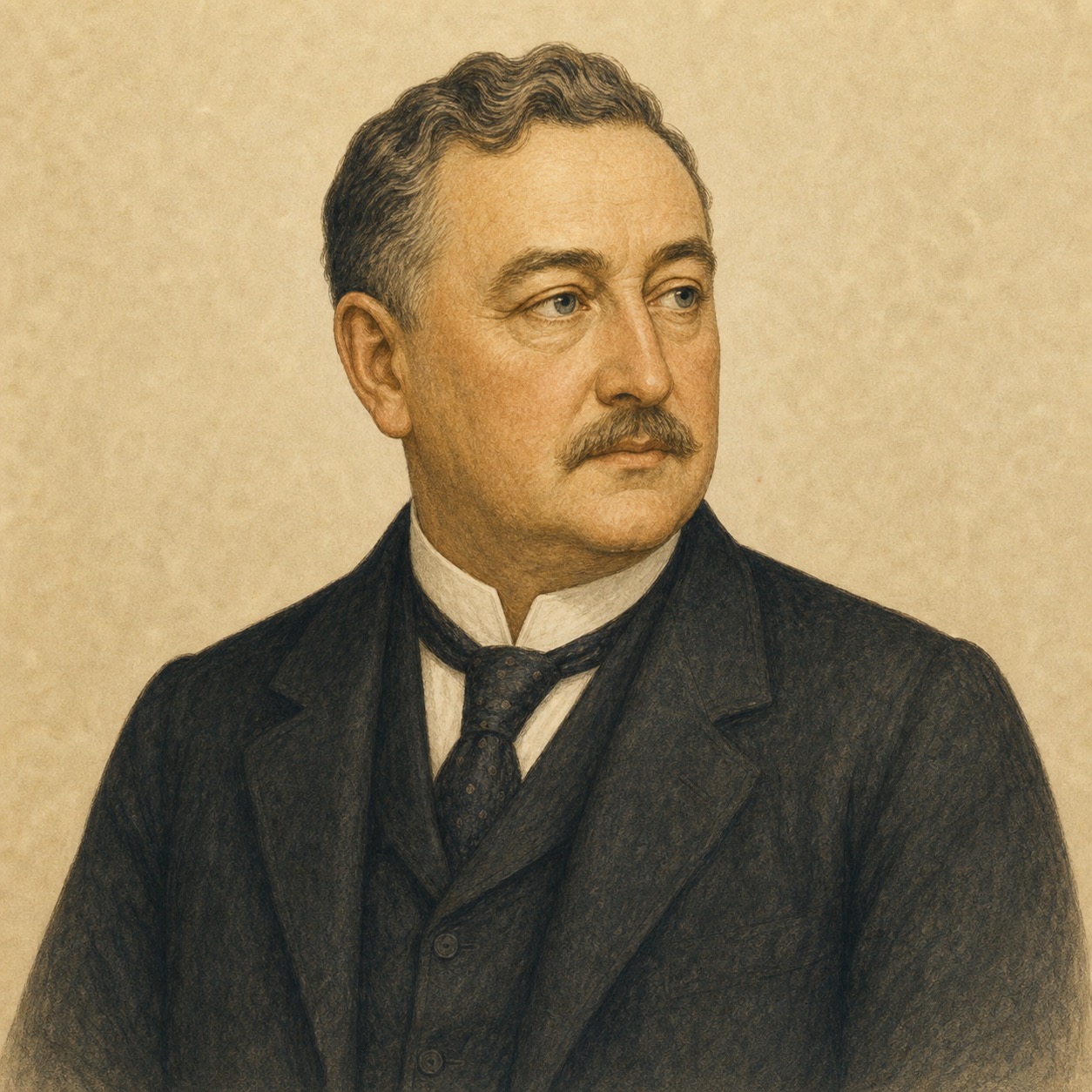
Cecil Rhodes
advocate of imperial expansion
As a mining magnate and prime minister of the Cape Colony, Rhodes promoted the expansion of British power in southern Africa. His involvement in the Jameson Raid deepened tensions with the Boer republics, and he was in besieged Kimberley during the war. He belongs here as a supporter who shaped its political economy, not as a battlefield commander.
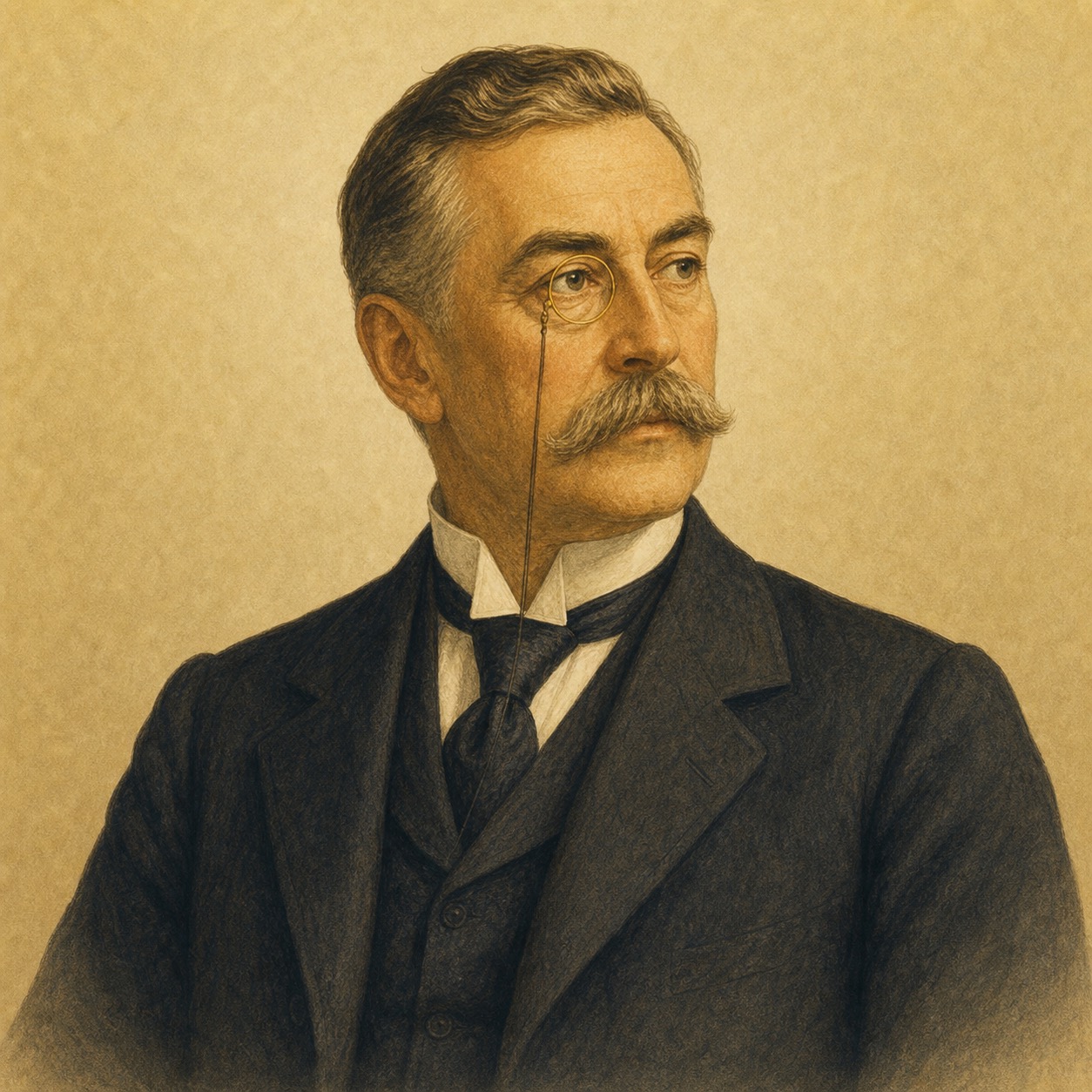
Joseph Chamberlain
political leader of colonial policy
As British Colonial Secretary, Chamberlain directed imperial policy toward the Transvaal and appointed Sir Alfred Milner as high commissioner. He rejected Kruger's franchise proposals in 1899 and supported the opening and prosecution of the war as a political leader, not a battlefield commander.
Related events
1867–1898
Mineral revolution and imperial competition
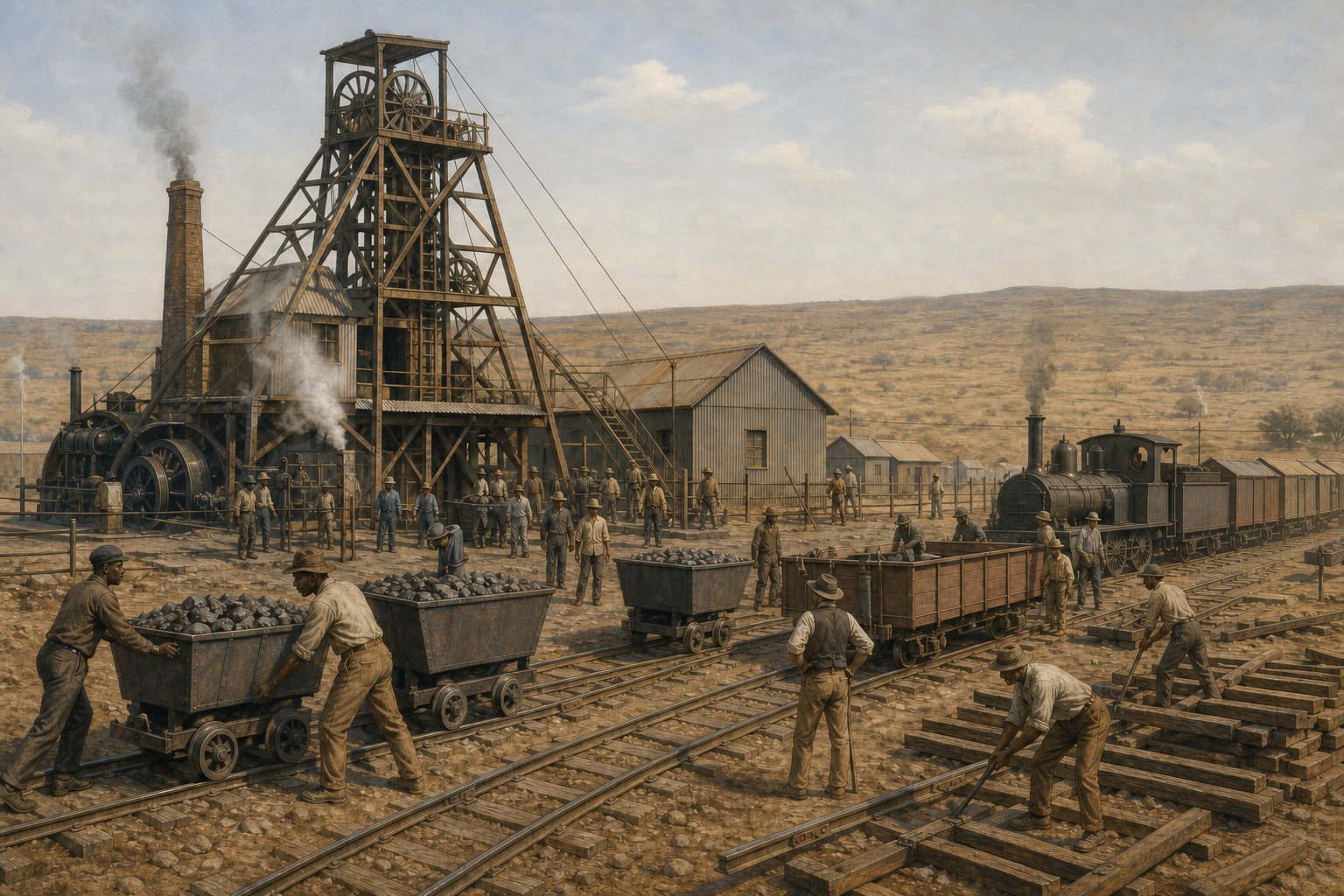
Diamond mining after 1867 and the 1886 gold discovery concentrated mining capital, railways, and migrant labor inland. Competition for resources and transport routes sharpened the conflict between Britain's confederation project and the independence of the Boer republics.
1895–1899
Jameson Raid and franchise crisis
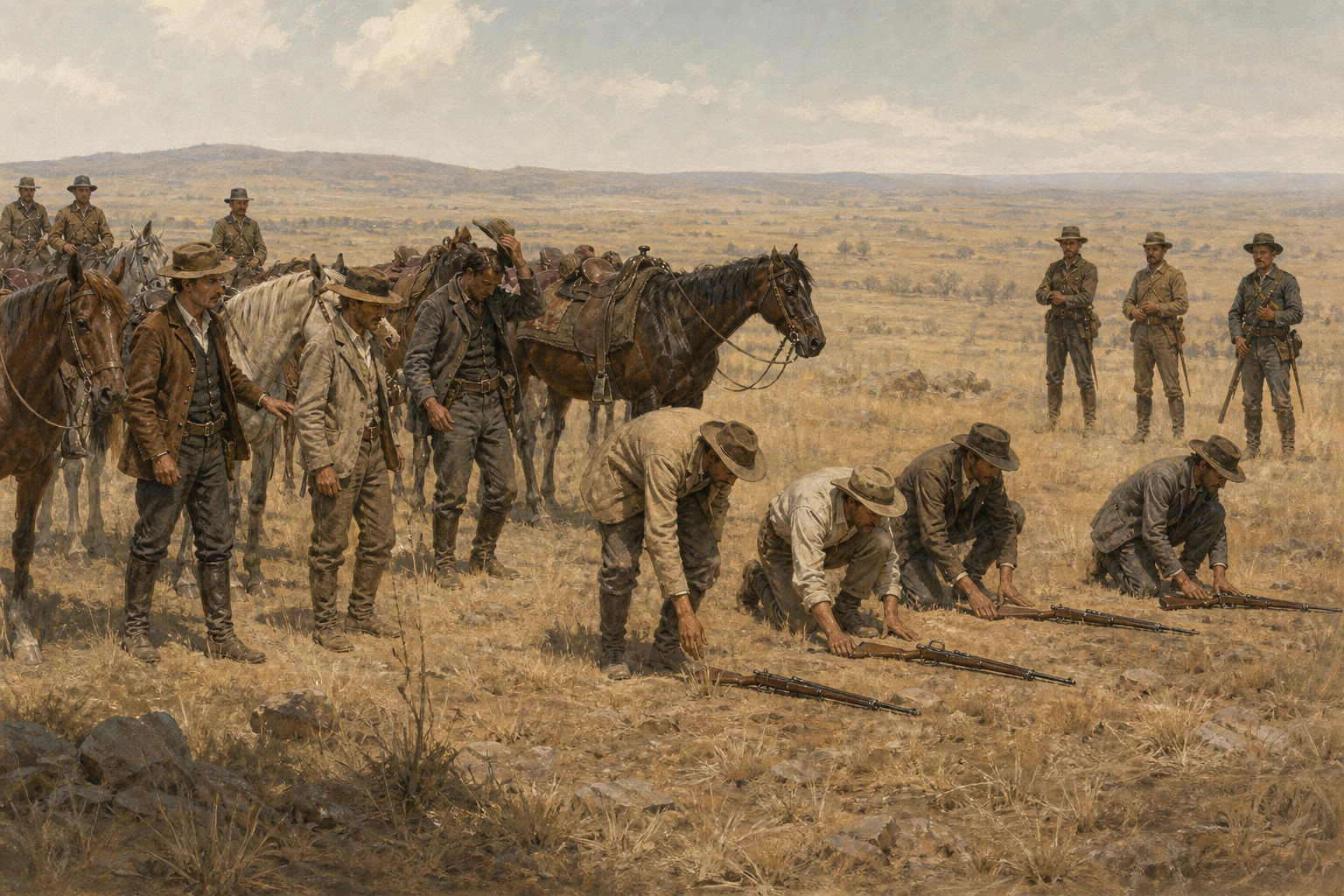
The incursion of late 1895 and early 1896 failed and worsened relations between Britain and the Transvaal. Negotiations over the franchise of foreign residents in the goldfields also collapsed, leading toward the ultimatum and war in 1899.
1899–1902
South African War
Current event
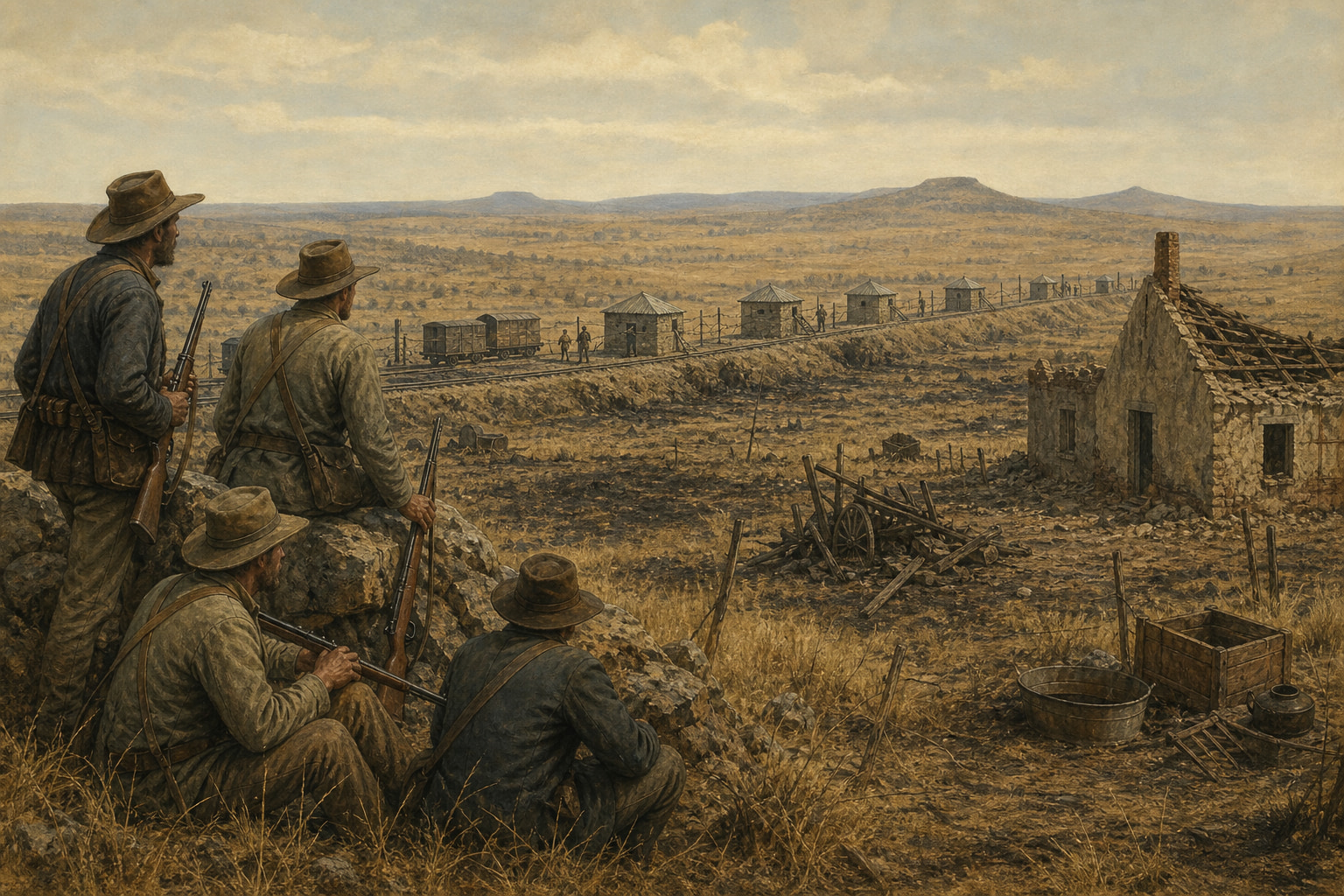
From 1899 to 1902, the conflict moved through an initial Boer offensive, a large British counteroffensive, and prolonged guerrilla warfare. British forces used blockhouse lines, scorched-earth tactics, and concentration camps, with grave costs to combatants and civilians.
1902–1909
British reconstruction of the former republics
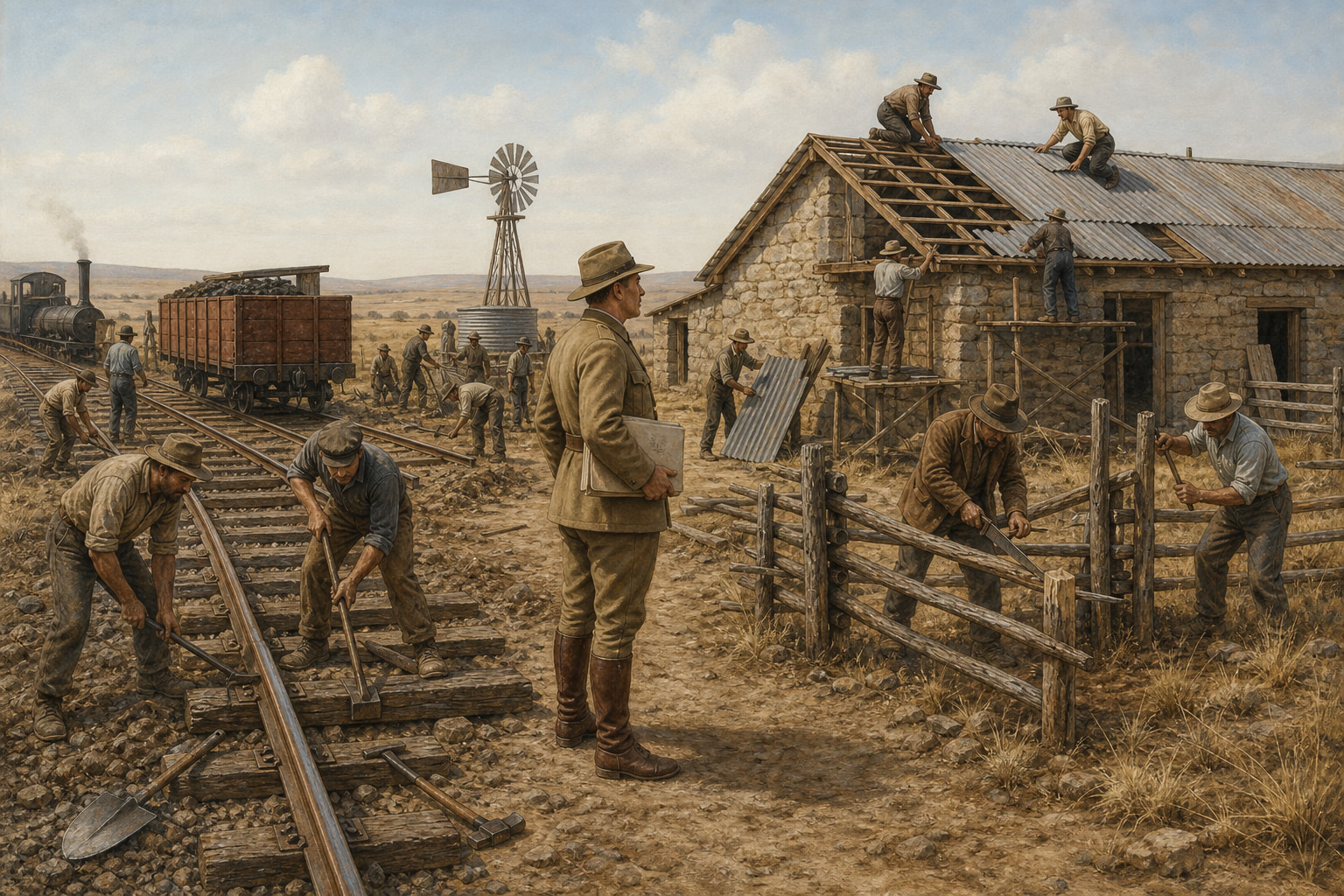
After the peace, British authorities rebuilt railways, farms, and mines and gradually returned self-government to the Transvaal and Orange River Colony. Reconstruction preserved racialized labor systems and the political marginalization of Black residents.
1910
Union of South Africa
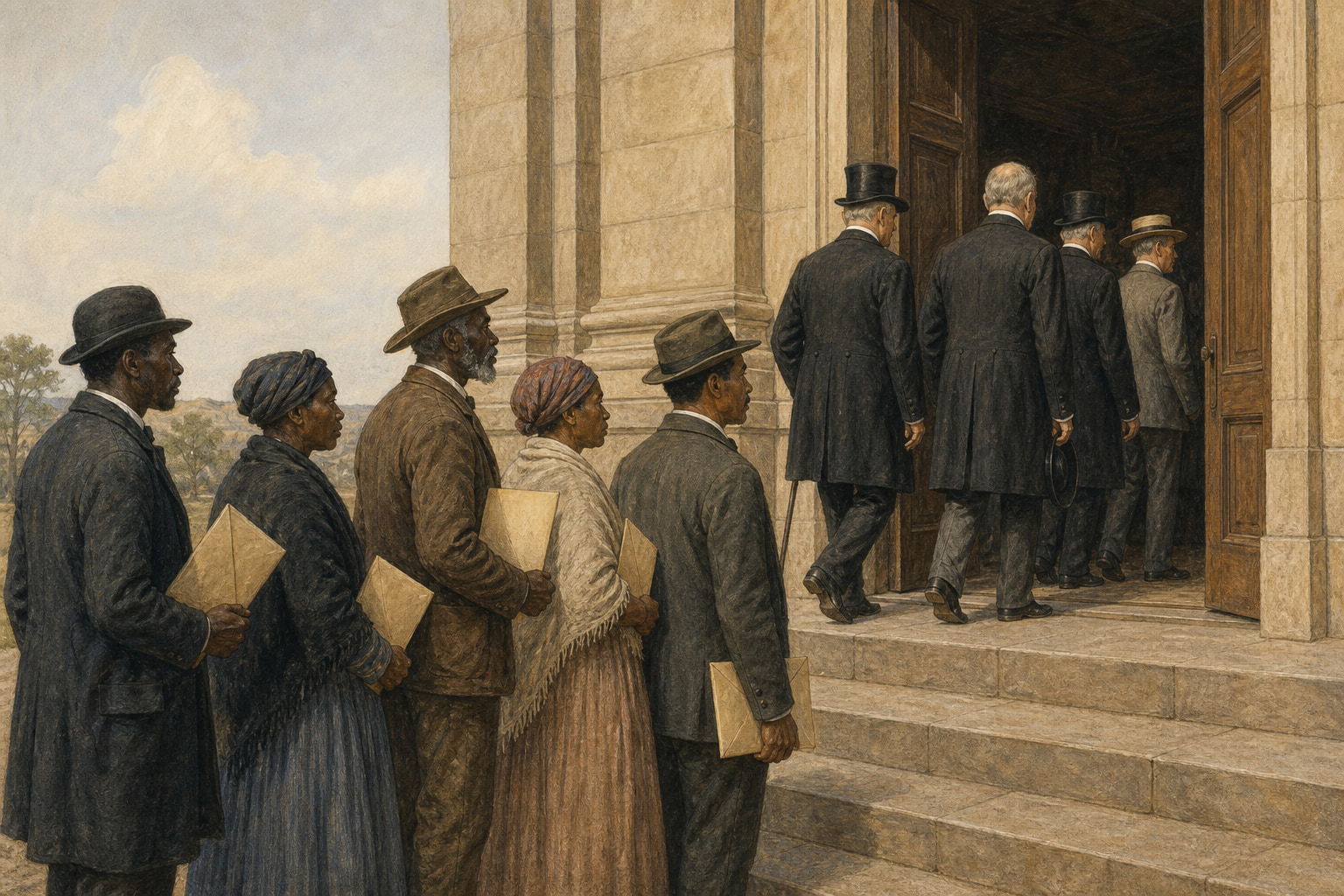
In 1910, the Cape, Natal, Transvaal, and Orange Free State colonies became a union within the British Empire. It advanced political integration between English-speaking and Afrikaner whites while excluding the Black majority and other communities from national power.


Sources
- Boer WarNational Army MuseumChecks the war's origins, three military phases, Black and Indian participation, scorched-earth policy, camps, and peace.
- The South African WarThe National ArchivesChecks British operations, the response to guerrilla warfare, scorched-earth policy, camps, and public opinion through historical sources.
- Constructing the Union of South Africa; negotiations & contestations, 1902-10South African History OnlineChecks postwar reconstruction, union-making, political exclusion of Black, Coloured, and Indian communities, and the entrenchment of white rule.