
Treaty of Verdun
843
In 843, three Carolingian kings settled the succession struggle after Louis the Pious by dividing the Frankish Empire among their realms.

- Period
- 843
- Kind
- Movement
- Regions
- Southeast Asia
- Keywords
- succession · civil war · partition · kingdoms · political geography
Follow the story · Four stages
Background
The empire built by Charlemagne faced tension between Christian unity and dynastic partition, while civil wars and political rearrangement continued during the 830s.
- Succession became contested after Louis the Pious died
- Civil war exhausted the realm
- Nobles and clergy helped mediate the partition

Course
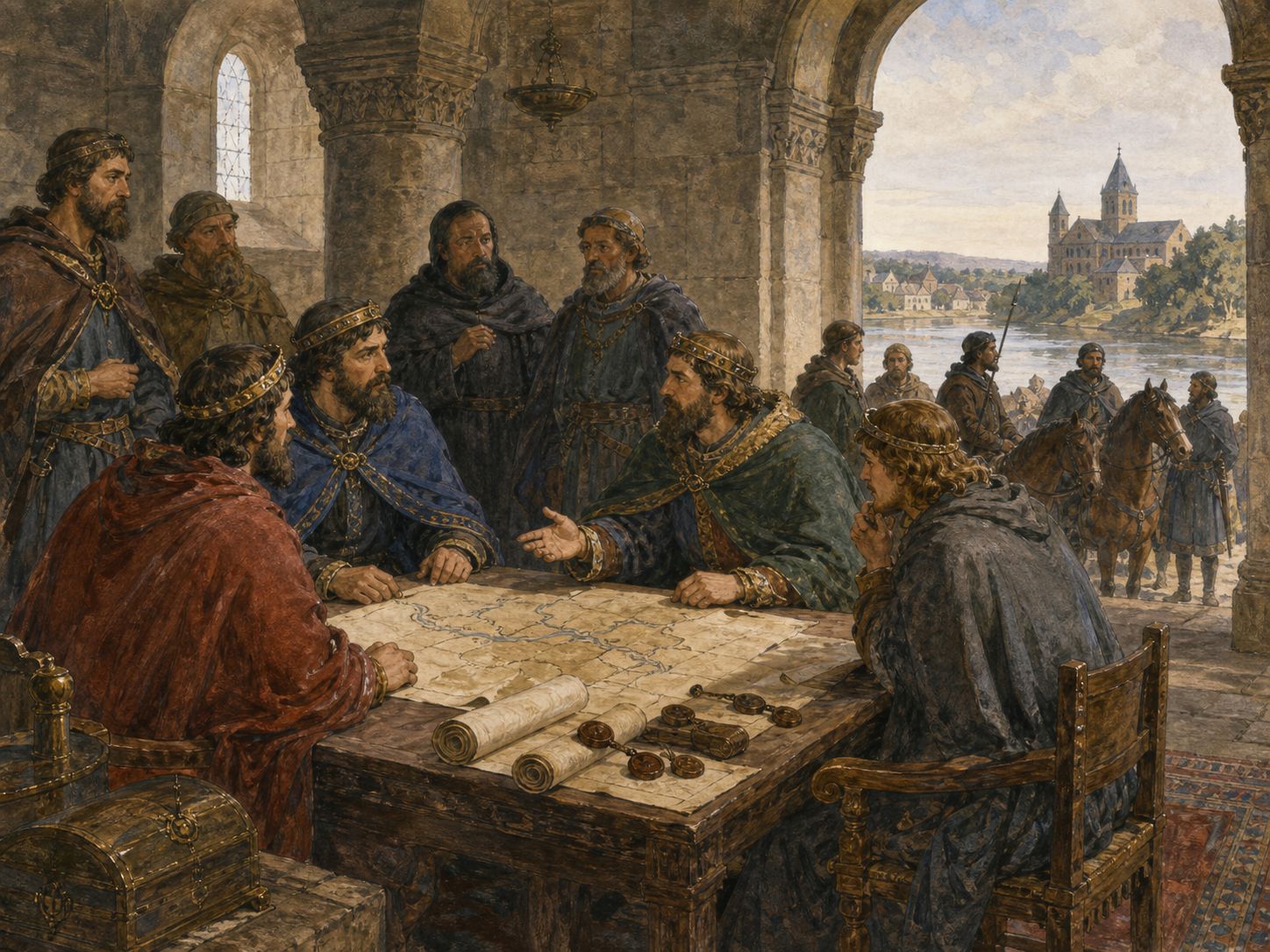
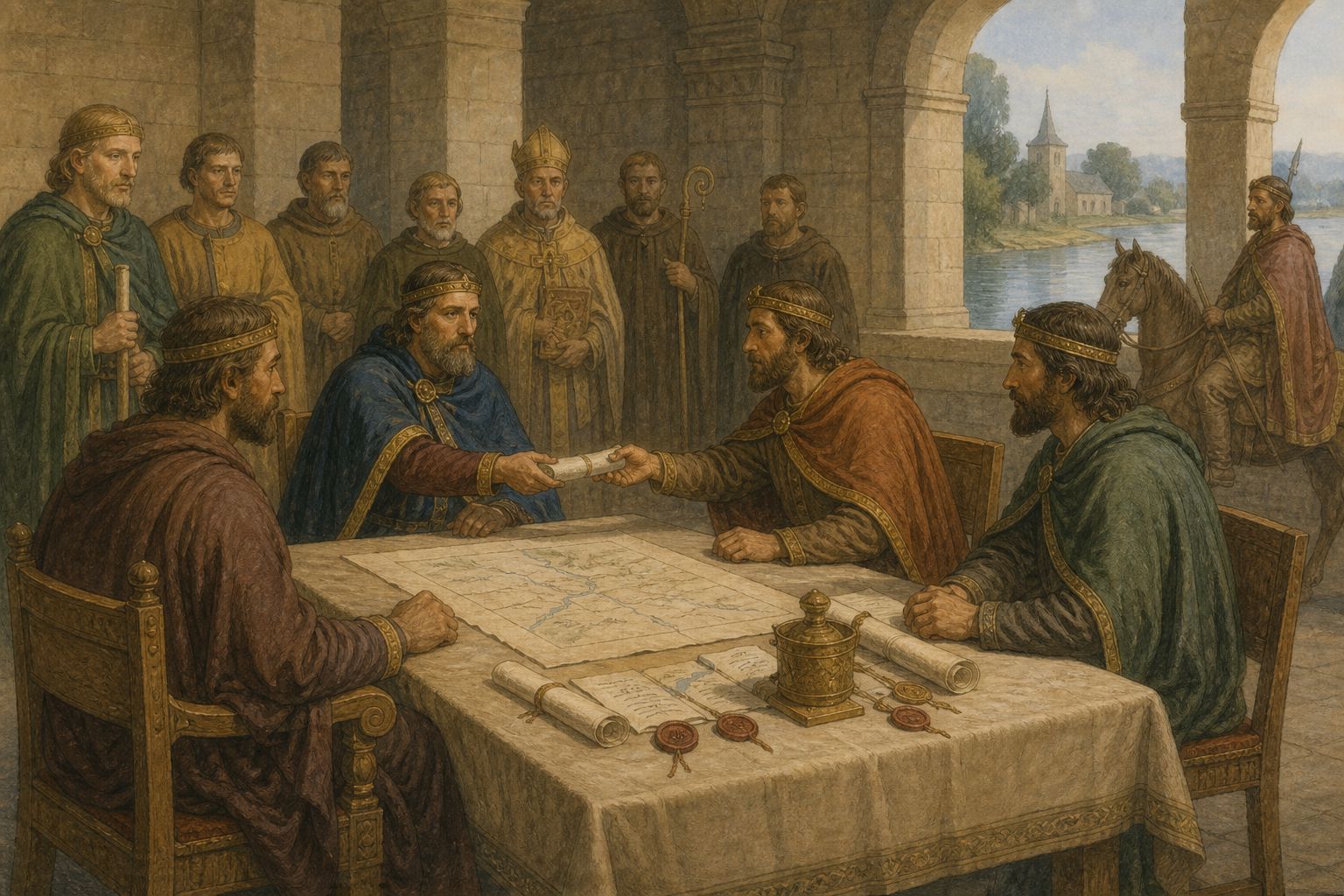
Lothair I, Louis the German, and Charles the Bald negotiated a division using political boundaries associated with rivers such as the Rhine and Rhône.
- Negotiations took place at Verdun in 843
- Territory and rights were marked out
- An agreement among three kings defined a new order
Outcome
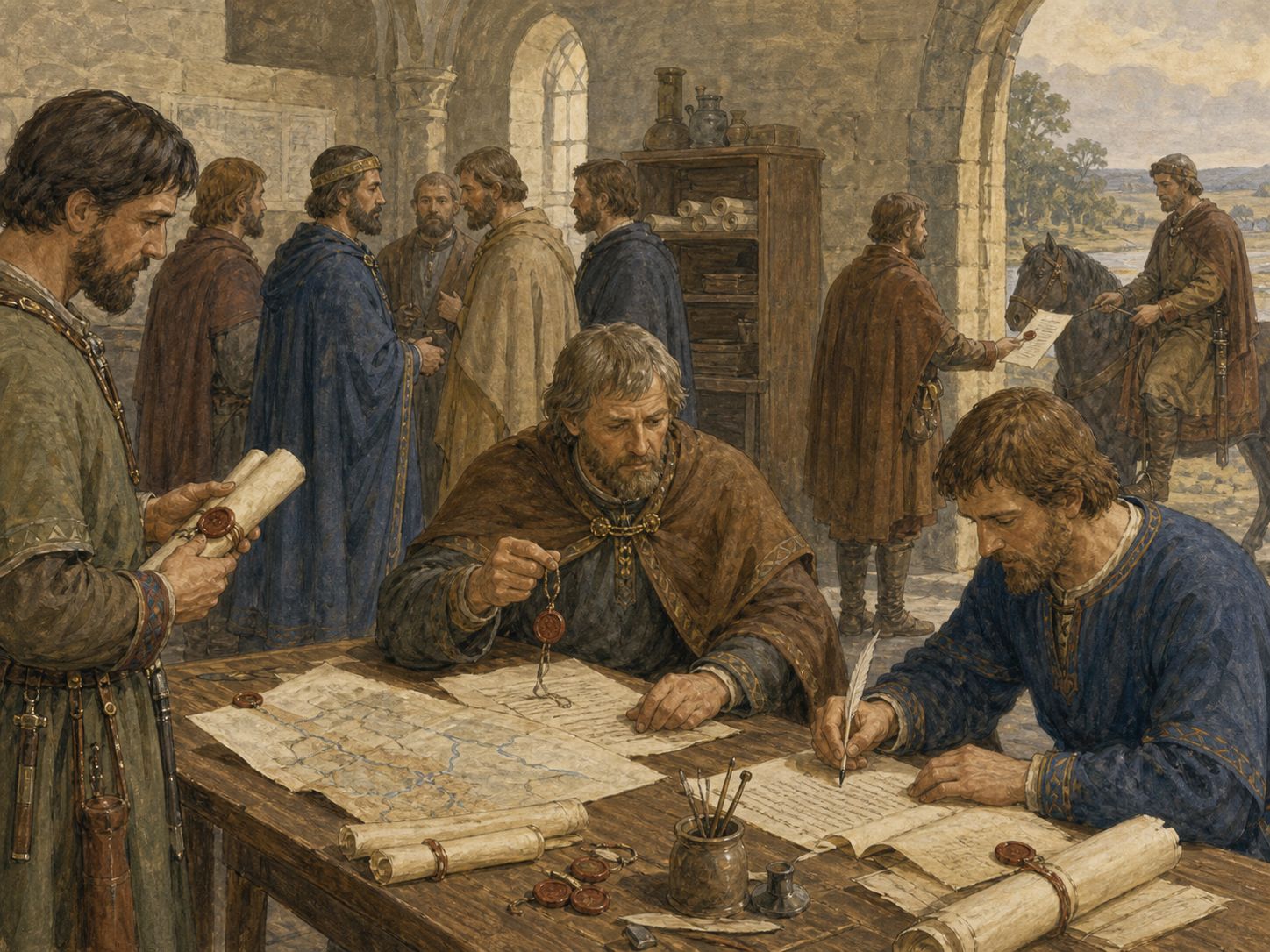
Middle, West, and East Francia emerged, creating a framework that later became connected to the political geographies of Italy, France, and Germany.
- The Frankish realm divided into three kingdoms
- The middle kingdom proved unstable over time
- The political geography of western Europe retained the partition
Historical significance
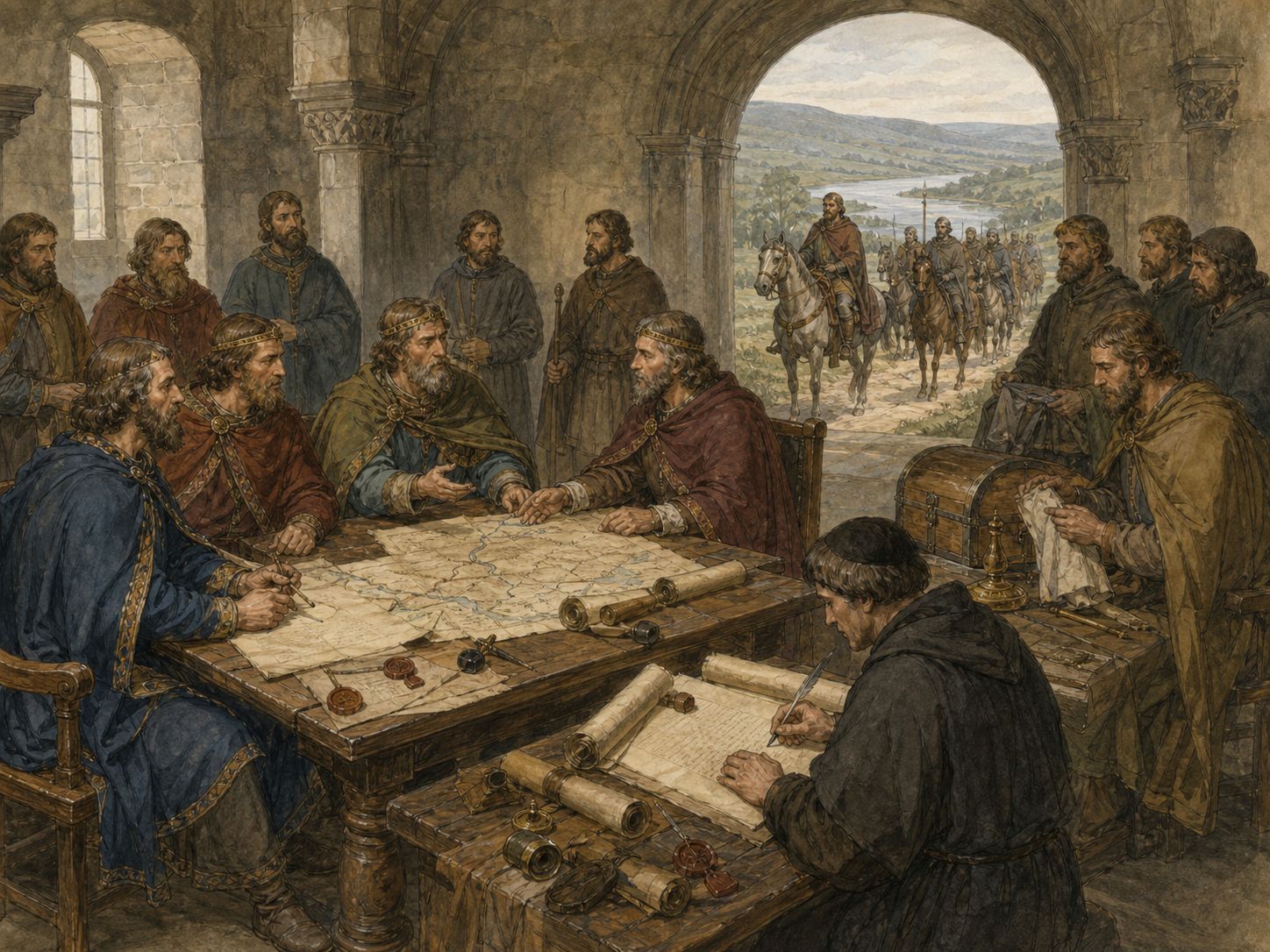
The treaty was not a direct founding moment for modern states, but it reveals the tension between treating an empire as one inheritance and governing it through divided kingdoms.
- It exposed the limits of Carolingian imperial rule
- It shows how inheritance and partition shape states
- It influenced the later formation of western European polities


Related figures
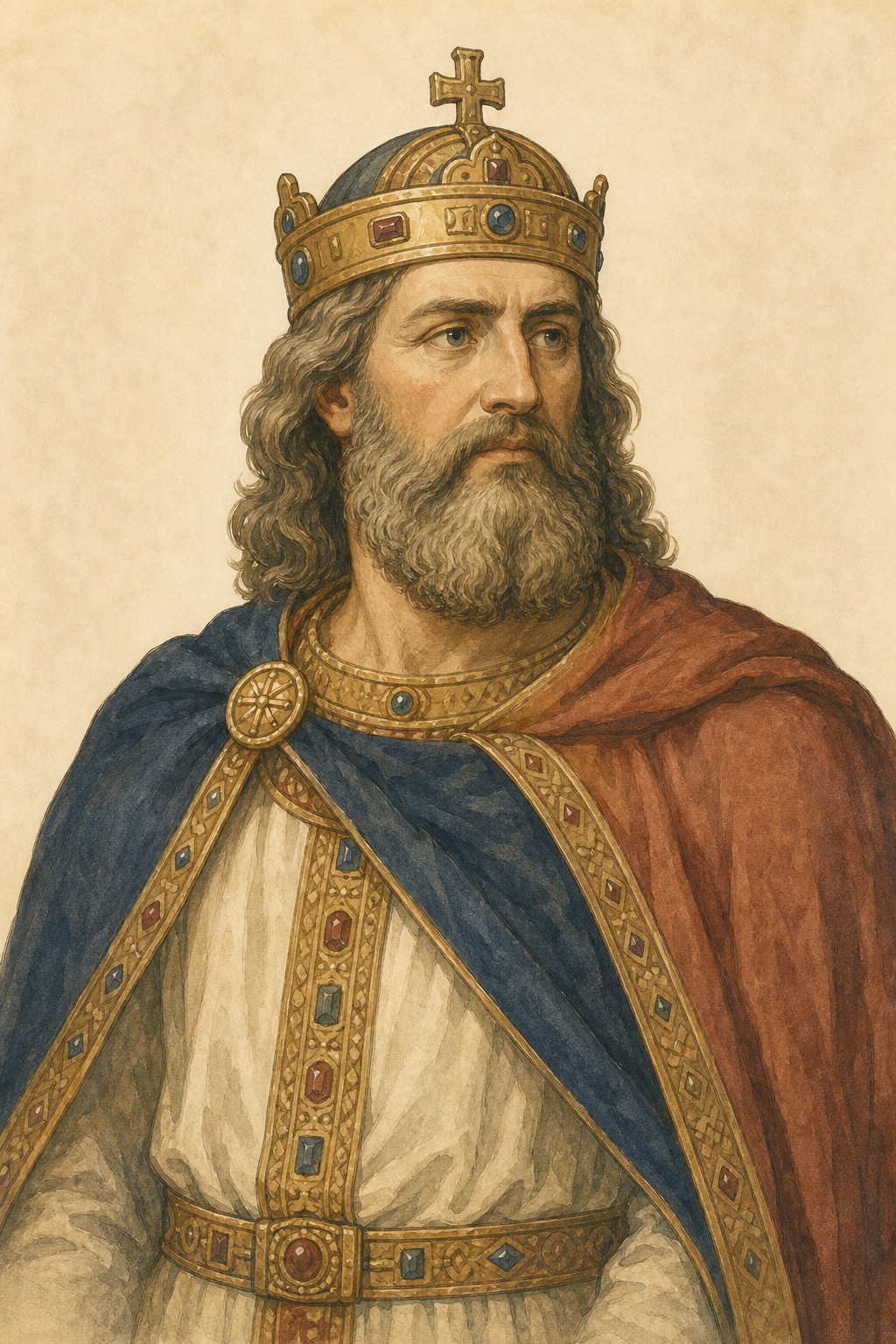
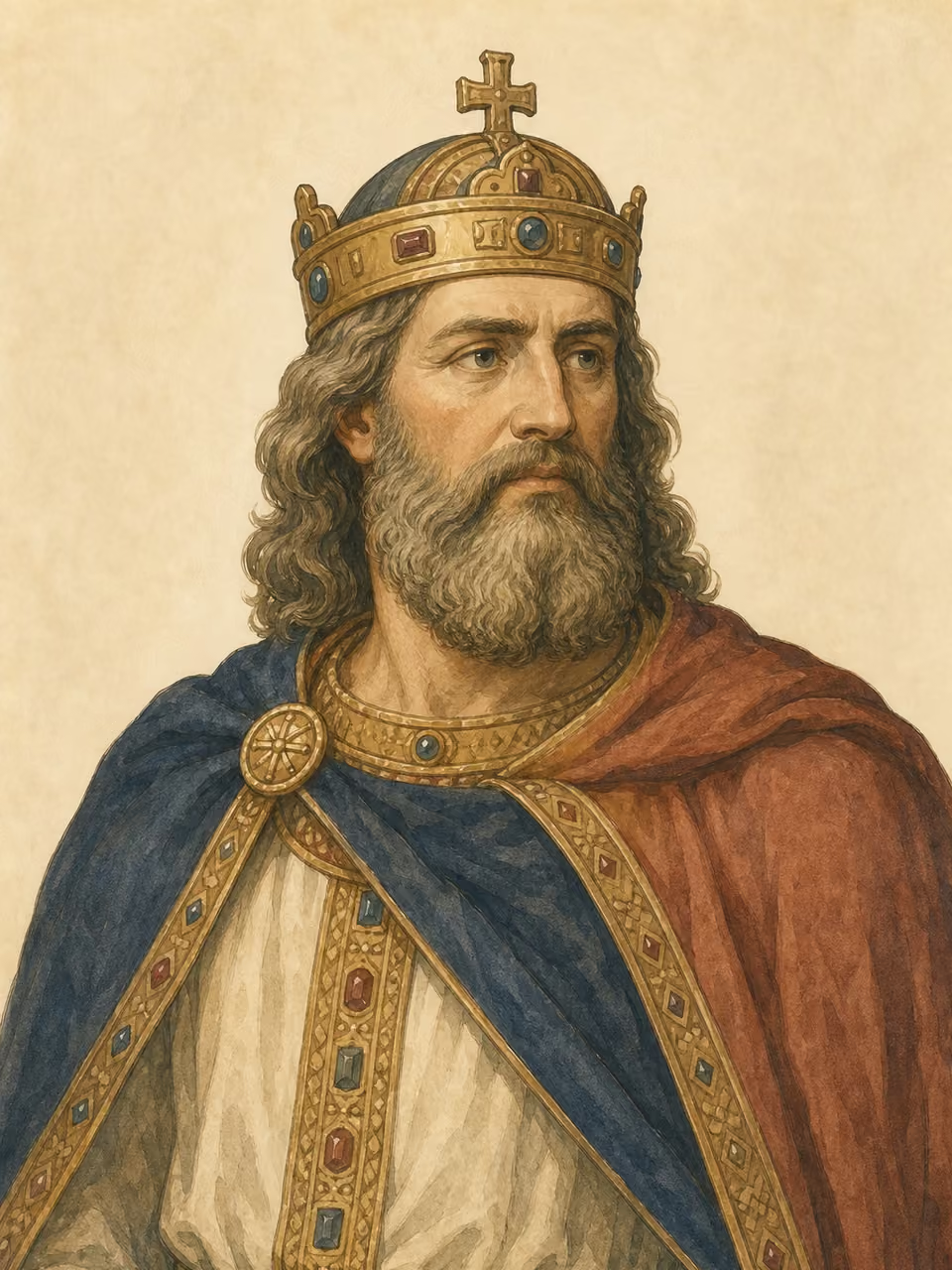
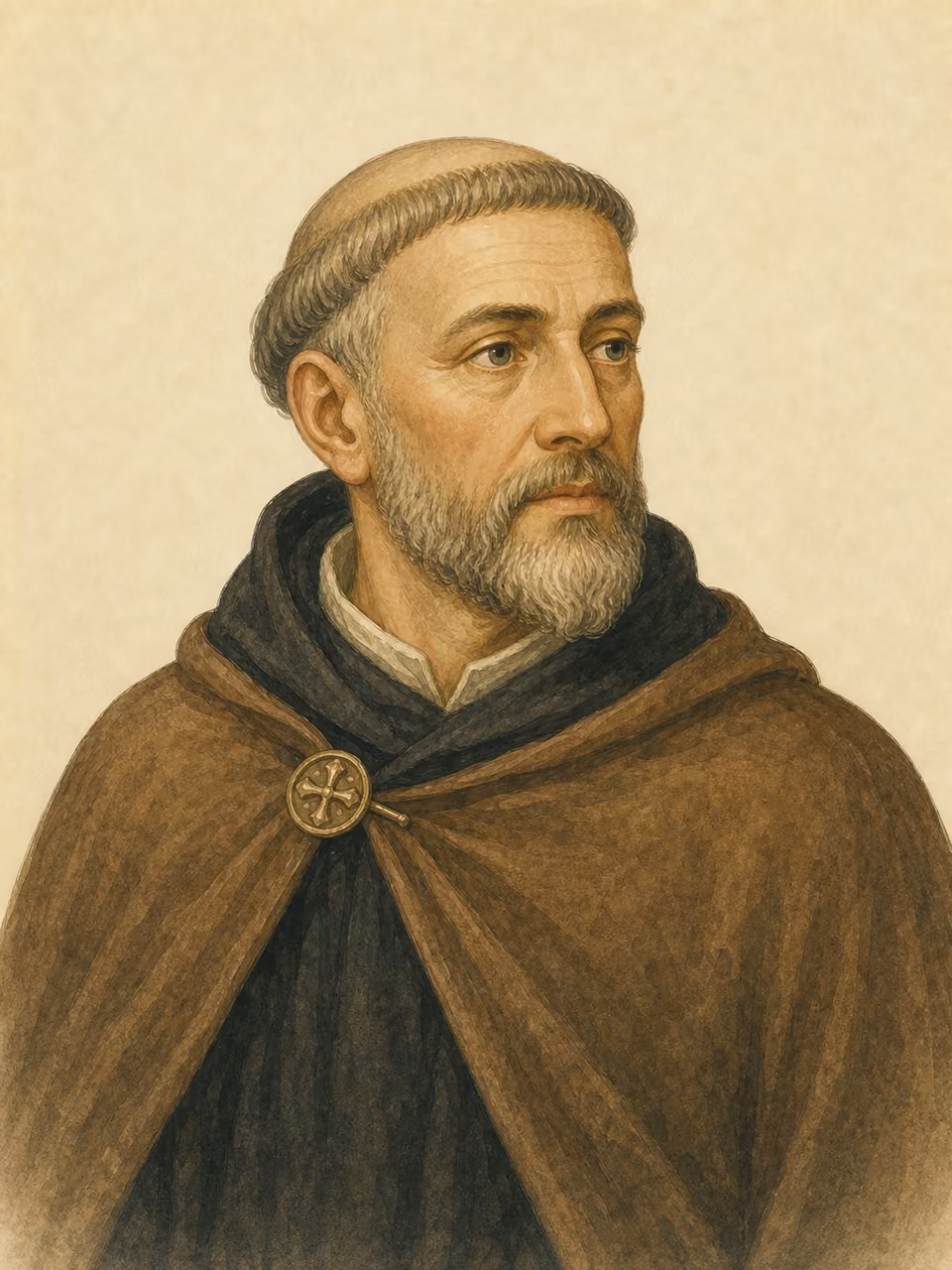
Charlemagne
Carolingian empire
The emperor who built a wide realm and created the setting for later succession problems.
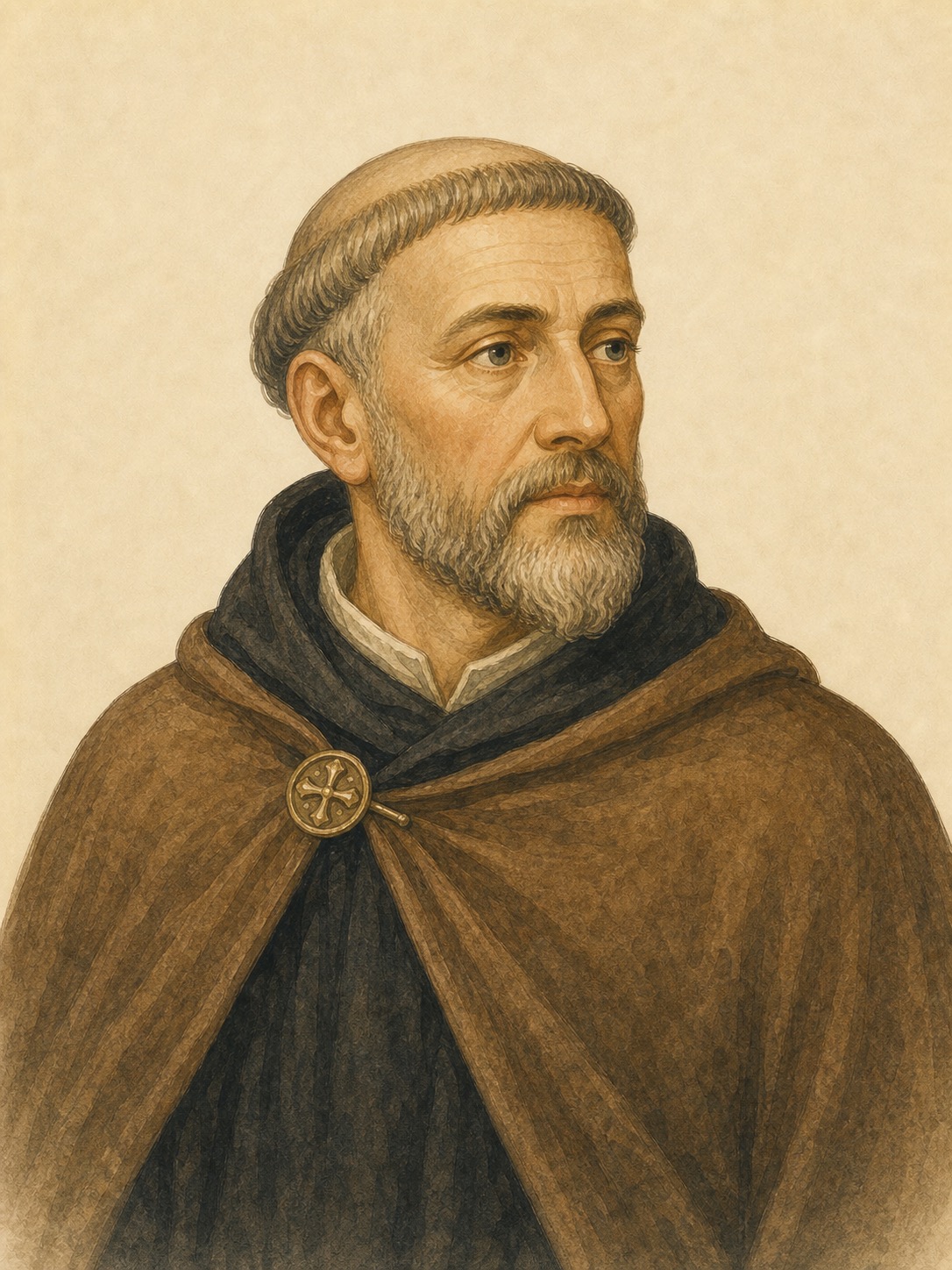
Alcuin
Court intellectuals
A scholar who supported the relationship between kingship, church, and Carolingian order.
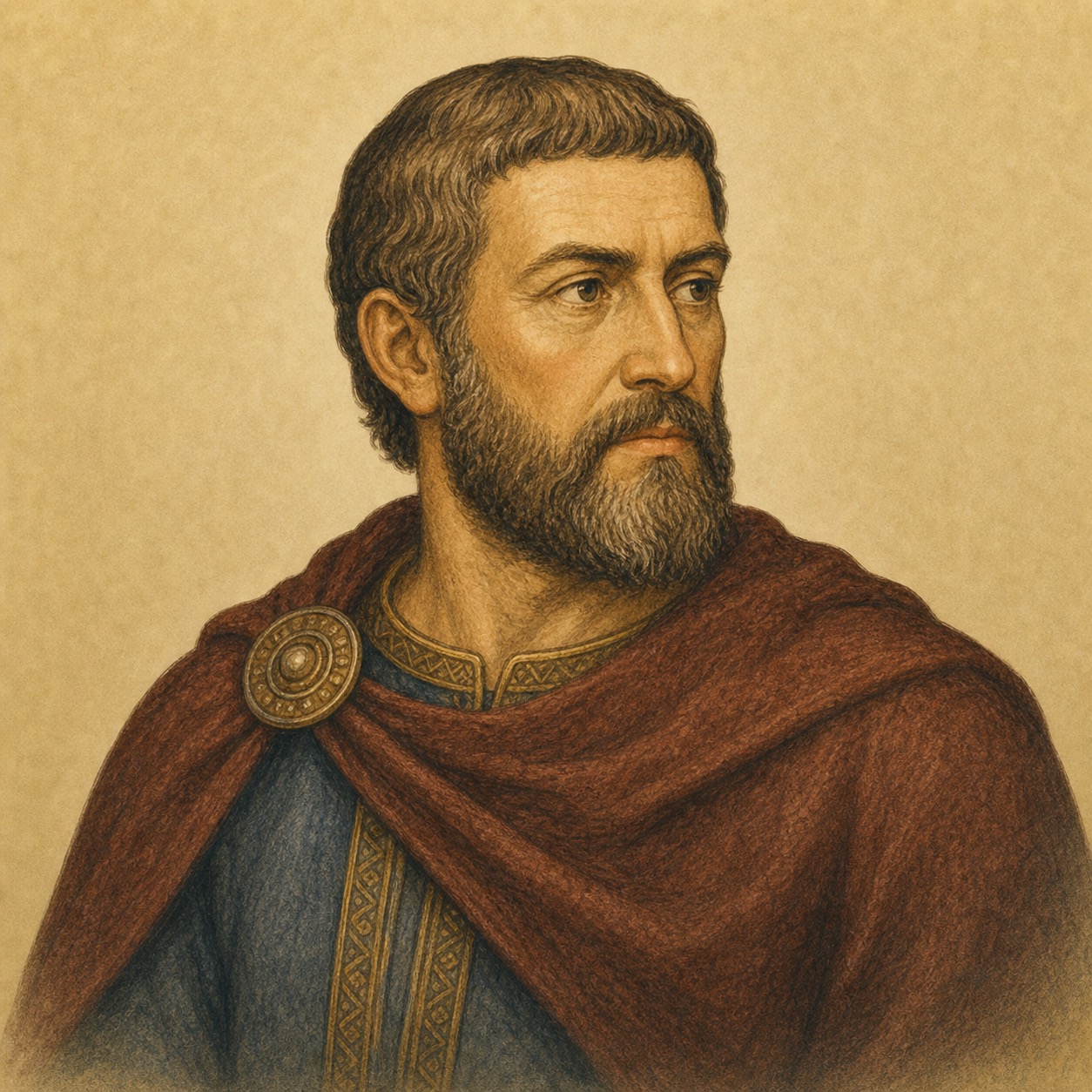
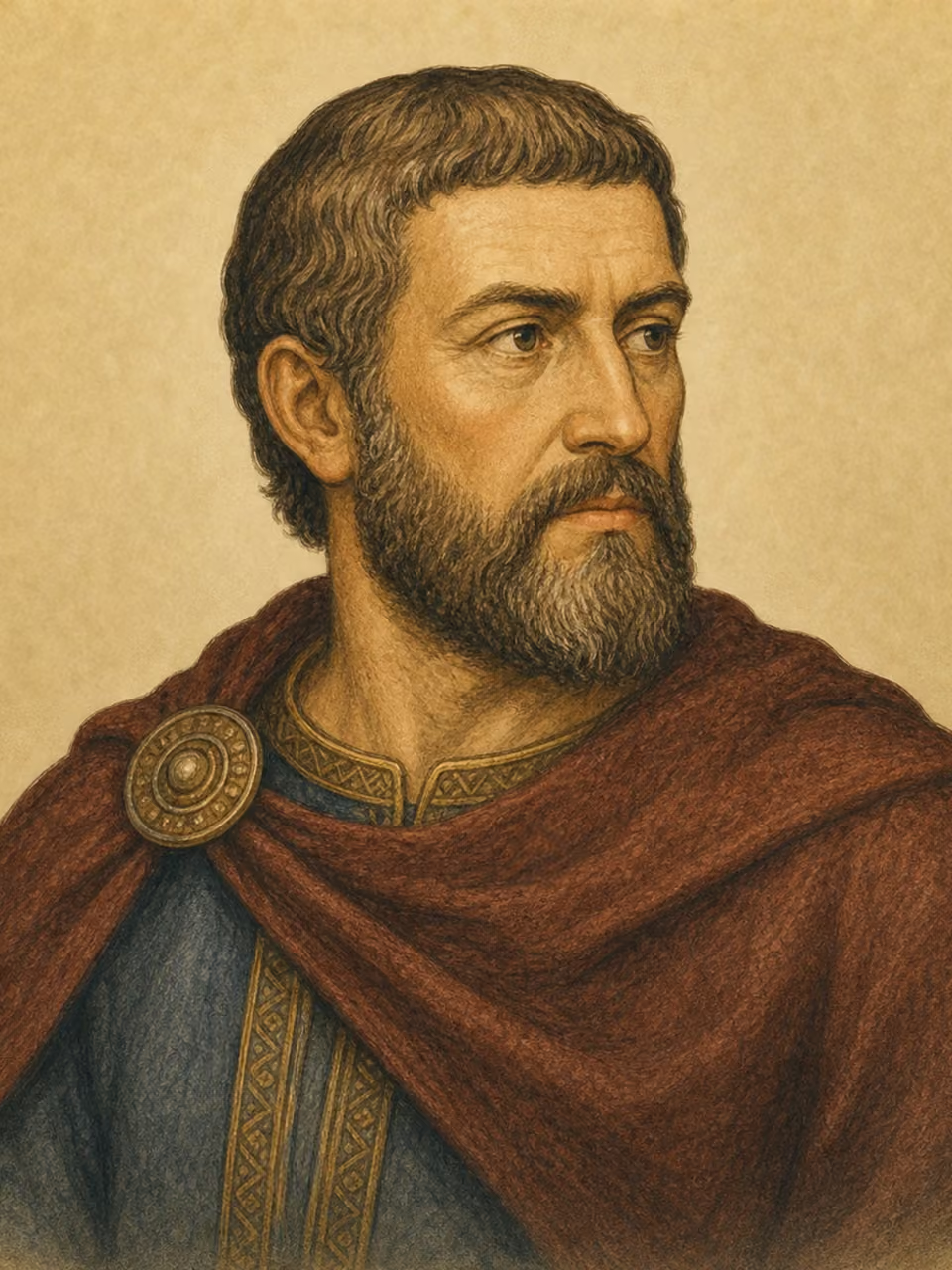
Charles Martel
Frankish realm
A mayor of the palace who established the political base before the empire was built.
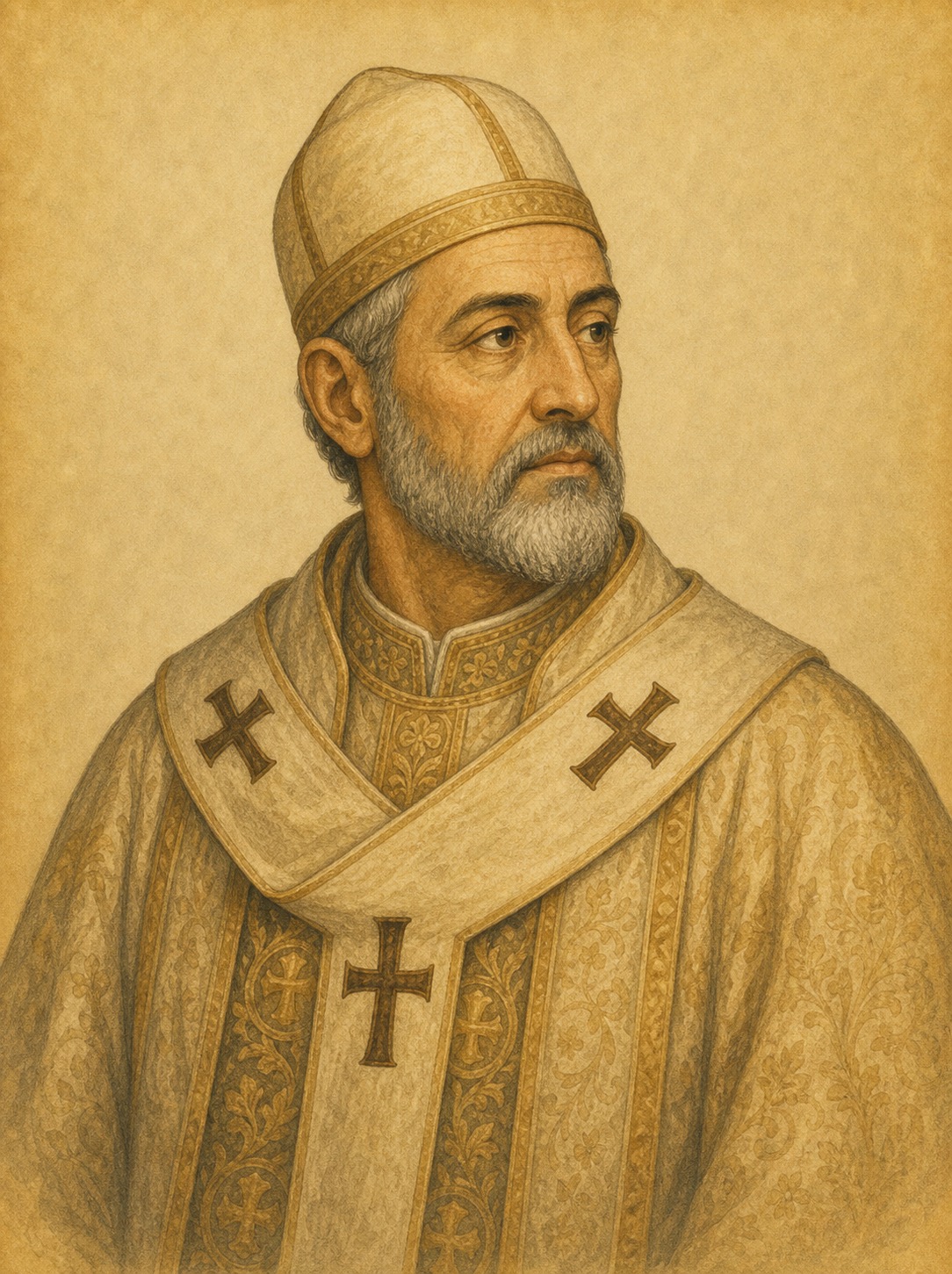
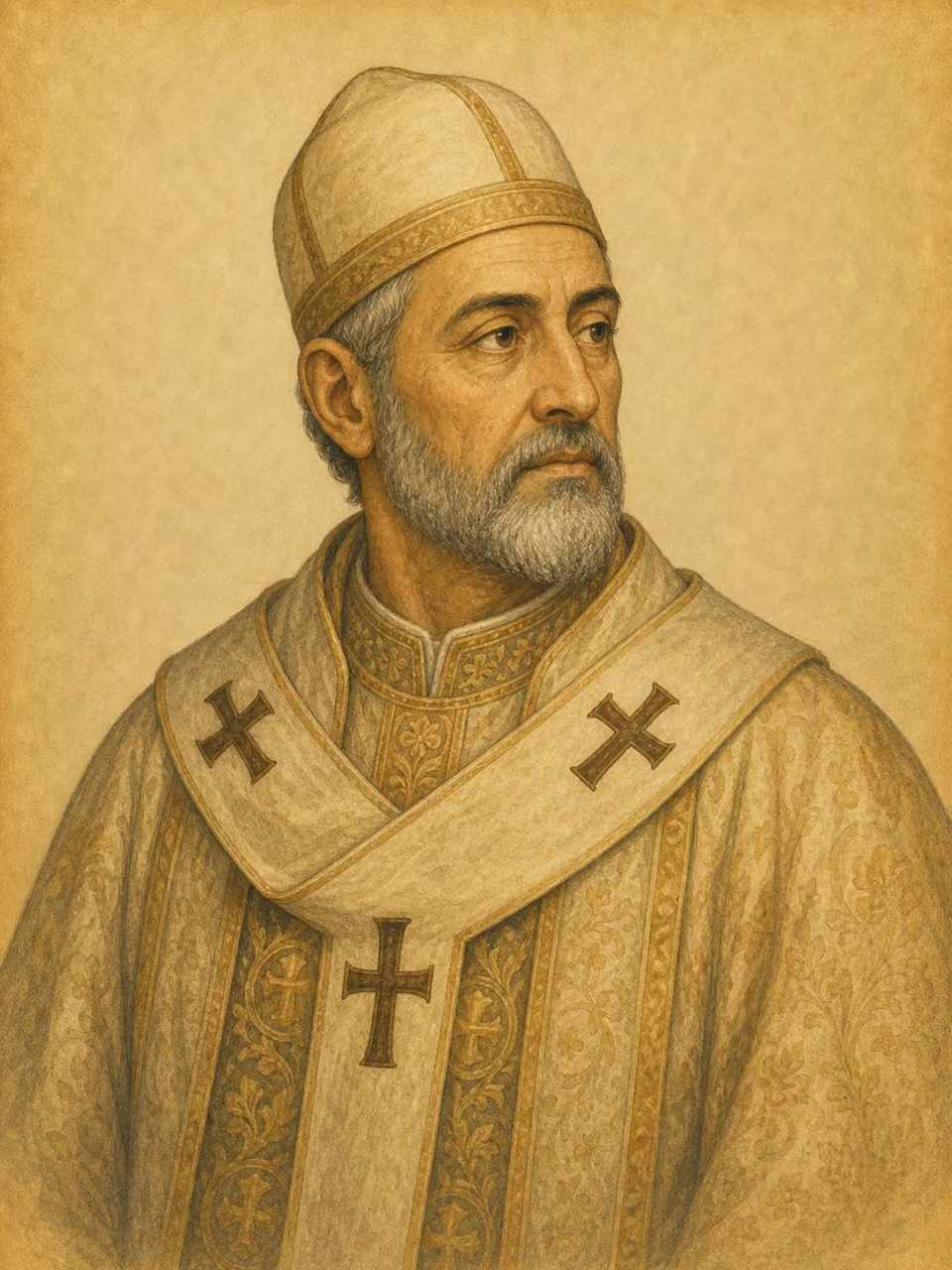
Leo III
Papacy
A pope who symbolized the legitimacy of Carolingian rule and a changing western order.
Related events
814
Succession crisis

After the emperor’s death, tension rose over partition and the claims of the eldest son.
833
Frankish civil war
Brothers and their supporters fought, weakening the unity of the realm.
843
Verdun negotiations
Current event
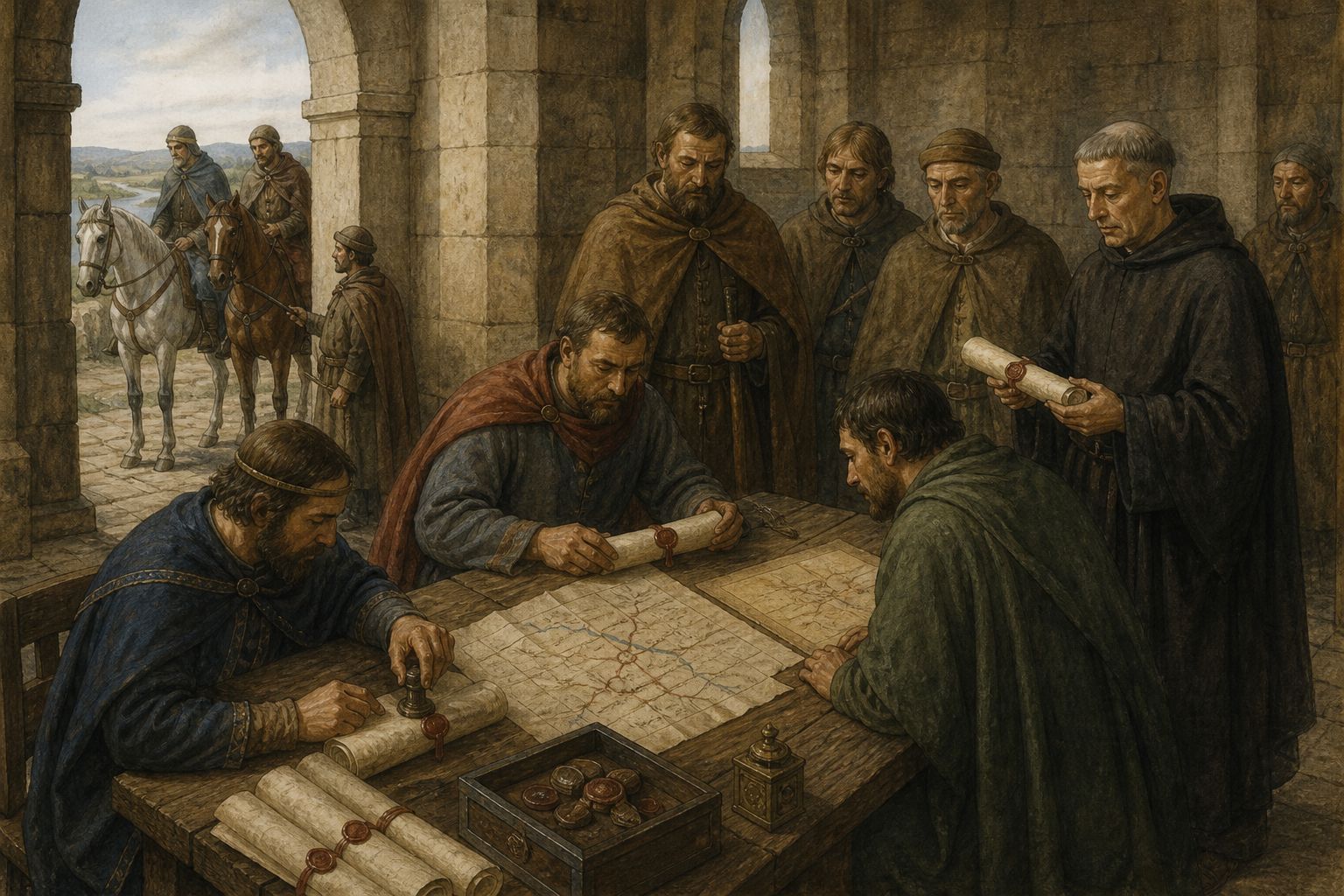
Three kings adjusted territory and rights and reached an agreement to divide the realm.
843
Three kingdoms
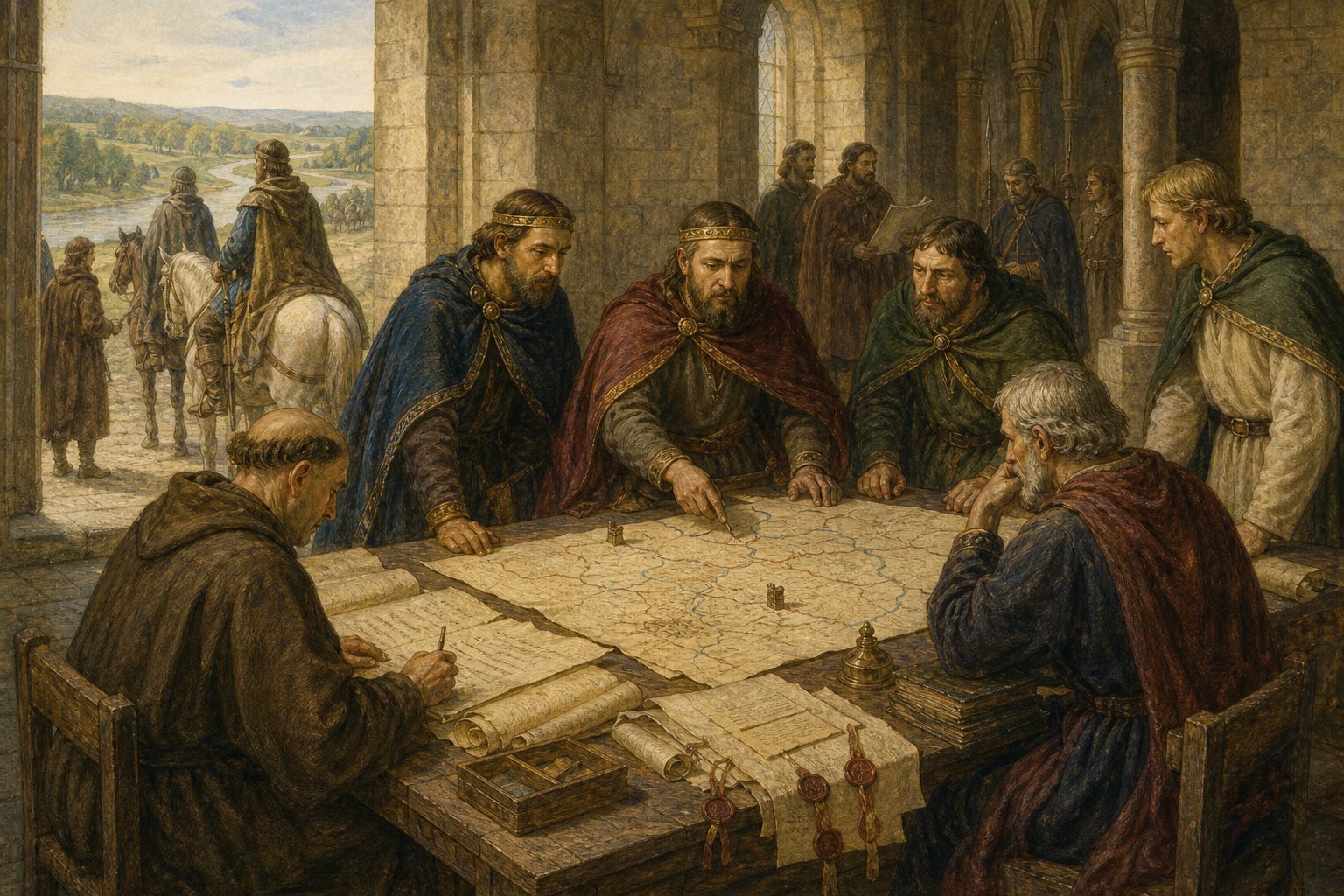
Western, middle, and eastern kingdoms changed the political geography of the Carolingian world.
c. 900
A European legacy
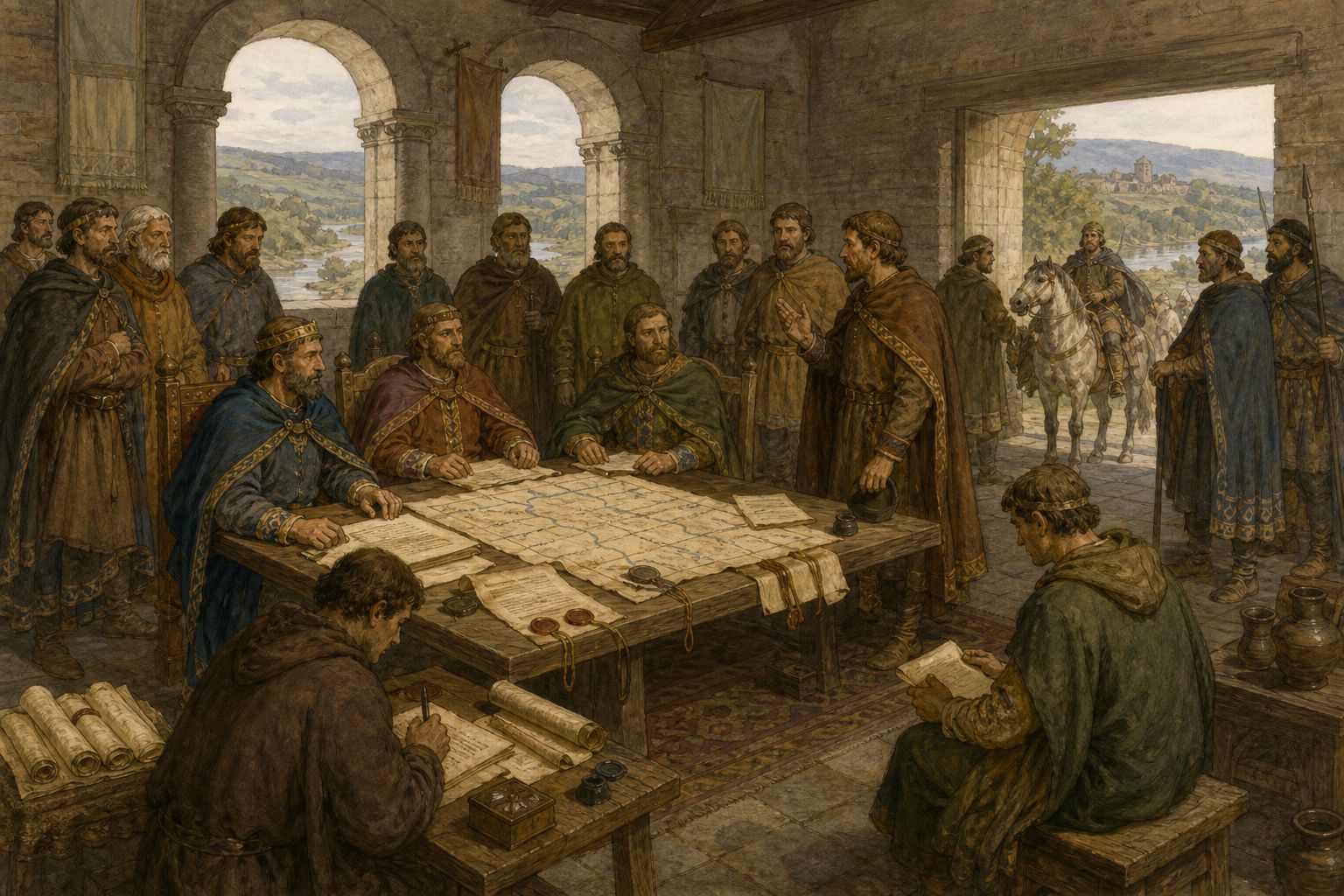
The partition influenced later kingdom-building and ideas of political boundaries.


Sources
- Treaty of VerdunEncyclopaedia BritannicaA reference overview of the Carolingian succession crisis and the 843 partition.
- The Carolingian EmpireThe Metropolitan Museum of ArtA material and cultural context for the Carolingian territories and their political division.
- Treaty of VerdunWorld History EncyclopediaA chronological summary of the civil war, negotiations, and the partition into three realms.