
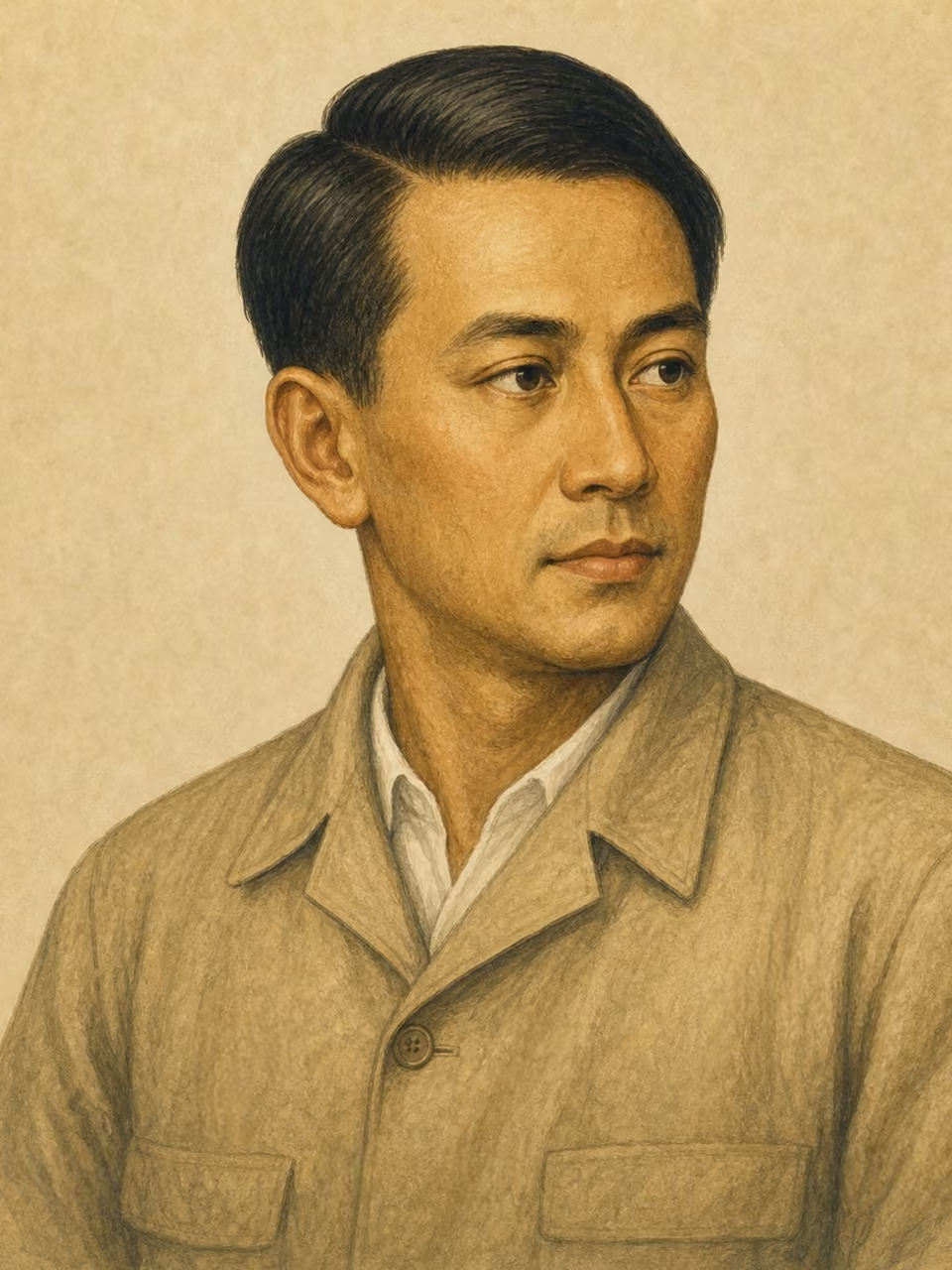
Aung San

Portrait: AI-generated imagined likeness

Aung San

Politician · Military leader · revolutionary

Years
1915–1947
Birthplace
Myanmar (Burma)
Birth polity
British Burma
Era
Contemporary
Field
Politics
Occupations
Politician · Military leader · revolutionary

Leader of the Burmese independence movement. Through cooperation and confrontation with the Japanese military, they proceeded with post-war independence negotiations. He is an important figure in thinking about the decolonization of Southeast Asia.

View in catalog

Historical context

Places

  • Yangon

    Work

Events

  • Panglong Agreement

    1947

    Political event · Leader

Origins

Origins map
Birth country
Birth country
Myanmar (Burma)

Map: Natural Earth (PD)

Biography

Early life

Born in British Burma, he became involved in nationalism through the student movement. Rebellion against colonial rule and changes in the international situation pushed him to the center of the independence movement.

Achievements

He organized the Burmese Independence Army and cooperated with Japan during the war, before turning to the anti-fascist movement. He aimed to unite with other ethnic groups through the Panglong Agreement in 1947, but was assassinated just before independence.

Character & anecdotes

Although Aung San lived a short life, he is remembered as the founding father of the country in modern Myanmar. The political symbolism of her daughter Aung San Suu Kyi is also deeply tied to this memory.

Historical Impact

Aung San's activities demonstrate that World War II forced Southeast Asian independence movements to make complex choices. Studying him reveals that decolonization simultaneously faced the challenges of ethnic integration, military, and diplomacy.