
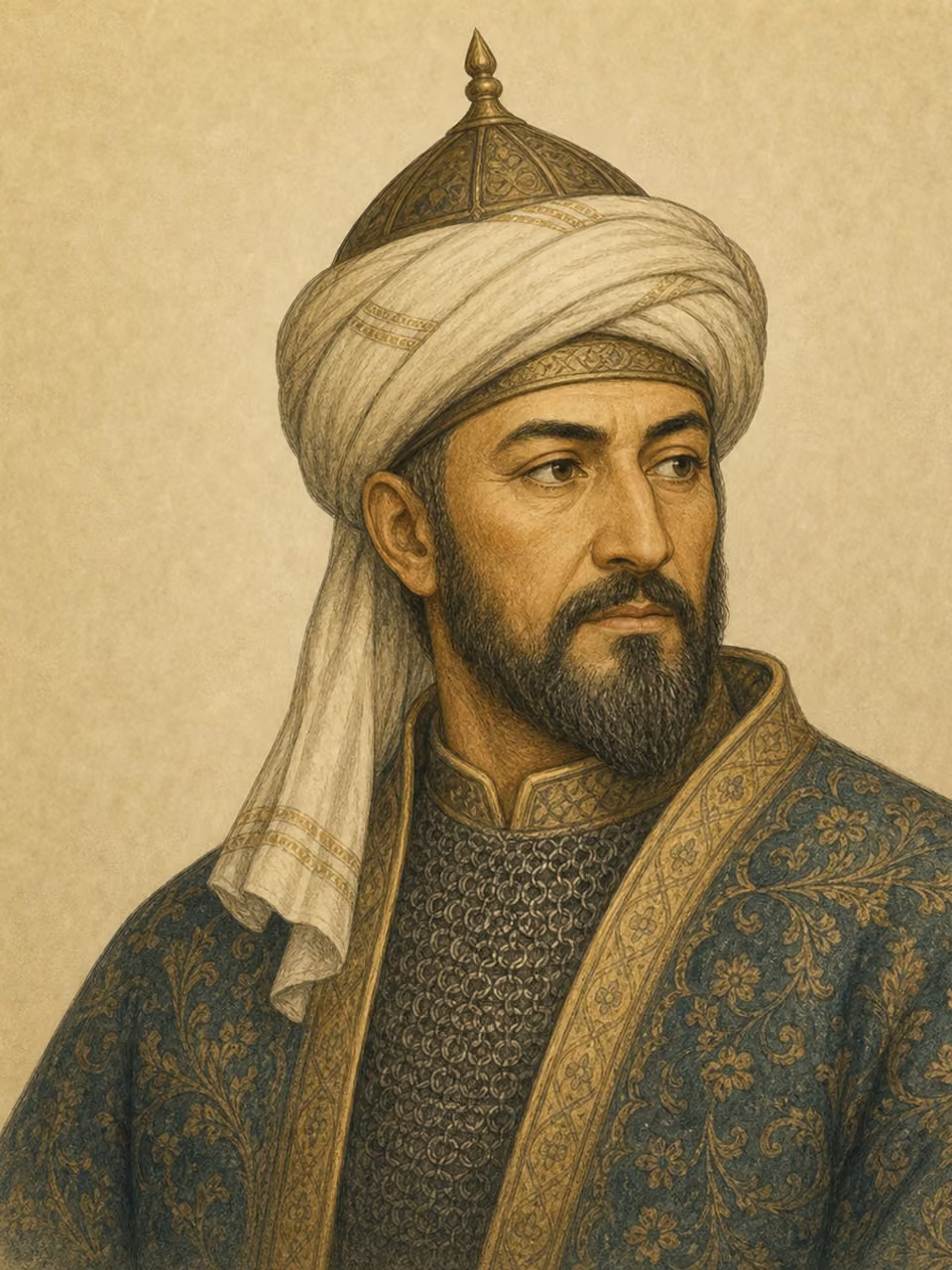
Baibars

Portrait: AI-generated imagined likeness

Baibars

Monarch · Military commander · Military leader

Years
c. 1223–1277
Birthplace
Syria
Birth polity
Kipchak steppe
Era
Medieval
Field
Military
Occupations
Monarch · Military commander · Military leader

Mamluk sultan. They fought against the Mongols and the Crusaders and consolidated their control over Egypt and Syria. He is a person who thinks about the military and state formation in the medieval Islamic world.

View in catalog

Historical context

Places

  • Cairo

    Work

  • Syria

    Campaign

Events

  • Battle of Ain Jalut

    1260

    Battle · Commander

  • Consolidation of Mamluk rule

    1260–1277

    Political event · Leader

Origins

Origins map
Birth countryAssociated countries
Birth country
Syria
Associated countries
Egypt · Kazakhstan

Map: Natural Earth (PD)

Biography

Early life

He is believed to be of Kipchak descent, and gained military experience in Egypt as a Mamluk slave soldier. They rose to prominence within the Mamluk system, where military ability and loyalty were valued over origin.

Achievements

He was involved in repulsing the Mongol army at the Battle of Ain Jalut, and later served as sultan, putting pressure on the Crusader base. He stabilized Mamluk rule centered on Cairo.

Character & anecdotes

His rise from slavery to supreme power is a characteristic of the Mamluk dynasty. The politics of military groups, which were different from bloodline dynasties, held great power in the Middle East during the Middle Ages.

Historical Impact

Baibars is a figure who represents the reorganization of the Islamic regime centered on Egypt and Syria in response to the expansion of Mongolia and the pressure of the Crusader states. Studying him reveals the relationship between military slavery and regional defense in the medieval world.