
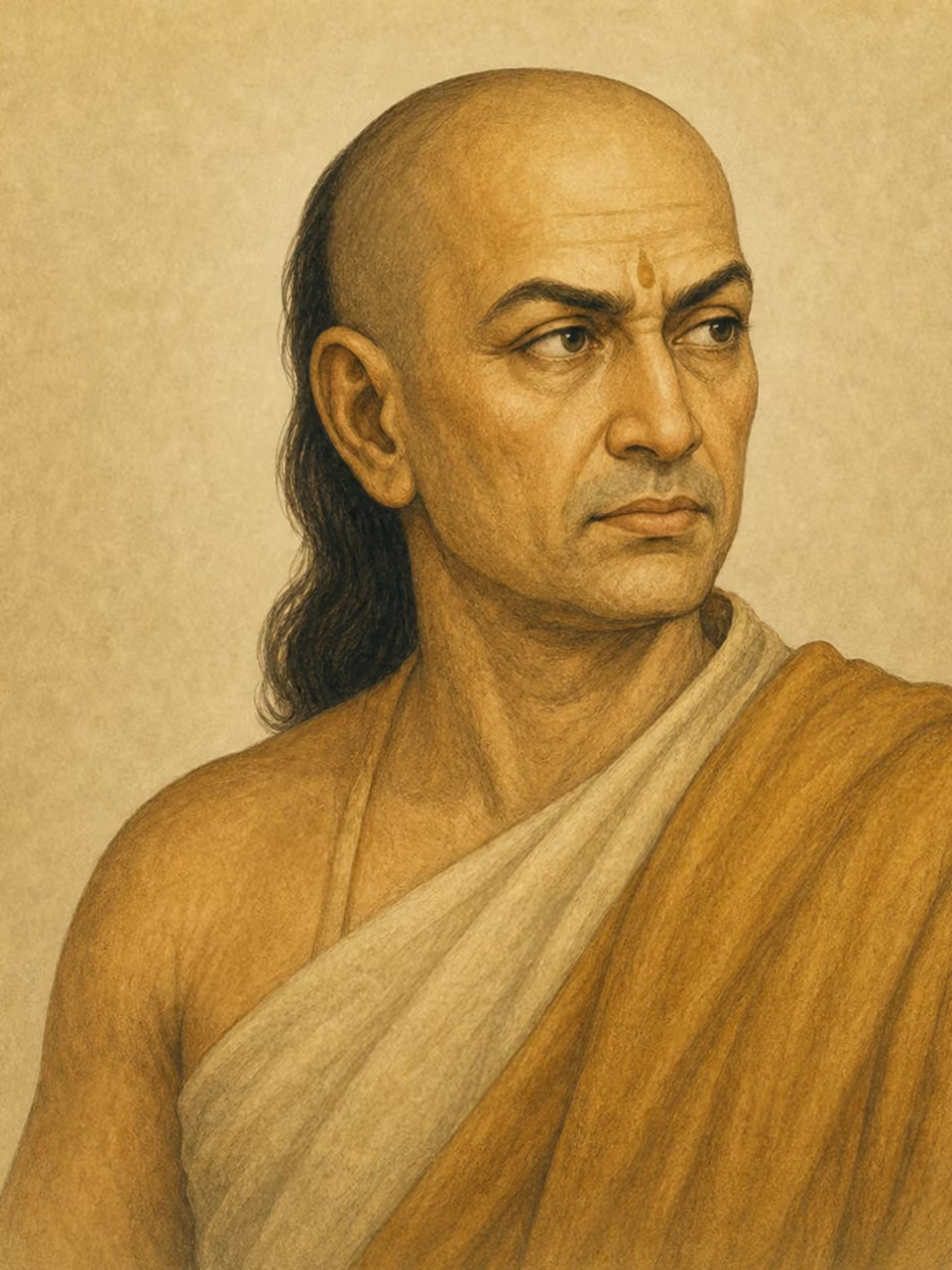
Chanakya Kautilya

Portrait: AI-generated imagined likeness

Chanakya Kautilya

Philosopher · Teacher · Writer · Politician

Years
c. 375 BC–c. 283 BC
Birthplace
India
Birth polity
Ancient Indian polities
Era
Ancient
Field
Philosophy
Occupations
Philosopher · Teacher · Writer · Politician

Ancient Indian thinker and political advisor. It is associated with ``Pragmatism,'' which supported King Chandragupta and discussed state management and diplomacy. He was a person who thought about the establishment of the Maurya dynasty.

View in catalog

Historical context

Places

  • Taxila

    Education

  • Pataliputra

    Work

Works & achievements

  • Arthashastra

    Book

Events

  • Foundation of the Maurya Empire

    c. 322 BC

    Political event · Supporter

Origins

Origins map
Birth countryAssociated countries
Birth country
India
Associated countries
Pakistan

Map: Natural Earth (PD)

Biography

Early life

There are many legends about his life and his relationship with Taxila and Magadha. In ancient India, city-states and kingdoms competed, and after Alexander's expedition, northwest India was also in great turmoil.

Achievements

He is said to have been a prime minister who supported the politics of King Chandragupta, and is said to have been involved in the formation of a powerful centralized state. ``Pragmatism'' can be read as a political philosophy that systematically discusses royal power, finance, diplomacy, and intelligence.

Character & anecdotes

The image of Kautilya is steeped in tradition as a cold-hearted realist. His attitude of analyzing not only morality but also profit and power provides material for understanding the ancient Indian view of the state.

Historical Impact

When we study Kautilya, we learn that ancient India also had sophisticated theories of governance and ideas on international relations. The expansion of the Mauryan Empire can be understood as the institutionalization of not only military power but also administration, tax collection, and diplomacy. It also serves as material for comparing the practical thoughts of ancient nations.