
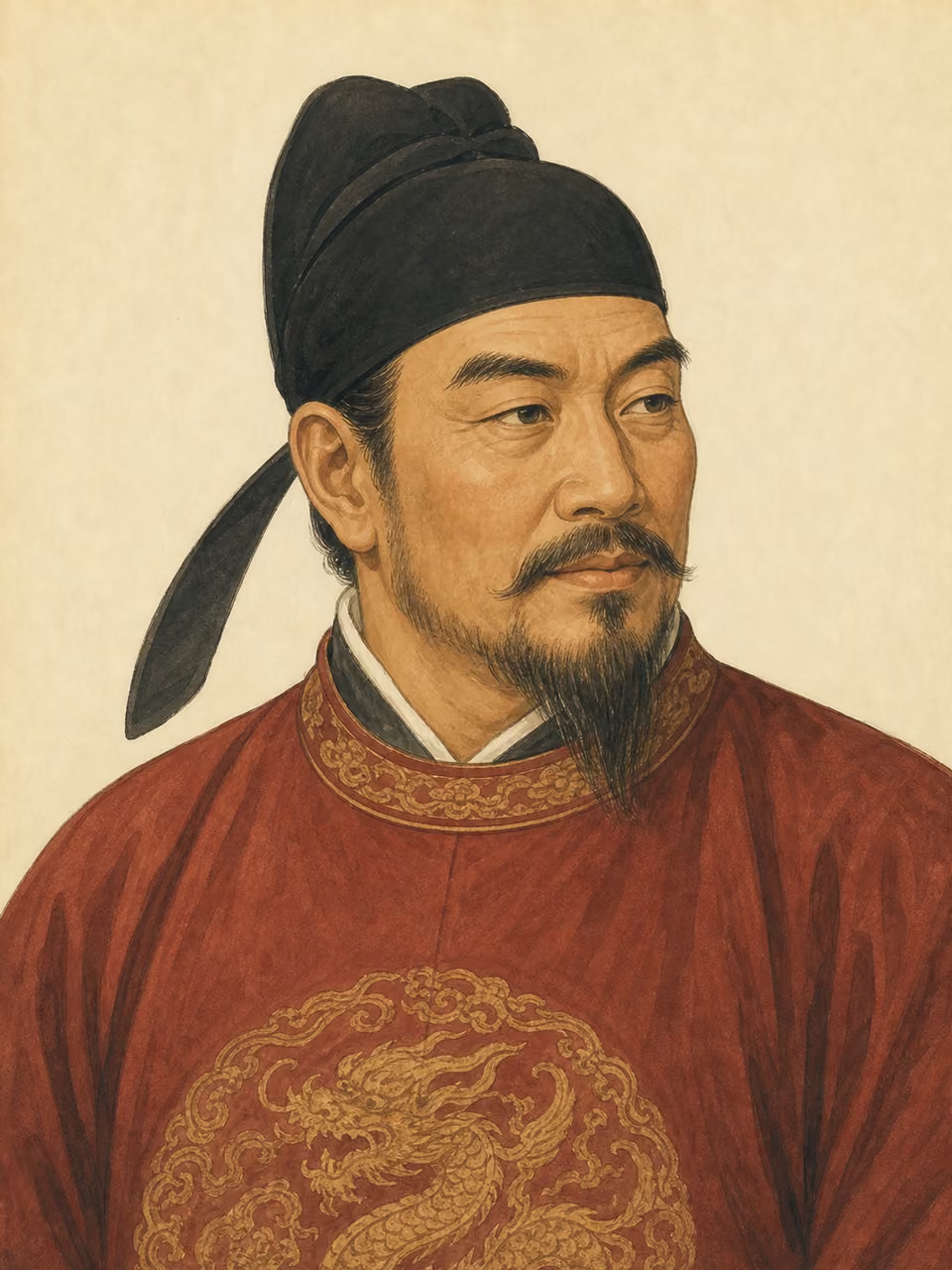
Emperor Gaozu of Tang

Portrait: AI-generated imagined likeness

Emperor Gaozu of Tang

Emperor · Politician

Years
566–635
Birthplace
China
Birth polity
China from Northern Zhou to Sui transition
Era
Medieval
Field
Politics
Occupations
Emperor · Politician

The first emperor of the Tang Dynasty. Amidst the chaos at the end of the Sui Dynasty, he raised an army and established the Tang Dynasty with Chang'an as his base. He was a person who thought about the establishment of the great empire of East Asia, the Tang Dynasty. The political structure of the alternation between Sui and Tang also becomes clear.

View in catalog

Historical context

Places

  • Chang'an

    Work

Events

  • Founding of the Tang dynasty

    618

    Political event · Leader

Origins

Origins map
Birth country
Birth country
China

Map: Natural Earth (PD)

Biography

Early life

He was born into the Li clan, an aristocratic family of Northern Dynasty descent, and served as a military commander and local governor of the Sui Dynasty. At the end of the Sui dynasty, the dynasty's control was rapidly waning due to the construction of the Grand Canal, the burden of expeditions, and the spread of rebellion.

Achievements

He raised an army using the power of his family including Li Shimin and established the Tang Dynasty in 618. They established a new dynasty centered on Chang'an and sought to stabilize the system while inheriting the Sui system.

Character & anecdotes

Yi Yuan later passed the throne to his son Lee Shimin, or Taejong. The founding of the Tang Dynasty was not driven by a single hero, but by a complex movement of aristocratic military groups and family politics.

Historical Impact

Studying Li Yuan reveals that the prosperity of the Tang Dynasty was built on the institutional legacy of the Sui dynasty and the new military and political order that ended the rebellion at the end of the Sui dynasty. It is the starting point of the dynasty that became the standard for the East Asian world, and allows us to concretely trace the alternation between the Sui and Tang dynasties.